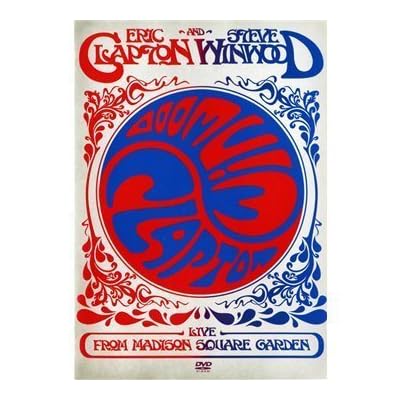
 Sometimes I think I live on Planet Nostalgia. I saw Cream live in a smoky bar in Milwaukee, Wisconsin in 1969. I don’t remember much other than they played really, really LOUD and Ginger Baker put on an incendiary 10-minute drum solo. But I’ve been a fan of Clapton and Winwood from Traffic, Blind Faith, Cream, and their solo careers. Actually, I think the enigmatic Steve Winwood is the greater artist. His Arc of the Diver is one of the greatest albums ever. But this set of two DVDs contain some of their best work: just listen to “Forever Man,” “Presence of the Lord,” “Well All Right,” “After Midnight,” “Double Trouble,” “Can’t Find My Way Home,” “Dear Mr. Fantasy,” and “Cocaine.” Terrific stuff! Yes, there are annoying continuity problems, but you can just play the DVDs on audio if that’s a problem. There’s also a CD version. If you grew up with this music, this concert will beam you right back to Planet Nostalgia like it did to me. GRADE: A-.
LIVE FROM MADISON SQUARE GARDEN By Eric Clapton and Steve Winwood
6 Replies


 Season Seven of 24 featured frogmen invading the White House by using a supersecret passage that somehow wasn’t on the White House tour. Jack Bauer (Keifer Sutherland), battered by the events of the day, contracted the dreaded Swine Flu bio-pathogen from a Bio-Weapon Canister of Doom. But that hasn’t stopped Jack from shooting terrorists and beating up his former friend, Tony. Tony was a Good Guy, become a Bad Guy, pretended to be a Good Guy, and then reverted back to a Bad Guy. Did you follow all of that? Don’t worry about it if you didn’t. In tonight’s two-hour finale, the nutty writers of 24 will attempt to wrap up all the ridiculous plot inconsistencies and set things up for Season Eight which is already in production. The DVD boxed set of Season Seven goes on sale Tuesday. My advice: skip it.
 The movie version of Angels & Demons displays many of the features of 24: the events occur within a day, the time is displayed on the screen every few minutes, a gruesome murder occurs practically every hour, there are explosions, and an impressive body count. But, for all of this furious pacing, I found Angels & Demons a bit draggy. Perhaps reading the book a few days before I saw the movie affected my frame of mind because the movie version makes a number of changes from Dan Brown’s novel. Some are good, like cutting out the most unbelievable scene in the novel: Robert Langdon jumping out of an exploding helicopter (and surviving). But some are bad, like skipping the kidnapping of Robert Langdon’s sexy physicist partner by the hired assassin. All in all, Angels & Demons is a mixed bag. GRADE: B-.
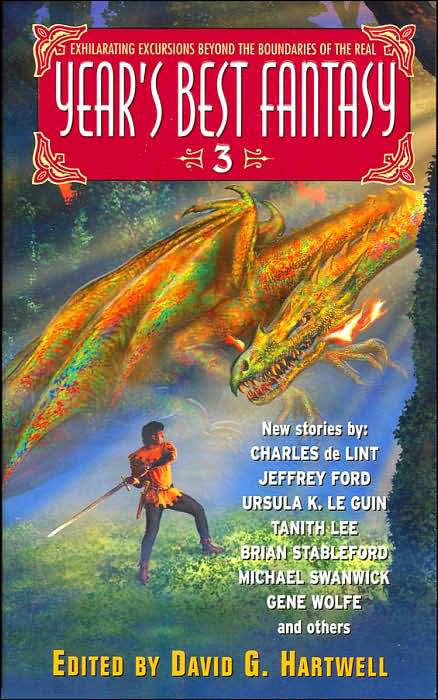 Steven Levine, in his comment to my review of P. G. Wodehouse’s “Honeysuckle Cottage,” recommended “Greaves, This is Serious” by William Mingin. The story was originally published in Tales of the Unanticipated and then reprinted in David G. Hartwell’s anthology, Year’s Best Fantasy #3. And, as Steven warned, “Greaves, This is Serious” is short: only six pages. This pastiche of Wodehouse’s Bertie and Jeeves stories is clever. But, even a talented writer like Mingin can only capture Wodehouse’s signature style for a few pages. If you’re a Wodehouse completest, “Greaves, This is Serious” belongs in your collection.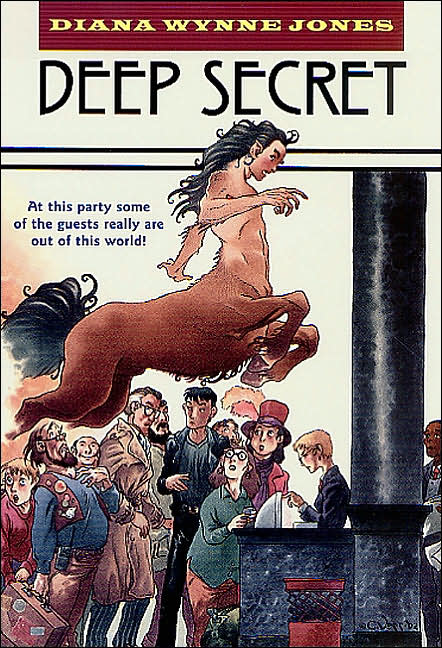
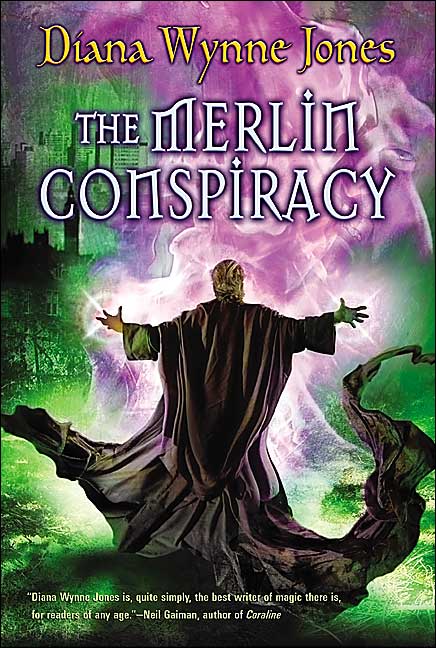 Some writers can write great fantasy, but most can’t. Diana Wynne Jones is one of the former. J. K. Rowling may have the money and the fame, but I consider Diana Wynne Jones to be the greater fantasy writer. Her body of work maintains a high standard of quality. If you haven’t read any Diane Wynne Jones, here is a good place to start. In Deep Secret the “Multiverse” is in danger of becoming unbalanced and only the efforts of the Magids–powerful magicians who can move among dimensions–can prevent disaster. The battle continues in The Merlin Conspiracy as a page, Arianrhod Hyde (Roddy), finds herself in the middle of a conspiracy that could destroy worlds. Strong writing, plenty of action, intricate plotting, and deft characterizations blend into compulsive reading at its best. Sometimes, Diana Wynne Jones’ books are shelved in the YA section of the library or bookstore. Don’t be fooled! There’s plenty of delight here for precocious teenagers and discerning adults alike.
 Little Dorrit seeps sentimentality on every one of its nearly 700 pages. Dickens is critiquing the British system of debtors’ prisons by showing how a family becomes undone, first by debt and later by riches. William Dorrit is imprisoned as a debtor. Amy (aka, Little Dorrit) is his saintly daughter. Fanny, his snobbish daughter, is a constant burden. Edward (aka, Tip) is a worthless idler. Someone bursts into tears on a regular basis. Arthur Clennam, returns to England after 20 years in the East, and befriends the Dorrits. Through Clennam’s efforts at the Circumlocution Office (aka, the British Treasury), Dorrit is released from debtors’ prison, becomes rich, and more disasters befall him. I slogged page by page, tear-jerker scene by tear-jerker scene, through Little Dorrit. I finished it, but if had been one page longer I might have bailed. The BBC version of Little Dorrit sits on my stack of Watch Real Soon DVDs so you’ll be seeing a review of that performance soon. As for the book, it is far from Dickens’ best. GRADE: C
 There must be someone else besides me in America who hasn’t read Dan Brown’s Angels & Demons before now. I read Brown’s The Da Vinci Code before the movie version appeared and wondered what all the fuss was about. The Da Vinci Code seemed to me like a run-of-the-mill thriller with a series of puzzles thrown in. The movie was so-so. But now the buzz about the new movie version of Angels & Demons tempted me to read the book before I see the movie this weekend. First, Angels & Demons is a better book that The Da Vinci Code. In fact, it reminded me of 24 with non-stop action crammed into one day. Once again, Harvard professor and symbologist Robert Langdon is called on to solve a series of baffling puzzles starting with the branded body of a particle physicist. And, once again, Brown provides a sexy sidekick in the form of Vittoria Vetra, daughter of the murdered physicist. Together, they take on the sinister forces of the Illuminati, sworn enemies of the Catholic Church. There are grand chase scenes all round Rome as the clock ticks down to an explosive conclusion. Great fun here! GRADE: B+