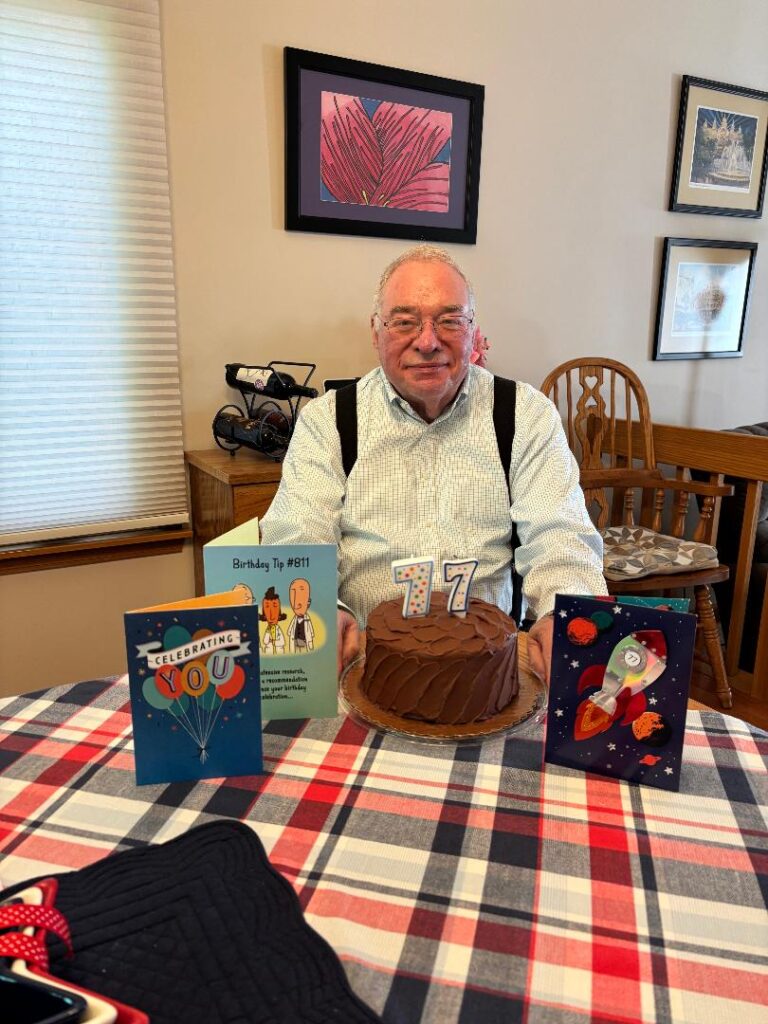
HAPPY 77th BIRTHDAY TO ME!
Leave a reply
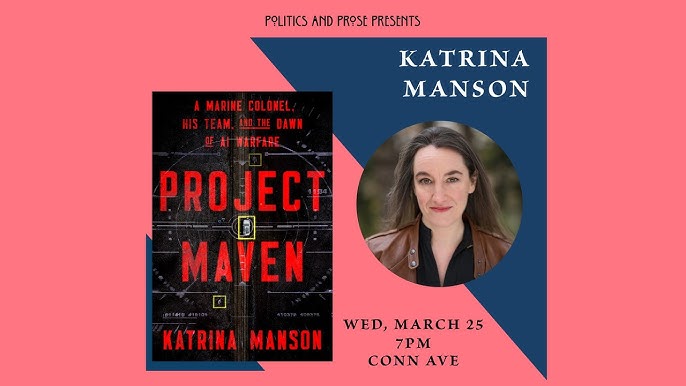
“The problem with war, Cukor told me, had always been the humans. ‘They’re materially corrupt, inefficient, and they get tired.’ And when they die it affects the campaign… He believed humans could do better with the help of machines, and that AI could pierce the Fog of War.” (p. 4)
“Nearly forty million people died in the First World War. An estimated eighty-five million people died in the Second World War. A Third World World War remained unthinkable.” (p. 351)
Watching what’s happening in the Ukraine War and the Iran War, it’s clear warfare will be fought by missiles and drones guided by Artificial Intelligence. Katrina Manson’s Project Maven tells how Colonel Drew Cukor first got the Defense Department involved in Artificial Intelligence a decade ago. Now, all the Big AI Players like Microsoft, Nvidia, Alphabet (Google), OpenAI, Anthropic, Palantir, and Amazon are supplying the Defense Department new technology to fight wars.
Katrina Manson not only presents the growth of the relationship between AI and the military, she issues warnings about weapon systems that are autominous and can act without human oversight. Very dangerous! What do you think about Artificial Intelligence? GRADE: A
TABLE OF CONTENTS:
A Note on Sources — vii
Prologue — 1
Introduction — 3
Epilogue — 351
Acknowledgments — 355
Notes — 357
Index –– 398
I was just 13 years old when I saw Robert Mitchum in Cape Fear in 1962. Yes, I was freaked out!
In 1991, I was much more under control when I watched Robert De Niro in Cape Fear. Still scary!
Cape Fear is based on John D. MacDonald’s The Executioners (1957) thriller where a convicted rapist, Max Cady, seeks revenge on the lawyer, Sam Bowden, who put him in prison.
After his release, Cady systematically terrorizes Bowden’s family. Cady’s actions escalate from psychological torments to physical violence. Cody cannot be reasoned with. And as Cady’s intimidation becomes more threatening, it forces Sam Bowden, a law-abiding lawyer, to deal with the psychopath outside the bounds of the law to protect his family.
Max Cody is a menacing role where Mitchum and De Niro got show their ominous sides. Javier Bardem brings his own fearsome presence to terrorize the Bowden family. Patrick Wilson plays a beleaguered Sam Bowden and Amy Adams plays Bowden’s unnerved wife. Are you a fan of Cape Fear? GRADE: B
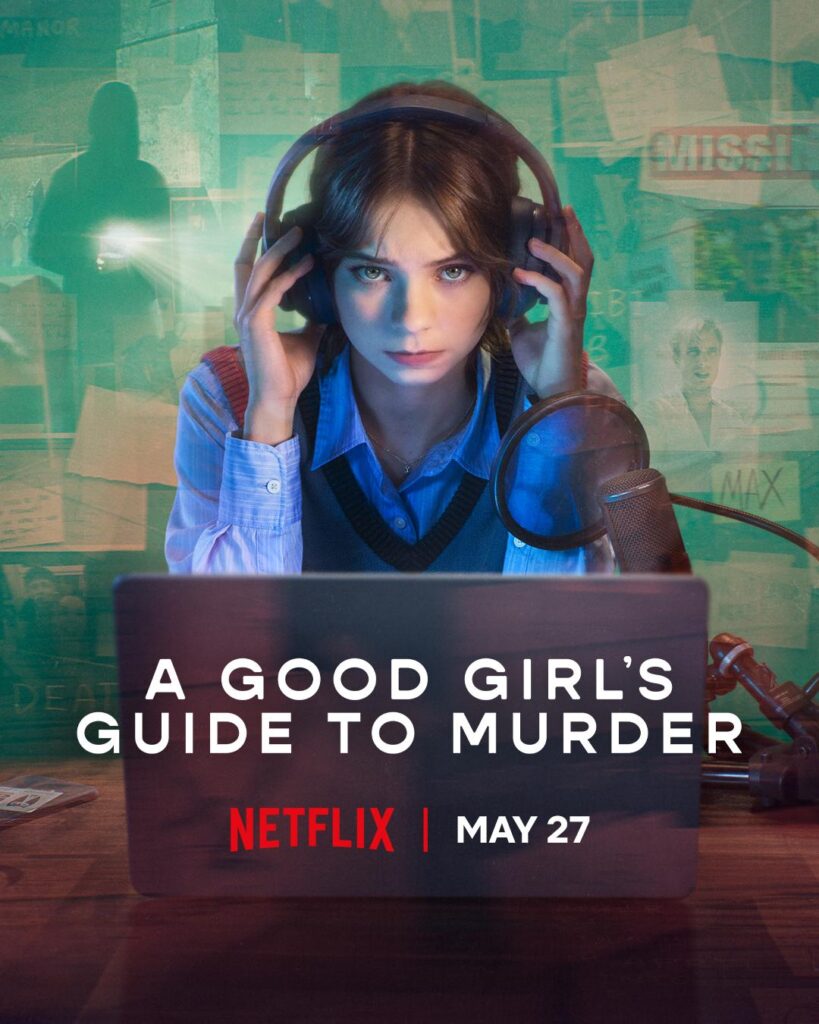
I enjoyed the first series of A Good Girl’s Guide to Murder on Netflix back in 2024 (you can read my review here). A Good Girl’s Guide to Murder is a mystery thriller series based on Holly Jackson’s bestselling Young Adult novels. The series follows high school student Pip Fitz-Amobi (Emma Myers) as she investigates a string of dark mysteries–think a modern Nancy Drew.
A Good Girl’s Guide to Murder, Season 2 with its 6 episodes covers the events of Holly Jackson’s second book, Good Girl, Bad Blood, which follows the mysterious disappearance of Jamie Reynolds right before a high-profile trial.
If you’re a fan of Veronica Mars, you’ll like A Good Girl’s Guide to Murder. GRADE: Incomplete but trending towards a B.

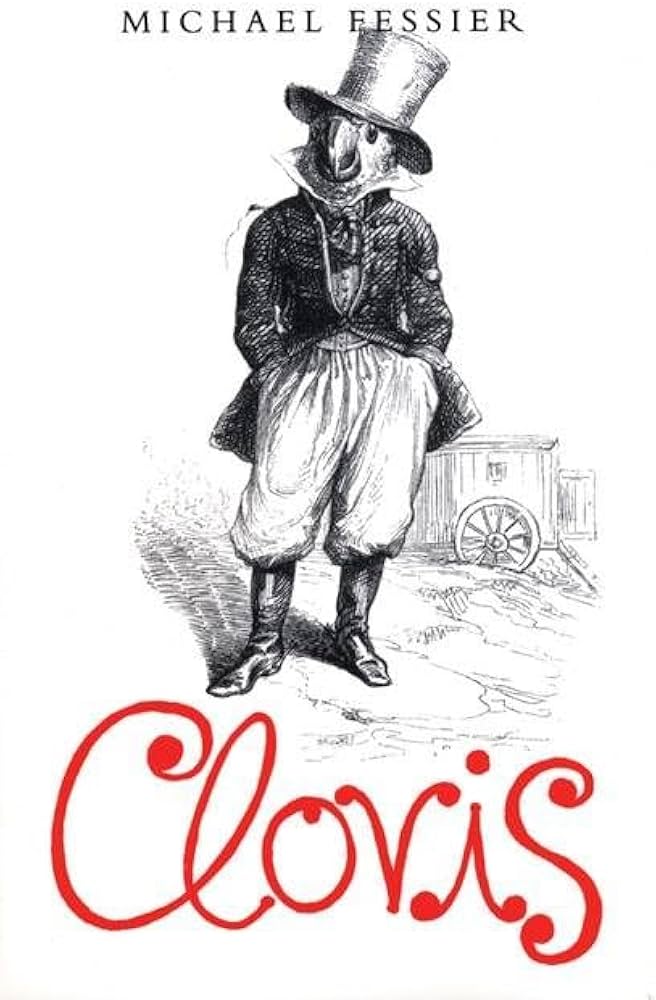
Somehow I missed Fully Dressed and In His Right Mind (1935) when Stark House published it back in 2022. The author, Michael Fessier (1905-1988), was best known as screenwriter, with credits including the Fred Astaire/Rita Hayworth musical You’ll Never Get Rich and even an episode of Gilligan’s Island. In the ’30s and ’40s Fessier worked in Hollywood, writing a couple of dozen produced screenplays, then he moved to New York and wrote for television, with his final contributions being six episodes for The High Chaparral, ending in 1969. He wrote screenplays for Bonanza, The Thin Man, and Alfred Hitchcock Presents. Fessier’s short story “That What Happened to Me,” has appeared in over 50 anthologies.
Jerry House–a reviewer seldom at a loss for words–admitted he didn’t know what to make of Fully Dressed and In HIs Right Mind and joined most of the book reviewers who found themselves with similar opinions (you can read Jerry’s brilliant review here).
Briefly, the short novel concerns a young man named Johnny Price who is drifting through Life because his father left him some bonds which makes work unnecessary. Price witnesses a little old man shoot publisher Albert E. Bagley to death. The little old man pops up several times in Fully Dressed and In His Right Mind with evil intent. Price also meets a nude woman named Trelia who swims in Golden Gate Park. Price is fascinated with her.
Other characters include Dorgan, a genius painter who destroys his paintings when he finishes them, George, a bartender who feels threatened simply because the old man looks at him with his green eyes, and Pete, the superintendent at Johnny’s apartment building.
Some critics have called Fully Dressed and In His Right Mind surreal. I can’t argue with that. It’s also a story about Good (Trelia) and Evil (little old man). Most critics don’t know what to make of Fully Dressed and In His Right Mind. I’m joining them. If you’re in the mood for a quirky, unusual story, this is it. GRADE: B (for baffling)
Michael Fessier wrote a second novel, Clovis (1948). Clovis is a parrot with human intelligence. Clovis can speak–and in fact knows several languages. But Clovis chooses his safe home–he claims he’s bored–and encounters a world where he’s constantly threatened.
Rick Horton of the wonderful blog STRANGE AT ECBATAN wrote this aboutClovis: “The book is out and out satire, though mostly somewhat gentle (except in the treatment of the evangelist.) And it is often very funny. The romance plot with Thad and the heiress, and the drinking cure, are almost Wodehousian. Clovis’ cynical utterances are quite amusing as well. The murder plot is very light-hearted, and doesn’t come off quite as amusing as the rest of the book. The book doesn’t outstay its welcome — though it probably reaches the limits of its welcome! Fun stuff on the whole, and I have to say I’m glad I read it.” So am I! You can read Horton’s entire review here. GRADE: B (for buffoonery)
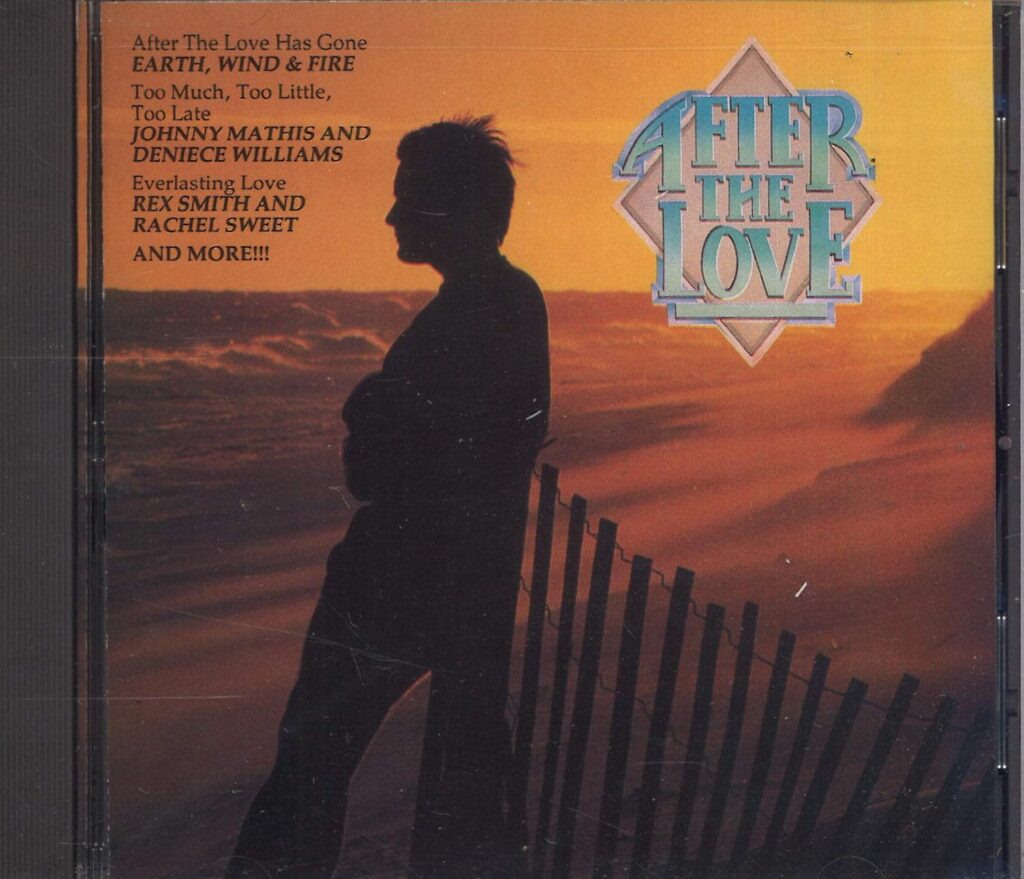
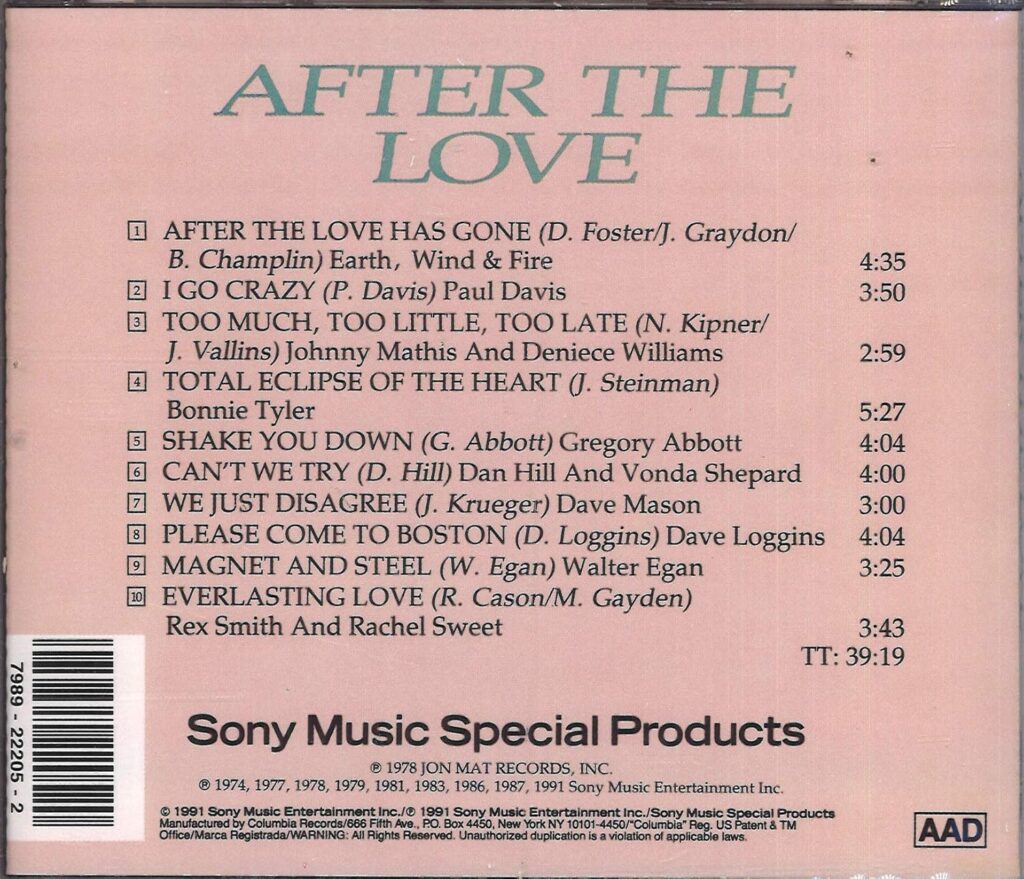
“I’m glad you picked up on my telepathy” sings Gregory Abbott on his “Shake You Down.” If you’re looking for a mellow compilation music CD, you’d be hard pressed to find a more satisfying one than 1991’s After the Love.
Dave Mason recently died, but his “We Just Disagree” continues to be played regularly on our local Oldies radio station. Dan Hill and Vonda Shepard’s “Can’t We Try” doesn’t get enough airplay. Dave Loggins’ “Please Come to Boston” still strikes a chord. And who can resist “After the Love Has Gone” by Earth, Wind & Fire?
Yes, this music CD is only 39 minutes long, but it’s a satisfying half hour of Easy Listening songs. Do you remember these songs? Any favorites here? GRADE: B+
David G. Hartwell and Kathryn Cramer’s The Space Opera Renaissance, a 941 page mammoth volume from 2006, is divided into six sections. I’ve already reviewed Section 1 (you can read my review here) and you can read my review of Section 2 here and Section 3 here and Section 4 here.
My favorite story in Section 5 is Michael Moorcock’s “Lost Sorceress of the Silent Citadel.” Moorcock wrote this story as a homage to Leigh Brackett, but as you’ll see in the next quote, he honors a lot of other Space Opera writers, too:
“They said only four men in the solar system could ever handle that weapon. One was the legendary Northwest Smith, the second was Eric John Stark, now far off-system. The third was Dumarest of Terra, and the fourth was Captain John MacShard. Anyone else trying to fire a Bunning died unpleasantly.” (p. 803)
I’m a fan of Robert Reed and his million year old giant starship. Gregory Benford shows off his Space Opera chops in “A Women in the Well.” I’m not sure Ursula K. Le Guin’s “The Shoes’ Story” is true Space Opera…but that’s what Hartwell and Cramer decided.
As you read the late 1990s selections, you’ll see the stories diverging more and more. GRADE: B+
V. MIXED SIGNALS/MIXED CATAGORIES (TO THE LATE 1990s)
589 • A Worm in the Well • (1995) • novelette by Gregory Benford
* 607 • The Survivor • [Man-Kzin Wars] • (1991) • novella by Donald Kingsbury
* 715 • Fool’s Errand • (1993) • shortstory by Sarah Zettel
* 727 • The Shobies’ Story • [Hainish] • (1990) • novelette by Ursula K. Le Guin
* 745 • The Remoras • [Marrow] • (1994) • novelette by Robert Reed
* 768 • Recording Angel • (1995) • novelette by Paul J. McAuley
* 788 • The Great Game • (2003) • shortstory by Stephen Baxter
* 802 • Lost Sorceress of the Silent Citadel • (2002) • novelette by Michael Moorcock
* 823 • Space Opera • (1997) • shortstory by Michael Kandel
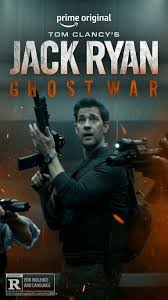
Amazon’s “Jack Ryan” series (2018-2023) seems to have morphed into a franchise of occasional stand-alone movies like Tom Clancy’s Jack Ryan Ghost War. John Krasinski, joins the role previously played by Alec Baldwin, Harrison Ford, and Ben Affleck.
Krasinski plays Jack Ryan as a reluctant former CIA analyst who gets sucked into doing a “favor” for his old friend and boss, James Greer (Wendell Pierce, who is also a Police Captain on Elsbeth) who is now CIA Deputed Director, and by his former colleague, Mike November (Michael Kelly), a security contractor who was once a CIA station chief.
What seems like a simple “drop” with Jack Ryan making contact with a former MI6 agent named Nigel Cooke (Douglas Hodge) in Dubai one night turns into a disaster when Ryan receives a super-important package that’s supposed to end up on Greer’s desk but poor Nigel gets a sniper’s bullet.
Ryan and November are taken into custody by MI-6 agent Emma Marlow (Sienna Miller), a tough but attractive love interest for Ryan. Marlow and Ryan figure out their adversary is former MI6 agent named Liam Crown (actor and jazz musician Max Beesley) who wants to continue the Ghost Wars that were politically terminated a couple decades ago.
Crown and Greer have an association from those post 9/11 years when they created a super-secret Black Ops unit called Project Starling to hunt down and kill terrorists.
I liked the fiery conclusion when Ryan, Marlow, and November take on Crown’s forces in a blazing shoot-out. Mildly entertaining. GRADE: B-
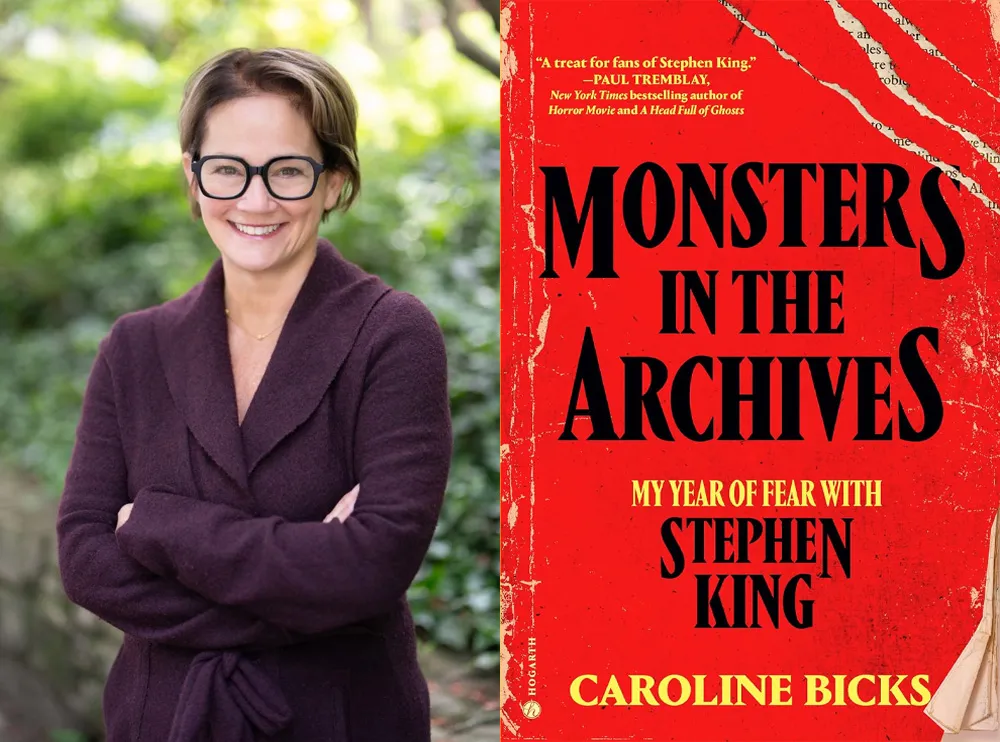
“In 2017, I moved from Boston to become the inaugural Stephen E. King Chair in Literature at the University of Maine in Orono. The Harold Alfond Foundation had endowed the position, naming it in honor of the English department’s most famous alum. I as hired for my expertise as a Shakespeare scholar, but I was thrilled to be associated with one of my favorite writers–even if I wasn’t going to be meeting him.” (p. 3)
“The Kings agreed to let me spend my sabbatical expiring their personal archives. Thanks to their generosity and trust, I was the first person outside their family and Foundation to be granted this kind of extended access to these newly collected materials.” (p. 15)
“King ended up paying Kubrick $1.5 million for the screen rights so that he could write his own adaptation [of The Shining] which came out as a TV miniseries in 1997. According to the director, Mick Garris, King also had to sign away the right to publicize his negative opinions of Kubrick’s film for a period of time.” (p. 67)
“…New American Library had purchased the paperback rights [for Carrie] for $400,000. The hardcover came out in April 1974, followed by the NAL/Signet edition a year later, which sold over a million copies. When De Palma’s film came out, that under jumped to four million, and King became a household name. As he [King] says, ‘the movie made he book and the book made me.'” (p. 205)
If you are a Stephen King fan, you’ll love Monsters in the Archives (2026). Caroline Bicks shares her research into the early Stephen King books by providing examples of King’s early drafts. For example, Bicks points out that Carrie is one of the most banned books in the United States. The violence and Carrie’s mother’s religious beliefs trigger groups to have Carrie removed from libraries. Carrie almost didn’t happen. King, frustrated by his problems with Carrie tossed the manuscript into the trash can. King’s wife, Tabitha, rescued it and assured her husband that she would help him with writing about a teen-age girl. The rest is history!
Bicks’s analysis of Night Shift‘s 20 stories reveals plenty of development in King’s writing style. ‘Salem’s Lot was initially titled Jerusalem’s Lot but since the editor’s thought that Jerusalem’s Lot sounded too religious, the title got changed to ‘Salem’s Lot.
There’s a wealth of information about the early Stephen King books in Monsters in the Archives. Are you a Stephen King fam? GRADE: A
TABLE OF CONTENTS:
ILLUSTRATIONS — ix
INTRODUCTION: No Place Like Home — 3
Chapter One: Pet Seminary — 19
Chapter Two: The Shining — 61
Chapter Three: Night Shift — 104
Chapter Five: Carrie — 201
EPILOGUE: Home Again — 247
ACKNOWLEGEMENTS — 253
NOTES — 259
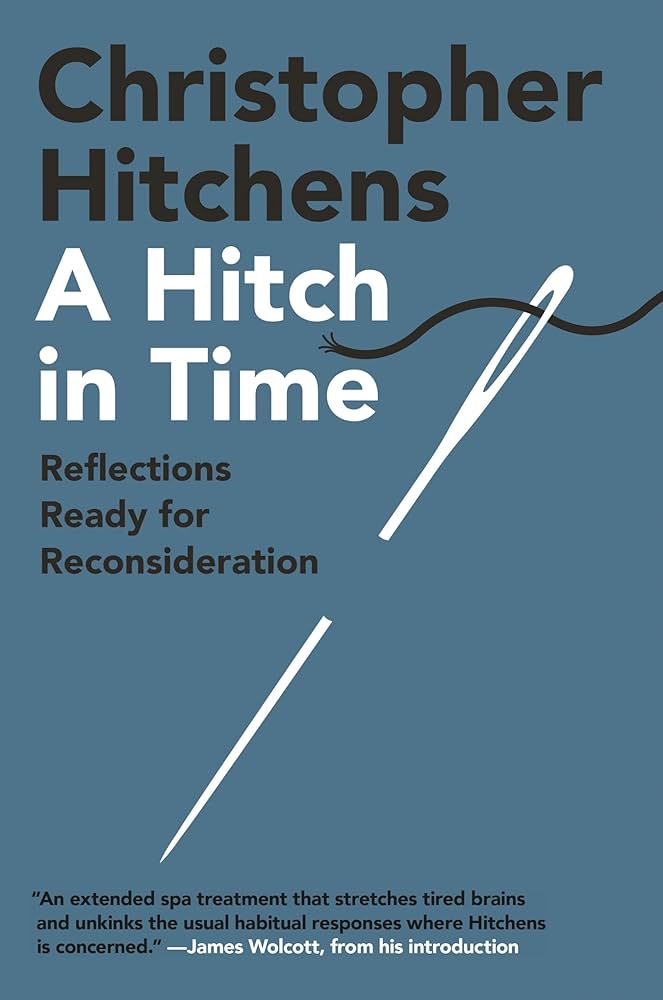
Christopher Hitchens died from complications related to oesophageal cancer in December 2011, at the age of 62. He was a complicated man who shifted his political positions Left to Right and back again. What drew me to Hitchens was his brilliant writing–even though I disagreed with some of it. Hitchens wrote snarky reviews and did not suffer fools gladly.
A Hitch in Time collects random book reviews, letter battles with his adversaries, and essays not in other Hitchens books. Some of these pieces are dated, but some are still as sparkling after decades. I enjoyed reading about Tom Wolfe, P. G. Wodehouse, Salman Rushdie, Spanking, Bill Clinton, and Gore Vidal.
My favorite essay in A Hitch in Time is “Moderation or Death: On Isaiah Berlin.” Isaiah Berlin advised Governments and International Corporations for decades. He was a controversial figure because he was independent and pragmatic.
If you haven’t read any of Christopher Hitchens books, check the links below the Table of Contents for my reviews of his work. You might not agree with Hitchens, but you’ll marvel at his incisive writing style. GRADE: A
TABLE OF CONTENTS: