Diane and I traveled to Sheas Performing Arts Center in Buffalo to see Back to the Future: The Musical. As you recall, the 1985 film Back to the Future–directed by Robert Zemeckis–was a hit movie starring Michael J. Fox, Christopher Lloyd, Lea Thompson, Crispin Glover, and Thomas F. Wilson. Michael J. Fox plays teenager Marty McFly who accidentally finds himself sent back in Time to 1955.
The humor of the movie–with Marty interacting with his parents when they were teenagers–still resonates in the musical version. Of course, the real star of the musical is the cool DeLorean car/Time Machine.
My main complaint about Back to the Future: The Musical is…the music is bland and banal. The show includes songs featured in the film: “The Power of Love“, “Earth Angel“, “Johnny B. Goode” and “Back in Time“. The rest of the music is forgettable. Are you a fan of Back to the Future? GRADE: B- (but the DeLorean gets an “A”!)
Playing With Reality is a revealing look at the hidden role that games have played in human development for centuries. Kelly Clancy provides a wide-ranging intellectual history that reveals how important games have been to human progress, and what’s at stake when we forget what games we’re really playing.
Clancy claims we play games to learn about the world, to understand our minds and the minds of others, and to make predictions about the future. Games are an essential aspect of humanity and a powerful tool for modeling reality. They’re also a lot of fun.
But, at the same time, games can be dangerous, especially when we mistake the model worlds of games for reality itself. The recent news stories about people falling in love with their Artificial Intelligence chat-bots is a prime example.
Playing With Reality explores the history of games since the Enlightenment. I enjoyed Clancy’s ability to weave a path through military theory, political science, evolutionary biology, the development of computers and AI, cutting-edge neuroscience, and cognitive psychology. She covers a lot of ground! But the details are enthralling!
It helps that Kelly Clancy is a neuroscientist and physicist. Her convincing analysis shows how intertwined games have been with the arc of history. War games shaped the outcomes of real wars in nineteenth and twentieth century Europe. Game theory warped our understanding of human behavior and brought us to the brink of annihilation—yet still underlies basic assumptions in economics, politics, and technology design. Games are more than just a tool…they can turn into weapons, too.
I used games to teach my students about using computers when I was a College Professor. Now, with powerful AI programs, games are being designed that could determine the shape of our society and future of democracy. In this astonishing book, Kelly Clancy makes a strong argument that the human fascination with games is the key to understanding our nature and our actions. What games do you play? GRADE: A
TABLE OF CONTENTS:
Part I: How to Know the Unknown
Chapter 1: The Play of Creation — 3
Chapter 2: How Heaven Works — 16
Chapter 3: Dice Playing God — 41
Part II: Naming the Game
Chapter 4: Kriegsspiel, the Science of War — 71
Chapter 5: Rational Fools — 85
Chapter 6: The Clothes Have No Emperor — 112
Chapter 7: A Map That Warps the Territory — 137
Part III: Building Better Players
Chapter 8: Chess, the Drosophila of Intelligence — 107
Chapter 9: The End of Evolution — 177
Chapter 10: Nous ex Machina — 200
Chapter 11: Cogito Ergo Zero Sum — 222
Part IV: Building Better Games
Chapter 12: SimCity — 249
Chapter 13: Moral Geometry: Playing Utopia — 257
Chapter 14: Mechanism Design: Building Games Where Everyone Wins — 278
I enjoyed Robert Jackson Bennett’s first Ana and Din Mystery, A Tainted Cup (2024) so I was looking forward to the sequel, A Drop of Corruption (2025). Ana Dolabra (a genius who frequently wears a blindfold to suppress sensations) and her hand-picked assistant, hunky Dinios Kol, travel to the canton of Yarrowdale to investigate the mysterious death of an Imperial Treasury official.
Yarrowdale is best known for its island that houses The Shroud, a site for the processing of the gigantic Leviathan bodies. Leviathans occasionally attack cities of the Empire and cause widespread death and destruction. But the select few at The Shroud harvest the bodies of the Leviathans to produce incredible reagents that can cure diseases and boost life expectancy.
Ana and Din’s investigation link the murder of the Empire official with the secrets hidden in The Shroud. The implications lead Ana to believe the murderer intends to destroy the Empire.
If you’re in the mood for a mystery with long tentacles and a mind-boggling plot, A Drop of Corruption presents the perfect Summer Beach Read. GRADE: B+
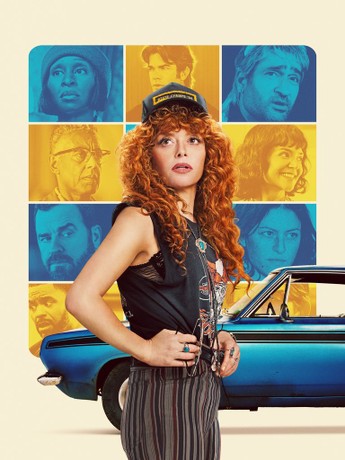
Human Lie Detector Charlie Cale (Natasha Lyonne) returns for a second season of being on the run from Bad Guys. No matter where she goes, Charlie stumbles onto a murder and feels compelled to solve it. Having the ability to know when people are lying is a Big Advantage!
Season 2 offers 12 episodes on Peacock, with new episodes dropping every Thursday, featuring a variety of guest stars. The first episode kicks off with a wonderful installment directed by Rian Johnson and written by Laura Deeley. “The Game Is a Foot” features Cynthia Erivo playing five sisters, one of whom killed their mother (Jasmine Guy). The five sisters starred in a TV series–Kid Cop: Nights–as child actresses. But their mother stole their residuals which amounted to millions of dollars. The sisters are struggling economically, especially Amber–the caretaker of the fatally ill mother.
Cynthia Erivo plays all five sisters with their unique personalities. I really liked the assortment of different hairstyles and accents each sister had. And, of course, Natasha Lyonne detects the lies that swirl around the death of the mother. If you’re looking for a contemporary Columbo-like mystery program with a satisfying blend of humor and cleverness, I highly recommend Poker Face. GRADE: A
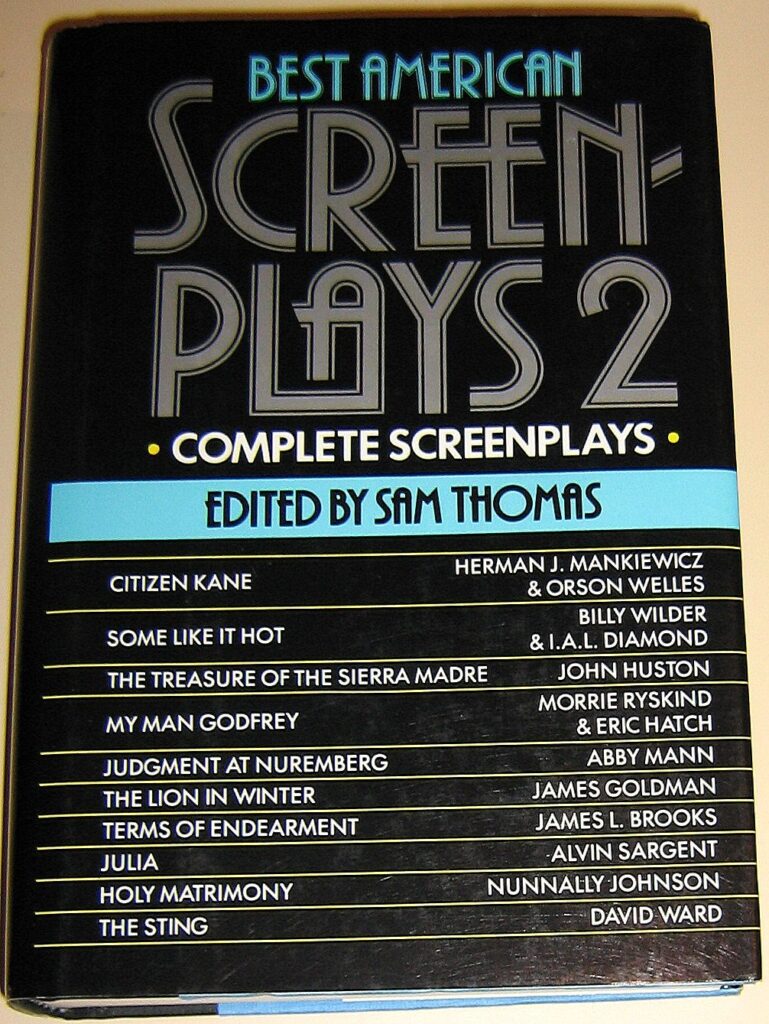
A week ago I reviewed Best American Screenplays: First Series. You can read my review here. I ordered the next book in the series, also edited by Sam Thomas, and read the screenplays.
My favorite screenplay in this volume is James L. Brooks’s Terms of Endearment, a movie that I cannot watch without crying…no matter how many times I’ve seen it. Also very powerful is James Goldman’s The Lion in Winter.
The most fun reading is Billy Wilder and I.A. L. Diamond’s Some Like It Hot. And, I’m fond of David Ward’s The Sting, too.
How many of these movies have you seen? Any favorites here? GRADE: A
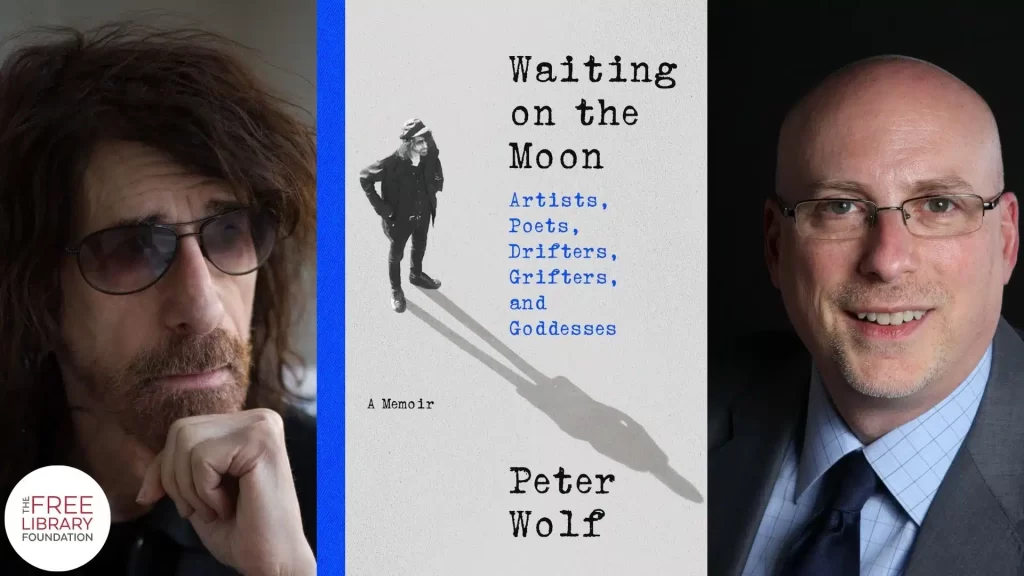
Before Peter Wolf became the lead singer for the J. Geils Band, he performed in New York City, rubbing shoulders with other musicians just starting their careers.
“Bob was always playing and trading songs with other musicians, and this exposed him to a wide array of influences, including Appalachian mountain music, Elizabethan ballads, and the songs of Hank Williams, Hank Snow, and Blind Lemon Jefferson. I came to learn that this voracious curiosity was typical of Bob.” (p. 45)
Yes, Peter Wolf hung out with Bob Dylan. And Van Morrison, David Lynch, Muddy Waters, Andy Warhol, and dozens of other artists who would hit the Big Time.
Peter Wolf and The J. Geils Band also hit the Big Time for a short period with a couple of hits. But as Wolf writes: “Success, if it does come to a band, often comes with its own special price.” (p. 284). At the height of their success, the J. Geils Band broke up.
“Frank Barsalona, our agent, took me out for a dinner after his final meeting with the other band members. In disbelief, he said, ‘After al these years, the band finally made it. It’s really quite unbelievable. I’ve dealt with the craziest of crazies; the drugs, the girlfriends, the managers–nothing even comes close to this. Nothing as stupid, as senseless, and as wasteful in what these guys are insisting on doing. So, Peter, let’s start thinking about your solo career.'” (p. 285)
And the result: “Shortly after the split, I went on to release an album called Lights Out which rose to the top ten on the Billboard charts. All the songs on that album were the very songs the band had rejected. The J. Geils Band then released You’re Gettin’ Even While I’m Gettin’ Old. As a result of poor sales, the band was dropped from the record company, and the ‘new’ J. Geils Band came to an ignominious end.” (p. 285)
I learned a lot about the era where Peter Wolf began his career with so many other musicians and performers. The dynamics of being in a band and trying to make it in a competitive music industry was also fascinating. Opening for The Rolling Stones, hanging out with Sly stone, meeting Alfred Hitchcock and Tennessee Williams, and falling in love with Faye Dunaway is just part of Peter Wolf’s amazing life. GRADE: A (for both the book and the CD)
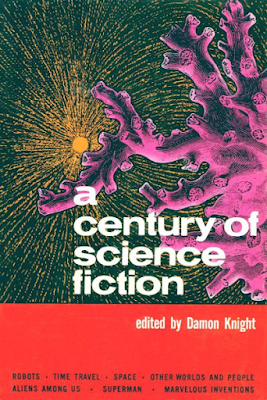
Last week I reviewed Damon Knight’s One Hundred Years of Science Fiction (you can read my review here). I quibbled about the lack of introductory material about the stories and their authors. Well, A Century of Science Fiction rectifies that issue. Knight provides detail about the stories and the writers this time around.
Publishers in the 1960s seem to be in the market for anthologies that presented an historical approach to Science Fiction. Of the two Damon Knight edited, I prefer A Century of Science Fiction.
Using a topical approach–Robots, Time Travel, etc.–Knight chose some classics like H. G. Wells’ The Time Machine (an excerpt) and more contemporary works like Keith Laumer’s Worlds of the Imperium (also an excerpt). Of the time travel stories, I really enjoyed Mack Reynolds’ snarky “Business As Usual.”
Where One Hundred Years of Science Fiction lacked some Big Names, A Century of Science Fiction includes Edmond Hamilton, Robert A. Heinlein, and Arthur C. Clarke.
Before Frank Herbert became a Big Name SF Writer with his DUNE series, he was a pretty good science fiction short story writer. “Cease Fire” is Herbert’s take on War and how to stop it.
A Century of Science Fiction is a first-rate SF anthology. Highly recommended! GRADE: A
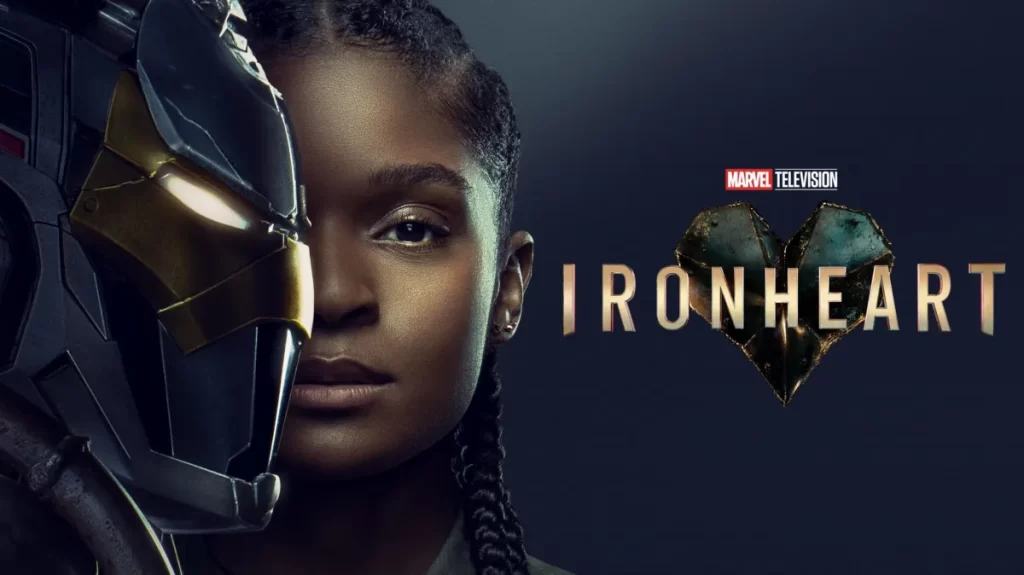
While the first episodes of Ironheart are due to show up on Disney+ today, MARVEL fandom already hates it. “Iron Man retread with a Black Girl Genius” is just one of the takes about this new series of six episodes. Some fans are claiming Disney is already expecting the Ironheart to fare poorly, and decided dropping all the episodes within two weeks to keep audiences engaged.
Three episodes will drop today. Here’s the Official Trailer to give you a taste of what Disney+ hopes is a hit:
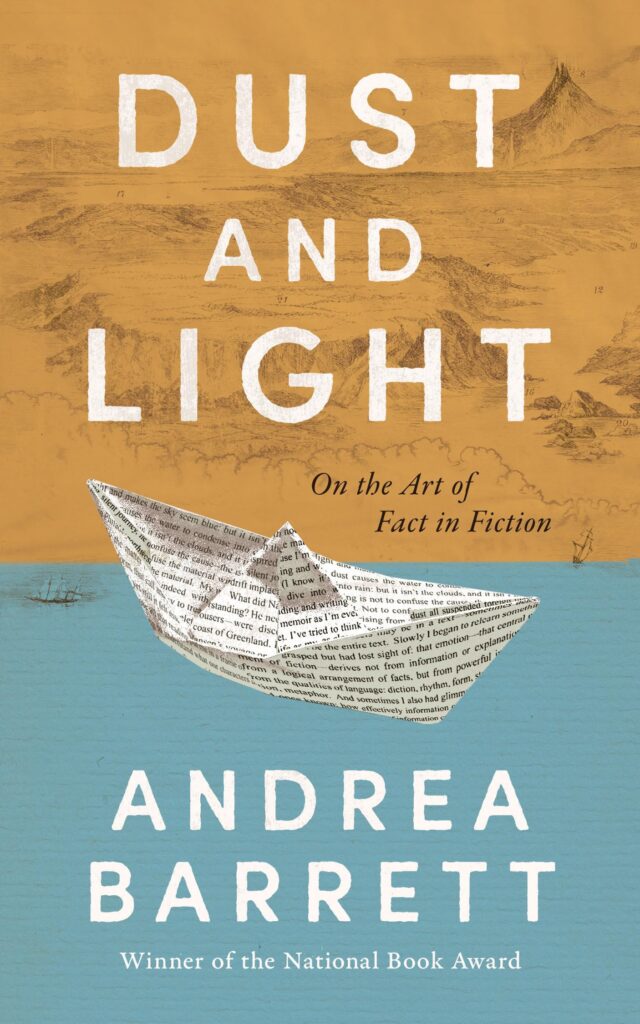
Andrea Barrett won a National Book Award for Ship Fever. Barrett has hit the Best Sellers List with Voyage of the Narwhal, Servants of the Map, and Natural History. In her new nonfiction book, Dust and Light: On the Art of Fact in Fiction, Barrett explores various means of injecting historical facts into novels.
One of my quibbles with many novels is that some authors do information dumps. The action of the novel is interrupted by a page or two (or more!) of fact after fact after fact. I find that trend annoying because it stalls the momentum of the novel and frequently bogs down the story.
Barrett’s techniques of weaving facts into fiction with grace and precision without grinding the story to a halt are both practical and clever. If you’re a fan of historical fiction, you’ll enjoy Barrett’s methods to keep novels lively and educational. GRADE: A
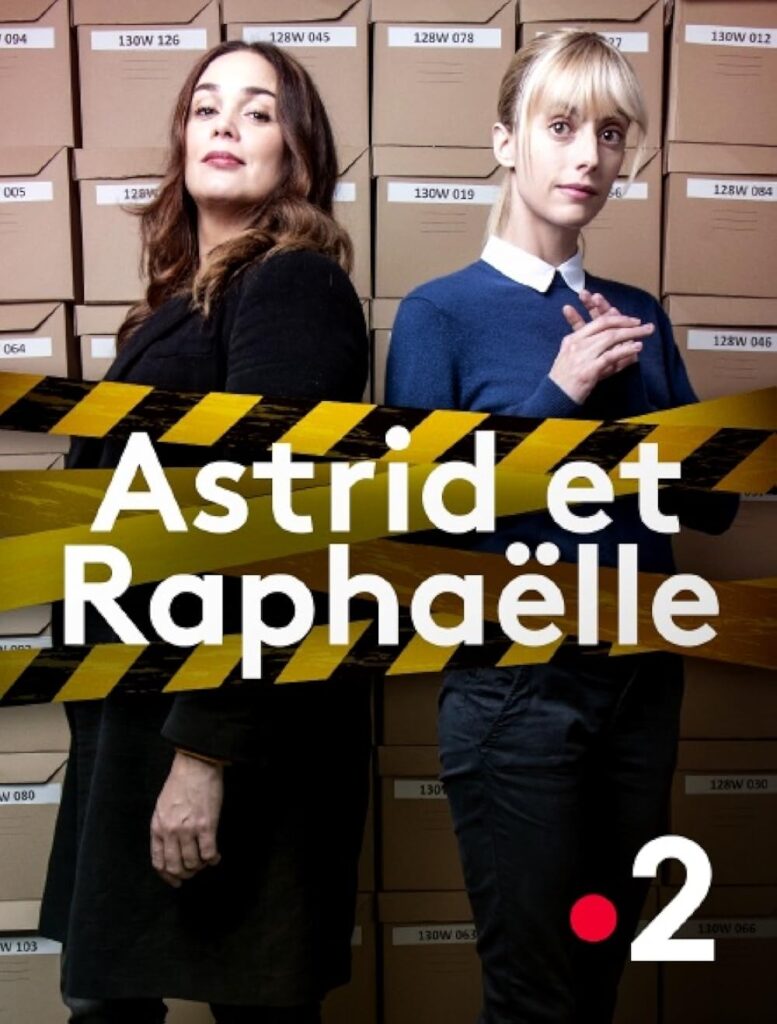
Diane and I watched Patience on PBS and enjoyed it (you can read my review here). Jeff Meyerson suggested that we watch the original French series, Astrid et Raphaëlle. I found it on AMAZON PRIME VIDEO and watched the first episode.
Like Patience, Astrid et Raphaelle focuses on Astrid Nielsen (Sara Mortensen), a woman on the Autism spectrum, who works in the police records department. Astrid is drawn into an active investigation by a frustrated detective, Raphaëlle Coste (Lola Dewaere), who is impressed by Astrid’s ability to see patterns in crimes that no one else does.
The two dissimilar characters develop a partnership that results in solving cases together. Astrid discovers key details that the police investigators miss that Costa can use to identify the perpetrator.
Jeff is right that Astrid et Raphaëlle is better than Patience because of the detail invested in the characters. And Paris has a lot more eye candy than York. I’m going to end up watch both series… GRADE: Incomplete, but trending towards an A