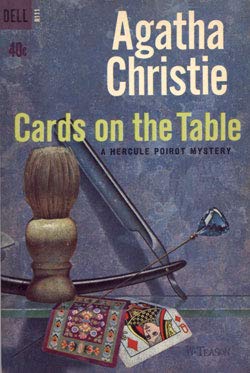
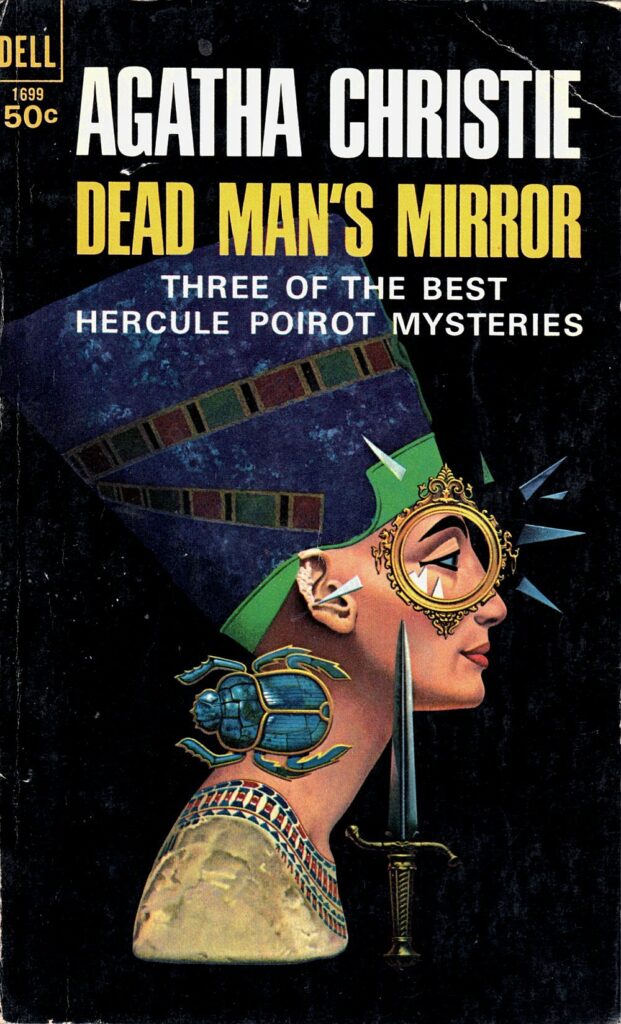
I started reading Agatha Christie mysteries in the mid-1960s. I was in High School with boring Study Halls so I started bringing books to read during those times. Agatha Christie paperbacks showed up on spinner racks (remember them?) everywhere so there were plenty of her titles to choose from. I gravitated toward the DELL paperbacks that had William Teason’s artwork on the covers. Teason would take clues from the books and use them in his clever covers. I binged on Christie mysteries for a year or so. Then I discovered Carter Brown and plenty of paperback Private Eye novels and moved on.
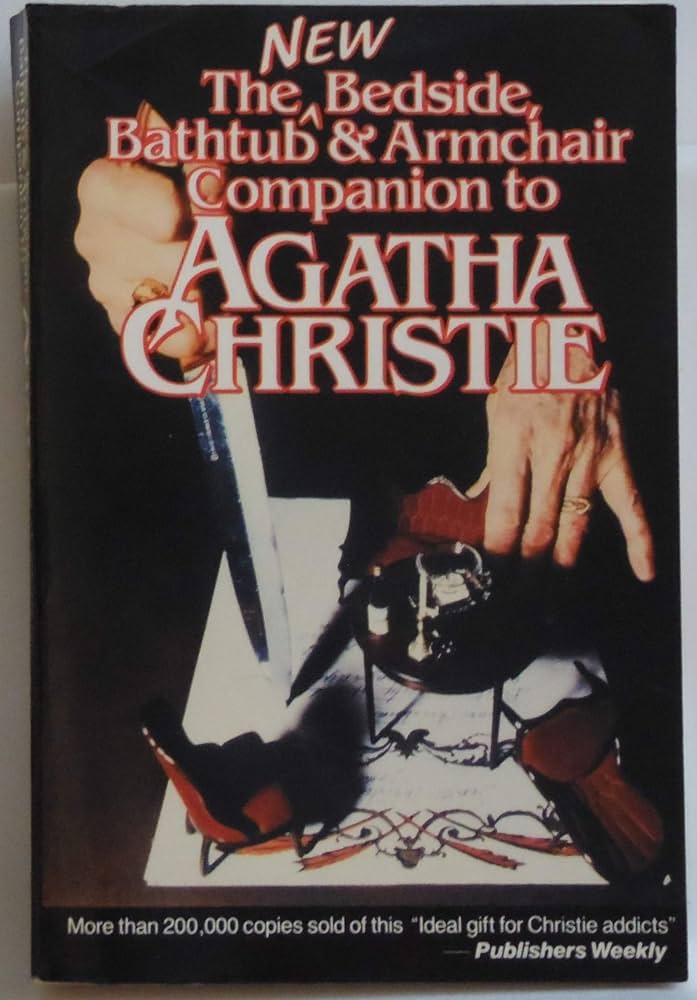
But my fondness for Christie mysteries was reignited in 1979 when the first edition of The Bedside, Bathtub & Armchair Companion to Agatha Christie was published. In 1986, The NEW Bedside, Bathtub & Armchair Companion to Agatha Christie (aka, The Second Edition) showed up. That’s the volume I’m reviewing here.
The NEW Bedside, Bathtub & Armchair Companion to Agatha Christie is a browser’s delight. There are synopsis’s of all the novels, plays, and short stories (without spoilers!). There’s a Christie mystery map, cross-word puzzles, poems, and fan appreciation essays.
The features new to this edition are:
Edward D. Hoch on Christie’s short fiction
Emma Lathen on Jessica Fletcher (a liberated Miss Marple?)
Filmography and video listings…that are obsolete.
If you’re an Agatha Christie fan, you probably own The NEW Bedside, Bathtub & Armchair Companion to Agatha Christie. But, if you don’t, inexpensive copies are available on-line. There are hours of fun in these pages! Are you a Christie fan? Do you have a favorite Christie mystery? GRADE: A
TABLE OF CONTENTS:
Acknowledgments — xi
A portrait of Agatha Christie / Julie Symons –xii
Preface — xvii
A publishing phenomenon / Patricia Maida –1
A Christie fan congress “I get that familiar tingle when I see her books” — 2
A fan letter / Lillian Carter — 5
The mysterious affair at Styles / Dick Riley — 6
The secret adversary / Gerald M. Kline — 9
Murder on the links / Norma Siebenheller — 12
The man in the brown suit / Janice Curry — 14
Poirot investigates / Cindy Loose — 16
A nice cuppa : the english tea ritual / Joanna Milton –18
I wouldn’t go in if I were you : rooms to avoid in an English country house / Dick Riley — 22
The secret of chimneys / Peter J. Fitzpatrick — 24
The murder of Roger Ackroyd / Norma Siebenheller — 27
The big four / Jerry Speir — 30
The mystery of the blue train / Jim Mele — 33
The seven dials mystery / Lisa Merrill — 36
A little diversion : a Christie crossword / Dale G. Copps — 38
Partners in crime / Norma Siebenheller — 39
Murder at the vicarage / Jack Murphy — 42
The mysterious Mr. Quin / Gaila Perkins — 46
Murder at Hazelmoor / Anita McAllister — 48
Peril at end house / Russ Kane — 50
The cruder methods : knives, guns, and a concerto for blunt instruments / Dick Riley — 52
A macabre tea party / Joanna Milton — 55
The tuesday club murders / Robert Smither –59
The hound of death / Pam McAllister — 61
Thirteen at dinner / Cynthia A. Read — 63
The boomerang clue / Jan Oxenburg — 66
Black coffee / Granville Burgess — 69
How to trace your family mystery if you dare — 71
Crime, class, and country in Christie’s mystery / Sue Ellen York and Pam McAllister — 73
Murder on the Orient Express / Cindy Loose — 78
Mr. Parker Pyne, detective / Richard Regis — 81
Murder in three acts / Gerald M. Kline — 83
Death in the air / Richard Regis — 86
Poirot makes the big time / Michael Tennenbaum — 88
The “what’s your name” word find / Dale G. Copps — 91
The A.B.C. murders / Phil Clendenen — 92
Murder in Mesopotamia / Jack Murphy — 94
Cards on the table / Helene Von Rosenstiel — 96
Poirot loses a client / Peter J. Fitzpatrick — 98
Christiemovie : an annotated filmography / Michael Tennenbaum — 101
The condemned ate a hearty meal : some favorite English dishes / Joanna Milton — 108
Death on the Nile / Libby Bassett — 112
Dead man’s mirror / Joanna Sturman —115
Appointment with death / Peter J. Fitzpatrick — 118
Murder for Christmas / Joan Gerstel — 120
Easy to kill / Jerry Kill / Jerry Keucher — 122
“You need look no farther, Inspector-three stands your criminal” or, how did the British police get by without Poirot and Marple? / Elizabeth Leese –124
Life on the Nile / Michael Tennenbaum — 126
Ten little indians / Maureen Stoddard — 129
Regatta mystery / Dick Riley — 132
Sad Cypress / Anita McAllister — 134
The patriotic murders / Norma Siebenheller — 136
Evil under the sun / Brian Haugh — 138
N or M? / Robert Smither — 139
The romantic Englishwoman : Agatha Christie as Mary Weatmacott / Patricia Maida and Nick Spornick — 141
Ten little who? / Pam McAllister — 144
And then there were three / Michael Tennenbaum — 146
The body in the library / Helene Von Rosenstiel — 149
The moving finger / Paul and Kadey Kimpel — 151
Murder in retrospect / Cindy Loose — 153
Towards zero / Jan Oxenberg — 155
Death comes as the end / Richard Regis — 157
All my trails : scenes from the Old Bailey / Elizabeth Leese — 159
The poison pen : a guide to Agatha’s toxic agents / Richard Regis –162
Remembered death / Helene Kendler — 166
Murder after hours / Jerry Keucher — 168
The labors of Hercules / Joanna Milton — 170
There is a tide / Sue Ellen York — 173
Witness for the prosecution / Granville Burgess — 175
The making of witness for the prosecution / Michael Tennenbaum — 177
A guide to murders fair & foul : the Christie mystery map of southern England — 180
Dartmoor-the deadly heath / Pam McAllister — 182
Crooked house / Regina Sackmary — 186
The mousetrap and other stories / Deborah J. Pope — 188
A murder is announced / Brian Haugh –191
They came to Baghdad / Edwin A. Rollins — 193
The under dog and other stories / John Sturman — 195
The mousetrap double-crostic / Dale G. Copps — 198
The quotable Christie — 200
The selling of Christie / Michael Tennenbaum — 202
It’s not a play, it’s an institution : the mousetrap / Elizabeth Leese — 203
Mrs. McGinty’s dead / Paul and Kadey Kimpel — 204
Murder with mirrors / Mark Fischweicher — 206
A pocket full of rye / Anita Greenfield — 208
Funerals are fatal / Joan Daniel — 210
Spider’s web / Jan Oxenberg — 212
Hercule Poirot : the man and the myth / Jerry Keucher –214
Poirot and I : a Hungarian-born fan tells why he identifies with Poirot — 219
So many steps to death / Marcia Clendenen — 222
Hickory, dickory, death / Jean Fiedler — 223
Dead man’s folly / Beth Simon –225
What Mrs. McGillicuddy saw! / Jan Oxenberg — 227
Unexpected guest / Granville Burgess – 229
They gave their lives for art ; a study of the Christie victims / Janice Curry — 231
The Miss Marple double-crostic / Dale G. Copps — 234
Ordeal by innocence / Norma Siebenheller — 236
Verdict / Jan Oxenberg — 238
Cat among the pigeons / Regina Sackmary — 240
The adventure of the Christmas pudding / Pam McAllister — 242
Double sin and other stories / Richard Regis — 244
The marvelous Miss Marple a profile / Norma Siebenheller — 245
Margaret Rutherford : the universal aunt / Michael Tennenbaum — 249
The pale horse / Ruth Farmer — 252
The mirror crack’d / Pam McAllister — 254
Rule of three / Granville Burgess — 256
The clocks / Deborah J. pope — 259
The womanly arts: gossip and intuition as detective tools / Jan Oxenberg — 261
A Caribbean mystery / Ann Cohen — 264
At Bertram’s hotel / Peter J. Fitzpatrick — 266
Third girl / Edwin A. Rollins — 269
Endless night / Richard Regis — 271
The Agatha Christie title crossword / Dale G. Copps — 273
Ariadne Oliver : Dame Agatha’s alter ego / Beth Simon — 274
Out of the top drawer or, how they dressed / John Sturman — 278
By the pricking of my thumbs / Gaila Perkins — 282
Hallowe’en party / Albert Norton — 284
Passenger to Frankfurt / Richard Regis — 286
The golden ball and other stories / Catherine DeLoughry — 288
He and she : two fans tell how they turned each other on to Christie — 290
“How do you feel about that, Jane?” : if I were Miss Marple’s shrink-a fantasy / Ro King with Pam McAllister — 295
Nemesis / Anita McAllister — 298
Elephants can remember / Robert Smither — 300
Akhnaton / Dick Riley — 302
Hercule Poirot double-crostic / Dale G. Copps — 304
Postern of Fate / Cynthia A. Read — 306
Poirot’s early cases / Anita Greenfield — 309
Curtain / Beth Simon — 311
Sleeping murder / Pam NcAllister — 314
Christiemovie II : and then there were more / Michael Tennenbaum — 316
Tommy and Tuppence : partners in “the great game” / Bruce Cassiday — 321
Waste no words : the short fiction / Edward D. Hoch — 324
Agatha : the movie that almost wasn’t : Michael Tennenbaum — 326
I was murdered at an Agatha Christie mystery weekend / Bruce Cassiday –329
Agatha in the eighties / Pam McAllister — 334
Inside the detection club / Ann Romeo — 336
Christie on the BBC / Michael Tennenbaum — 339
Jessica Fletcher : a liberated Miss Marple? / Emma Lathen — 340
The impact of gender on Agatha and her craft / Pam McAllister –342
Agatha Christie made me do it! — 345
Had enough yet? — 346
Christie on video — 347
The unread Christie / Norma Siebenheller — 348
AGATHA CHRISTIE Editions Currently in Print — 349
Christie books arranged by Detective featured — 352
Plays and Short Story collections — 353
Illustration Credits — 355
About the Contributors — 358
Title Index — 360