I liked The Old Guard from 2020 (you can read my review here) but this sequel is dull and tedious. The opening scene features Charlize Theron (playing Andy, the former Immortal) kicking off TheOld Guard 2 by storming an Italian mansion where secretive arms dealers with impressive weapons wait for a rumble.
As a distraction, Andy dispatches Joe (Marwan Kenzari) and Nicky (Luca Marinelli)–the franchise’s adorable queer couple–to lure some of the minions into a wild car chase. James Copley (Chiwetel Ejiofor), Andy’s former adversary turned teammate, raids the mansion with her. Lots of shooting…and sword-play (very silly in my estimation)!
The plot of Immortal vs. Immortal didn’t grab me. The fight scenes interrupt an interminable, meandering series of dialogues about the Meaning of Life and the Purpose of Existence. Yawn.
Uma Thurman is wasted as an Immortal with a complicated plan. There’s a lot of blah, blah, blah punctuated by some routine action scenes. Don’t waste your time with this sequel. GRADE: D (for dud)
Katie and Patrick laugh at me when I buy music CDs. They listen to 100% of their music on streaming services like Spotify, iTunes, and Pandora. Diane and I do listen to Sirius/XM Radio when were driving around but at home, we’re CD listeners.
Liz Pelly’s informative Mood Machine: The Rise of Spotify and the Costs of the Perfect Playlist (2025) tells the story of how a tiny, obscure Swedish music streaming service became one of the dominate music platforms in the world. Music streaming has become the norm for millions of listeners with playlists, personalized, and autoplayed services.
“In 2021, a couple of executives form the in-house Warner Music Group data science team explained, in a video, that the comp was then processing information about its roughly 4.5 billion streams per day, all of which power insights to ‘help inform where we’re going to invest in new Artis and content types…’ In other words, the major label was collecting an obscene amount of date every day, and then using it to presumably power algorithms that would tell it what artists to sign in the future.” (p. 90-91).
Of course Spotify, iTunes, and Sirius/XM Radio were doing the same thing. Even back in 2013 when Spotify made its big investment into producing in-house playlists, the effect was the ability of Spotify (and other streaming services) to change the way people listen. “It was not long just about providing all the music in the world, but about purporting to know what you anted to listen to, when you wanted to listen to it, to provide the perfect playlist at the perfect moment.” (p. 92)
The most shocking chapter in Mood Machine is “The First .0035 Is the Hardest.” .0035 of one cent is the royalty Spotify pays singers and groups to play their song. Needless to say, Spotify is paying a pittance for this music while making billions in profit. Studies show the median musician earned between $20,000 and $25,000. You could make more money working at McDonalds.
Liz Pelly, who has covered the music industry for over a decade, shows how a small group of music streaming services controls what millions of subscribers listen to and which singers and artists are shut out. This is a chilling book. Do you listen to music streaming services? GRADE: A
Our 10 year old GE dehumidifier stopped working so we ordered a Frigidaire 35 Pint Dehumidifier with Wi-Fi (Energy Star) FHDD3534W1 from HOME DEPOT. A few days later, Diane received a text that said the dehumidifier arrived. We picked it up (38 pounds!) and brought it home.
I read the instructions, unpacked the unit, and plugged it in. A very quiet motor started and 24 hours later, I dumped 35 pints of water into my sump. Our large basement holds a lot of humidity so it takes two Frigidaire dehumidifiers to handle it. Last year we bought our first Frigidaire dehumidifier (you can read my review here) and it worked so well, we bought another one. Do you use a dehumidifier? Do you have a favorite? (GRADE: too soon to tell, but our other Frigidaire dehumidifier is a solid B+)
I grew up listening to Phil Spector’s music. At one point in his career, he was the most influential record producer in the business. Spector produced The Beatles’ last album.
“Phil Spector is renowned for his groundbreaking “Wall of Sound” production technique and his work with numerous iconic artists. Some of his biggest hits include “Be My Baby” by The Ronettes, “You’ve Lost That Lovin’ Feelin'” by The Righteous Brothers, and “He’s a Rebel” by The Crystals. He also produced hits like “Da Doo Ron Ron” by The Crystals, “Then He Kissed Me” by The Crystals, and “Unchained Melody” by The Righteous Brothers, among others.”
But Phil Spector had a Dark Side. He had a hot temper and he loved guns. Those two flaws led to Phil Spector being charged with the shooting death of Lana Clarkson.
On the morning of February 3, 2003, American actress Lana Clarkson was found shot dead inside the Pyrenees Castle, the Alhambra, California, mansion of record producer Phil Spector. The movie, Phil Spector, written and directed by David Mamet, presents the lawyers who defended Spector in this case. It stars Al Pacino as Phil Spector, Helen Mirren as defense attorney Linda Kenney Baden, and Jeffrey Tambor as defense attorney Bruce Cutler.
The movie focuses primarily on the relationship between Spector and Linda Kenney Baden, his defense attorney in 2007 during the first of his two murder trials for the 2003 death of Lana Clarkson in his California mansion, and is billed as “an exploration of the client–attorney relationship” between Spector and Kenney Baden.
“The film is controversial for fictionalizing aspects of the case and for neglecting significant evidence that was presented by the real life prosecution, leading to accusations that the movie was created as an advocacy piece in Spector’s favor. Spector was not involved with the film, and disputed its historical accuracy. Although it is based on real people and an actual event, it opens with an unusually worded disclaimer that states: This is a work of fiction. It’s not ‘based on a true story.’ It is a drama inspired by actual persons on a trial, but it is neither an attempt to depict the actual persons, nor to comment upon the trial or its outcome.”
I’ll watch anything with Helen Mirren in it. Al Pacino creates a believable Phil Spector. GRADE: B
The relentless Sun cooked Western NY last week. Fortunately, we’ve backed off the 90 degree temps and are hovering around the 80s. Time for some refreshing Summer songs like the ones on Cool Rock.
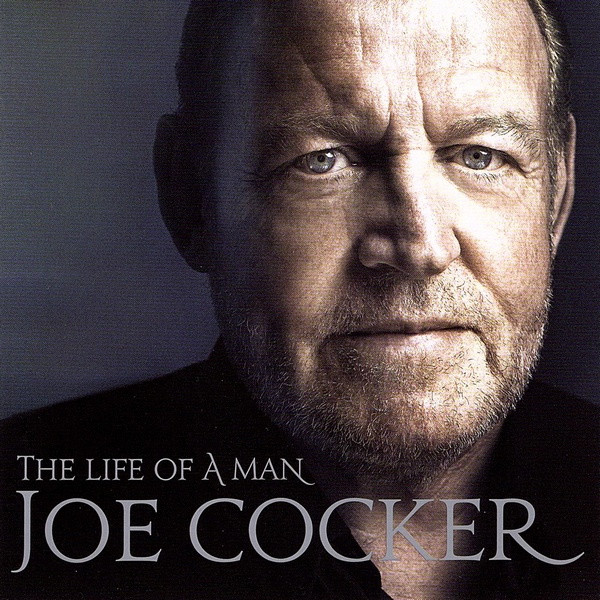
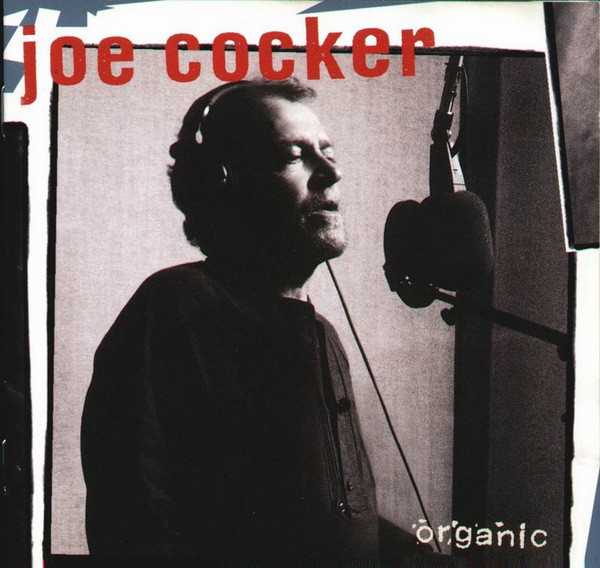
Joe Cocker and Jennifer Warnes’ “Up Where We Belong” always pleases me. Same with the Thompson Twins’ “Hold Me Now.” I remember when Rosette’s “It Must Have Been Love” got heavy airplay on the radio (and on MTV).
Where would Summer music be without Ambrosia’ “Biggest Part of Me” and Toto’s “Africa”? They are mainstays in Hot Weather each year.
I’m a fan of Chris DeBurgh’s “Lady in Red” and Dan Hartman’s “I Can Dream About You.” Many of these compilation CDs include filler in the form of One-Hit Wonders or obscure songs. But Cool Rock consists of readily identifiable songs with a Summer vibe. How many of these songs do you remember? Any favorites here? GRADE: B+
I’ve been reading “Alfred Hitchcock” mystery anthologies for decades (check out the list below). Alfred Hitchcock’s Daring Detectives (1969) includes an excellent blend of stories. I particularly enjoyed Stuart Palmer’s “Green Ice,” a Hildegarde Withers gem. The police struggle to find the thief of a value green diamond. Miss Withers shows them the way to solve the crime.
Also fun is Erle Stanley Gardner’s “Adventures of the Irate Witness” where Perry Mason fakes out the Prosecution. And, I’m a fan of August Derleth’s Solar Pons series. “Adventures of the Grice-Paterson Curse” involves a series of mysterious deaths. Solar Pons sees the pattern that no one else does.
Who doesn’t like a good spy story? Michael Gilbert’s “The Headmaster” involves the murder of a British agent and it’s up to Calder and Behrens to even the score. I’ve read a lot of Ellery Queen but somehow missed “The Adventure of the Seven Black Cats.” An infirm woman fears someone is trying to murder her so she buys a series of black cats–even though she hates cats. Ellery Queen becomes intrigued and investigates.
Alfred Hitchcock’s Daring Detectives is one of the best mystery anthologies I’ve read lately. How many Alfred Hitchcock anthologies have you read? GRADE: A-
TABLE OF CONTENTS:
“The Day the Children Vanished”: by High Pentecost — 3
“Through a Dead Man’s Eye”: by Cornell Woolrich — 30
“The Disappearance of Mr. Davenheim”: by Agatha Christie — 57
“Green Ice”: by Stuart Palmer — 71
“The Grave Grass Quivers”: by MacKinlay Kantor — 88
“The Case of the Irate Witness”: by Erle Stanley Gardner — 104
“Adventures of the Grice-Paterson Curse”: by August Derleth — 120
“The Headmaster”: by Michael Gilbert — 140
“The Adventure of the Seven Black Cats”: by Ellery Queen — 153
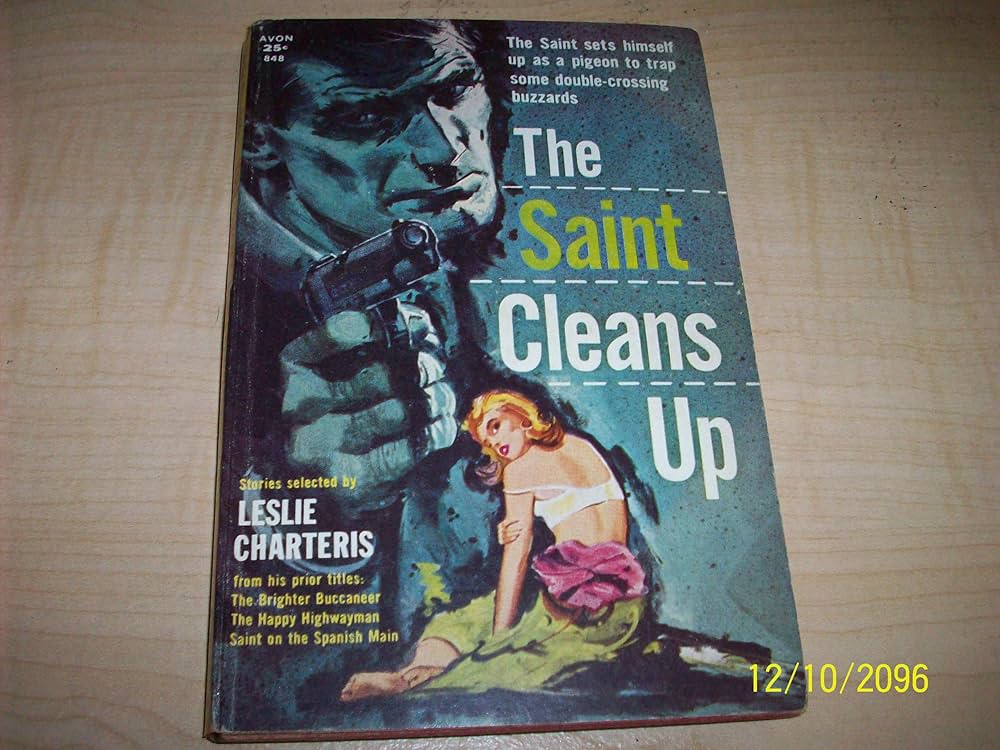
“The Wicked Cousin”: by Leslie Charteris — 174
“The Footprint in the Sky”: by John Dickson Carr — 193
In general, only the first new edition of each American and British title is listed. The country, format (paperback or hardback/hardcover) and date of publication is shown in parentheses.
Diane and I traveled to Sheas Performing Arts Center in Buffalo to see Back to the Future: The Musical. As you recall, the 1985 film Back to the Future–directed by Robert Zemeckis–was a hit movie starring Michael J. Fox, Christopher Lloyd, Lea Thompson, Crispin Glover, and Thomas F. Wilson. Michael J. Fox plays teenager Marty McFly who accidentally finds himself sent back in Time to 1955.
The humor of the movie–with Marty interacting with his parents when they were teenagers–still resonates in the musical version. Of course, the real star of the musical is the cool DeLorean car/Time Machine.
My main complaint about Back to the Future: The Musical is…the music is bland and banal. The show includes songs featured in the film: “The Power of Love“, “Earth Angel“, “Johnny B. Goode” and “Back in Time“. The rest of the music is forgettable. Are you a fan of Back to the Future? GRADE: B- (but the DeLorean gets an “A”!)
Playing With Reality is a revealing look at the hidden role that games have played in human development for centuries. Kelly Clancy provides a wide-ranging intellectual history that reveals how important games have been to human progress, and what’s at stake when we forget what games we’re really playing.
Clancy claims we play games to learn about the world, to understand our minds and the minds of others, and to make predictions about the future. Games are an essential aspect of humanity and a powerful tool for modeling reality. They’re also a lot of fun.
But, at the same time, games can be dangerous, especially when we mistake the model worlds of games for reality itself. The recent news stories about people falling in love with their Artificial Intelligence chat-bots is a prime example.
Playing With Reality explores the history of games since the Enlightenment. I enjoyed Clancy’s ability to weave a path through military theory, political science, evolutionary biology, the development of computers and AI, cutting-edge neuroscience, and cognitive psychology. She covers a lot of ground! But the details are enthralling!
It helps that Kelly Clancy is a neuroscientist and physicist. Her convincing analysis shows how intertwined games have been with the arc of history. War games shaped the outcomes of real wars in nineteenth and twentieth century Europe. Game theory warped our understanding of human behavior and brought us to the brink of annihilation—yet still underlies basic assumptions in economics, politics, and technology design. Games are more than just a tool…they can turn into weapons, too.
I used games to teach my students about using computers when I was a College Professor. Now, with powerful AI programs, games are being designed that could determine the shape of our society and future of democracy. In this astonishing book, Kelly Clancy makes a strong argument that the human fascination with games is the key to understanding our nature and our actions. What games do you play? GRADE: A
TABLE OF CONTENTS:
Part I: How to Know the Unknown
Chapter 1: The Play of Creation — 3
Chapter 2: How Heaven Works — 16
Chapter 3: Dice Playing God — 41
Part II: Naming the Game
Chapter 4: Kriegsspiel, the Science of War — 71
Chapter 5: Rational Fools — 85
Chapter 6: The Clothes Have No Emperor — 112
Chapter 7: A Map That Warps the Territory — 137
Part III: Building Better Players
Chapter 8: Chess, the Drosophila of Intelligence — 107
Chapter 9: The End of Evolution — 177
Chapter 10: Nous ex Machina — 200
Chapter 11: Cogito Ergo Zero Sum — 222
Part IV: Building Better Games
Chapter 12: SimCity — 249
Chapter 13: Moral Geometry: Playing Utopia — 257
Chapter 14: Mechanism Design: Building Games Where Everyone Wins — 278
I enjoyed Robert Jackson Bennett’s first Ana and Din Mystery, A Tainted Cup (2024) so I was looking forward to the sequel, A Drop of Corruption (2025). Ana Dolabra (a genius who frequently wears a blindfold to suppress sensations) and her hand-picked assistant, hunky Dinios Kol, travel to the canton of Yarrowdale to investigate the mysterious death of an Imperial Treasury official.
Yarrowdale is best known for its island that houses The Shroud, a site for the processing of the gigantic Leviathan bodies. Leviathans occasionally attack cities of the Empire and cause widespread death and destruction. But the select few at The Shroud harvest the bodies of the Leviathans to produce incredible reagents that can cure diseases and boost life expectancy.
Ana and Din’s investigation link the murder of the Empire official with the secrets hidden in The Shroud. The implications lead Ana to believe the murderer intends to destroy the Empire.
If you’re in the mood for a mystery with long tentacles and a mind-boggling plot, A Drop of Corruption presents the perfect Summer Beach Read. GRADE: B+