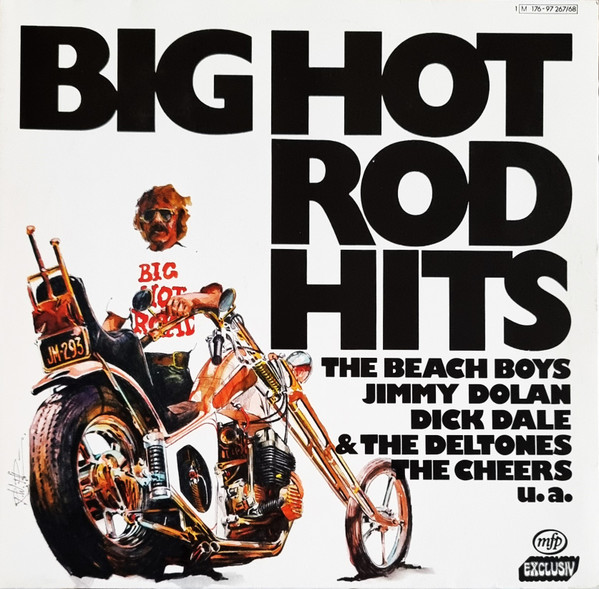
Back in the early 1960s, my friends and I were captives by Hot Rod Hits. My favorites were by The Beach Boys, but plenty of other groups filled the radio airwaves with songs about fast cars. If you watch any of the car TV commercials from the late 1950s and 1960s, you’ll see lovely models slouched against the hoods of big cars with fins. The message was clear: buy a hot car, get a hot girl.
Big Hot Rod Hits a plethora of car songs, many obscure. Even The Beach Boy songs are tunes you probably haven’t heard before…or haven’t heard in decades! Have you heard Robert Mitchum’s “The Ballad of Thunder Road”? Or Hot Rod Dog’s “Repossession Blues”?
Shut Down: The Best of the Hot Rod Hits includes some of the songs on Big Hot Rod Hits and more recognizable hits like Jan & Dean’s “The Little Old Lady (From Pasadena) and The Beach Boys’ “Little Deuce Coupe.”
Do you remember these Hot Rod Hits? Did you have a Hot Rod? GRADE: B (for both)
TRACK LIST:
| A1 | The Beach Boys– | Custom Machine | 1:40 |
| A2 | Dick Dale– | Ho-Dad Machine | 2:02 |
| A3 | Dick Dale– | Night Rider | 1:45 |
| A4 | Super Stocks*– | Hot Rod City | 2:05 |
| A5 | The Beach Boys– | No-Go Showboat | 1:52 |
| B1 | Dick Dale– | The Scavenger | 1:45 |
| B2 | The Beach Boys– | Our Car Club | 2:15 |
| B3 | The Cheers– | Black Denim Trousers And Motorcycle Boots | 2:10 |
| B4 | Jimmy Dolan*– | Hot Rod Race | 2:08 |
| B5 | Hot Rod Rog*– | Little Street Machine | 1:40 |
| B6 | The Beach Boys– | Cherry, Cherry Coupe | 1:50 |
| C1 | The Beach Boys– | Shut Down | 1:59 |
| C2 | Super Stocks*– | Wide Track | 2:00 |
| C3 | Robert Mitchum– | The Ballad Of Thunder Road | 2:28 |
| C4 | Super Stocks*– | Cheater Slicks | 1:55 |
| C5 | Shutdown Douglas– | Twin Cut Outs | 2:18 |
| C6 | The Beach Boys– | 409 | 1:58 |
| D1 | Super Stocks*– | Street Machine | 1:55 |
| D2 | Shutdown Douglas– | Flash Falcon | 2:15 |
| D3 | Hot Rod Dog– | Repossession Blues | |
| D4 | The Beach Boys– | Car Crazy Cutie | 2:40 |
| D5 | Super Stocks*– | 426 Superstock | 2:00 |
| D6 | The Beach Boys– | A Young Man Is Gone | 2:15 |
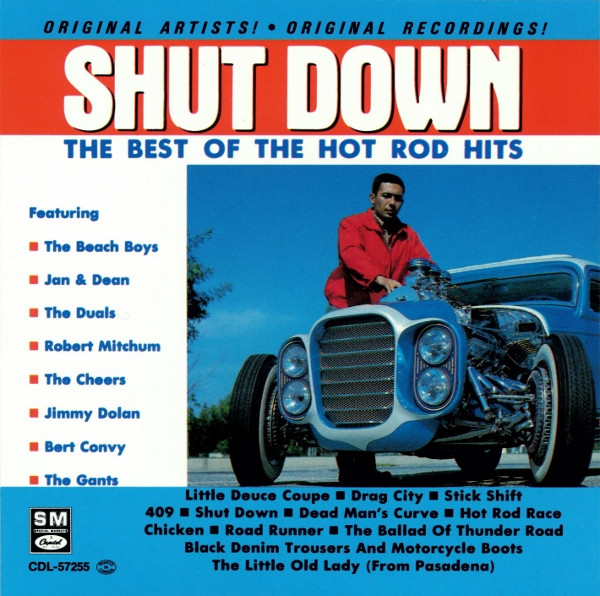
TRACK LIST:
| 1 | The Beach Boys– | Shut Down | 1:53 |
| 2 | Jan & Dean– | Drag City | 2:21 |
| 3 | The Duals– | Stick Shift | 2:32 |
| 4 | The Beach Boys– | 409 | 2:01 |
| 5 | The Gants– | Road Runner | 2:20 |
| 6 | Jan & Dean– | Dead Man’s Curve | 2:47 |
| 7 | Bert Convy– | Chicken | 1:59 |
| 8 | Robert Mitchum– | The Ballad Of Thunder Road | 2:32 |
| 9 | Jimmy Dolan*– | Hot Rod Race | 2:11 |
| 10 | The Cheers– | Black Denim Trousers And Motorcycle Boots | 2:13 |
| 11 | The Beach Boys– | Little Deuce Coupe | 1:41 |
| 12 | Jan & Dean– | The Little Old Lady (From Pasadena) | 2:23 |