
BAMBI AND HER MOM VISIT OUR BACK YARD
12 Replies

The script to Enola Holmes 3, written by Jack Thorne, is an original story, not an adaptation of the book series The Enola Holmes Mysteries by Nancy Springer–a series which I like a lot (you can read my review of THE CASE OF THE MISSING MARQUESSE here and THE CASE OF THE LEFT-HANDED LADY here). Enola is in Malta about to be married to Lord Tewkesbury when Sherlock goes missing leaving a major mystery to be solved.
I’ve seen Enola Holmes 1 ( you can read my review here) and Enola Holmes 2 (you can read my review here). I think it is a mistake to abandon Nancy Springer’s books as the basis of the TV series.
This latest movie features Millie Bobby Brown, reprising her role as the Enola Holmes, the sister of the famous detective Sherlock Holmes. The film also stars Louis Partridge (Lord Tewkesbury), Himesh Patel (Dr. Watson), Sharon Duncan-Brewster (Mira Troy), Henry Cavill (Sherlock Holmes), and Helena Bonham Carter (Eudora Holmes–mother of Enola and Sherlock and Mycroft) appearing in supporting roles. The film is directed by Philip Barantini–making this the first film in the Enola Holmes TV series not directed by Harry Bradbeer.
Enola Holmes 3 has a Hallmark movie vibe as Enola searches for her missing brother and encounters danger and deception–and romance, of course. As you can see from the photo above, Enola is in her wedding dress on top of a stage coach ready to fire a shotgun. That sums up the essence of Enola Holmes 3. GRADE: B-
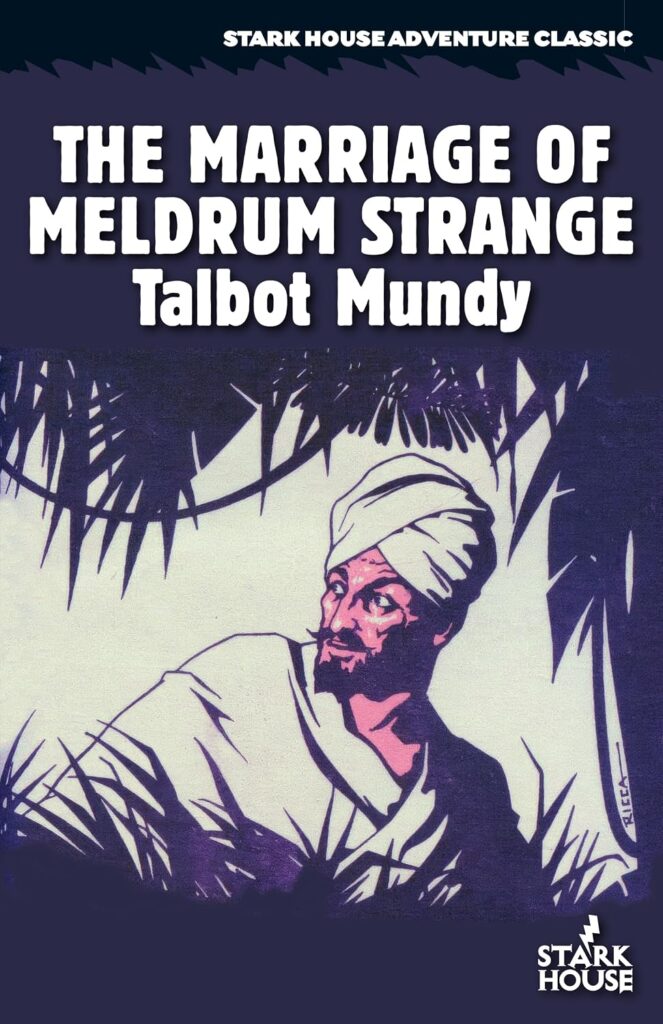
Stark House’s reprint of Talbot Mundy’s The Marriage of Meldrum Strange (1930) brings to a new generation of readers a novel both comic, calamitous, and complex. It shouldn’t surprise anyone that The Marriage of Meldrum Strange was first published in the October 10, 1923 issue of Adventure. Talbot Mundy was one of the premier adventure writers of that time in the league with H. Rider Haggard and Robert E. Howard.
Meldrum Strange is a billionaire obsessed with Cottswold Ommony’s forest. Ommony concocts a devious plan to block Strange’s efforts to acquire the forest. The Marriage of Meldrum Strange is a mix of clever plotting and curious characters.
David Vineyard provides an insightful Introduction to Talbot Mundy. This Stark House edition includes a useful Bibliography of Talbot Mundy’s work. The Marriage of Meldrum Strange is a perfect Summer Reading book! GRADE: B+
TABLE OF CONTENTS:
TALBOT MUNDY By David Vineyard — 7
1. “Well met!” — 10
2. “I’m thinking.” — 18
3. “Perhaps a hundred years from now——” — 29
4. As Esther to Ahasuerus — 38
5. “Sheep’s bones and no strynchine!” — 54
6. “C. O. to Z. P.” “Z. P. to C. O.” — 66
8. “And now for the really difficult part!” — 85
9. “Tiger!” — 94
10. “Up to you, sir!” — 109
11. “Who eats crow, eh? Wait and see!” — 118
12. “Is everything ready?” — 128
13. “Watch! Watch! Be still!” (“AH-H-H!”) — 138
14. “Chullunder Ghose prays to all the Gods!” — 145
Talbot Mundy Bibliography (1876-1940) — 158
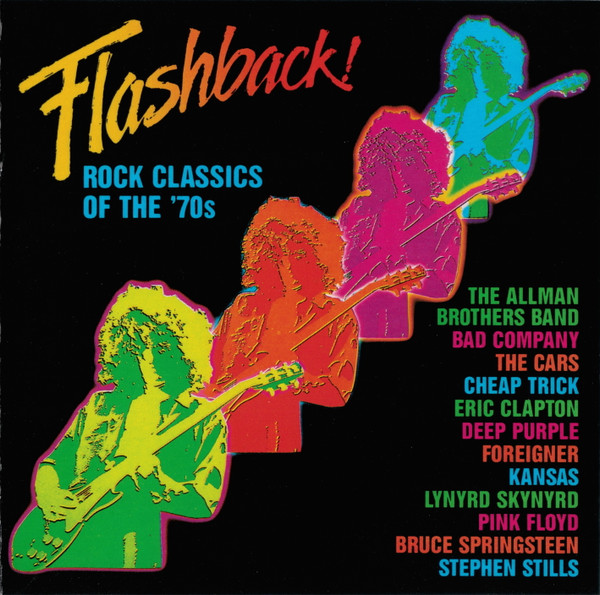
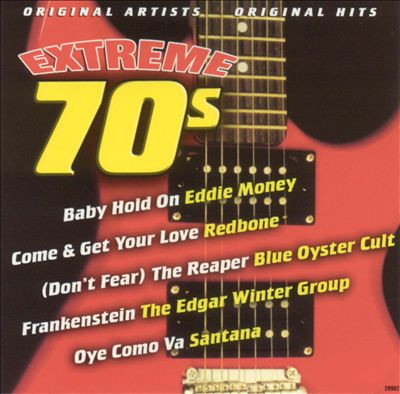
Over the years I’ve presented compilation CDs on Thursdays, I’ve noticed the ones with 1970s music seem to be the most popular. Fortunately, I have dozens of compilation CDs from the 1970s I haven’t listened to yet. Flashback! and Extreme 70s were two of them. I listened to them over the 4th of July weekend.
Flashback! from 1991 includes plenty of Name groups and singers. Classics like Eric Clapton’s “I Shot the Sheriff” and Stephen Stills “Love the One You’re With” still sound great! Who can forget Kansas’ “Carry On Wayward Son” or Foreigner’s “Hot Blooded”–songs that still get airplay on our Oldies radio staton today.
Extreme 70s from 2003 includes Name groups and singers, but many of them are second-tier. I still hear Looking Glass’s “Brandy” from time to time. Blue Oyster Cult’s “(Don’t Fear) The Reaper” still gets played. Eddie Money is still making money with “Baby Hold On.”
Do you remember these Seventies songs? Any favorites here? GRADE: Flashback!: B+ Extreme 70s: B-
TRACK LIST:
| 1 | Deep Purple– | Smoke On The Water | 5:40 |
| 2 | Foreigner– | Hot Blooded | 4:23 |
| 3 | The Allman Brothers Band– | Ramblin’ Man | 4:48 |
| 4 | Bruce Springsteen– | Badlands | 4:02 |
| 5 | Pink Floyd– | Money | 6:23 |
| 6 | Cheap Trick– | I Want You To Want Me | 3:39 |
| 7 | Bad Company (3)– | Can’t Get Enough | 4:14 |
| 8 | Kansas (2)– | Carry On Wayward Son | 5:23 |
| 9 | Eric Clapton– | I Shot The Sheriff | 4:23 |
| 10 | The Cars– | Let’s Go | 3:33 |
| 11 | Stephen Stills– | Love The One You’re With | 3:05 |
| 12 | Lynyrd Skynyrd– | Freebird | 9:08 |
TRACK LIST:
| 1 | Looking Glass– | Brandy (You’re A Fine Girl) | 3:06 |
| 2 | Santana– | Oye Como Va | 4:17 |
| 3 | Earth, Wind & Fire– | Shining Star | 2:51 |
| 4 | The Isley Brothers– | That Lady | 5:34 |
| 5 | The Amazing Rhythm Aces– | Third Rate Romance | 3:22 |
| 6 | Albert Hammond– | It Never Rains In Southern California | 3:19 |
| 7 | Eddie Money– | Baby Hold On | 3:30 |
| 8 | Redbone– | Come & Get Your Love | 4:57 |
| 9 | Blue Öyster Cult– | (Don’t Fear) The Reaper | 5:07 |
| 10 | The Edgar Winter Group– | Frankenstein | 4:45 |
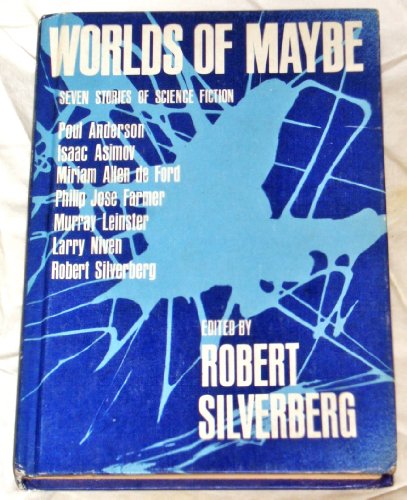
Remember the Weekly Reader Book Club? Back in the 1960s, our Reading Teacher would hand out a leaflet each month showing what books were available for purchase from the Weekly Reader Book Club. I and my classmates would make choices, bring in a few dollars–the prices per book were less than a dollar each–our Reading Teacher would send in the order, and a week later the books would arrive.
Worlds of Maybe, published by Thomas Nelson in 1970, also had a Weekly Reader Book Club edition (pictured above). Robert Silverberg is one of my favorite Science Fiction writers, but his skills as an editor are under appreciated. Worlds of Maybe is an anthology of seven parallel universe stories.
My favorite story is also the oldest story in Worlds of Maybe: Murray Leinster’s “Sidewise is Time.” Paul Anderson’s “Defend East” is one of his Time Patrol stories where a team finds themselves not only in a different time-line, but also in a parallel universe.
Isaac Asimov’s “Living Space” confronts the issue of who gets to own their own planet. “Sail On! Sail On!” is an early story of Philip Jose Farmer that hints at the disruption he would cause with future stories like his Riverworld series.
It might be difficult to find a copy of Worlds of Maybe, but the quality of the stories would make the effort worth it. GRADE: B+
TABLE OF CONTENTS:
9 · Introduction · Robert Silverberg — 9
15 · Sidewise in Time · Murray Leinster · na Astounding Jun 1934 — 15
96 · Sail On! Sail On! · Philip José Farmer · ss Startling Stories Dec 1952 — 96
121 · Slips Take Over · Miriam Allen deFord · ss F&SF Sep 1964 — 121
139 · All the Myriad Ways · Larry Niven · ss Galaxy Oct 1968 — 139
153 · Living Space · Isaac Asimov · ss Science Fiction Stories May 1956 — 152
173 · Translation Error · Robert Silverberg · nv Astounding Mar 1959 — 173
200 · Delenda Est [Manse Everard (Time Patrol)] · Poul Anderson · nv F&SF Dec 1955 — 200

“Dr. Watson is a name that resonates with fans of detective fiction, and while [Anna] Fernandez is not that Dr. Watson, her character shares some uncanny similarities to him. When she is sent on an errand to 221B Baker Street (Boston, MA), the game is afoot. The play is a Sherlock Holmes-type murder mystery, set in Boston, 1946, and told in the style of film noir.”
Diane and I have seen several plays based on Sherlock Holmes so when local theater company, Alleyway Theater, advertised His Girl Watson, we immediately bought tickets. Kevin Cirone, the playwright, discussed how His Girl Watson came about in the Playbill: “First off, I’m a great fan of the Holmes canon–I make an effort to read The Complete Adventures…about once ever two years or so, and I’m always feasting on new adaptations.
I knew I wanted to write a new story based on Doyle’s beloved characters and was searching for the right angle. In my research, I discovered the existence of the Women’s Army Corps, the first U.S. instance of enlisted women, which was created in World War II. The ‘OG’ Watson was an army doctor, I thought coming out of the Corps into post-War Boston as a woman in the 1940s, with all the obstacles and experiences that might entail, would put a very interesting spin on the character, especially once she was engulfed by the world of Sherlock Holmes. This gave me a universe of choices of how to play with her story while at the same time giving me room to create a person who can resonate with audiences on multiple levels.”
A local theater critic, Anthony Chase, loved His Girl Watson and praised the actress who plays Josie Watson. “In that context, Fernandez’s Dr. Josie Watson resembles an archetypal femme fatale. Deploying a tough Boston accent, she embodies a woman who can spot a sap at twenty paces and strip him of his illusions before he’s finished lighting her cigarette — if she smoked, that is. While she may move like a hawk through the city’s shadows, unlike a true femme fatale our Watson is also a medical doctor in a battered urban hospital, tending both to shell‑shocked boys just back from the war and to the women they bruise, seeing the damage on both sides and refusing to look away. She’s a sharp‑witted, self‑possessed, street‑wise woman whose beauty is both armor and weapon. She understands exactly how men see her and plays into that gaze just enough to get what she wants, even as she knows the world will punish her for taking that power. Indeed, Dr. Watson is the conscience of this story.
I have always thought that Fernandez is a marvelous actor with an impressive range. Strikingly beautiful, she has a wide, Katharine Cornell‑esque face made for stage light. She has been brilliant as Morticia Addams, as Nell Gwynn, and as the lead in Crazy for You. I truly sat up and took notice when she played Sybil Chase in Noël Coward’s Private Lives, taking a character who previously seemed insipid and disposable and making her distinct and purposeful. It remains the finest performance of the role I ever expect to see.
Just as she is beginning to hit her stride as a leading lady in Buffalo, I report, with mixed feelings, that as soon as His Girl Watson: A Sherlock Noir closes, Miss Fernandez will be relocating to the New York City area to try her luck in that decidedly more competitive market. Our loss is New York’s gain. Anna Fernandez’s Dr. Watson is a knockout: fierce, funny, and unforgettable.”
So why is this play subtitled “A Sherlock Noir”? Playwright Kevin Cirone explains: “My dad had bookshelves a mile wide with detective novels and VHS tapes of the hard-boiled stories of the 30s and 40s–feature lengths and also action serials, which I would watch repeatedly.” Cirone grew up watching noir and decided to give His Girl Watson a dash of darkness amid all the detection and fun. Hopefully, His Girl Watson is just the beginning of a series of plays about Holmes and Watson. GRADE: B+

I fell in love with Diana Rigg on March 28, 1966. That’s when I watched the first episode of The Avengers broadcast on the ABC Network…and it was love at first sight!
“The show was sold to the American Broadcasting Company (ABC) in 1965, and The Avengers became one of the first British series to be aired on prime-time US television. The US ABC network paid the then-unheard-of sum of $2 million for the first 26 episodes. The average budget for each episode was reportedly £56,000, which was high for the British industry. The fourth series aired in the US from March to the beginning of September 1966.”
Diana Rigg is best known for her iconic role as secret agent Mrs. Emma Peel. But you might remember she also starred in a James Bond movie. Diana Rigg played Countess Teresa “Tracy” di Vicenzo in the 1969 James Bond film On Her Majesty’s Secret Service. She remains the only woman to have officially married James Bond in the franchise’s history.
Diana Rigg also performed in The Royal Shakespeare Company and won an Emmy for her role of sharp-tongued matriarch Olenna Tyrell in HBO’s Game of Thrones (2013-2019).
Pilato’s biography includes wonderful photos of Diana Rigg and takes the reader from her early days to her death in 2020 at the age of 82. Are you a fan of Diana Rigg? GRADE: B+
TABLE OF CONTENTS:
Foreword by Rupert Macnee — xi
Introduction by Ray Austin — xiii
Preface — xix
PART ONE: BEFORE
Chapter 1: Rigged — 3
Chapter 2: First signs of royalty — 8
Chapter 3: Great expectations — 17
PART TWO: DURING
Chapter 4: Embracing Emma — 31
Chapter 5: Avenging angel — 36
Chapter 6: Defending Mrs. Peel — 43
PART THREE: AFTER
Chapter 7: From the Bureau to Bond — 63
Chapter 8: Hailing Caesar, the Hospital, and Blood — 75
Chapter 9: When Diana met Diana — 84
Chapter 10: Her craft, unstoned — 96
Chapter 11: A little night music with a three-piece suite, and more — 106
Chapter 12: The Bradley Bunch — 121
PART FOUR: FOREVER AFTER
Chapter 13: The queen of Thrones and Thornes — 141
Chapter 14: Final bows — 152
Chapter 15: Encore — 158
Appendix: Life and career highlights: a selective timeline — 173
Acknowledgments — 187
Notes — 189
Bibliography — 197
Index — 203

Yes, this six-storey rubber duck is visiting Buffalo this weekend. Thousands of fans are on the waterfront to view this 61 foot high extravaganza! Are you a fan of ducks…rubber or otherwise?


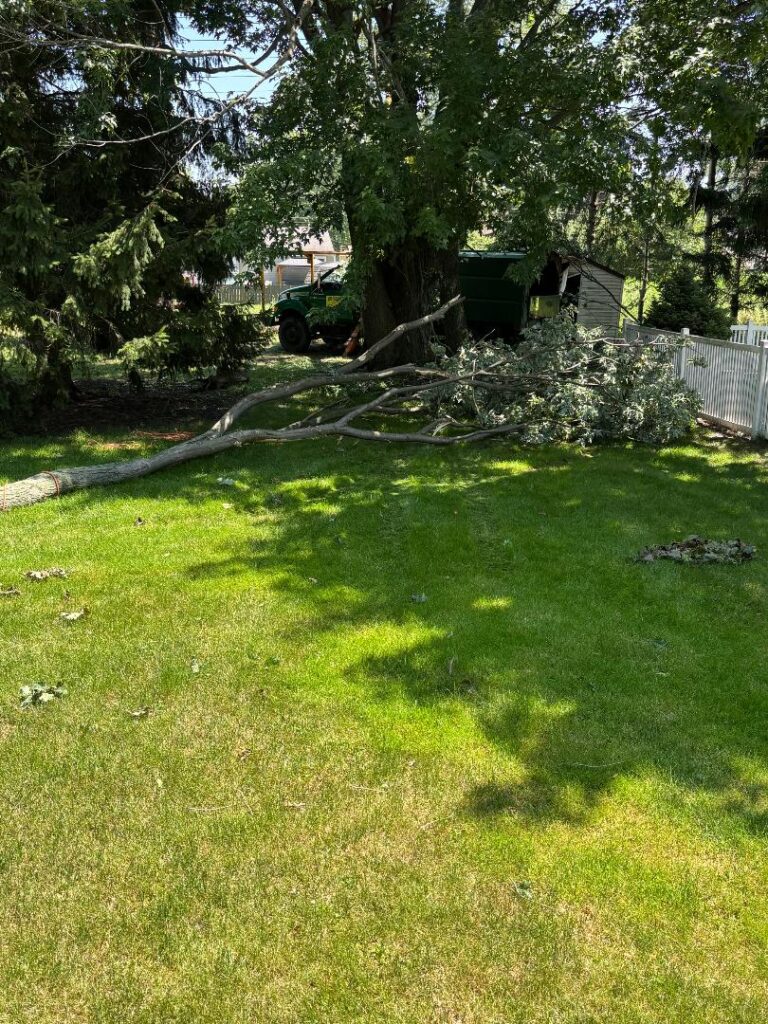
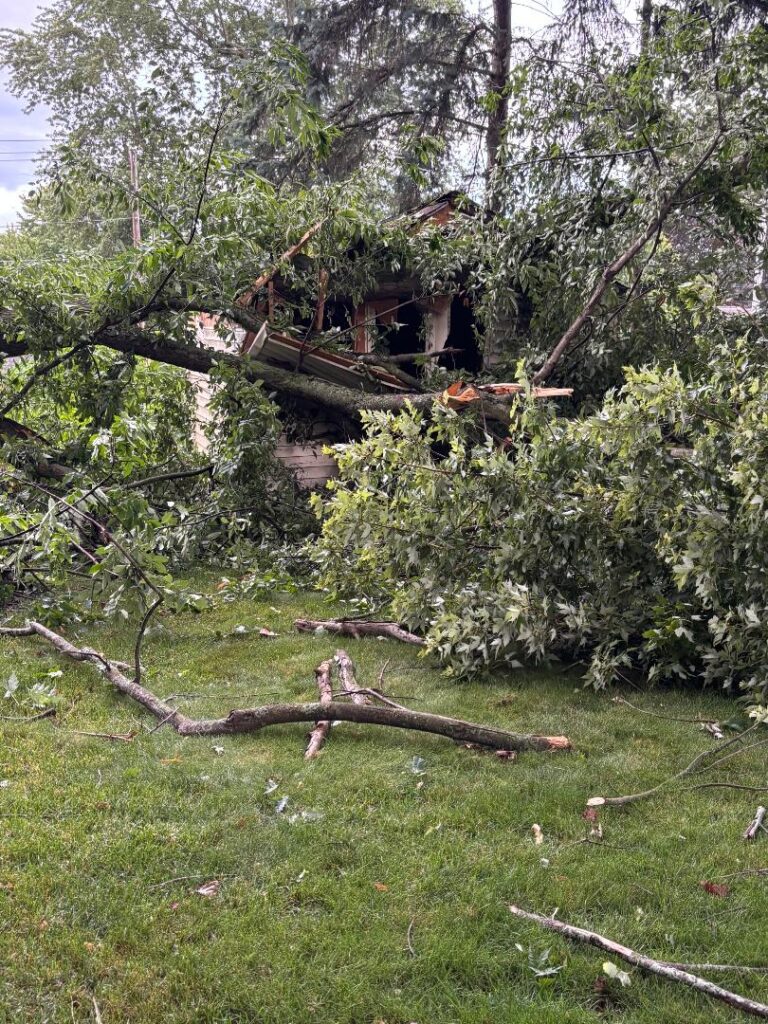
Diane and I were watching the NBC Nightly News when there was a bright flash of light in our backyard. Then, the BOOOM! When we looked out, we saw one of our tall trees toppled by a lightning strike and it demolished our neighbor’s shed.
Diane, who is always thinking, told me: “Call the tree service and get on their list.” So I called Kelley Tree Service (no relation) that we’ve used before and the wife of the Tree Guy said, “We’ll drive over to your house to scope it out in a half hour.” That’s why we love these people!
Sure enough, the Tree Couple arrived in a half hour and we all walked out to assess the damage. There were tree limbs everywhere! Plus our neighbor’s shed was crushed. The Tree Guy told us: “We can clean this all up tomorrow. We’ll be here around noon. It will cost about $2000.”
Our home insurance deductible is $2500 so Diane and I knew we would be paying for this tree damage. I called AMICA INSURANCE and asked them about whether we would have to pay for our neighbor’s shed. “No, that lightning strike is an Act of God. Your neighbor’s insurance will have to pay for it.”
The next day the Tree Crew showed up with trucks, tractors, wood chippers, and a bucket truck with an Aerial Lift. The chain saws were busy buzzing and cutting. The chipper was grinding up the leaves and limbs. One of the trucks hauled the logs and stumps away. The whole operation took a couple hours. When the job was done and the Tree Crew were packing up their equipment, I went out and tipped each member $20. “Thank you for doing such a great job,” I told them. They worked in 90 degree heat with high humidity.
More lightning storms are predicted for the 4th of July weekend so this might not be over! Have you encountered a lightning strike?