CASTALIAN STRING QUARTET

On a cold snowy night last week, Diane and I drove to Buffalo’s Kleinhans Music Hall to hear the Castalian String Quartet: Sini Simonen (violin), Ruth Gibson (viola), Daniel Roberts (violin), and Stefan Morris (cello). We found the music a little dark, but it fit the wintery weather we were experiencing. The Quartet played well and the 200 listeners in the audience with us clapped enthusiastically at the end of the performance.

Diane and I arrived early to hear the Q&A session before the performance and learned interesting facts about the musicians’s lives and backgrounds. The Quartet will be in Schenectady, NY and then New York City next week. Worth traveling in the darkness and snow showers to hear. Are you a fan of chamber music? GRADE: B

PROGRAM:

STRING QUARTET IN D MINOR, K. 421 — Wolfgang Amadeus Mozart

STRING QUARTET NO. 1 “Kreutzer Sonata” — Leos Janacek

STRING QUARET in B flat, Op. 130, with Grosse Fuge, Op. 133 —Ludwig van Beethoven

FRIDAY’S FORGOTTEN BOOKS #718: THE BEST FROM FANTASY AND SCIENCE FICTION, 23rd SERIES Edited by Edward L. Ferman

My favorite story in The Best From Fantasy and Science Fiction, 23rd SERIES is John Varley’s “In the Hall of the Martian Kings,” a story of a exploration of the Red Planet with a lot of problems. I also liked Jane Yolen’s “Brother Hart” involving shape-shifting and sadness.

Edward L. Ferman continues the inclusion of The Magazine of Fantasy and Science Fiction “Competition” entries. You may or may not like them. I’m not a fan.

I did like Joanna Russ’s essay on “Books: In Defense of Criticism” which extends the discussion beyond Fantasy and SF. Thought-provoking!

The Best From Fantasy and Science Fiction, 23rd Series is the penultimate volume in this long-running anthology series. Next mouth, the final volume…after two years of monthly reviews on this blog! GRADE: B

TABLE OF CONTENTS:

’70s SOUL GOLD (2-CD Set)

There are plenty of songs to like on 70s Soul Gold. I like the mix of well-known songs like Marvin Gaye’s “What’s Going On” with more obscure songs like The Originals’ “The Bells.”

I love Smokey Robinson and The Miracles’ “Tears of A Clown,” Chic’s “Le Freak,” and The Staple Sisters’ “I’ll Take You There.” And, then there are classics like Curtis Mayfield’s “Freddie’s Dead,” Marvin Gaye’s “Let’s Get It On,” and The Temptations’ “Papa Was A Rolling Stone.”

All in all, this compilation delivers great music from the 1970s. Do you remember these songs? Any favorites? GRADE: A-

TRACK LIST:

1-1The Delfonics–Didn’t I (Blow Your Mind This Time)3:24
1-2The Originals–The Bells3:08
1-3The Supremes–Up The Ladder To The Roof3:16
1-4The Moments–Love On A Two Way Street3:30
1-5The Jackson 5–I’ll Be There3:58
1-6Smokey Robinson & The Miracles*–The Tears Of A Clown3:02
1-7Marvin Gaye–What’s Going On3:54
1-8James Brown–Soul Power Pts. 1 & 23:23
1-9Ike & Tina Turner–Proud Mary3:17
1-10Jean Knight–Mr. Big Stuff2:31
1-11Undisputed Truth (2)–Smiling Faces Sometimes3:17
1-12Isaac Hayes–Theme From Shaft4:38
1-13Al Green–Let’s Stay Together3:42
1-14Betty Wright–Clean Up Woman2:47
1-15The Dramatics–In The Rain5:08
1-16The Stylistics Featuring Russell Thompkins, Jr.–Betcha By Golly Wow3:49
1-17The Chi-Lites–Oh Girl3:38
1-18The Staple Singers–I’ll Take You There3:14
2-1Billy Preston–Outa-Space Producer – Billy PrestonWritten-By – Billy Preston, Joe Greene4:10
2-2Brothers Johnson–Strawberry Letter #23 Producer – Quincy JonesWritten-By – Shuggie Otis5:01
2-3Curtis Mayfield–Freddie’s Dead (Theme From Superfly) Producer, Written-By – Curtis Mayfield5:28
2-4The Temptations–Papa Was A Rollin’ Stone7:00
2-5Brighter Side Of Darkness–Love Jones Producer – Clarence JohnsonWritten-By – Clarence Johnson, Ralph Eskridge*, Randolph Murphy3:21
2-6Four Tops–Ain’t No Woman (Like The One I Got) Producer – Dennis Lambert & Brian Potter, Steve Barri Written-By – Dennis Lambert & Brian Potter3:05
2-7The Isley Brothers–That Lady Pts. 1 & 2 Producer – The Isley Brothers Written-By – Christopher Jasper*, Ernie Isley, Marvin Isley, O’Kelly Isley, Ronald Isley, Rudolph Isley5:37
2-8Marvin Gaye–Let’s Get It On Producer, Written-By – Ed Townsend 4:54
2-9Eddie Kendricks–Keep On Truckin’ Producer – Leonard Caston Written-By – Anita Poree, Leonard Caston3:35
2-10Aretha Franklin–Until You Come Back To Me (That’s What I’m Gonna Do) Producer – Aretha Franklin, Arif Mardin, Jerry Wexler Written-By – Clarence Paul, Morris Broadnax3:28
2-11Dionne Warwick & Spinners–Then Came You Written-By – Phillip Pugh*, Sherman Marshall4:00
2-12Harold Melvin And The Blue Notes–Bad Luck Arranged By – Bobby Martin Producer – Kenneth Gamble, Leon Huff* Written-By – Gene McFadden, John Whitehead*, Victor Carstarphen3:10
2-13Diana Ross–Love Hangover Written-By – Marilyn McLeod, Pam Sawye3:51
2-14Commodores–Easy Producer – Commodores, James Anthony Carmichael Written-By – Lionel Richie4:53
2-15The Floaters–Float On Producer – Woody Wilson Written-By – Arnold Ingram, James Mitchell, Jr.*, Marvin Willis4:14
2-16Chic–Le Freak Producer, Written-By – Bernard Edwards & Nile Rodgers4:19
2-17Bell & James–Livin’ It Up (Friday Night) Executive-Producer – Thom Bell Producer – Leroy Bell, Casey James3:24
2-18Ray, Goodman & Brown–Special Lady Producer – Vincent Castellano Written-By – Al Goodman, Harry Ray, Lee Walter4:10

WEDNESDAY’S FORGOTTEN BOOKS #99: NIGHT LIVES By Phyllis Eisenstein

My favorite story in Nine Lives: Nine Stories of the Dark Fantastic (Five Star, 2003) is “The Island in the Lake,” a story about Eisenstein’s troubadour, Alaric, who has the power to teleport himself…usually into trouble. I also enjoyed “The Amethyst Phial” where Eisenstein explores the nature of revenge.

The stories in Night Lives vary from early stories in Eisenstein’s career to later stories. If you want to read a representative collection of Eisenstein’s short fiction, Night Lives would be a good place to start. GRADE: B

Table of Contents:

  • Introduction: Straddling the Spectrum – (2003) – essay by Phyllis Eisenstein — 9
  • In the Western Tradition – (1981) – novella — 13
  • The Island in the Lake – (1998) – novelette — 77
  • Nightlife – (1982) – novelette — 127
  • Wallpaper World – (2001) – shortstory with Alex Eisenstein — 176
  • Subworld – (1983) – novelette — 211
  • Altar Ego – (1977) – novelette with Alex Eisenstein — 240
  • The Amethyst Phial – (1984) – short story — 268
  • Dark Wings – (1982) – short story — 290
  • Sleeping Beauty: The True Story – (1976) – short story and Alex Eisenstein — 299
  • About the Author – essay — 308
  • Additional copyright information –310

THE ENGLISH [Amazon Prime Video]

EMILY BLUNT as LADY CORNELIA LOCKE in THE ENGLISH

“It cannot be that this whole country is only full of killers and thieves,” says Lady Cornelia Locke (Emily Blunt), reflecting on the America of 1890, to which she has traveled from England in order to avenge the death of her son. And she’s right: There are also psychopaths, sadists, rapists, racists, idiots, imbeciles, religious fanatics and carnival freaks. They pepper a landscape whose panoramic vistas Mr. Blick emphasizes with poetic intentions, interrupted only now and then by spasms of violence and rivers of blood. –John Anderson, Wall Street Journal, November 11, 2022

The English, an epic tale of murder, revenge, and violence in lawless America during 1888, features Emily Blunt as an aristocratic lady from England who journeys to the United States to avenge the murder of her son. After nearly getting raped and murdered herself, Lady Cornelia allies herself with a Pawnee ex-cavalry scout Eli Whipp (Chaske Spencer) as they journey through a dangerous landscape where thugs, bushwhackers, and outlaws attack without warning.

Lady Cornelia believes the man who killed her son can be found in the new town of Home, Wyoming. Along the way, Lady Cornelia learns about Eli Whipp’s savage past and the deadly aspects of his life.

This six-episode series on Amazon Prime Video, with its outbursts of graphic violence in each episode, might not be for everyone. But, if you’re in a spaghetti western mood, The English will take you back to the days of the good, the bad, and the ugly. GRADE: A

THE PHILOSOPHY OF MODERN SONG By Bob Dylan

The first thing I realized when I started reading Bob Dylan’s new book, The Philosophy of Modern Song, is that Dylan knows a lot about music. Dylan analyzes 66 songs and reveals how and why they work. In addition to dissecting the songs, Dylan provides background information on the artist, the composer, and influences–sometimes from classical music–that impacted the music.

And, Dylan being Dylan, you’ll find surprising connections like a profile of science fiction and mystery writer Leigh Brackett as part of the Chapter 56 on Santana’s “Black Magic Woman.” Dylan proves he’s well read, too.

If you’re a Bob Dylan fan, you’ll want to own this book. If you’re interested in music, you’ll want to check out The Philosophy of Modern Song to learn about how a song is constructed, how it works, and how it should be sung. Dylan also includes some music history and cunning literary references like “there is assuredly nothing dearer to a man than wisdom, and though age takes away all else, it undoubtedly brings us that”–words of Cicero (p. 268). So, yes, there are surprises on almost every page of this book.

Do you remember these 66 songs? Are any of them your favorites? GRADE: A

TABLE OF CONTENTS:

“Detroit City”
(Bobby Bare– 1963)
 
“Pump It Up”
(Elvis Costello & the Attractions — 1978)
 
“Without a Song”
(Perry Como — 1951)
 
“Take Me From This Garden of Evil”
(Jimmy Wages — 1956)
 
“There Stands the Glass”
(Webb Pierce — 1953)
 
“Willy the Wandering Gypsy and Me”
(Billy Joe Shaver — 1973)
 
“Tutti Frutti”
(Little Richard — 1955)
 
“Money Honey”
(Elvis Presley — 1956)
 
“My Generation”
(The Who — 1965)
 
“Jesse James”
(Harry McClintock — 1928)
 
“Poor Little Fool”
(Ricky Nelson — 1958)
 
“Pancho and Lefty”
(Willie Nelson & Merle Haggard — 1983)
 
“The Pretender”
(Jackson Browne — 1976)
 
“Mack the Knife”
(Bobby Darin — 1959)
 
“The Whiffenpoof Song”
(Bing Crosby — 1947)
 
“You Don’t Know Me”
(Eddy Arnold — 1956 )
 
“Ball of Confusion”
(The Temptations — 1970)
 
“Poison Love”
(Johnnie & Jack — 1950)
 
“Beyond the Sea”
(Bobby Darin — 1958)
 
“On the Road Again”
(Willie Nelson — 1980)
 
“If You Don’t Know Me by Now”
(Harold Melvin & the Blue Notes — 1972)
 
“The Little White Cloud That Cried”
(Johnnie Ray — 1951)
 
“El Paso”
(Marty Robbins — 1959)
 
“Nelly Was a Lady”
(Alvin Youngblood Hart — 2004 )
 
“Cheaper to Keep Her”
(Johnnie Taylor — 1973)
 
“I Got a Woman”
(Ray Charles — 1954)
 
“CIA Man”
(The Fugs — 1967)
 
“On The Street Where You Live”
From “My Fair Lady” (Vic Damone — 1956)
 
“Truckin’”
(The Grateful Dead — 1970)
 
“Ruby, Are You Mad?”
(The Osborne Brothers — 1956)
 
“Old Violin”
(Johnny Paycheck — 1986)
 
“Volare”
(Domenico Modugno — 1958)
 
“London Calling”
(The Clash — 1979)
 
“Your Cheatin’ Heart”
(Hank Williams — 1953)
 
“Blue Bayou”
(Roy Orbison — 1963)

“Midnight Rider”
(The Allman Brothers Band — 1970)

“Blue Suede Shoes”
(Carl Perkins — 1956)

“My Prayer”
(The Platters — 1956)

“Dirty Life and Times”
(Warren Zevon — 2003)

“Doesn’t Hurt Anymore”
(John Trudell — 2001)

“Key to the Highway”
(Little Walter — 1958)

“Everybody Cryin’ Mercy”
(Mose Allison — 1968)

“War”
(Edwin Starr — 1970)

“Big River”
(Johnny Cash — 1957)

“Feel So Good”
(Sonny Burgess — 1957 )

“Blue Moon”
(Elvis Presley — 1964)

“Gypsies, Tramps & Thieves”
(Cher — 1971)

“Keep My Skillet Good and Greasy”
(Uncle Dave Macon — 1924)

“It’s All in the Game”
(Tommy Edwards — 1958)

“A Certain Girl”
(Ernie K-Doe — 1961)

“I’ve Always Been Crazy”
(Waylon Jennings — 1978)

“Witchy Woman”
(Eagles — 1972)

“Big Boss Man”
(Jimmy Reed — 1960)

“Long Tall Sally”
(Little Richard — 1956)

“Old and Only in the Way”
(Charlie Poole — 1928)

“Black Magic Woman”
(Santana — 1970)

“By the Time I Get to Phoenix”
(Glen Campbell — 1967)

“Come On-a My House”
(Rosemary Clooney — 1951)

“Don’t Take Your Guns to Town”
(Johnny Cash — 1958)

“Come Rain or Come Shine”
(Ray Charles — 1956)

“Don’t Let Me Be Misunderstood”
(Nina Simone — 1964)

“Strangers in the Night”
(Frank Sinatra — 1966)

“Viva Las Vegas”
(Elvis Presley — 1964)

“Saturday Night at the Movies”
(The Drifters. — 1964)

“Waist Deep in the Big Muddy”
(Pete Seeger — 1967)

“Where or When”
(Dion and the Belmonts — 1959)

MINNESOTA VIKINGS VS. BUFFALO BILLS

Despite last Sunday’s shocking 20-17 loss to the NY Jets, Vegas claims the 6-2 Buffalo Bills are 6 1/2 point favorites over the 7-1 Minnesota Vikings. The Bills are suffering from a number of key players being injured so I’m dreading to see what will happen in this game if Josh Allen, who has an elbow injure, can’t start. How will your favorite NFL do today?

GEORGE KELLEY OUTSIDE THE BILLS STORE AT HIGHMARK STADIUM

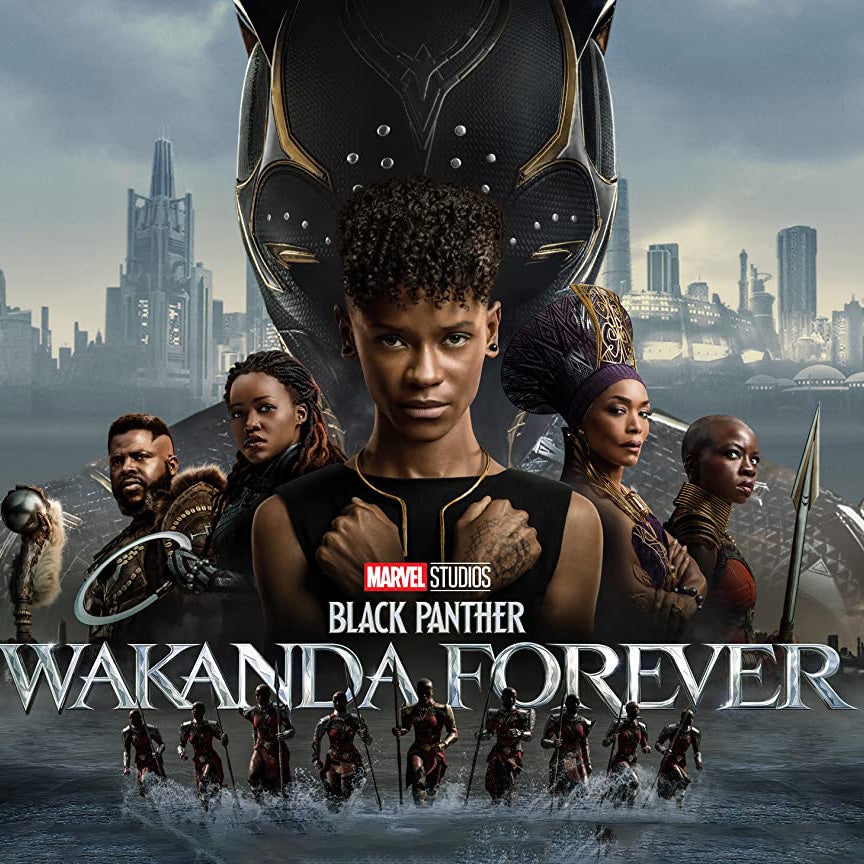
WAKANDA FOREVER

At 161 minutes, Black Panther: Wakanda Forever is one of the longest Super-Hero movies ever. Director Ryan Coogler tries to solve the problem of continuing the Black Panther series after his star, Chadwick Boseman, died unexpectedly. Coogler includes numerous tributes to Boseman in the film which helps to explain the extraordinary length of the movie.

In the first Black Panther movie, the villain was the scary Michael B. Jordan as Killmonger. In Wakanda Forever the villain is the undersea Namor (Tenoch Huerta), king of the ancient underwater world of Talokan. Sure, Namor has super strength, but he also has silly wings on his ankles which allow him–somehow–to fly.

Both Wakanda and Talokan find themselves threatened because the rest of the world wants their precious Vibranium. A meteorite made of vibranium, one of the most powerful metals in the universe, crashed in Wakanda which allowed the hidden African country to develop advance technologies. The same scenario happened in Talokan under the ocean. Another meteorite of vibranium landed in their area and the quasi-Aztecs developed astonishing technology, too.

You would think that two threatened countries would become allies to resist their common enemies. Wakanda Forever shows you would be wrong. Plenty of fighting and destruction result. Martin Freeman and Julia Louis-Dreyfus find themselves thrown into the mix for no particular reason.

Although our showing of Wakanda Forever was packed (and Diane and I were the only ones wearing N95 masks) I suspect attendance will dip sharply after this opening weekend. GRADE: B-

JAMMIN’ OLDIES: INSTRUMENTAL HITS and WALK–DON’T RUN: THE VENTURES ALL TIME GREATEST HITS

When I first began to listen to music in the late 1950s and early 1960s, I really enjoyed the instrumental songs I heard on the radio. Loved “Walk Don’t Run” by The Ventures. I couldn’t get enough of “Out of Limits” by The Marketts. And, of course, there’s the classic “Tequila” by The Champs that showed up years later in a Pee Wee Herman movie.

I have no idea why this instrumental genre faded away. Just listen to The Ventures playing the theme songs like “Hawaii Five-O” and “Secret Agent Man.” Just terrific!

Do you remember these instrumental hits? Any favorites here? GRADE: A (for both CDs)

TRACK LIST:

1Tequila – Champs
2Rebel Rouser – Duane Eddy
3Telstar – Tornadoes
4Walk Don’t Run – Ventures
5Red River Rock – Johnny, The Hurricanes
6Pipeline – Chantays
7Raunchy – Bill Justis
8Out Of Limits – Marketts
9Wipe Out – Surfaris
10Sleep Walk – Santo, Johnny

TRACK LIST:

1Walk – Don’t Run
2Perfidia
3Hawaii Five-O
4Theme From “A Summer Place”
5Secret Agent Man
6Lolita Ya-Ya
7Wipe Out
8Slaughter On Tenth Avenue
9Diamond Head
10Ram-Bunk-Shush
11Blue Moon
12Lullaby Of The Leaves