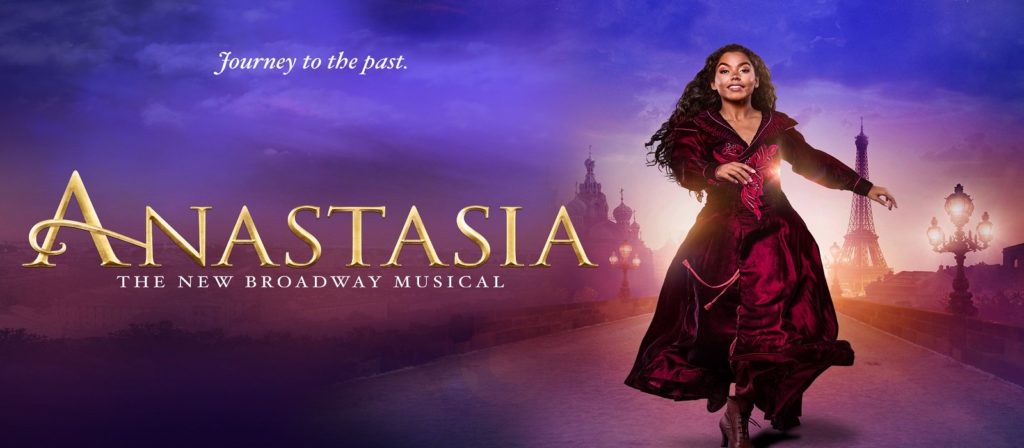
On Sundays, Shea’s Performing Arts Center usually offers two performances of their musicals, a matinee and an evening performance. Diane and I attended the sold-out matinee performance of Anastasia. When we returned home and were preparing dinner, the phone rang. It was Diane’s cousin who had tickets to the evening performance of Anastasia. “They cancelled the performance!” Phyllis exclaimed. Later, we found out several of the actors who performed in the matinee of Anastasia developed symptoms and when they were tested after the matinee…they tested positive. Yes, Covid-19 is still alive and spreading in Buffalo.
Diane and I wore our N95 masks, but we were in the small minority in the audience who took that precaution.
Remember the name Kayla Stone. She plays Anastasia with verve and flair. Kayla Stone sings, dances, and projects her enigmatic character marvelously.
We also liked the two Russian con-men, Dimitry (Sam McLellan) and the raffish Vlad (Bryan Seastrom) who “groom” their young street sweeper to pass as Anastasia. They plan on fooling the wealthy Dowager Empress (played in superb world-weary fashion by Gerri Weagraff) living Paris that Anastasia survived the execution of the Romanoffs…and collect the reward.
Anastasia features luscious costumes, lush music, and a great cast. Don’t miss it if it shows up in your neighborhood…unless it gets canceled because of Covid. GRADE: B+
Kevin Goetz specializes in the field of focus groups that evaluate movies before they are released. Goetz tells dozens of stories of movies whose endings were changed based on audience feedback. For example, in the original ending of Fatal Attraction Glenn Close committed suicide. But the focus group audience who watched the movie wanted Glenn Close “punished” for her actions. So, a new ending was shot. If you get the Director’s Cut version of Fatal Attraction you’ll see both endings.
I was also fascinated to find out the original movie focus groups came about because of George Gallup, the pollster. He approached the movie studios and offered his services.
“In The Big Broadcast of 1938, a new comedic actor named Bob Hope was featured in several early scenes that didn’t play well to the test audiences. Moviegoers were unfamiliar with his style of humor and didn’t find it particular funny. But, in one of the film’s later scenes, the audience roared with laughter at his antics. So Paramount, recognizing that audience might need a different introduction to his brand of humor, reordered the scenes to put his big laugh scene before the others. At the next test screening, moviegoers found Hope to be funny all the way through.” (p. 30)
Kevin Goetz ran dozens of focus groups that provided key information to improving films. At a time when Batman, Indiana Jones, and Die Hard dominated the movie screens, a movie like Driving Miss Daisy looked like a loser. But test audiences loved it. When Driving Miss Daisy was released, Roger Ebert wrote, “After so many movies in which shallow and violent people deny their humanity and ours, what a lesson to see a film that looks into the heart.” Driving Miss Daisy won the Oscar for Best Picture of 1989 and Jessica Tandy won Best Actress at 80 years of age! Her career began in the 1930s. And the movie took in $145 million!
If you love movies, Audience-ology provides plenty of insights and stories and surprises about films, directors, and actors. Terrific book! GRADE: A
Table of Contents:
Foreword Chris Meledandri ix
Introduction 1
1 Finding My “And” 9
2 Locked Doors, Severed Heads, and the Early History of Test Screenings 25
3 The Lights in Minneapolis 39
4 The Girl in the Black Cocktail Dress 63
5 Know Thy Audience 93
6 From Straight-to-DVD to Five F*cking Sequels 119
7 Scores Settle Scores 137
8 When Bad Things Happen to Good Movies 155
9 It’s Like Seeing Your Lover Naked for the First Time 167
10 Spock, Laddie, and Lessons in Managing Highly Emotional Individuals 179
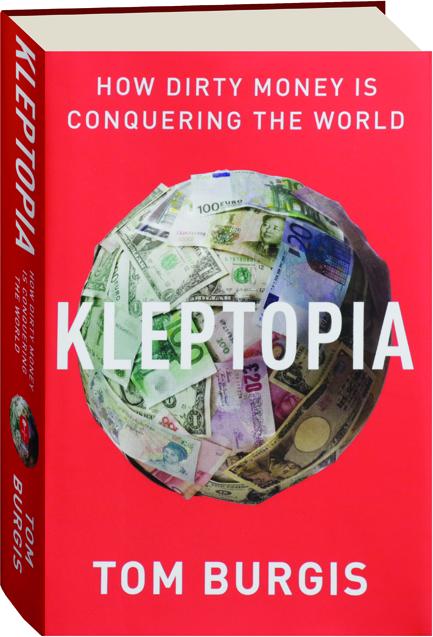
No one will be surprised to learn we live in a corrupt world. Just how corrupt the world is takes 446 pages of Tom Burgis’s Kleptopia to document. Corrupt banks, Russian Oligarchs, international currency manipulation, ransomware, and assassinations feature in Burgis’s story of how the economic system is going to Hell. Written like a thriller, Kleptopia shows how criminal organizations and corrupt governments rake in billions of dollars.
And, it will come as no surprise that the Trump family is deeply involved in many of these nefarious enterprises. Dirty money flows all over the world and ends up in Swiss Bank accounts and Grand Cayman Island safe deposit boxes. Tax free.
If you’re interested in the growing corruption of the world’s trade, governments, and currencies, reading Kleptopia will keep you up at night. GRADE: A
Table of Contents:
A Note on Truth xi
Cast of Characters xiii
Part I Crisis
1 The Thief – Kensington, January 2008 3
2 A Feast – Whitehall February 2008 8
3 Tunnels – Cheapside, February 2008 25
4 The Dual State – Moscow, February 2008 30
5 Silhouette – Cheapside, July 2008 44
6 Mr Billy – Harare, September 2008 48
7 Shutdown – Cheapside, September 2008 58
8 The Fallen Oligarch – Astana, January 2009 60
9 Top Secret – London, April 2009 70
10 Paying Your Dues – Pretoria, September 2009 72
11 The Informant – Brooklyn, October 2009 74
12 The Real – London, May 2010 88
Part II Chrysalis
13 Beginnings – London, December 2010 93
14 Big Yellow – Finchley, February 2011 103
15 Watchdogs – London, March 2011 118
16 The Savarona – London, May 2011 121
17 Off the Boob – Rudny, May 2011 128
18 God’s Kingdom – St Paul’s, October 2011 136
19 Fear – Zhanaozen, December 2011 140
20 Stability – Cambridge, July 2012 154
21 Too Big to Jail – London, September 2012 170
22 Sasha and Seva – St James’s, March 2013 172
23 The Loving Cup – Canary Wharf, February 2013 185
24 The Presumption of Regularity – Rome, May 2013 189
25 A Legit Shithole – Cincinnati, August 2013 198
26 Risk Appetite – Canary Wharf August 2013 207
27 Doubles – Old Billingsgate, February 2014 209
28 The System – Canary Wharf, June 2014 214
Part III Metamorphosis
29 Conquest – Eastern Ukraine, August 2014 221
30 Privacy – Kensington, September 2014 228
31 The Bridge – Moscow, February 2015 233
32 His Footprints Are Not Found – Colchester, September 2015 239
33 Winners – Manhattan, November 2016 244
34 Saint or Sinner – Paris, December 2016 251
35 The Future – Colchester, December 2016 271
36 The Man With No Past – Washington, January 2017 274
37 It’s Over – Kensington, June 2017 288
38 The Story You Choose to Tell – Montreal, August 2017 291
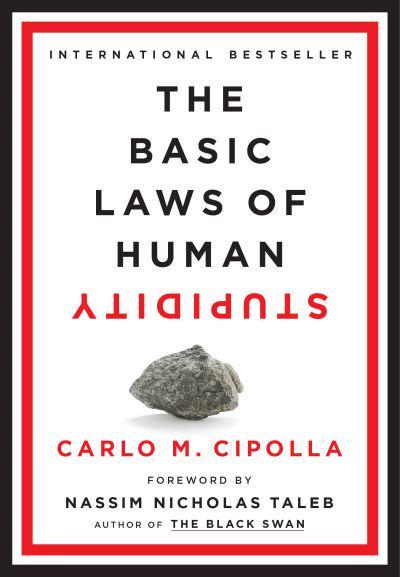
In his witty and informative Introduction, Nassim Nicholas Taleb discusses the scientific basis of stupidity and confirms much of what Carlo M. Cipolla asserts about human stupidity.
The First Basic Law says: “Always and inevitably everyone underestimates the number of stupid individuals in circulation.” We found that out in the last Presidential Election. And during the Pandemic! Later in his slim little book, Cipolla defines a stupid person as a person who causes losses to another person or a group of persons while deriving no gain and even possibly incurring losses to themselves.
While I agree with Cipolla, I have to admit I have done some stupid things in my Life. Not to go into too much detail, but I was naive as a kid and there were times I was misled into stupid actions because I didn’t know any better. Later in Life, I fell prey to believing people who lied to me and that resulted in me making stupid mistakes because I trusted them.
There are consistently stupid people and there are people like me who occasionally do stupid things. I’m sure you know people who fall into both categories. In the May 2022 issue of The Atlantic, Jonathan Haidt in “After Babel,” shows how social media dissolved the mortar of our society and made America stupid. The future looks grim. GRADE: B
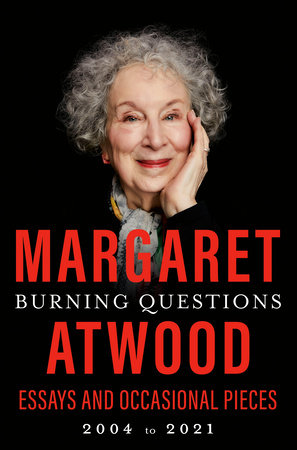
Margaret Atwood morphed into a world famous author when her The Handmaid’s Tale was published in 1985 and she became in intergalactic figure when HULU broadcast the TV version of The Handmaid’s Tale in 2019. The tale of a dystopian future where women are marginalized and a few become breeding machines for the political elite resonated in the time of Trump.
But over Margaret Atwood’s long career, she’s written several compelling novels and dozens of brilliant essays. In Burning Questions the focus tends to be on women and the ways society and culture deal with them. In a review of Marilyn French’s massive three-volume work on the history of Women, From Eve to Dawn, Atwood cites the “horse sacrifice” of ancient India. The priests at that time forced the raja’s wife to copulate with a dead horse (p. 23). Religion has not been kind to women over the centuries.
I also enjoyed Atwood’s essay on her early career. “I continued with my secret life, which was the life of a writer. Like vampires, I had to pursue this life at night.” And, “There’s not much about Kraft Dinner with hot dogs cut up into it that I don’t know.” (p. 42)
Atwood’s book reviews are fun, too. Alice Munro, Stephen King, Ray Bradbury, Richard Powers, and many more writers receive Atwood’s careful analysis. For Science Fiction fans, Atwood’s “Scientific Romancing” is one of the best essays on the SF genre I’ve ever read.
Burning Questions is a terrific book! Don’t miss it! GRADE: A
TABLE OF CONTENTS:
Introduction — xiii
PART I: 2004-2009. What will happen next? Scientific romancing — 3 Frozen in time — 14 From eve to dawn — 21 Polonia — 28 Somebody’s daughter — 32 Five visits to the word-hoard — 37 The echo maker — 49 Wetlands — 60 Trees of life, trees of death — 67 Ryszard Kapuściński — 78 Anne of Green Gables — 83 Alice Munro: an appreciation — 92 Ancient balances — 105 Scrooge — 119 A writing life — 123 PART II: 2010-2013. Art is our nature The writer as political agent? Really? — 131 Literature and the environment — 137 Alice Munro — 148 The gift — 150 Bring up the bodies — 156 Rachel Carson anniversary — 160 The futures market — 169 Why I wrote Maddaddam — 184 Seven gothic tales — 189 Doctor sleep — 195 Doris Lessing — 199 How to change the world? — 202 PART III: 2014-2016. Which is to be master In translationland — 217 On beauty — 230 The summer of the stromatolites — 234 Kafka — 238 Future library — 243 Reflections on The handmaid’s tale — 245 We are double-plus unfree — 259 Buttons or bows? — 266 Gabrielle Roy — 271 Shakespeare and me — 293 Marie-Claire blais — 306 Kiss of the fur queen — 311 We hang by a thread — 313 PART IV: 2017-2019. How slippery is the slope? What art under Trump? — 323 The illustrated man — 328 Am I a bad feminist? — 335 We lost Ursula Le Guin when we needed her most — 340 Three tarot cards — 344 A slave state? — 361 Oryx and crake — 363 Greetings, earthlings! What are these human rights of which you speak? — 368 Payback — 380 Memory of fire — 384 Tell, the, truth — 387 PART V: 2020-2021. Thought and memory Growing up in quarantineland — 393 The equivalents — 398 Inseparable — 402 We — 408 The writing of The testaments — 414 The bedside book of birds — 424 Perpetual motion and gentleman death — 427 Caught in time’s current — 433 Big science — 440 Barry Lopez — 444 The sea trilogy –446
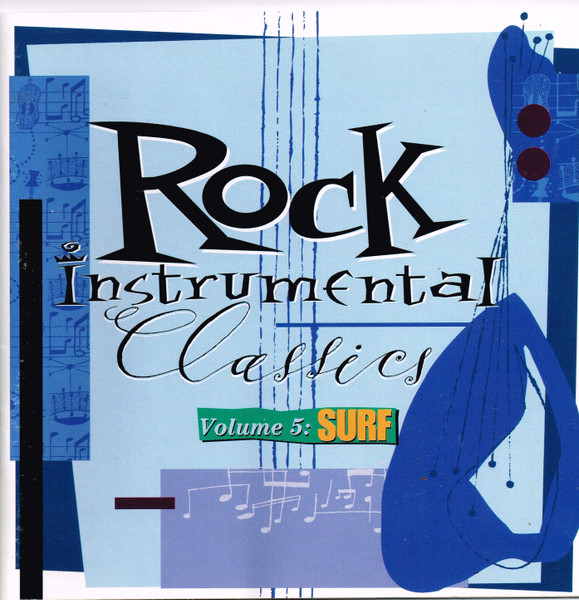
Back in the early days of Rock’n’Roll, songs would played on radio pop stations and some of the songs would be instrumentals. Not so today.
And, in the early 1960s, a new genre–Surfer Music–made its appearance. Sure, The Beach Boys and Jan & Dean sang plenty of songs about surfing and beaches, but I enjoyed instrumentals like The Chantay’s “Pipeline” and The Surfaris’s “Wipe Out.” Of all the songs here–and there are some great ones!–my favorite is Jack Nitzsche’s “The Lonely Surfer.” Nitzsche would go on to do great work with Phil Spector and Neil Young.
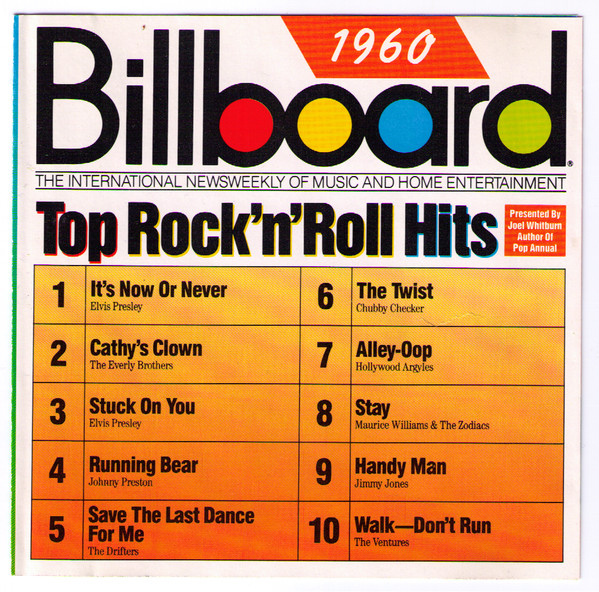
I consider 1960 to be a milestone year for me. That’s when I got my first transistor radio! I listened to it constantly. And the songs on Billboard Top Rock’n’Roll Hits–1960 are all very familiar to me. I listened to them tons of times over that time period. Do you remember these songs? Do you like instrumentals? GRADE: A (for both CDs)
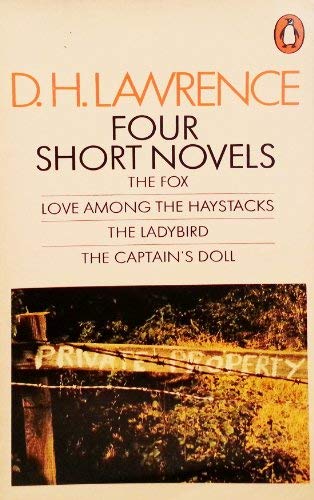
In my quest to read books I’ve had on my shelves for decades, I finally picked up D. H. Lawrence’s Four Short Novels. I’m not sure the term “short novel” is appropriate for some of these stories. For example, “Love Among the Haystacks” is only 41 pages. That’s hardly a short novel in my book!
Let’s start with “Love Among the Haystacks.” It’s the story of a couple of young farmers and a couple of young women finding romance among the haystacks. I found it very ho-hum. GRADE: C
“The Fox” concerns two women who are living together and trying to turn a patch of wilderness into a farm. A young man visits them, stays for a time, and all hell breaks loose! This is a strange story that takes some bizarre turns. GRADE: C+
“The Ladybird” features a young woman in love with an older man. The older man, of course, is married and a prisoner of war. The young woman visits the wounded solider and when the man asks her to sew him a shirt, she does so. Why? The story really seems to go nowhere. GRADE: C
The final story in this collection is “The Captain’s Doll.” A gifted artist has a crush on a military man. She makes a doll that resembles the Captain, the man she would love to marry. The Captain tells her that he only cares to take care of a woman and have her obey his commands–he cares nothing of love. Of course, they end up together. GRADE: C
I’ve never been a big fan of D. H. Lawrence’s fiction. Lawrence wrote a brilliant non-fiction book, Studies in Classic American Literature, in 1923. Read that instead!
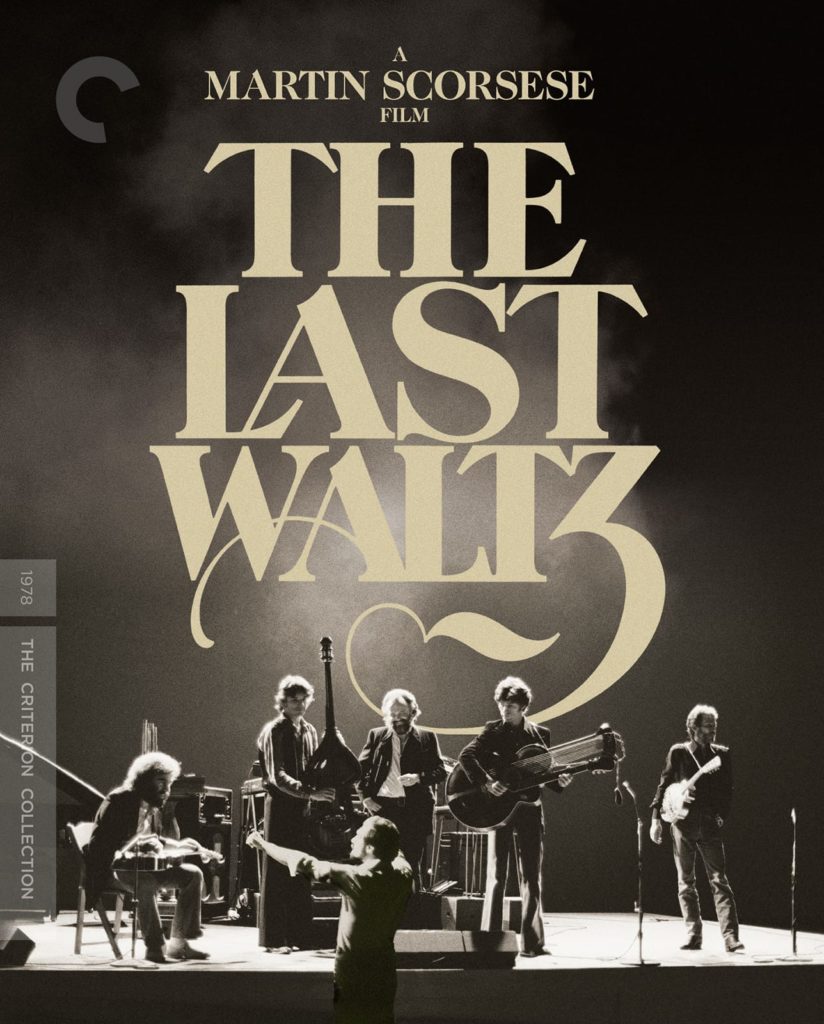
Last week I blogged about The Band’s Stage Fright and The Best of the Band. Just by coincidence, the new Criterion Collection version of The Last Waltz arrived the next day and I spent time watching it. I have a couple different versions of The Last Waltz, at least one DVD version and a Blu-ray. This new Criterion Collection disc is a Blu-ray and the quality is very good. The colors are crisp and the sound is sharp.
Not only do you get to see and hear The Band play its final performance, you get to see them share the stage with Bob Dylan, Joni Mitchell, Van Morrison, the Staple Singers, Muddy Waters, Neil Young, Dr. John, Ronnie Hawkins, Emmylou Harris, Eric Clapton, Neil Diamond, and Mavis Staples. Martin Scorsese’s classic rock documentary from 1978 looks remastered for the 21st Century! Terrific! GRADE: A
New 4K digital restoration, supervised and approved by director Martin Scorsese, with 5.1 surround DTS-HD Master Audio soundtrack supervised and approved by musician Robbie Robertson
In the 4K UHD edition: One 4K UHD disc of the film presented in Dolby Vision HDR and one Blu-ray with the film and special features
Two alternate soundtracks: the original 1978 2.0 surround mix, presented in DTS-HD Master Audio, and an uncompressed stereo mix from 2001
Two audio commentaries, featuring Scorsese; members of the Band; members of the production crew; and performers Dr. John, Ronnie Hawkins, and Mavis Staples
New interview with Scorsese, conducted by critic David Fear
Documentary from 2002 about the making of the film
Outtake
Interview from 1978 with Scorsese and Robertson
Trailer and TV spot
English subtitles for the deaf and hard of hearing
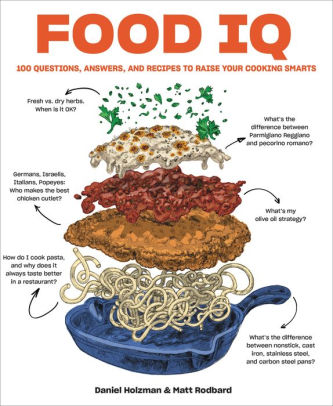
Daniel Holzman & Matt Rodbard’s Food IQ is subtitled: 100 Questions, Answers, and Recipes to Raise Your Cooking Smarts. With years of cooking experience Holzman and Rodbard share many of their cooking secrets.
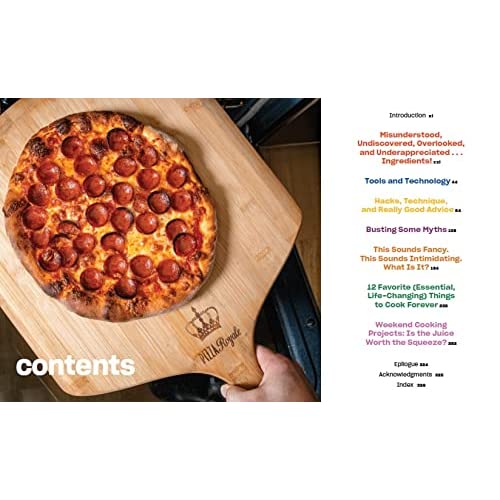
I, of course, went directly to their advice on baking wonderful pizzas! Despite the many different kinds of pizzas you might want to bake, the authors focus on the importance of the dough. Most people do not have pizza ovens in their kitchen (able to reach over 600 degrees) so some temperature compromises must be made.
The chapter on pasta dishes also drew my attention. I learned by pasta always tastes better in a restaurant–unless you know the secret.
Finding out the strengths and weaknesses of various kitchen tools was useful, too. If you want to become a better cook and prepare more tasty food, check outFOOD IQ. GRADE: A
TABLE OF CONTENTS:
Introduction — xi
Misunderstood, undiscovered, overlooked, and underappreciated … ingredients — xxi Tools and technology — 44 Hacks, technique, and really good advice — 84 Busting some myths — 138 This sounds fancy. This sounds intimidating. What is it? — 194 12 favorite (essential, life-changing) things to cook forever — 238 Weekend cooking projects: is the juice worth the squeeze? — 282