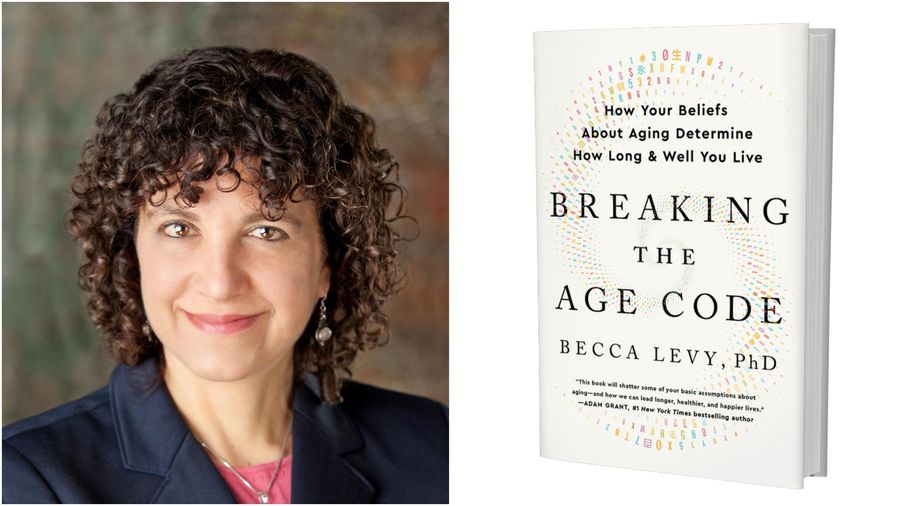
Becca Levy, Professor of Epidemiology at the Yale School of Public Health, subtitled her new book, Breaking the Age Code, with How Your Beliefs About Aging Determine How Long & How Well You Live (2022).
Based on years of research, Becca Levy presents a compelling case that the way we view the Aging Process affects how long and well we will live. My favorite chapter in Breaking the Age Code is “Longevity Advantage of 7.5 Years.” “Age beliefs stole or added almost 8 years to lives, conferring an even better survival advantage than low cholesterol or low blood pressure (both of which added an extra four years of life) or low body mass index (one extra year) or avoiding smoking (three extra years).” (p. 93)
Having positive views of aging and a willingness to manage the aging process extended lives and improved mood and satisfaction. When I’m at the Pool, I’ve encountered many people who are bitter about aging. They resent the limitations it has forced on them: low energy, increased injuries, and increased pain.
Becca Levy shows how many of the problems with aging can be dealt with. Engagement allows you to live longer and happier while resentment and hostility cuts years off your life. Becca Levy believes we’re on the cusp of a revolution in dealing with dementia, Alzheimer’s, and reversing various aging conditions. Dozens of drugs are in clinical trials and should be available in a few years to help us out if we can just hang on.
I liked the optimism of Becca Levy’s Breaking the Age Code. Help with aging is on the way! How are you dealing with aging? GRADE: A
TABLE OF CONTENTS:
Introduction: Ideas Bouncing Between the US and Japan 1
1 The Pictures in Our Head 9
2 Anatomy of a Senior Moment 25
3 Old and Fast 44
4 Brawny Brains: Genes Aren’t Destiny 58
5 Later-Life Mental Health Growth 73
6 Longevity Advantage of 7.5 Years 91
7 Stars Invisible by Day: Creativity and the Senses 110
8 Ageism: The Evil Octopus 130
9 Individual Age Liberation: How to Free Your Mind 155
10 Societal Age Liberation: A New Social Movement 172
Afterword: A Town Free of Ageism 192
Appendix 1 ABC Method to Bolster Positive Age Beliefs 205
Appendix 2 Ammunition to Debunk Negative Age Stereotypes 211
Appendix 3 A Gall to End Structural Ageism 215
Acknowledgments 227