MILLER’S CROSSING (Criterion Collection Blu-ray)

The new Criterion Collection version of Miller’s Crossing blends classic noir fiction with Joel and Ethan Coen’s trademark sparkling dialogue, off-beat characters, and violent action. Here’s a summary:

“Gabriel Byrne brings a wry gravitas to the role of Tom Reagan, the quick-thinking right-hand man to a powerful crime boss (Albert Finney). Tom’s unflappable cool is tested when he begins offering his services to a rival outfit—setting off a cascade of betrayals, reprisals, and increasingly berserk violence. The Hopperesque visuals of cinematographer Barry Sonnenfeld, majestically elegiac score by Carter Burwell, and vivid supporting performances from John Turturro and Marcia Gay Harden come together in a slice of pulp perfection that crackles with sardonic wit while plumbing existential questions about free will and our own terrifying capacity for evil.”

Of course the real reason I bought Miller’s Crossing was the conversation between Megan Abbott and the Coen’s film noir and crime fiction. Great movie, great conversation! GRADE: A

DIRECTOR-APPROVED BLU-RAY SPECIAL EDITION FEATURES:

  • 2K digital restoration, approved by director of photography Barry Sonnenfeld and filmmakers Joel and Ethan Coen, with new 5.1 surround soundtrack mix, presented in DTS-HD Master Audio
  • New conversation between author Megan Abbott and the Coens about film noir and hard-boiled crime fiction
  • New interview with actors Gabriel Byrne and John Turturro, moderated by Abbott
  • Interviews from 1990 with Byrne, Turturro, and actors Marcia Gay Harden and Jon Polito
  • New interviews with Sonnenfeld, composer Carter Burwell, music editor Todd Kasow, and production designer Dennis Gassner
  • English subtitles for the deaf and hard of hearing
  • PLUS: An essay by film critic Glenn Kenny

    New cover illustration by Patrick Leger

LANDSLIDE: THE FINAL DAYS OF THE TRUMP PRESIDENCY By Michael Wolff

“In the days and weeks after Election Day on November 3, the President was deserted by his aides and staff. The legal establishment, at least anyone in it with a promising career, abandoned him. His hapless band of co-conspirators are too lazy or too drunk or cynical to develop a credible strategy or execute one. It was a a shit show–ludicrous, inexplicable, cringeworthy, nuts, event for the people who felt most loyal to him. The election challenge never had a chance of success.” (p. xiv)

“[Sidney Powell] had been telling Giuliani and the team that the conspiracy ran even deeper: Trump’s landslide victory was upended by an international plot. Former Venezuelan present Hugo Chavez (dead since 2013), George Soros, the Clinton Foundation, and the Chinese had masterminded the plot to steal the election from [Trump]. Oh, and the voting software routed the realists through Germany, exposing the tabulation to nefarious elements there!” (p. 114)

“On Saturday, November 21, two days after Giuliani’s hair dye meltdown at the RNC press conference, U. S. Court District judge Matthew Brann, in Pennsylvania, denied the Trump effort to have millions of mail-in ballots thrown out because of small inconsistencies, from county to country, in the filing process. …[Judge Brann wrote] the claim, ‘like Frankenstein’s monster, has been haphazardly stitched together.'” (p. 124)

With Trump traipsing around the country praising Putin–“A genius!”–and positioning himself for a run for President in 2024, I thought it was instructive to read Michael Wolff’s Landslide: The Final Days of the Trump Presidency to revisit those dark days that culminated in the Attack on the Capitol on January 6, 2021. The desperate efforts to overturn the Election, the failure to concede to Biden, the launching of the Big Lie (the Election was stolen!) strategy, and total lack of interest in the Pandemic punctuated the Lame Duck period until Biden’s Inauguration.

With the Russian-Ukraine War raging, historically high gas prices, Inflation out of control, and Republican states targeting LGBTQ students (“Don’t Say Gay!), things look bleak. Where do you think we’re headed? GRADE: B+

TABLE OF CONTENTS:

Introduction xiii

Prologue: The Trial 1

1 Death Star 9

2 Election Night 43

3 New Votes 64

4 Rudy 92

5 What’s Black Is White 121

6 Where Now? 143

7 The Endgame 163

8 The Day Before 189

9 Morning, January 6 213

10 The Remainder Of The Day, January 6 229

11 Deplatformed 251

12 Redux 272

Epilogue: The Road To Mar-A-Lago 291

Acknowledgments 311

VIETTI MOSCATO D’ASTI 2020

“A fruity, lightly spiced apple pie with a dollop of cream pairs nicely with this pear-inflected, softly sweet and vivaciously semi-sparkling Moscato d’Asti from the Piemontese producer Vietti. Produced from vineyards that are almost 40 years old, its low in alcohol (5%) but long on pleasure and very, very easy to drink.”

That’s the review in the Wall Street Journal that motivated me to buy a bottle of Vietti Moscato d’Asti. And, I totally agree with the reviewer! Vietti Moscato d’Asti is a softly sweet and vivaciously semi-sparkling white wine that’s simply delicious!

If you’re interested in other wine and dessert pairings, you can read the full review here. GRADE: A

GODINE AT FIFTY: A RETROSPECTIVE OF FIVE DECADES IN THE LIFE OF AN INDEPENDENT PUBLISHER By David R. Godine

I’m not a big fan of coffee table books, but this gorgeous volume celebrating Godine Press will grace my coffee table for years! A couple dozen Godine Press books sit on my shelves. I found Godine books wonderfully produced with unique cover artwork and quality materials.

The first Godine book I bought was in 1982. It was a quirky mystery by K. C. Constantine: The Man Who Liked Slow Tomatoes. I went on to purchase the next eight Mario Balzic mysteries Godine published. Balzic, chief of police in Rocksburg, Pennsylvania, investigates crimes in a small coal mining town in Western Pennsylvania. Why K. C. Constantine isn’t in the conversation with Michael Connelly and Laura Lippman and other top writers baffles me.

Edmund Wilson, George Orwell, Donald Hall, Iris Origo, Paul Horgan, William Gass, Will Cuppy, Ludwig Bemelmans, William Maxwell, Wright Morris, and Paula Fox are just some of the writers you’ll find between well designed and beautifully printed Godine covers. Are you a fan of Godine Books? Do you have a favorite? GRADE: A

TABLE OF CONTENTS:

Introduction & Brief History of the Press — vii

1. Early Letterpress & Fine Printing — 1

2. Wood Cut & Wood Engraving — 10

3. Fiction — 17

4. Short Stories — 29

5. Literature in Translation — 36

6. Poetry — 43

7. Essay and Criticism — 58

8. Words, Language and Usage — 69

9. Biography & Autobiography — 73

10. History — 90

11. Photography — 105

12. Art — 124

13. Architecture — 135

14. Children’s Books — 147

15. Nautical & Maritime — 173

16. Music — 185

17. Gardening — 197

18. Cooking and Cuisine — 207

19. Typography — 213

20. Calligraphy — 231

21. Natural History — 239

22. Humor — 249

23. The Sporting Life — 253

24. Outliers & Other Works of Unclassifiable but Undeniable Genius — 257

Posters — 262

Ephemera — 264

Bindings — 265

Typographers, Calligraphers, & Designers — 266

Index — 267

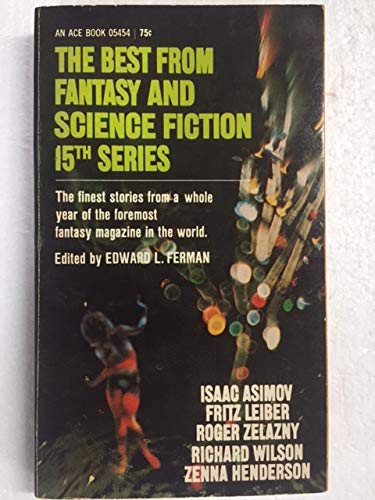
FRIDAY’S FORGOTTEN BOOKS #682: THE BEST FROM FANTASY AND SCIENCE FICTION, 15th SERIES Edited by Edward L. Ferman

Edward L. Ferman succeeds Avram Davidson as editor with this volume. My favorite story in this anthology is Fritz Leiber’s “Four Ghosts in Hamlet.” Perhaps the most famous story in The Best Fantasy and Science Fiction, 15th Series is Roger Zelazny’s “The Doors of His Face, The Lamps of His Mouth” about a fishing expedition on Venus.

R. A. Lafferty’s “Hog-Belly Honey” presents his usual comic silliness. Zenna Henderson’s touching story of The People, “No Different Flesh,” begins with a flying baby and ends in hope. The Best Fantasy and Science Fiction, 15th Series shows Edward L. Ferman can assemble a quality anthology in the manner that Anthony Boucher and Avram Davidson did for years. GRADE: B+

TABLE OF CONTENTS:

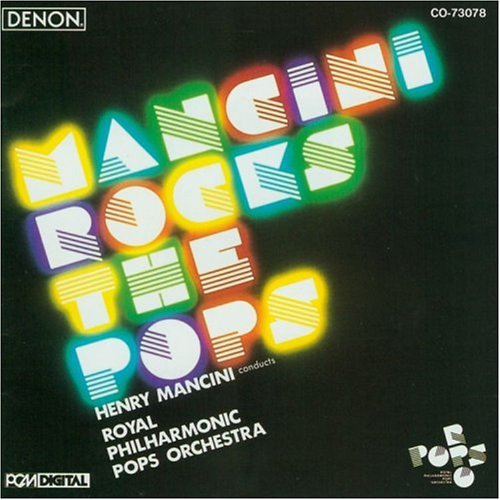
MANCINI ROCKS THE POPS

Henry Mancini is best known for his “Theme for Peter Gunn,” “Moon River,” and “The Theme for The Pink Panther.” So when I saw this orchestral CD of Pop Hits, I bought it immediately. I’m sure you’ll find most of these tunes familiar.

The CD ends with “Good Old Rock’N’Roll (Medley)” with eight songs mostly from the early days of Rock’N’Roll. If you’re in the mood for something very different, you might want to try these versions of well-known Pop songs. I’ve listened to this CD a couple of times since I acquired it and enjoyed what I heard. How many of these songs do you remember? GRADE: B+

TRACK LIST:

1Walk Like an Egyptian [Bangles] Liam SternbergHenry
Mancini
4:41
2In the Air Tonight [Phil Collins]Phil CollinsHenry Mancini05:15
3Thriller [Michael Jackson]Rod TempertonHenry Mancini04:21
4Every Breath You Take [the Police]StingHenry Mancini03:54
5Material Girl [Madonna]Peter Brown / Robert RansHenry Mancini04:09
6With or Without You [U2]Bono / Adam Clayton / The Edge / Larry Mullen, Jr.Henry Mancini04:58
7Sweet Dreams (Are Made of This)Annie Lennox / Dave StewartHenry Mancini04:03
8La Bamba [Los Lobos]TraditionalHenry Mancini03:09
9On the Turning Away [Pink Floyd]David Gilmour / Anthony MooreHenry Mancini04:25
10It’s a Sin [Pet Shop Boys]Chris Lowe / Neil TennantHenry Mancini04:05
11Imagine [John Lennon]John LennonHenry Mancini03:47
12Good Old Rock’n’roll [Medley]Henry Mancini06:40
13Rock Around the Clock Jimmy DeKnight / Max FreedmanHenry Mancini
14Bye Bye Love Boudleaux Bryant / Felice BryantHenry Mancini
15Great Balls of Fire Otis Blackwell / Jack HammerHenry Mancini
16Proud Mary John FogertyHenry Mancini
17Bad, Bad Leroy Brown Jim CroceHenry Mancini
18Blue Suede Shoes Carl PerkinsHenry Mancini
19Shake, Rattle & Roll Charles E. CalhounHenry Mancini
20Peggy Sue Jerry Allison / Buddy Holly / Norman PettyHenry Mancini

WEDNESDAY’S SHORT STORIES #59: ANONYMOUS SEX Edited by Hillary Jordan and Cleryl Lu-Lien Tan

A bold collection of stories about sex that leaves you guessing who wrote what.” And, “27 Authors. 27 Stories. No Names Attached.” That’s the marketing concept behind Hillary Jordan and Clearly Lu-Lien Tan’s Anonymous Sex. Jordan and Tan approached a number of writers asking if they would send them stories that would be published anonymously with readers challenged to figure out which writer wrote which story. The project was stalled until the Pandemic hit and suddenly writers found time to participate.

So, who submitted stories that made the cut? Check out this list:

Featuring Robert Olen Butler, Catherine Chung, Trent Dalton, Heidi W. Durrow, Tony Eprile, Louise Erdrich, Jamie Ford, Julia Glass, Peter Godwin, Hillary Jordan, Rebecca Makkai, Valerie Martin, Dina Nayeri, Chigozie Obioma, Téa Obreht, Helen Oyeyemi, Mary-Louise Parker, Victoria Redel, Jason Reynolds, S.J. Rozan, Meredith Talusan, Cheryl Lu-Lien Tan, Souvankham Thammavongsa, Jeet Thayil, Paul Theroux, Luis Alberto Urrea, and Edmund White

What are these sex stories about? Here’s a brief sample:

* A married woman has a BDSM-tinged encounter at a work conference
* Two young boys on a sleepover feel the first stirrings of desire
* In an artificially generated afterlife, anything can be sexual if you want it to be
* A young widow on a sleeper train shelters a criminal in her carriage
* A bisexual woman cheats on her wife with a baker
* Anyone can hire a holographic gigolo in 2098 – but one client gets a lot closer than she’d intended
* Female friends, sharing a hotel room, give in to long-repressed feelings
* The Rapunzel myth is rewritten…

Clearly, Jordan and Tan tried to provide something for everybody. But, that wide net of stories also creates a problem: some of the stories may not engaged readers interested in a specific erotic scenario.

Each year since 1993, Literary Review has presented the annual Bad Sex in Fiction Award to the author it deems to have produced the worst description of a sex scene in a novel.  Too bad the stories in Anonymous Sex don’t qualify. GRADE: C-

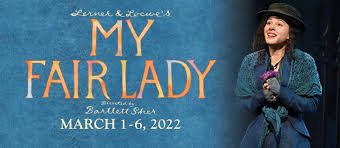
MY FAIR LADY

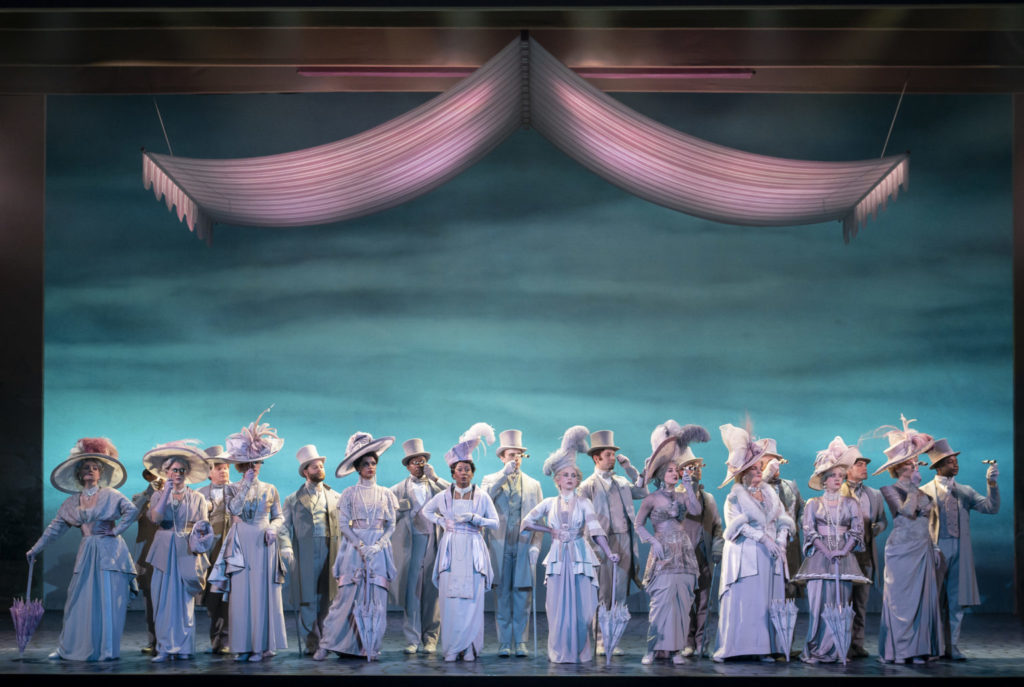
Diane and I donned our N95 masks and arrived at Shea’s Performing Arts Center to see an elegant classical musical, My Fair Lady. This touring company version didn’t stint on anything: the sumptuous costumes, the impressive rotating set pieces, and an orchestra worthy of the music.

My Fair Lady

Based on George Bernard Shaw’s 1913 play Pygmalion, My Fair Lady was first produced on Broadway in 1956 starring Julie Andrews and Rex Harrison, with Book and Lyrics by Alan Jay Lerner and Music by Frederick Loewe. It won six Tony awards, including Best Musical, and ran for 2,717 performances, which was a record for that time.

The 1964 film version of My Fair Lady, which won the Oscar for Best Picture and was the second highest grossing movie of the year (only Mary Poppins made more), was controversial for its replacement of Julie Andrews for a bigger star, Audrey Hepburn as Eliza, whose voice was dubbed by Marni Nixon (who also dubbed Natalie Wood’s Maria in the 1961 film of West Side Story. Ms. Nixon was quite a busy woman at that time).

Lerner and Loewe collaborated on sixteen musicals including, to name a few: BRIGADOON, PAINT YOUR WAGON, CAMELOT, and GIGI. My Fair Lady was their biggest hit.

Shereen Ahmed as Eliza Doolittle, the cockney flower girl transformed into an elegant lady on a bet by altering her speech, delighted us with her wonderful voice. Laird Mackintosh is a convincing obsessive/compulsive Henry Higgins although this production presents Professor Higgins as an obnoxious dilettante.

If My Fair Lady shows up in your neighborhood, I recommend you consider seeing this old fashioned, classic musical with its wonderful songs. Are you a fan of My Fair Lady? GRADE: B+

Musical numbers:

Act I
“Overture” – The Orchestra”Busker Sequence” – The Orchestra”Why Can’t the English?” – Professor Higgins
Wouldn’t It Be Loverly?” – Eliza and Male Quartet
With a Little Bit of Luck” – Alfred Doolittle, Harry, Jamie and Company
“I’m an Ordinary Man” – Professor Higgins
“With a Little Bit of Luck (Reprise)” – Alfred Doolittle and Ensemble
“Just You Wait” – Eliza”The Servants’ Chorus (Poor Professor Higgins)” – Mrs. Pearce and Servants

The Rain in Spain” – Professor Higgins, Eliza, and Colonel Pickering
I Could Have Danced All Night” – Eliza, Mrs. Pearce, and Servants”Ascot Gavotte” – Ensemble
On the Street Where You Live” – Freddy”Eliza’s Entrance/Embassy Waltz” – The Orchestra
Act II
“You Did It” – Colonel Pickering, Professor Higgins, Mrs. Pearce, and Servants
“Just You Wait (Reprise)” – Eliza
“On the Street Where You Live (Reprise)” – Freddy
“Show Me” – Eliza with Freddy
“The Flower Market/Wouldn’t It Be Loverly? (Reprise)” – Eliza and Male Quartet
Get Me to the Church on Time” – Alfred Doolittle and Ensemble
“A Hymn to Him” – Professor Higgins and Colonel Pickering
“Without You” – Eliza and Professor Higgins
I’ve Grown Accustomed to Her Face” – Professor Higgins
“I Could Have Danced All Night (Reprise) / Finale” – The Orchestra

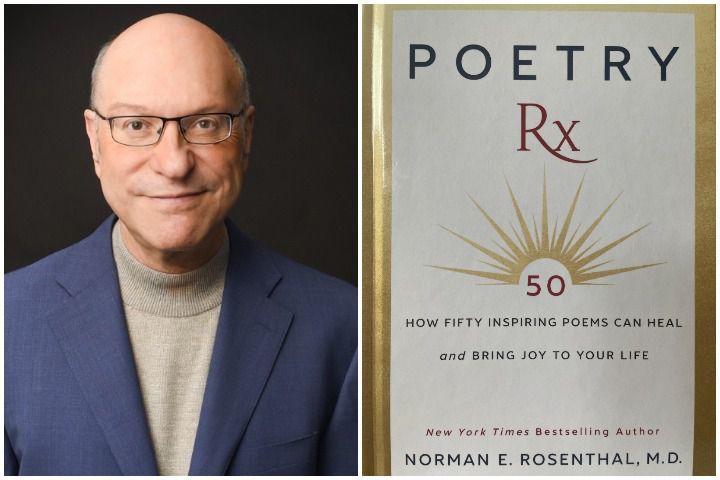
POETRY RX: HOW FIFTY INSPIRING POEMS CAN HEAL AND BRING JOY TO YOUR LIFE By Norman E. Rosenthal

Norman E. Rosenthal is a psychiatrist who believes poetry has the power to heal. Rosenthal selected 50 poems–many of them well-known–that can help readers deal with common problems of Life: loss, grieving, love, aging, anger, longing, and many more.

Whether or not you believe Rosenthal’s theory of the healing power of poetry, Rosenthal has assembled a wonderful group of poems that can just be read for pleasure. How many of these 50 poems do you know? Any favorites? GRADE: B+

TABLE OF CONTENTS:

INTRODUCTION — 1

PART ONE: LIVING AND LOSING

CHAPTER ONE: Is There an Art to Losing? — 9

“One Art” by Elizabeth Biship

CHAPTER TWO: Can Love Transform You? — 15

“How do I love thee? Let me count the ways” by Elizabeth Barrett Browning

CHAPTER THREE: The Heart versus the Mind — 22

“Pity me not because the light of day”. by Edna St. Vincent Millay

CHAPTER FOUR: Love in the Moment — 29

“Lullaby” by W. H. Auden

CHAPTER FIVE: When Love Fades — 36

“Failing and Flying” by Jack Gilbert

CHAPTER SIX: Getting Over a Breakup I: Acceptance — 43

“Why so pale and wan fond lover? by Sir John Suckling

CHAPTER SEVEN: Getting Over a Breakup II: Reclaiming Yourself — 48

“Love after Love” by Derek Walcott

CHAPTER EIGHT: Declaring Your Love — 55

“Sonnet 18: Shall I compare thee to a summer’s day?” by William Shakespeare

CHAPTER NINE: Consoled by Love — 63

“Sonnet 29: Whe, in disgrace with fortune and men’s eyes” by William Shakespeare

CHAPTER TEN: In Praise of the Marriage of True Minds –71

“Sonnet 116: Le me not to the marriage of true minds” by William Shakespeare

CHAPTER ELEVEN: Loss of a Loved One — 77

“Stop all the clocks, cut off the telephone (Funeral Blues) by W. H. Auden

CHAPTER TWELVE: Will I Ever Feel Better? — 83

“Time Does Not bRing Relief” by Edna St. Vincent Millay

CHAPTER THIRTEEN: Love Remembered — 86

“When You Are Old” by William Butler Yeats

CHAPTER FOURTEEN: Love After Death — 91

“Remember” by Christina Rossetti

PART TWO: THAT INWARD EYE

CHAPTER FIFTEEN: Transcendence in Nature –101

“Daffodils” by William Wordsworth

CHAPTER SIXTEEN: The Memory of Daffodils –109

“Miracle on St. David’s Day” by Gillian Clarke

CHAPTER SEVENTEEN: Transcendence in Body and Mind — 114

“Lines Composed a Few Miles above Tintern Abbey (excerpt)

CHAPTER EIGHTEEN: The Power of Dark and Light — 119

“There’s a certain Slant of light” by Lily Dickinson

CHAPTER NINETEEN: In Praise of Diversity — 126

“Pied Beauty” by Gerard Manley Hopkins

CHAPTER TWENTY: A Plea to Save the Natural World — 131

“Inversnaid” by Gerard Manley Hopkins

CHAPTER TWENTY-ONE: The Importance of Being Needed — 136

“Stopping by Woods on a Snowy Evening” by Robert Frost

CHAPTER TWENTY-TWO: The Choices We Make — 142

“The Road Not Taken” by Robert Frost

CHAPTER TWENTY-THREE: The Force of Longing — 148

“Sea Fever” by John Masefield

CHAPTER TWENTY-FOUR: Finding Hope in Nature — 154

“The Darkling Thrush” by Thomas Hardy

PART THREE: THE HUMAN EXPERIENCE

CHAPTER TWENTY-FIVE: The Power of Hope — 163

“Hope is the thing with feathers” by Emily Dickinson

CHAPTER TWENTY-SIX: Welcoming Your Emotions — 168

“The Guest House” by Jalaluddin Rumi (Translated by Coleman Barks)

CHAPTER TWENTY-SEVEN: The Healing Power of Reconciliation — 175

“Out beyond Ideas” by Jalaluddin Rumi (Translated by Coleman Barks)

CHAPTER TWENTY-EIGHT: Leaving Home — 180

“Traveler, there is no road” by Antonio Machado (Translated by Mary G. Berg and Dennis Maloney)

CHAPTER TWENTY-NINE: And Those You Leave Behind — 184

“Letter to My Mother” by Salvatore Quasimodo (Translated by Jack Bevan)

CHAPTER THIRTY: The Importance of Self-Actualization — 190

“On His Blindness” by John Milton

CHAPTER THIRTY-ONE: The Power of Faith — 195

“PSALM 23, A PSALM OF DAVID”

CHAPTER THIRTY-TWO: The Thrill of Discovery — 199

“On First Looking into Chapman’s Homer” by John Keats

CHAPTER THIRTY-THREE: The enduring Thrill of the Moment — 205

“High Flight” by John Gillespie Magee Jr.

CHAPTER THIRTY- FOUR: The Long Reach of Trauma — 211

“The Sentence” by Anna Akhmatova (Translated by Judith Hemschemeyer)

CHAPTER THIRTY-FIVE: The Danger of Anger — 220

“The Poison Tree” by William Blake

PART FOUR: A DESIGN FOR LIVING AND THE SEARCH FOR MEANING

CHAPTER THIRTY-SIX: Principles for a Good Life — 229

CHAPTER THIRTY-SEVEN: Remaining Steady through Life’s Ups and Downs — 234

“If” by Rudyard Kipling

CHAPTER THIRTY-EIGHT: Never Give Up — 243

“Invictus” by William Ernest Henley

CHAPTER THIRTY-NINE: Putting One Foot in Front of the Other — 249

“The Waking” by Theodore Roethke

CHAPTER FORTY: Should You React or Proact? — 256

“Waiting for the Barbarians” by Constantine Cavafy (Translated by Edmund Keeley and Philip Sherrard)

CHAPTER FORTY-ONE: It’s the Journey that Matters — 261

“Ithaka” by Constantine Cavity (Translated by Edmund Keeley)

CHAPTER FORTY-TWO: Hold On to Your Dreams — 269

“Dreams” by Langston Hughes

PART FIVE: INTO THE NIGHT

CHAPTER FORTY-THREE: Should You Just Go for It? — 279

“An Irish Airman Foresees His Death” by William Butler Yeats

CHAPTER FORTY-FOUR: Or Should You Be Careful? — 283

“Musee des Beaux Arts” by W. H. Auden

CHAPTER FORTY-FIVE: Dying Too Soon — 289

“We Real Cool” by Gwendolyn Brooks

CHAPTER FORTY-SIX: Aging by Degrees — 296

“I know I Am Getting Old” by Wendell Berry

CHAPTER FORTY-SEVEN: The Critical Importance of Communication — 301

“Not Waving but Drowning” by Stevie Smith

CHAPTER FORTY-EIGHT: Should You Rage? — 310

“Do not go gentle into that good night” by Dylan Thomas

CHAPTER FORTY-NINE: Or is it Time to Go Gently? — 317

“Because I could not stop for Death” by Emily Dickinson

CHAPTER FIFTY: I Did Not Die! — 323

“Do not stand at my grave and weep” by Mary Elizabeth Frye

A Few Last Thoughts — 329

Source Materials and Further Reading — 330

Permissions — 337

Acknowledgements — 341

Index — 343

About the Author — 365
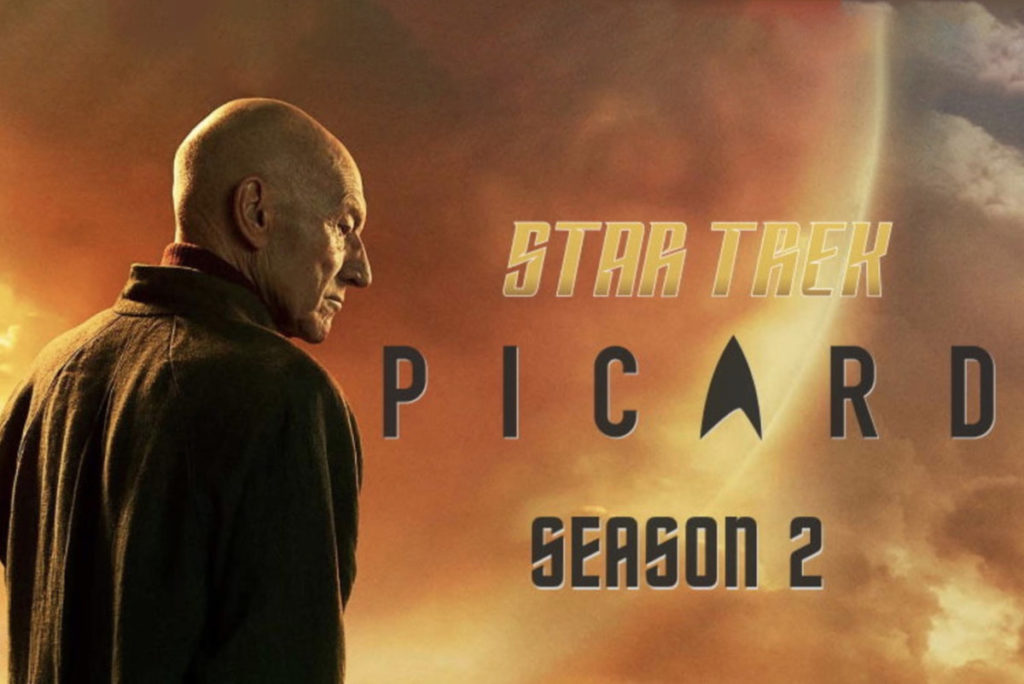
PICARD SEASON TWO [Paramount+]

Picard Season Two showed up on Paramount+ this week with a chatty episode that took a while to get started. This ten episode series releases a new episode every Thursday. Because of the Pandemic, Season Two and Season Three were shot at the same time.

Fans of Star Trek: The Next Generation may or may not be happy to see Whoopi Goldberg as Guinan and John de Lancie as Q. But I’m thrilled with Annie Wersching as the Borg Queen! From what I’ve been able to discern from Episode One, Season Two will involve Time Travel and a lot more action. Are you a Star Trek fan? GRADE: Incomplete

Main Characters: