

And so it begins! Is Winter showing up in your neighborhood?
And so it begins! Is Winter showing up in your neighborhood?

My first rock concert was Bob Dylan’s Buffalo Concert at the acoustically perfect Kleinhan’s Musical Hall November 20, 1965. Dylan was backed up by a group of musicians who would become The Band. Here’s the concert setlist:
Dylan had the local chapter of Hell’s Angels provide security and when some disgruntled fans rang a cow bell during the start of Dylan’s electric set, the Angels put an end to that disruption.
Marc Meyers discusses Bob Dylan’s impact on rock concerts in Chapter 8. He talks about the growing popularity of venues like Fillmore East and Fillmore West. And, of course, the ultimate concert of the Sixties: Woodstock.
The Seventies launched concerts in sporting venues and playing to much larger crowds. And, of course, costumes and lighting and special effects enhanced the viewing experience.
MTV changed the music industry in the Eighties. Music videos fueled concert tours. But, it also sowed the seeds of disruption to rock concerts in the future. Pink Floyd caused a sensation with THE WALL tour. Live Aid may have been the ultimate rock concert.
Marc Meyers includes his picks of the Fifty Best Live Albums, Concert Films, and Rock Documentaries. What was your first rock concert? What was your favorite concert? GRADE: A
Introduction 1
Part 1 The 1950s
Chapter 1 Los Angeles Auditoriums 11
Chapter 2 Cleveland Theaters 22
Chapter 3 Chicago Clubs 31
Chapter 4 Memphis Fairs 37
Chapter 5 Northeast Fests 50
Part 2 The 1960s
Cnapter 6 Folk at the Mall 65
Chapter 7 Pop’s Endless Summer 76
Chapter 8 Dylan Invents Rock 97
Chapter 9 Ballrooms and Be-Ins 104
Chapter 10 Festival Mania 119
Part 3 The 1970s
Chapter 11 Image, Media, and Branding 161
Chapter 12 Arenas, Stadiums, and Tours 177
Chapter 13 Sight and Sound 201
Chapter 14 Concert Maximus 220
Chapter 15 Rise of Exurbia 240
Part 4 The 1980s
Chapter 16 Not Just Another Brick 251
Chapter 17 Killing the Radio Star 264
Chapter 18 Computerized Ticketing 274
Chapter 19 And in the End, Live Aid 285
Epilogue 295
Fifty Best Live Albums, Concert Films, and Rock Docs 299
Source List 305
Acknowledgments 311
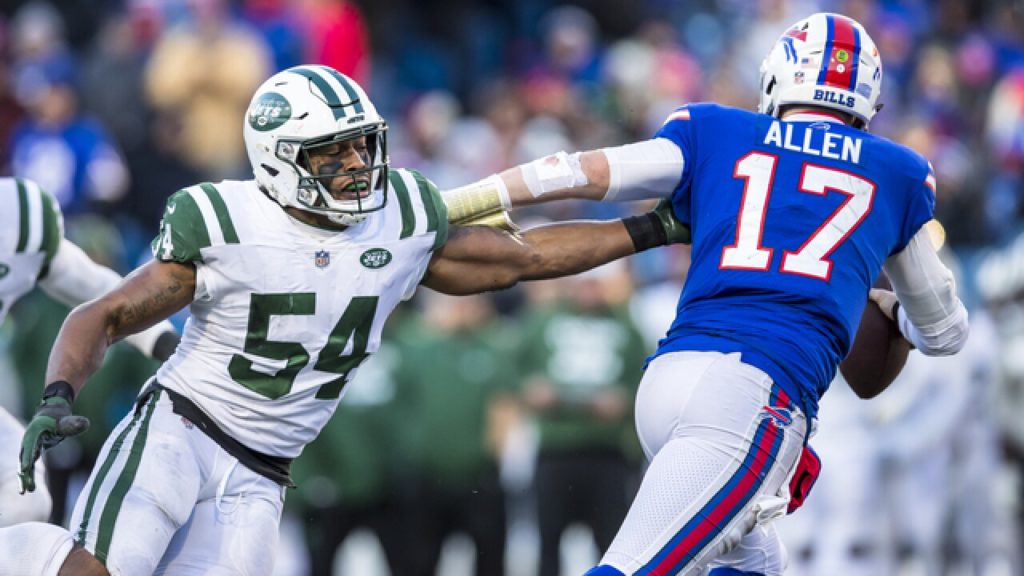
Despite last week’s debacle in Jacksonville, the Buffalo Bills travel to the Meadowlands to play the NY Jets in MetLife Stadium. Inexplicably, the 5-3 Bills are 11 1/2 point favorites over the 2-6 Jets. Last Sunday in the NFL saw a number of upsets. Will it happen again this week? How will your favorite NFL perform today?
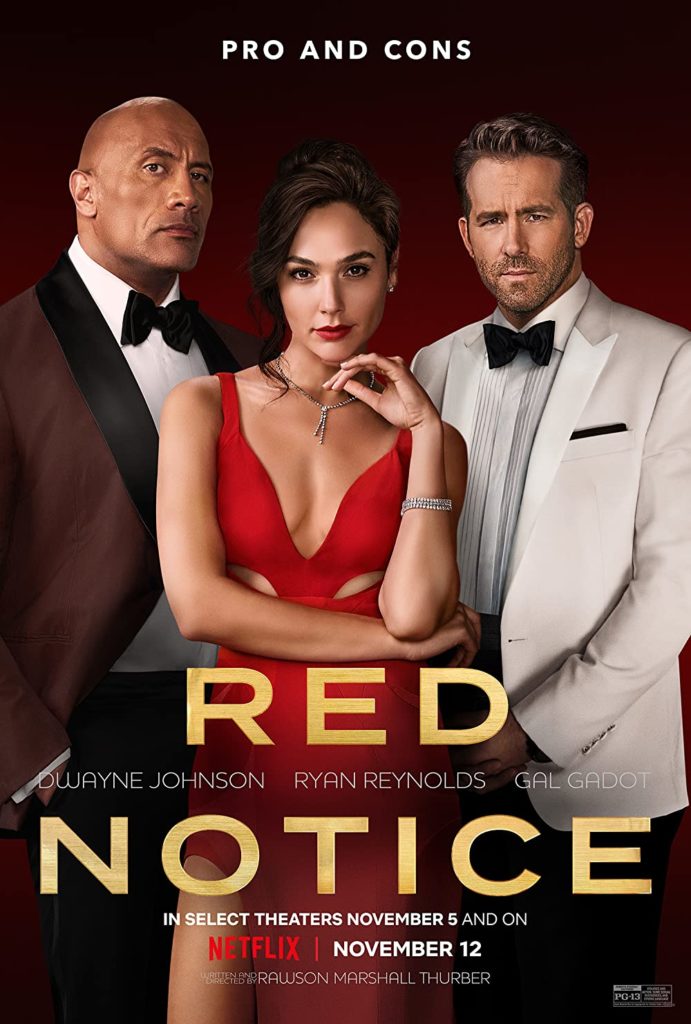
If you like caper movies, you’ll enjoy Red Notice, a Netflix original film. Ryan Reynolds plays a master art thief who is trying to steal all three of Cleopatra’s golden eggs. Dwayne Johnson plays an FBI profiler who can anticipate the movements of criminals. And Gal Gadot plays The Bishop, a mysterious character who is also trying to steal all of Cleopatra’s priceless golden eggs.
Red Notice hopscotches around the world like a global scavenger hunt. Ryan Reynolds, Dwayne Johnson, and Gal Gadot take turns double-crossing the each other while cracking the most sophisticated security systems.
Plenty of action in this heist adventure! If you’re looking for an action movie with humor and plenty of trickery, give Red Notice a try. GRADE: B
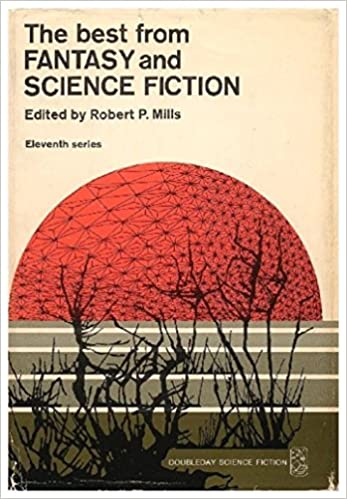

The most famous story in The Best From Fantasy and Science Fiction, Eleventh Series is “Alpha Ralpha Boulevard” by Cordwainer Smith (aka, Paul Linebarger) with the first appearance of C’mell who will play a much bigger role in a future Instrumentality story. Nearly as famous is Kurt Vonnegut’s “Harrison Bergeron” where equality is strictly enforced across society.
I’m a fan of Clifford D. Simak’s work and “Shotgun Cure” includes a doctor named Jason Kelly who encounters aliens who offer to cure humanity of all its diseases. Ah, but about what about side-effects…
The Best From Fantasy and Science Fiction, Eleventh Series presents a nice mix of “Name” SF writers like Poul Anderson, Isaac Asimov, and Gordon R. Dickson with writers on the rise like Evelyn E. Smith and Avram Davidson. All in all, an enjoyable anthology. GRADE: B+
TABLE OF CONTENTS:
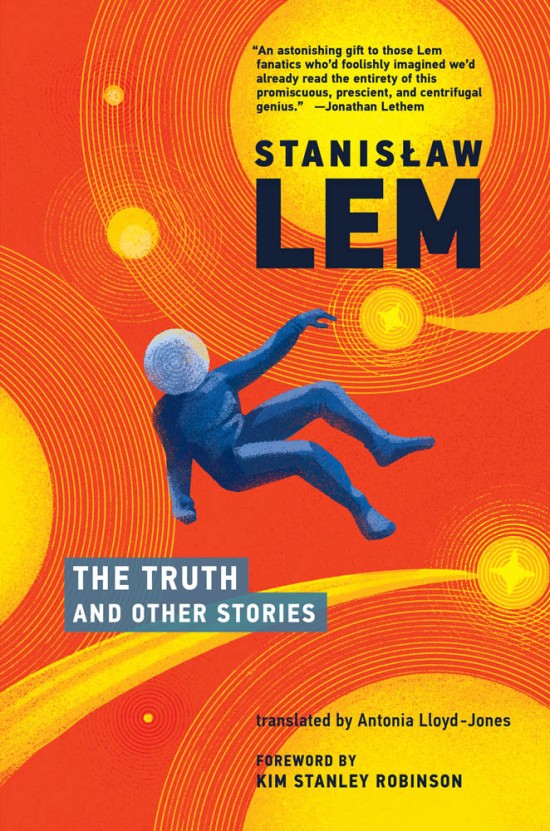
Stanisław Lem, best known in the United States for his novel (and the subsequent movie), Solaris, is the best SF writer ever according to Kim Stanley Robinson in his “Foreword” to The Truth And Other Stories (translated by Antonia Lloyd-Jones). MIT Press is reprinting much of Lem’s work–but they have a long way to go since his collected works in Polish fill 40 volumes.
It’s obvious from Kim Stanley Robinson’s “Foreword” that he’s read a lot of Lem. Over Lem’s long and prolific writing career, several themes keep reappearing. For example, in the excellent title story, “The Truth,” a trio of scientists embark on a risky experiment into the science of plasma. The Government, who is funding their research, knows nothing of this secret test and when disaster strikes–two of the three scientists die–the whole incident is hushed up. The surviving scientist tries to tell the truth about what happened, but he is dismissed as a brain-damaged eccentric.
“One Hundred and Thirty-Seven Seconds” is a story written in 1976. Lem creates a journalist who works the night shift setting up the next day’s newspaper with the aid of a four million dollar IBM mainframe computer. Over time, the journalist realizes the computer is setting up print stories before the events have been reported. This opens the door to speculation that computers operate in a different Time Zone than humans. It also suggests Artificial Intelligence before the term was commonly used. Lem shows what canny predictor he can be.
Some of the stories in The Truth And Other Stories were written in the 1950s which might explain why many of them deal with First Contact will aliens and Green-Eyed Monsters, common themes for that decade. If you’re in the mood for stories that will make you think, I recommend The Truth And Other Stories. GRADE: B+
TABLE OF CONTENTS:
FOREWORD By Kim Stanley Robinson — vii
The Hunt — 1
Rat in the Labyrinth — 23
Invasion from Aldebaran — 61
The Friend — 23
The Invasion — 123
Darkness and Mildew — 161
The Hammer — 183
Lymphater’s Formula — 221
The Journal — 269
The Truth — 272
One Hundred and Thirty-Seven Seconds — 295
An Enigma — 323
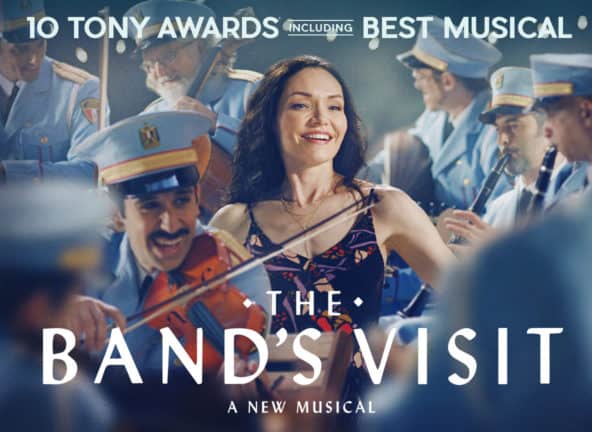
The Band’s Visit won 10 Tony Awards including Best Musical. The action begins when the Alexandra Ceremonial Police Orchestra from Egypt gets on the wrong bus in Israel and ends up in a small village of Bet Hatikva instead of the city of Petah Tikv with the Egyptian Embassy where they are scheduled to perform.
The stranded musicians discover the next bus out of town doesn’t arrive until the following morning. The band’s leader, the stiff Tewfiq (played by Sasson Gaby), reluctantly accepts the offer from the beautiful cafe owner Dina (Janet Dacal) to allow his band members to stay the night with the local residents.
The key to The Band’s Visit revolves around the unusual situation of stranded Arabs interacting with isolated Israelis where they find common ground.
I had two problems with The Band’s Visit. I found it hard to decipher some of the dialogue because of the accents the actors used. My second problem centers around the music. Yes, The Band’s Visit won the Tony for Best Musical, but I don’t care for Middle Eastern music so most of these songs didn’t move me. Your mileage may vary. GRADE: C+
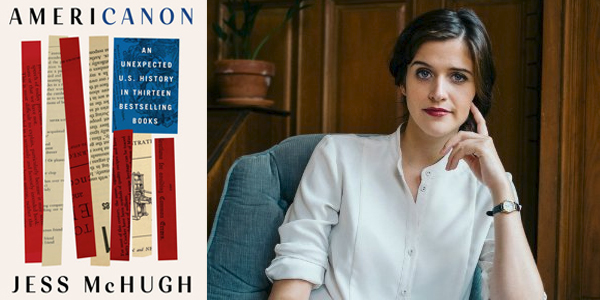
Jess McHugh believes that a thread of United States history extends through a series of best selling books. McHugh starts with The Old Farmer’s Almanac–which has been around for 228 years!–and points out how loyal readers continue to support the book over centuries.
Noah Webster dreamed of uniting his country through language so he dedicated his life to writing spellers and dictionaries that would standardize American language and help indoctrinate immigrants into the American Way.
I first read Benjamin Franklin’s Autobiography in a doctoral seminar on early American Literature. Franklin, an entrepreneur, inventor, politician, and literary figure, focused his book on suggesting ways the reader could become successful. And, the massive sales and continued popularity of the book shows Franklin’s message still resonates.
The McGuffey Readers are still used by parents who homeschool their kids. Catharine Beecher published her best seller, A Treatise on Domestic Economy, in 1841. Beecher’s goal was to show American women how to run a household efficiently and effectively. Emily Post wrote Etiquette in Society, in Business, in Politics and at Home basically updated Beecher’s book and added addition advice on how women should behave. How to Win Friends and Influence People by Dale Carnage is still in print and preaching the message of getting people to like you.
I learned how to cook by using my Mom’s Betty Crocker’s Picture Cook Book. I started with French Toast and moved on to desserts. We still have an updated copy in our Kitchen Library. Everything You Always Wanted to Know About Sex* (*But Were Afraid to Ask) was a book I didn’t read (I preferred The Joy of Sex), but I did see the Woody Allen movie of the same title.
Viewing the development of our country through books that offer advice and norms of behavior produces an very different version of U. S. history. If you’re looking for an off-beat history book, Americanon is well worth a look! How many of these books are you familiar with? GRADE: A
Introduction 1
Chapter 1 The Old Farmer’s Almanac (1792-) 11
Chapter 2 Webster’s Speller and Dictionary (1783/1828) 43
Chapter 3 Benjamin Franklin’s Autobiography (1793) 84
Chapter 4 The McGuffey Readers (1836-1837) 114
Chapter 5 A Handbook to American Womanhood 145
Chapter 6 Etiquette in Society, in Business, in Politics and at Home (1922) 178
Chapter 7 How to Win Friends and Influence People (1936) 218
Chapter 8 Betty Crocker’s Picture Cook Book (1950) 252
Chapter 9 Everything You Always Wanted to Know About Sex* (*But Were Afraid to Ask) (1969) 287
Chapter 10 Surviving the Eighties 316
Epilogue 348
Acknowledgments 353
Notes 359
Selected Bibliography 393
Index 405
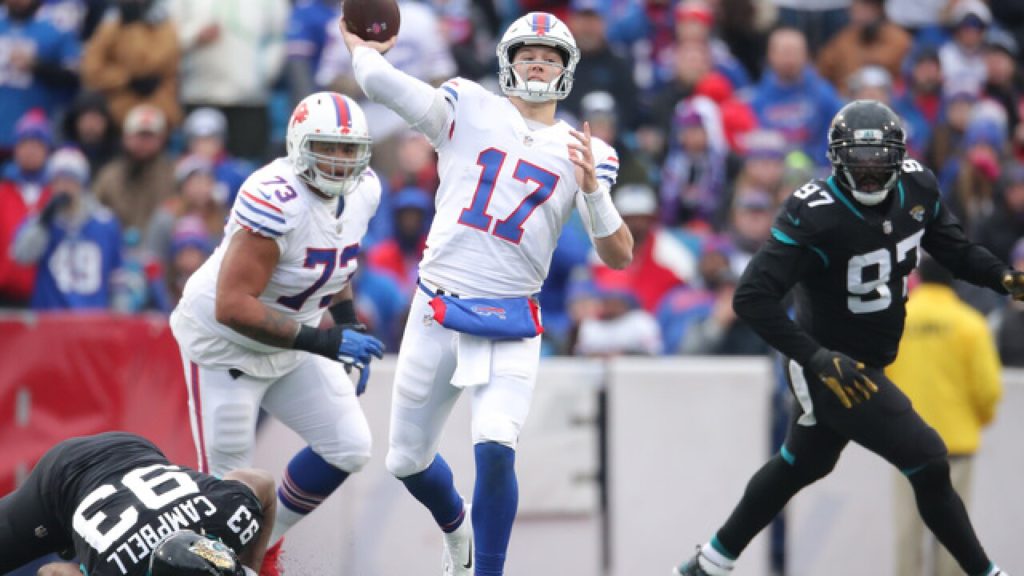
The 6-2 Buffalo Bills face the struggling 1-6 Jacksonville Jaguars today in sunny Florida. The Bills are 14-point favorites. Jaguars QB Trevor Lawrence–Number One in the 2021 NFL Draft–finds himself surrounded by mediocrity and ineptness. Lawrence’s coach, Urban Meyer, has been embroiled in a lap-dancing incident. While Meyer was a very successful College coach, like many College coaches before him, he’s finding the NFL a completely different game. My guess is Urban Meyer will be looking for a new job at the end of the season. How will your favorite NFL team perform today?