Mike Ashley’s latest volume in the Science Fiction Classics series, Moonrise, follows the pattern Ashley set in his previous anthology, Lost Mars: Stories From the Golden Age of the Red Planet (you can read my review here). Ashley includes early stories about the Moon like H. G. Wells’s “First Men In the Moon” and George Griffith’s “A Visit to the Moon” just to give the reader the flavor of speculation about the Moon a hundred years ago. Judith Merril’s “Dead Centre” and Edmond Hamilton’s “After Judgement Day” are likely to be more familiar stories. Arthur C. Clarke’s “The Sentinel,” although published in 1951, led to 2001: A Space Odyssey. If you’re a fan of theme SF anthologies, you’ll enjoy these mostly forgotten stories about the Moon. And Mike Ashley’s excellent introductions to the stories inform and delight! GRADE: B+
TABLE OF CONTENTS:
INTRODUCTION 7
Dead Centre – Judith Merril 31
A Visit to the Moon – George Griffith 67
Sunrise on the Moon – John Munro 93
First Men in the Moon – H.G. Wells 105
Sub-Satellite – Charles Cloukey 151
Lunar Lilliput – William F. Temple 175
Nothing Happens on the Moon – Paul Ernst 221
Whatever Gods There Be – Gordon R. Dickson 247
Idiot’s Delight – John Wyndham 269
After a Judgement Day – Edmond Hamilton 317
The Sentinel – Arthur C. Clarke 335
DEAD GIRLS: ESSAYS ON SURVIVING AN AMERICAN OBSESSION By Alice Bolin

Megan Abbott’s blurb exclaims “Bracing and blazingly smart…could hardly be more needed or more timely” on the cover of Dead Girls. Alice Bolin explores the theme of dead girls in crime fiction, movies, and TV. From the death of Laura Palmer in Twin Peaks to the mysteries of Raymond Chandler and Ross Macdonald, Alice Bolin traces the American obsession with missing and dead girls. The perfect example of this phenomenon is the late Summer media domination of the search for missing (and then dead) Molly Tibbitts in Iowa. FOX News showed its obsession with Molly Tibbitts while ignoring the more provocative happenings in Trump World. Dead Girls is strongest when Alice Bolin deals with crime and mysteries rather than her hypochondria and witchcraft. I enjoyed Bolin’s perspective in these essays. GRADE: A-
TABLE OF CONTENTS:
Introduction: Girls, Girls, Girls 1
Part 1 The Dead Girl Show
Toward a Theory of a Dead Girl Show 13
Black Hole 25
The Husband Did It 47
The Daughter as Detective 57
Part 2 Lost in Los Angeles
There There 89
Los Angeles Diary 99
Lonely Heart 109
The Place Makes Everyone a Gambler 117
The Dream 137
Part 3 Weird Sisters
A Teen Witch’s Guide to Staying Alive 159
And So It Is 177
My Hypochondria 187
Just Us Girls 199
Part 4 A Sentimental Education
Accomplices 215
Acknowledgments 275
SCREAM FOR JEEVES: A Parody By P. H. Cannon

A couple weeks ago Jeff Meyerson mentioned a Lovecraft/Jeeves mashup. It took a spirited search to find P. H. Cannon’s Scream for Jeeves (Wodecraft Press, 1994) but I finally tracked it down and reread it. P. H. Cannon is a Lovecraft expert. Cannon’s H. P. Lovecraft (Twayne, 1989) provides a survey of Lovecraft’s stories and discusses key aspects of Lovecraft’s short life. Scream for Jeeves consists of three short stories. The first, “Cats, Rats, and Bertie Wooster,” involves Bertie and Jeeves in a mission to help Bertie’s old friend, Tubby Norrys. Underground horrors and strangeness abound. In “Something Foetid,” Bertie and Jeeves confront a stinky situation involving a reclusive Spanish doctor with a passion for cool air. My favorite story in this book is “The Rummy Affair of Young Charlie” where Aunt Agatha dispatches Bertie and Jeeves to aid a family friend, Charles Dexter Ward, who has met up with Erich Zann in a room on Rue d’Auseuil (a place on no known map). Also included in Scream for Jeeves is P. H. Cannon’s essay, “The Adventure of the Three Anglo-American Authors: Some Reflections on Conan Doyle, P. G. Wodehouse, and H. P. Lovecraft.” Cannon gives the reader plenty to think about with these three unique writers. GRADE: B+
FREEDOM FIGHTERS: THE RAY [Blu-ray]

Imagine that Germany and Japan won World War II and are crushing the Resistance in the United States. That’s the premise of Freedom Fighters: The Ray. This Alternative Earth is called Earth-X. A band of meta-humans including The Ray fight the Nazis and support the Resistance. When The Ray is wounded during a fight with Nazi meta-humans, he’s sent to our Earth. The Ray passes his powers over to 22-year-old civil servant, Ray Terrill. Ray Terrill finds having superpowers both fun and scary.
With the help of The Flash and Green Arrow, The Ray learns how to master his powers. But Big Decisions–in Ray Terrill’s personal and superhero life–loom large. I’m a fan of these DC Animated movies. If you’re in the mood for a adventure in Infinite Earths, give Freedom Fighters: The Ray a try. GRADE: B+
TICKER: THE QUEST TO CREATE AN ARTIFICIAL HEART By Mimi Swartz

“A transplant trades one set of problems for another set of problems.” That’s what O. H. “Bud” Frazier, one of the world’s best heart surgeons, believes. Immune system problems, organ rejections, and infections make transplanting hearts a flawed solution to heart failure at best. Frazier believes the real answer is to develop an artificial heart. Mimi Swartz’s story includes vivid descriptions of Michael DeBakey and Denton Cooley, two of the ground-breaking heart surgeons. The surgeons were rivals, but their competition produced innovations that saved lives. Christiaan Barnard shocked the world by performing the first heart transplant. That triggered a rush to develop the techniques to make heart transplants saFe and successful. Robert Jarvik’s artificial heart kept Barney Clark alive and pointed the way to the future.
Bud Frazier’s quest for a fully functioning and reliable artificial heart attracted Billy Cohn, a heart surgeon and inventor. Daniel Timms, an Australian biomedical engineer, introduces Frazier and Cohn to a radical new concept: an artificial heart that spins the blood instead of pulsing it. You will learn a lot about medical innovation, heart surgery, surgeons, and the medical bureaucracy in Ticker. Riveting! A-
TABEL OF CONTENTS:
Prologue: THE TIN MAN 1
1. THE WIZARD: 2015 13
2. HOW HARD COULD IT BE? 21
3. THE MAKINGS OF A SURGEON 31
4. A TOUR OF HELL 51
5. THE WAR AT HOME 61
6. THE PURLOINED HEART 81
7. EXPERIMENTS 97
8. BARNEY WHO? 115
9. THE PRISONER 141
10. THE WILDERNESS 147
11. SYNCHRONICITY 165
12. THE KING OF DISTRACTION 177
13. HEARTMATES 195
14. THE AUSTRALIAN GUY 209
15. MATILDA 223
16. THE OCCUPATION 243
17. THE POWER SOURCE 257
18. THE DEAM OF ETERNAL LIFE 271
Acknowledgements 279
Notes 283
Selected Bibliography 297
Index 307
BUFFALO BILLS VS. BALTIMORE RAVENS

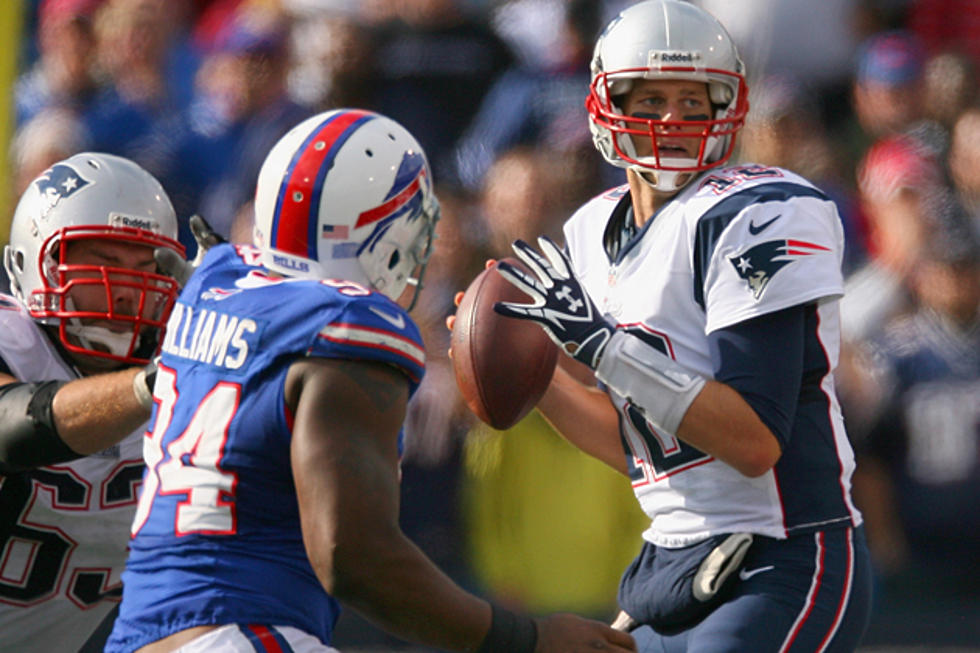
Many “experts” and sports pundits have named the Buffalo Bills as the Worst Team in the NFL this season. The reasons: an inexperienced quarterback–Nathan Peterman–and a shaky offensive line. Nathan Peterman famously threw FIVE interceptions in the First Half his first NFL start last year against the L.A. Chargers. Two of the starters in last year’s offensive line are gone. Even the most ardent Bills fans are worried. The Bills are 7 1/2 point underdogs to the Ravens today. How will your favorite NFL team perform today?
JULIET, NAKED

Rose Byrne plays a woman whose professor boyfriend (Chris O’Dowd) is obsessed with an American singer/songwriter, Tucker Crowe (Ethan Hawke). Yes O’Dowd’s character actually has a whole room with walls covered with Tucker Crowe posters and photos. Tucker Crowe released an album titled Juliet, Naked 25 years ago and dropped out of the music scene. O’Dowd’s character and hundreds of “fans” like him spend hours in chat rooms and tweaking their web sites with the latest nugget of news (or gossip) about Tucker Crowe. Crowe, meanwhile, has been busy making babies with various women. Now, on the verge of becoming a grandfather, Crowe decides to reconnect with his children, especially a pregnant one in London, England. Rose Byrne’s character, feeling that she’s wasted the last 15 years with her obsessed boyfriend, leaves a message in the Tucker Crowe chat room and guess what? Tucker Crowe answers! The relationship starts out with texts, but develops into Something More. If you’re in the mood for a quirky comedy, give Juliet, Naked a try. This movie is based on Nick Hornby’s book of the same name. You can read my review of Hornby’s book here. GRADE: B+
SOUNDTRACK:
Sunday Never Comes
LAX
What to Do When You’ve Wasted 15 Years of Your Life
We’re in Trouble
Juliet
20th Call of the Day
Waterloo Sunset
The Reality
I Know Annie
War & Peace
LAX
Sunday Never Comes
Juliet
20th Call of the Day
LAX
FRIDAY’S FORGOTTEN BOOKS #493: THE BABY DOLL MURDERS/KILLER TAKE ALL!/FRENZY By James O. Causey


Stark House’s omnibus volume of The Baby Doll Murders/Killer Take All!/Frenzy hits the trifecta for noir action. James O. Causey amps up the suspense in each of these paperback novels from the Fifties. The Baby Doll Murders (1957) features a cast of characters involved in gambling, corruption, kidnapping, extortion, and murder. Killer Take All! (1957) qualifies as one of the most unusual noirish novels I’ve ever read since it’s set in the world of golf. An unstable love triangle swirls around the desperate drives and passionate putts in a society obsessed with money and power. Frenzy (1960), a book Anthony Boucher pronounced as “a violent, ugly, and believable story of evil in action,” explodes with narrator Norman Sands’s sociopathic spree from dope running to racketeering. Causey’s depiction of the residents of Mason Flats, with their twisted desires, greed, and taste for violence, produces an explosive mixture. Nicholas Litchfield’s “Causey’s Fast, Frenzied Trio of Killer Novels” outlines James O. Causey’s writing career and provides details about this underrated writer. GRADE: B+
THE THINGS THAT MATTER: WHAT SEVEN CLASSIC NOVELS HAVE TO SAY ABOUT THE STAGES OF LIFE By Edward Mendelson

Edward Mendelson choses classic novels to illustrate the various stages of Life. You might wonder why Mendelson picked THREE novels by Virginia Woolf. Or why Mendelson included novels all written by women. As you read The Things That Matter (2007), you start to unravel the logic behind Medelson’s choices. Admittedly, these are quirky choices. Thinking about Birth doesn’t immediately conjure up Mary Shelley’s Frankenstein. Rebirth maybe… And with marriage at the center of Middlemarch, George Eliot’s novel seems more about Bad Choices to me. Mrs. Dalloway, To The Lighthouse, and Between the Acts skews The Things That Matter to the things that matter to Virginia Woolf. All of these writers question the state of women. Mendelson’s book might spur you to revisit these classic novels. GRADE: B
TABLE OF CONTENTS:
Introduction p. xi
1 Birth: Frankenstein p. 3
2 Childhood: Wuthering Heights p. 47
3 Growth: Jane Eyre p. 79
4 Marriage: Middlemarch p. 115
5 Love: Mrs. Dalloway p. 160
6 Parenthood: To the Lighthouse p. 204
7 The Future: Between the Acts p. 227
Afterword to the Anchor Books Edition p. 241
Notes on the Novelists p. 245
Further Reading p. 247
Acknowledgments p. 253
Index p. 255
THE WILD DEAD By Carrie Vaughn

Carrie Vaughn’s The Wild Dead, a sequel to Bannerless (you can read my review here), concerns a mystery and a murder. Set in the future after economic and environmental collapse, the survivors on the Coast Road practice a disciplined existence. Investigators Enid of Haven and her new partner, Teeg, initially resolve a community problem over an ancient structure. But then the body of a young girl is found with her throat cut. The girl isn’t part of the community, she’s from one of the outsider camps made up of nomads and “wild folk” who reject the strictures of the Coast Road communities. Enid finds clues and follows leads to solve the crime. The Wild Dead is a traditional whodunit set in a dystopian future. I thought it took Enid a little too long to find the murderer. I figured it out 50 pages before she did. GRADE: B