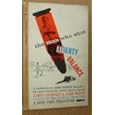
Sorry for the dinky graphic. James Warner Bellah wrote the novelization of his screenplay (with Willis Goldbeck, based on a story by Dorothy M. Johnson) for The Man Who Shot Liberty Valance in 1962. There were a couple of paperback editions and then…nothing. Talk about being forgotten! James Warner Bellah wrote for The Saturday Evening Post and published over a dozen novels. He was also a successful Hollywood screenwriter. Bellah wrote the screenplays for The Sea Chase (1955), Thunder of Drums (1961), and X-15 (1961).
James Warner Bellah’s novels Dancing Lady (1932) and The Command (1954) were made into a movies. The movie Fort Apache (1948) was based on Bellah’s short story “Massacre” (later issued as a book), and She Wore a Yellow Ribbon (1949) was based on “War Party.” He both wrote the novel and later, the screenplay based on it, Sergeant Rutledge (1960) . Bellah also appeared in bit parts and as an extra in movies including The Man Behind the Gun (1952).
I loved the movie version of The Man Who Shot Liberty Valance when I saw it as a kid. I immediately bought the Gene Pitney song (written by Burt Bacharach and Hal David) and read James Warner Bellah’s book at the Library. Those memories have stayed with me all these years.

 The Girl Who Played With Fire, based on the flawed Stieg Larsson novel with the same title, features another electrifying performance by Noomi Rapace as the elfin computer hacker, Lisbeth Salander. If you haven’t read The Girl With the Dragon Tattoo or seen the movie of the same name, you’ll be very confused about what’s happening in The Girl Who Played With Fire. The director and screenwriter pretty much assume you’ve read the books as they follow Larsson’s plot relentlessly. This movie lacks the intensity of the previous movie, The Girl With the Dragon Tattoo, simply because the two main characters, Lisbeth Salander and journalist Mikael Blomkvist, are separated for most of the film. However, once the murderous climax unfolds, you’ll be on the edge of your seat. All three MILLENNIUM movies were filmed together. The last installment, The Girl Who Kicked the Hornet’s Nest, will open around Christmas. I can’t wait. GRADE: B+
 “We had been living together for about a week when my roommate told me she had asked specifically to be paired up with a girl from a world as different as possible from her own.” That’s the opening line to Sigrid Nunez’s remarkable novel, The Last of Her Kind. Dooley Ann Drayton comes from the moneyed class, yet she devotes her life to the poor and oppressed. Her college roommate is Georgette George, born into hard-scrabble life with a violent mother and troubled siblings. One of these women will commit a murder. The Last of Her Kind is a social history. The two college students attend Barnard in the Sixties just as civil rights and the Vietnam War ignite student movements. Woodstock, Altamont, marijuana, LSD, speed, all become part of the story. Sigrid Nunez brings startling narrative effects to her story. Most of the book is narrated by Georgette, but when Georgette has an affair, she finds she can only relate it to us in the third person. And then there’s the shocking prison journal. I cannot praise this tour de force too much. It’s amazing! The Last of Her Kind is the best book I’ve read in 2010 so far. GRADE: A
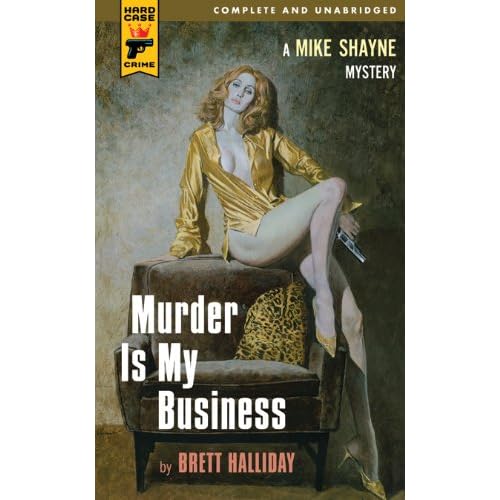 Charles Ardai, editor of HARD CASE CRIME books, sent this email message to readers:
 Diane, Patrick, and Katie all read Kathryn Stockett’s The Help so I thought I’m make it a complete family sweep by reading it too. This story begins in Jackson, Mississippi in 1962. Stockett introduces us to two black maids, Aibileen and Minny. We see and hear the racism of this time in the events Stockett includes: separate bathrooms for the maids, a near-murder of a worker who uses a “white” bathroom, and enormous cruelty by a bridge club of white women who rule the social scene in Jackson. Into this mix Stockett drops 22-year-old Skeeter with a degree from Ole Miss. Skeeter wants to be a writer and “change things.” With the encouragement of an editor at Harper & Row, Skeeter starts to secretly interview the maids about their views of their white employers. My chief quibble about this book is that Stockett alternates the narration of the chapters from Aibileen, to Minny, to Skeeter, all in the first person. I think a third-person narration would have been more effective. But, that being said, The Help presents an effective social history of those dark times. GRADE: B

 Kim Stanley Robinson is best known for his excellent science fiction novels like his Mars trilogy: Red Mars, Green Mars, and Blue Mars. Robinson also wrote the under-rated Three Californias Trilogy: The Wild Shore, The Gold Coast, Pacific Edge (but that’s a topic for another FORGOTTEN BOOKS Friday). Most readers head for the novels. Yet, Robinson also wrote some dazzling short stories. Thanks to Night Shade Books, we have the just published collection, The Best of Kim Stanley Robinson. The title is no misnomer. Some of Robinson’s best writing can be found in these pages. Many of these stories hard to find. Now, they’re in one convenient package. Robinson also threw in a new, original story. There are hours of reading pleasure to be found here.
 Diane and I had so much fun going to the Shaw Festival with Patti and Phil to see An Ideal Husband that we decided to return and see The Women, a play about women and divorce. First presented on stage in 1936, The Women went on to have a couple of movie incarnations. This Shaw Festival version brought out plenty of laughter from the audience. The all female cast captured Clare Booth Luce’s wisdom and frivolity. If you get a chance to see a stage version of The Women, take it. This insightful play holds up. GRADE: A
 Last week I reviewed Thrillers: 100 Must Reads edited by David Morrell and Hank Wagner. Now, I’m reviewing James N. Frey’s How to Write a Damn Good Thriller: A Step-by-Step Guide for Novelists and Screenwriters. There’s plenty of overlap between the two books. The main difference comes down to the variety of opinions on thrillers in Morrell’s book vs. Frey’s focused analysis of how thrillers work and how to write them. Frey analyzes an impressive number of books and movies to show how the effects are achieved. My only quibble is that Frey sometimes tells you more than you want to know about works you may not have read or seen yet: too many spoilers! If I was Frey’s editor, I would have suggested WARNINGS to prevent readers from learning information that would spoil their reading or viewing experience. Other than that, I recommend Frey’s book if you’re a fan of thrillers. You’ll learn a lot! GRADE: B+