FRIDAY’S FORGOTTEN BOOKS #901: SECRET AGENT X VS. DOCTOR DEATH By Will Murray

I am a big fan of Pulp Fiction and Will Murray–writer of wonderful adventures of Doc Savage, Cthulhu, Sherlock Holmes, and Tarzan–who brings back a Pulp Hero to take on a Pulp Villain. Secret Agent X is a master of disguise who was once an intelligence agent. Now he has given up his former identity to fight crime as the nameless, faceless Secret Agent X with the ability to impersonate anyone. Secret Agent X was a pulp magazine that ran for more than forty issues from Ace Magazines. Paul Chadwick created the character and the stories were written by Chadwick with various other pulp fiction writers, chiefly G.T. Fleming-Roberts.

Doctor Death is one of the few villains to have his own pulp magazine, a  short-lived pulp science fiction magazine published by Dell Magazines in 1935. Altus Press has reprinted five Doctor Death novels and several short stories. Doctor Death was a former academic named Dr. Rance Mandarin. He is a master of both scientific and mystical arts which makes him incredibly powerful.

Doctor Death is “determined to hurl civilization back to the Dark Ages”! Harold Ward, created Doctor Death and wrote the novels under the pseudonym “Zorro”.

As a master of science and the supernatural, Doctor Death presents problems to Secret Agent X that he can’t overcome by himself. After an almost fatal battle with Doctor Death, Secret Agent X decides he needs help in stopping this super-villain.

Secret Agent X recruits three other crime fighters: The Cobra, Moon Man, and The Griffon. Together, they are the Secret Circle.

Secret Agent X found Doctor Death’s hidden lair in the deadly catacombs. The Secret Circle face Elementals, Harpies, Minotaurs, and Zombies in the assault on Doctor Death’s booby-trapped hideaway!

If you like The Avengers and the Justice League, you’ll enjoy the epic conclusion of Secret Agent X Vs. Dr. Death! The team of crime fighters face many perils in their battle with Doctor Death. You’ll be on the edge of your seat! GRADE: A

LOVE & HAPPINESS

With the gloominess of our current situation, we all need some Love and Happiness. This compilation from 1990 brings some of the fun back with songs like “In the Midnight Hour” by Wilson Pickett and “Ain’t No Sunshine” by Bill Withers.

Who can resist “Stand By Me” by Ben E. King? Or “Best Thing That Ever Happened to Me” by Glady Knight and The Pips?

Do you remember these songs? Any favorites here? GRADE: B+

TRACK LIST:

1Jackie Wilson(Your Love Keeps Lifting Me) Higher
2Aretha FranklinThink
3Jerry ButlerHe Will Break Your Heart
4Al WilsonShow And Tell
5Harold Melvin & The Blue Notes*–If You Don’t Know Me By Now
6The Pointer Sisters*–Slow Hand
7Ben E. KingStand By Me
8Otis ReddingI’ve Been Loving You Too Long
9The Staple SingersI’ll Take You There
10The Chi-LitesOh Girl
11The DriftersSave The Last Dance For Me
12James BrownI Feel Good (I Got You)
13Al GreenLet’s Stay Together
14Gladys Knight And The PipsBest Thing That Ever Happened To Me
15Johnnie TaylorI Believe In You (You Believe In Me)
16Bill WithersAin’t No Sunshine
17Wilson PickettIn The Midnight Hour
18Aaron NevilleTell It Like It Is
19Marvin Gaye & Tammi TerrellAin’t Nothing Like The Real Thing
20The TemptationsJust My Imagination
21Junior Walker & The All StarsWhat Does It Take (The Win Your Love)
22Percy SledgeWhen A Man Loves A Woman
23Dionne WarwickAnyone Who Had A Heart
24Smokey Robinson & The Miracles*–You’ve Really Got A Hold On Me

WEDNESDAY’S SHORT STORIES #268: THE STORIES OF JANE GARDAM

In her revealing “Introduction” Jane Gardam cites James Joyce’s Dubliners as the book that affected her as a writer. Gardam is an award winning writer who shows in this collection of her short stories she likes the best that the people in the background sometimes hold the best story material: the old and shy and reclusive and sheepish, the conservative wives, the stay-at‑home mothers and impoverished ex‑colonials, the dwellers in cottages and suburban villas out of the mainstream.

Take “Grace” as an example.  Clockie loses his virginity while Gardam’s crafty story-telling presents the implications. And in “Lunch with Ruth Sykes” the Past reaches into the Present with startling consequences.

The Stories of Jane Gardam (2014) presents three decades’ worth of her short fictions full of surprise and menace. If you’re looking for a master of short story writing, this is the book for you. GRADE: A

TABLE OF CONTENTS:

INTRODUCTION — 13

  • Hetty Sleeping — 21
  • Lunch with Ruth Sykes — 41
  • The Great, Grand Soap-Water Kick — 57
  • The Sidmouth Letters — 65
  • A Spot of Gothic — 89
  • The Tribute — 101
  • The Pig Boy — 119
  • Rode by All with Pride — 139
  • The Easter Lilies — 159
  • The First Adam — 175
  • The Pangs of Love — 187
  • Stone Trees — 201
  • An Unknown Child — 211
  • Showing the Flag — 227
  • Swan — 237
  • Damage — 257
  • The Dixie Girls — 293
  • Groundlings — 311
  • Grace — 325
  • Miss Mistletoe — 333
  • Telegony (a triptych in three parts: Going into a Dark House; Signor Settimo; The Hot Sweets of Cremona) — 341
  • The Boy Who Turned into a Bike — 383
  • Missing the Midnight — 393
  • The Zoo at Christmas — 401
  • Old Filth — 411
  • The Green Man — 423
  • Soul Mates — 451
  • The People on Privilege Hill — 459
  • About the Author — 477

POLAR DIET ORANGE DRY

A while ago, Todd Mason recommended Polar Diet Orange Dry. I’m always looking for new beverage options so I went to Wegmans…and struck out. They had many Polar products on the shelves, but NOT Polar Diet Orange Dry. I went to TOPs. Same thing: plenty of Polar products but no Polar Diet Orange Dry. I then tried our local Consumer Beverage Center. Again, no dice.

So I did what I always do: I ordered Polar Diet Orange Dry from AMAZON. Within a few days, it arrived. Diane initially thought the box was fu ll of books–she was getting The Look ready–but when I opened it and displayed the cans of Polar Diet Orange Dry, she retreated from DEFCON 5.

Over the next few days, I drank a can of Polar Diet Orange Dry daily. I agree with this review: “Polar Diet Orange Dry is widely praised for its crisp, refreshing, and authentic orange flavor, often described as a ‘dryer,’ less-sweet alternative to Orangina or traditional orange soda. It features real orange juice concentrate, a distinct, sharp carbonation, and a ‘fleshy’ citrus taste that makes it popular as a low-calorie, versatile beverage.”

I don’t know about “fleshy” but it sure tastes good to me! If you’re looking for something a little bit different with low calories and refreshing orange flavor, you might consider giving Polar Diet Orange Dry a try. Are you a fan of sparkling water? GRADE: A

COULD SHOULD MIGHT DON’T: HOW WE THINK ABOUT THE FUTURE By Nick Foster

Nick Foster, an in-demand consultant to GOOGLE, Nokia, Sony, Dyson and many other Big Tech companies, is a “futurist” even though he doesn’t like that term. Foster’s new book, Could Should Might Don’t (2025), presents a model for thinking about the Future.

The Future business is littered with false promises: flying cars, cold fusion, women’s equality, etc. Foster explores why predictions go wrong…and how they come true.

The reason I’m recommending Nick Foster’s book is that unlike a lot of books I’ve read about the Future, Foster is willing to talk about the risks of predicting the Future. Trump should have read Could Should Might Don’t before he started the disastrous Iran War (or Excursion). “Unintended Consequences” are the bane of prediction.

If you want to think about the Future in a rational, more reliable, and serious way, give Could Should Might Don’t a try. What do you think about the Future? GRADE: B+

TABLE OF CONTENTS:

  • Preface vii
  • Just imagine — 3
  • The metronome quickens — 9
  • A reluctant futurist — 29Marmot Library Network

Could

  • Oh, wow — 47
  • Science fiction — 53
  • The roots of could futurism — 58
  • Could futurism in public — 64
  • Commercial could futurism — 78
  • Heroic futures and background talent — 87Marmot Library Network

Should: The Futurism of Goals

Better — 103

Belief — 109

On Prediction — 117

Empirical Futures — 132

Numeric Fiction — 141

The Future is Accretive — 151

Might

  1. Futures plural — 167
  2. Think tanks — 176
  3. Strategic foresight — 181
  4. The limits of imagination — 193
  5. Regurgitative futures — 203
  6. Wagging the dog — 212

Don’t

  1. Critique, caution, and fear — 231
  2. Algorithmic adversity — 242
  3. Toxic positivity and solutionism — 252
  4. Dependencies, implications, and ends — 262
  5. Extrapolatory futures — 280
  6. And so… — 301
  7. The future mundane — 305
  8. There’s plenty of future left — 323
  9. Thank you — 338

WE THE WOMEN: THE HIDDEN HEORES WHO SHAPED AMERICA By Norah O’Donnell

Women’s History Month, celebrated annually in March, honors the contributions of women to American history, culture, and society. Originating from a local California celebration in 1978, it grew into a national observance in 1987, featuring notable figures like Harriet Tubman, Amelia Earhart, and Rosa Parks. The month includes International Women’s Day on March 8.”

To celebrate Women’s History Month, I read Nora O’Donnell and Kate Andersen Brower’s We the Women: The Hidden Heroes Who Shaped America (2026). I confess: I was unfamiliar with many of the important women listed in the early chapters of this book. Fascinating nonetheless!

I did know all the women in the last section of the book–recency bias perhaps. But my favorite chapter in We the Women was Chapter 24: Agnes Meyer Driscoll: The Code Breaker. What an amazing woman! She was born in 1889 and excelled at mathematics, music, and physics. She was proficient in five languages: German, French, Latin, Japanese, and English. Driscoll worked for the Director for Navel Communication in the Code an Signal Section in Washington, D.C. during World War I. She became one of the first Navel instructors in the field of cryptography.

During World War II, Driscoll worked on cracking the German and Nazi codes. “In 1959, just before her retirement at the age of seventy, Agnes received her final assignment: to decode a set of ‘unreadable’ messages that others in her section had found impossible to solve. Two weeks later, she figured it out. Of course she did!” (p. 202)

Norah O’Donnell honors the many women who have made the cause of Women’s Rights key to success and freedom in America. Although the battle continues, my allegiance is with the women and not the stupid men who run this country right now. GRADE: A

TABLE OF CONTENTS:

Introduction — 3

Part 1: The first fifty years : the women behind America’s fight for independence, 1776-1826

  1. Mary Katherine Goddard: The Printer — 13
  2. Phillis Wheatley: The Poet — 18
  3. Mercy Otis Warren: The Intellectual — 25
  4. Elizabeth Ellet: The Historian — 32
  5. Elizabeth Freeman: The Freedom Seeker — 39
  6. Deborah Sampson: The War Fighter — 46
  7. Patience Lovell Wright: The Sculptor — 51

Part 2: Risk takers and rulebreakers : Seneca Falls and the Civil War, 1826-1876

8. The Grimke Sister: The Truth Tellers — 67

9. Charlotte Forten: The Abolitionist — 76

10. The Women of Seneca Falls: The Signers — 83

11. The Blackwell Sister: The Doctors — 95

12. Dr. Mary Edwards Walker: The Medal of Honor Recipient — 103

13. Susan and Susette La Flesche: The Advocates — 111

14. Anna Dickinson: The Orator — 118

15. Belva Lockwood: The Lawyer — 121

Part 3: Blood, sweat, and tears : the Gilded Age and the great demand : 1876-1926

16. Emily Warren Roebling: The Builder — 143

17. Katharine Wright: The Aviator — 151

18. Inez Milholland, The Suffragist — 157

19. Maggie Lena Walker: The Titan of Finance — 164

20. Mary Tape: The Determined Mother — 170

21. Zitkala-Sa: — The Writer — 175

22. The Hello Girls of World War I: The Operators — 182

23. The Ninetieth Amendment: The Vote — 190

24. Agnes Never Driscoll: The Codebreaker — 198

25. Margaret Sander and Katharine McCormick: The Birth Control Pioneers — 205

Part IV: Warriors, rebels, and visionaries : women at war at home and abroad, 1926-1976

26. Mary McLeod Bethune: The First Lady of the Struggle — 220

27. Eleanor Roosevelt: The Great “Agitator” — 232

28. Frances Perkins: The Cabinet Member — 245

29. The Six Triple Eight: The Soldiers — 252

30. The New Orleans Four: The Barrier Breakers —258

31. Romana Acosta Banuelos: The Treasurer — 267

32. Babe Didrikson: “The Greatest Athlete Who Ever Lived” — 273

33. Patsy Mink: The Mother of Title IX — 280

34. Pat Schroeder: The Legislator — 287

35. Constance Baker Motley: The Judge — 296

Part V:  My lifetime : women’s progress in America, 1976-today

Acknowledgements — 327

Photo Credits — 333

Notes — 337

Index — 397

SATURDAY NIGHT LIVE UK [Peacock]

I didn’t laugh once. Yes, this British version of Saturday Night Live has all the format features of the US version, but it just wasn’t funny. You would think that Tina Fey would inject some humor into the premier of this show…but no.

The musical group, Wet Leg, was awful. The female lead singer belted out lyrics like “People want to fuck me.”

Diane and I skip a lot of skits in Saturday Night Live US–we typically watch the opening, the host monologue, and Weekend Update. Most of the music groups are not to our taste. The Saturday Night Live UK Weekend Update was lame.

Saturday Night Live UK will be available on Peacock the day after the British broadcast. We won’t be watching. GRADE: C-

FRIDAY’S FORGOTTEN BOOKS #900: TRACE ELEMENTS: Conversations on the Project of Science Fiction and Fantasy By Jo Walton & Ada Palmer

“A book like this has no start and no end. These are things we’ve been thinking about and will go on thinking about, they’re part of a conversation older than we are and that will carry on longer than we will.” (p. 352)

Jo Walton and Ada Palmer, two Award winning writers, share their years of conversations about Science Fiction and Fantasy. As Jo Walton puts it, Trace Elements (2026) “will join nonfiction works like Ursula K. Le Guin’s The Language of the Night, Samuel R. Delany’s The Jewel-Hinged Jaw, and Understanding Comics by Scott McCloud on the short shelf of titles essential to all readers of our genre.” I agree.

I’m a fan of Jo Walton’s solo volume, What Makes This Book Great (2014) (you can read my review here). If you’re a fan of Science Fiction and Fantasy, this is a must-read!

“Our greatest hope, of course, is that this book will be the middle of a conversation, as you who read these pieces chew on them, share them, debate them, harvest the terms and observations useful to your own ongoing thoughts about the interwoven world of stories we all love, and say new things.” (p. 553)

What more can you ask from a wonderful, nonfiction book on Science Fiction and Fantasy? GRADE: A

TABLE OF CONTENTS:

Section 1: Genre; or, The Modern Proteus — 1

Integral to the Plot: The Author-Reader Contract –3

The Science Fiction Conversation: Imprint SF — 22

Genre Pacing and Protocols, or What is Genre? — 35

Poem: By Their Spaceship Ye Shall Know Them — 54

History of Science Fiction Publishing — 55

Sheep’s Clothing Why SF and F might Be Disguised as Each Other — 93

Where Does Dystopia Fit as a Genre? — 114

Not Saving the World? How Does That Even Work? — 121

Mitfreude: The Joy of Sharing Friends Joy — 132

A Mitfreude of Manga and Anime (and Their Relationship with SF) — 134

A Mitfeude of Genre Romance — 167

History and Robots — 192

The Ghost Did What?! Translation Exposing Providentialist Thinking — 209

Section 2: Anyone Who Says Differently is Selling Something — 219

Chrome Pain Chronicle, in Prose and Verse — 221

Writing Realizing Disability + Power — 237

Not Deluded How I Sold My First Novel While on Vacation — 259

The Key to the Kingdom, or How I Sold Too Like the Lightning — 266

Author’s Note and Acknowledgements from Too Like the Lightning — 275

Section 3: Craft — 279

Spear Point Theory — 281

The Protagonist Problem — 284

What’s Reading For — 293

Expanding our Empathy Sphere Using SF & F, a History — 306

Poem: Translated from the Original — 316

Censorship and Genre Fiction–Let’s Broaden Our Broader Reality — 317

How to Encourage Space Exploration? — 325

Poem: On Praising Tech — 328

Poem: Old Question — 329

Meta, Irony, Narrative, Frames, and The Princess Bride — 330

Hopepunk, Optimism, Purity, and Futures at Hard Work — 337

Poem: Somebody Will — 347

Acknowledgements — 351

About the Author — 355

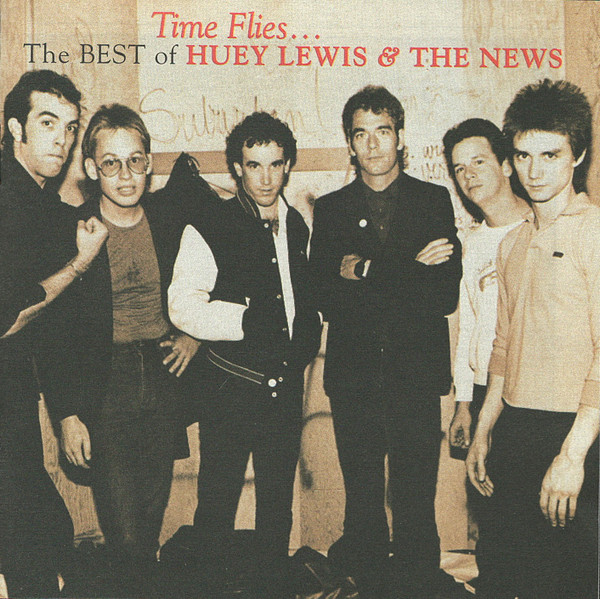
JUDITH and THE VERY BEST OF JUDY COLLINS

Some consider Judith (1975) Judy Collins’ best album. The Very Best of Judy Collins (2001) updates the songs since Judith and includes Judy Collins’ early hits. I love Judy Collins’ rendition of “The Moon is a Harsh Mistress.” “Send in the Clowns” is a classic. And so is “Both Sides Now.”

While I prefer Sandy Denny’s version of “Who Knows Where The Time Goes,” Judy Collins comes close to that perfection. “Amazing Grace” is heart-felt.

Despite her successes, Judy Collins has a sad history of addiction to alcohol and drugs. Collins entered a rehabilitation program in Pennsylvania in 1978 and has reportedly maintained her sobriety ever since. Are you a Judy Collins fan? Do you have a favorite song? GRADE: A (for both)

TRACKLIST:

A1The Moon Is A Harsh Mistress Bass Flute – Romeo Penque English Horn, Flute – George MargeLute [Alto] – Bill Slapin*Piano – Judy CollinsViola – Emanuel VardiViolin – Gene Orloff Written-By – Jimmy Webb2:59
A2Angel, Spread Your Wings Bass – Tony LevinDrums – Stephen Gadd*Electric Piano – Ken Ascher Guitar – David SpinozzaHugh McCrackenSteve Burgh Percussion – Ralph MacDonaldSynthesizer [Arp] – Ken Bichel Written-By – Danny O’Keefe3:05
A3Houses Written-By – Judy Collins4:32
A4The Lovin’ Of The Game Bass – Tony LevinDrums – Stephen Gadd*Guitar – Charlie Brown (7)David SpinozzaHarmonica – Don BrooksOrgan – Pat RebillotSteel Guitar, Resonator Guitar – Eric Weissberg Written-By – Pat Garvey (2)3:03
A5Song For Duke Bass – Tony Levine*Drums – Stephen Gadd*Electric Piano – Pat RebillotGuitar – David SpinozzaHugh McCrackenHorns – Arthur ClarkeFrank WessGarnett BrownRandy BreckerSeldon PowellTony Studd Written-By, Piano – Judy Collins3:33
A6Send In The Clowns Written-By – Stephen Sondheim3:57
B1Salt Of The Earth Backing Vocals – Cissy HoustonDenver CollinsEunice PetersonSteve GoodmanSylvia ShemwellBass – Tony LevinDrums – Stephen Gadd*Guitar – Eric WeissbergHugh McCrackenOrgan, Electric Piano – Paul Griffin Written-By – Mick Jagger, Keith Richards*3:59
B2Brother, Can You Spare A Dime Acoustic Guitar – Eric WeissbergHugh McCrackenSteve GoodmanBass – Tony LevinDrums – Stephen Gadd*Written-By – Jay Gorney3:12
B3City Of New Orleans Bass – Tony LevinDrums – Stephen Gadd*Guitar – Hugh McCrackenJudy CollinsSteve GoodmanHarmonica – Don BrooksSteel Guitar, Backing Vocals – Eric Weissberg Written-By, Backing Vocals – Steve Goodman4:07
B4I’ll Be Seeing You Written-By – Irving KahalSammy Fain3:44
B5Pirate Ships Accordion – Dominic Cortes*Cello – George RicciFlute – Romeo PenqueHarp – Corky HaleRecorder – George Marge Written-By – Wendy Waldman2:42
B6Born To The Breed Bass – Tony LevinDrums – Stephen Gadd*Guitar – Charlie Brown (7)Eric WeissbergHarmonica – Don BrooksOrgan – Pat Rebillot Written-By, Piano – Judy Collins

TRACKLIST:

1Turn! Turn! Turn!/To Everything There Is A Season Bass [Upright] – Bill TakasTwelve-String Guitar [Acoustic] – Jim McGuinn Written-By – Pete Seeger3:41
2So Early, Early In The Spring Acoustic Guitar [2Nd] – Eric Weissberg Written-By – Trad.*3:12
3Suzanne Written-By – Leonard Cohen4:26
4Just Like Tom Thumb’s Blues Written-By – Bob Dylan5:08
5Both Sides Now3:16
6Since You’ve Asked2:36
7Albatross4:53
8My Father Piano – Michael Melvoin*5:02
9Someday Soon Electric Bass – Stephen StillsElectric Guitar – James BurtonPiano – Van Dyke ParksSteel Guitar [Pedal] – Buddy Emmons Written-By – Ian Tyson3:47
10Who Knows Where The Time Goes Piano – Michael Sahl Written-By – Sandy Denny4:47
11Chelsea Morning Orchestrated By – Jimmie Haskell Producer – David Anderle3:21
12Farewell To Tarwathie4:58
13Song For Judith (Open The Door) Drums, Percussion – Susan Evans*Electric Bass – Gene Taylor Electric Guitar – Ry Cooder4:07
14Cook With Honey Acoustic Guitar – Bucky PizzarelliSteve MandellAcoustic Guitar, Bass [Upright] – Eric WeissbergArranged By [Recorders] – Richard Bell (4)Bass [Upright] – Bob DaughertyCongas, Bongos – Ray BarrettoElectric Bass – Don PayneRussel George*Percussion – Allan Schwartzberg Written-By – Valerie Carter3:31
15Send In The Clowns Arranged By, Conductor – Jonathan TunickBass – John BealCello – Charles McCrackenKermit MooreFrench Horn – Albert Richmond*, Larry WechslerGuitar – Cliff MorrisHarp – Abe RosenPercussion – Hank Jaramillo*Piano, Celesta – Thomas PearsonTrombone – Garnett BrownVinnie Fanuele*, Wayne AndreViola – George Brown (8)Julien BarberViolin – Al Miller (4)Alvin RogersAnn BarakBob RozellCy BergerDan Reed (2)Guy LumiaHarriet ReynoldsHarry CykmanJulie HeldLarry GoldmanMarilyn WrightMathilde PincusNorman CarrWoodwind – Jerry Smith (17)Joel KayeLes Scott*, Bob Steen*, Sidney Weinberg Written-By – Stephen Sondheim4:03
16Amazing Grace

WEDNESDAY’S SHORT STORIES #267: BLIND TRAILS AT TONTO By W. C. Tuttle

I’ve been reading W. C. Tuttle’s tales of Sheriff Henry Harrison Conroy for almost a decade now. Popular Publications (aka, Steeger Books (formerly Altus Press) has been reprinting Tuttle’s entertaining Western stories featuring a seemingly bumbling former actor who has been elected Sheriff of Tonto Arizona, a town with plenty of problems.

Blind Trails at Tonto is Volume 8 of this reprint series. The three stories included in this book also feature Sheriff Conroy’s loyal deputy, Judge Van Treece (a man with a serious drinking problem, but with an uncanny intelligence), and jailer, Oscar Johnson (a massive man with incredible strength). For comic relief, Frijole Bill and Slim Pickins are always around with their powerful prune whiskey laced with high octane alcohol.

“Henry the Silent” involves Frijole and Slim finding a dead body…and some money. Sheriff Conroy suspects the young woman who had just been hired at the Tonto saloon as a violinist, is connected to the case. Another murder and the disappearance of Mary McLean, the violinist, leads the Sheriff to a treacherous plot of counterfeiting and duplicity.

“Tracks in the Sand” begins with a plot to gain control of a mine outside of Tonto Arizona. The owner of the mine, Frank Travis, is found dead just outside of town. Yet, another man, claiming to be Frank Travis shows up to chase a beautiful woman named Nola Terry, who comes to Tonto to become its teacher. As the bodies pile up, Sheriff Conroy sets a trip for the gang who hopes to steal the mine.

“Blind Trails at Tonto” begins with the local newspaper Clarion, calling for the defeat of Sheriff Conroy at the next election. Conroy’s opponent is “Honest” Ed Henderson, owner of the Circle H spread who is backed monetarily by Jim Nelson. Nelson purchased the King’s Castle, the biggest saloon, gambling house, and honkatonk in the country. Conroy takes a lot of heat as the number of murders pile up. But once again, Conroy has a plan to reveal what is really going on.

I’ve enjoyed all the Sheriff Conroy stories–all 8 volumes!–and recommend them to readers who like their Westerns with humor and mysteries. GRADE: A

TABLE OF CONTENTS:

“Henry the Silent” — 1

“Tracks in the Sand” — 137

“Blind Trails at Tonto” — 223