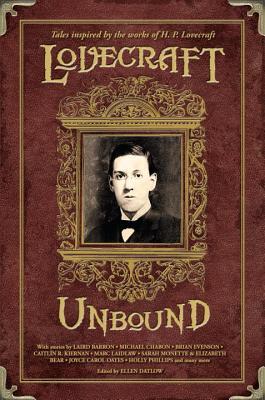
Back in 2009, Ellen Datlow’s anthology Lovecraft Unbound: Tales Inspired By the Works of H. P. Lovecraft appeared. The growing popularity of faux-Lovecraft stories was just beginning and Datlow’s book set a new standard for quality. I finally got around to reading Lovecraft Unbound. My favorite story is “Mongoose” by Sarah Monette & Elizabeth Bear. It’s set on a space station infested with Lovecraftian pests. But, the infestation has opened a dimensional rift so that something big and dangerous has entered the space station. I also enjoyed “The Office of Doom” by Richard Bowes. Someone is foolish enough to request The Necronomicon through Inter-library loan. What would a Lovecraftian College Graduation be like? Joyce Carol Oates will show you in “Commencement.” Ellen Datlow assembled an excellent collection that contemporary antholgies struggle to match. Don’t miss this one! GRADE: B+
TABLE OF CONTENTS:
Introduction by Ellen Datlow
“The Crevasse” by Dale Bailey and Nathan Ballingrud
“The Office of Doom” by Richard Bowes
“Sincerely, Petrified” by Anna Tambour
“The Din of Celestial Birds” by Brian Evenson
“The Tenderness of Jackals” by Amanda Downum
“Sight Unseen” by Joel Lane
“Cold Water Survival” by Holly Phillips
“Come Lurk with Me and Be My Love” by William Browning Spencer
“Houses Under the Sea” by Caitlín R. Kiernan
“Machines of Concrete Light and Dark” by Michael Cisco
“Leng” by Marc Laidlaw
“In the Black Mill” by Michael Chabon
“One Day, Soon” by Lavie Tidhar
“Commencement” by Joyce Carol Oates
“Vernon, Driving” by Simon Kurt Unsworth
“The Recruiter” by Michael Shea
“Marya Nox” by Gemma Files
“Mongoose” by Sarah Monette & Elizabeth Bear
“Catch Hell” by Laird Barron
“That of Which We Speak When We Speak of the Unspeakable” by Nick Mamatas
“Catch Hell” by Laird Barron
LOVECRAFT UNBOUND Edited by Ellen Datlow
12 Replies