Author Archives: george

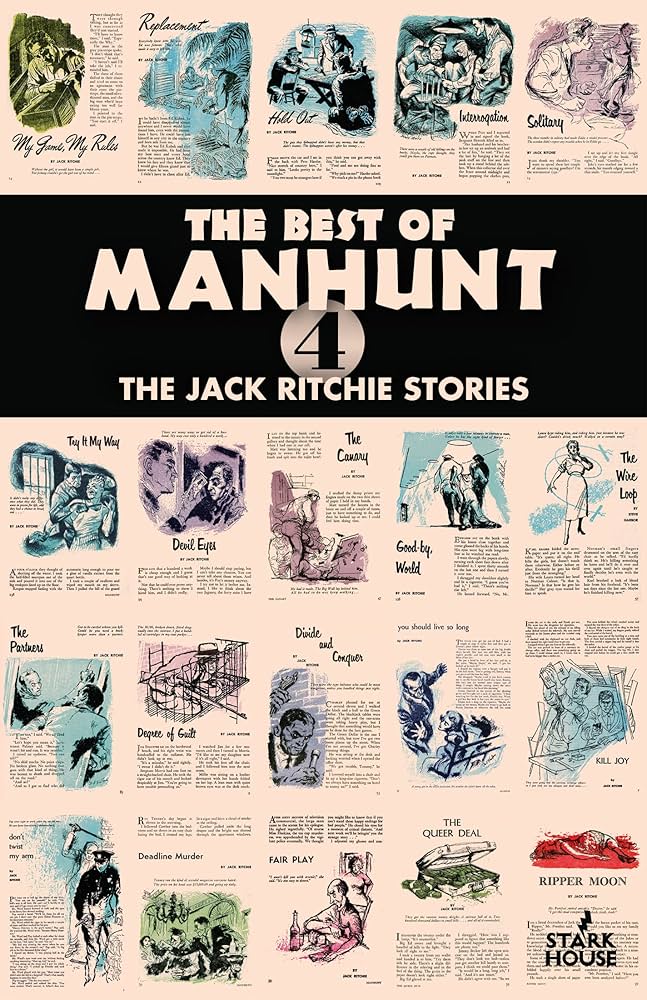
WEDNESDAY’S SHORT STORIES #260: THE BEST OF MANHUNT 4: THE JACK RITCHIE STORIES

Back in the late 1950s and 1960s when I was reading Manhunt it seemed like Jack Ritchie had a story in almost every issue. In his detailed INTRODUCTION, Jeff Vorzimmer writes “Ritchie’s stories appeared in 117 issues of Alfred Hitchcock’s Mystery Magazine and in 116 Alfred Hitchcock anthologies.” That is an amazing writing career!

The Best of Manhunt 4: The Jack Ritchie Stories (2022) includes 23 of Ritchie’s stories from Manhunt and five stories from MANTRAP, MURDER! and SMASHING DETECTIVE STORIES. Plus, a Jack Ritchie bibliography!

Jack Ritchie specialized in short stories. In an interview for Ellery Queen’s Mystery Magazine Ritchie said, “I’ve alway felt that there hasn’t been a novel published that couldn’t be reduced to a better short story. Often the very long novels are really collections of short stories and sometimes they even include what are basically articles. Victor Hugo was good at that. He put about 30,000 words into Les Miserables delineating the history, structure, and whatnot of the Paris sewers. Now if I’d been in his shoes I could have describe the sewers in two paragraphs. Maybe one. Les Miserables itself would have become a novelette. Possibly even a pamphlet.” Les Miserables has almost 1,500 pages!

Jack Ritchie died in 1983 but his stories live on. This STARK HOUSE edition brings some of Ritchie’s best stories to a new audience. If you’re a fan of well crafted short stories, The Best of Manhunt 4: The Jack Ritchie Stories should be high on your list of books to read. GRADE: A

TABLE OF CONTENTS:

INTRODUCTION: War and Peace on a Postcard By Jeff Vorzimmer — 7

THE STORIES FROM MANHUNT:

MY GAME, MY RULES — 12

Replacement — 18

Hold Out — 26

Interrogation — 30

Solitary — 37

Try It My Way — 44

The Deveraux Monster — 50

Ripper Moon! — 64

Devil Eyes — 77

The Canary — 82

The Wire Loop — 88

Goodbye, World — 93

The Partners — 99

Degree of Guilt — 107

Divide and Conquer — 112

You Should Live So Long — 119

Kill Joy — 125

Don’t Twist My Arm — 130

Deadline Murder — 137

Fair Play — 149

Shatter Proof — 151

The Queer Deal — 158

Going Down — 167

THE STORIES FROM MANTRAP, MURDER! and SMASHING DETECTIVE STORIES

Anniversary of Death –171

A Torch for Tess — 181

Dead Cops are Murder — 191

Death Rail — 202

Rainy Afternoon — 208

A JACK RITCHIE BIBLIOGRAPHY — 211

SHARON ISBIN: TROUBADOUR (PBS) and FIVE CLASSIC ALBUMS

I’ve been a fan of Sharon Isbin–one of the great classical guitar players in the world–for decades. Over the years, I’ve watched Isbin perform with various symphony orchestras. I’ve also enjoyed her solo concerts. And, I listen to her wonderful music CDs on a regular basis.

SHARON ISBIN: TROUBADOUR presents a fascinating portrait of Sharon Isbin’s career. As a young girl, Isbin was interested in rockets. SHARON ISBIN: TROUBADOUR starts with film of Isbin firing off rockets in her backyard when she was a kid. Isbin’s father took the family to Italy for a year. Isbin’s brother was supposed to take guitar lessons, but backed out when he realized all the practice he would be required to do. Sharon Isbin took his place…and the rest is history.

Isbin fell in love with her guitar and decided at an early age she wanted to be a performer. SHARON ISBIN: TROUBADOUR traces Isbin’s long career as a performer and a teacher. The Juilliard School approached Isbin to establish a guitar option for their gifted students. Isbin’s Juilliard guitar majors continue to learn and astonish with their marvelous performances.

Isbin had a lot to overcome over her career. Conservative European symphony orchestras did not consider the guitar as a legitimate classical instrument. After years of touring, Isbin convinced many of them to allow her to perform with them. And, a woman musical performer–a guitarist–was a rare phenomenon which took decades to achieve acceptance.

If you’d like to listen to Sharon Isbin’s inspired playing, 5 Albums is the perfect opportunity. Not only do you get five of Isbin’s best albums, but it’s available at the bargain price of $17! You can’t beat that! GRADE: A (for both the TV documentary and the 5 Albums)

CD1 Journey To The Amazon – Music By Almeida, Barrios, Brouwer, Canonico, Lauro, Montana, Salvio, Thiago De Mello And Vianna (Pixinguinha)
1-1Historia Do Luar (Chôro)
1-2Seis Por Derecho
1-3Waltz Op. 8, No.4
1-4A Hug For Pixingha
1-5Chants For The Chief, No. 2: Uirapurú Do Amazonas = Uirapurú From The Amazon
1-6Julia Florida
1-7El Marabino
1-8Waltz, No.3 (Natalia)
1-9Porro
1-10Batucada
1-11Lago De Janauacá
1-12Chants For The Chief, No.1: A Chamada Dos Ventos / Canção Noturna = Wind Call / Nocturne Song
1-13Canción De Cuna (Lullaby)
1-14Aire De Joropo
1-15Cochichando
1-16Chôro Alegre (A Hug For Tiberio)
1-17Cavaleiro Sem Armadura = Knight Without Armor
CD2 Dreams Of A World – Folk Inspired Music For Guitar By Duarte, Gismonti, Granados, Lauro, Lecuona, Padre Donostia, Ramón Y Rivera, Ruiz-Pipo, Shemer, Takemitsu, Tárrega, Theodorakis And Thiago De Mello
2-1Virgilio
Canción Y Danza No. 1
2-2Canción
2-3Danza No. 1
Appalachian Dreams Op. 121
2-4Fantasia: Katy Cruel–Shady Grove–The Foggy, Foggy Dew
2-5Black Is The Color Of My True Love’s Hair
2-6Darling Cora
2-7Putney Hymn
2-8Finale: O’Brien’s Jig–Red-Haired Boy–Planxty George Brabazon
2-9Londonderry Air
2-10Agua E Vinho
2-11Romanza
2-12Brisas Del Torbes
2-13Canto Siboney
2-14Preludio No. 6: Dolor
2-15Recuerdos De La Alhambra
Four Songs
2-16.1Of Sting And Honey
2-16.2Tomorrow
2-16.3Jerusalem Of Gold
2-16.4Spy Girl
Two Epitaphios
2-17One Day In May
2-18You Have Set, My Star
2-19Varre-Vento
2-20Dedicatoria
CD3 Rouse • Dun Guitar Concertos
Concert De Gaudi For Guitar And Orchestra
3-1Allegro
3-2Largo Sereno
3-3Svolazzante
Concerto For Guitar And Orchestra (Yi2)
3-4Rubato
3-5Adagio
3-6Andante Agitato
3-7Cadenza
3-8Ending
CD4 Baroque Favourites For Guitar – Music By Albinoni, J. S. Bach And Vivaldi
Concerto In D Major R. 93
4-1Allegro
4-2Largo
4-3Allegro
Concerto In A Minor BWV 1041 / In G Minor BWV 1058
4-4[Allegro]
4-5Andante
4-6Allegro Assai
4.7Adagio
Concerto In A Major R. 82
4-8Allegro Non Molto (Quasi Andante)
4-9Larghetto
4-10Allegro
4-11Adagio, From Keyboard Concerto In F Minor BWV 1056
4-12Prelude For Lute In D Minor BWV 999
4-13Jesu, Joy Of Man’s Desiring, From Cantata BWV 147
CD5 Rodrigo Concierto de Aranjuez, Villa-Lobos Guitar Concerto, Ponce Concierto Del Sur
Concierto De Aranjuez
5-1I Allegro Con Spirito
5-2II Adagio
5-3III Allegro Gentile
Concerto For Guitar
5-4I Allegro Preciso
5-5II Andantino E Andante
5-6III Allegretto Non Troppo
Concierto Del Sur
5-7I Allegretto
5-8II Andante

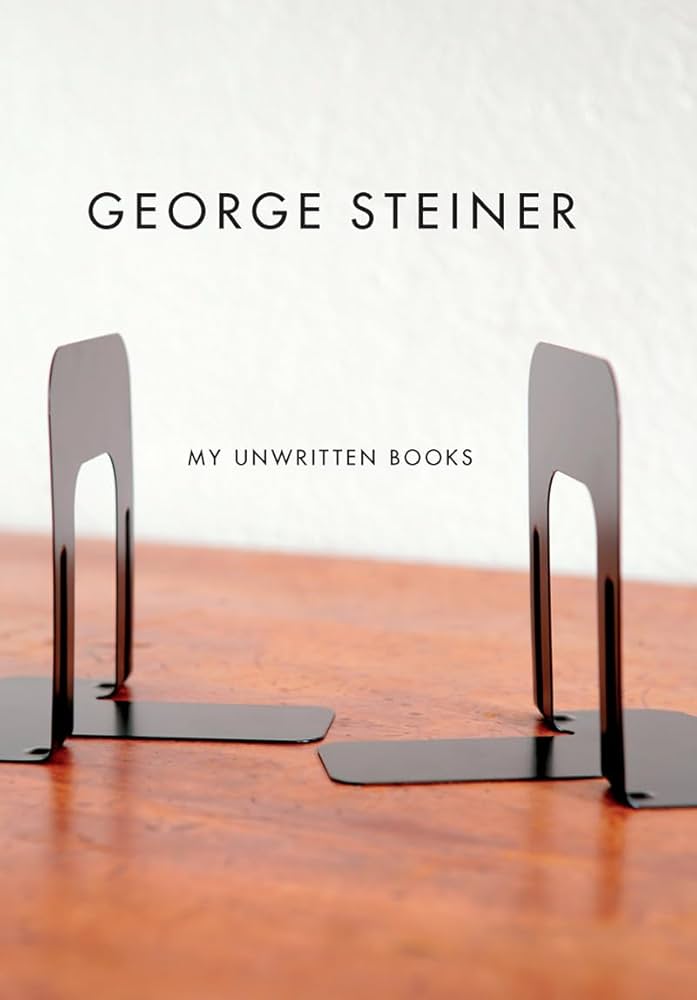
MY UNWRITTEN BOOKS By George Steiner

“A book unwritten is more than a void. It accompanies the work one has done like an active shadow, both ironic and sorrowful. It is one of the lives we could have lived, one of the journeys we did not take.” George Steiner, 2006

I’ve read many of George Steiner’s twenty-seven published books, but I would also have liked read some of these unwritten books that Steiner never finished writing. Steiner devotes each chapter of My Unwritten Books (2008) to a writing project that was started, but never completed.

In the first chapter, “Chinoiserie,” Steiner is approached by noted literary critic and editor, Frank Kermode, to contribute to Kermode’s MODERN MASTERS series. Steiner suggested a polymath like himself, Joseph Needham. Needham was best known as a biologist and sinologist. But, when Steiner sat down with Needham, the two men did not get along. That was their one and only meeting. Steiner did contribute a volume to Kermode’s MODERN MASTERS series, but it was Martin Heidegger (1979).

“Invidia” is NOT about the incredible AI computer chip company. Steiner starts writing about Francesco degli Stabili (aka, Cecco d’Ascoli) a mostly forgotten Italian writer and runs out of gas.

“The Tongues of Eros” might have been too spicy for most publishers. The essay starts off this way: “What is the sexual life a a deaf-mute? To what incitements and cadence does he or she masturbate?” (p. 61). These are questions I had not considered before Steiner’s jarring beginning.

“Zion” is a brief essay on what it’s like to be a Jew. “I had hoped to hammer out these arguments in a full-scale work. I lacked the clarity of vision to do so.” (p. 122)

“School Terms” is a dated essay on the difference between English schools, European schools, and U.S. schools. Steiner had been a Visiting Professor at many colleges and universities over his long career. Based on his time teaching at various institutions, Steiner makes some observations that are now completely obsolete and defunct.

I’m not a pet person, but Steiner loves animals. “Of Man and Beast” concludes: “To write my ‘animal book’ would have required not only eminent psychological and narrative skills. It would have necessitated raw introspection. I did not have the guts.” (p. 182)

“Begging the Question” focuses on Steiner’s politics–where he begs the question of what his politics is.

Have you started a project and wished you had finished it? GRADE: B

TABLE OF CONTENTS:

AUTHOR’S NOTE………………..IX

CHINOISERIE………………..1
INVIDIA………………..33
THE TONGUES OF EROS………………..59
ZION………………..91
SCHOOL TERMS………………..123
OF MAN AND BEAST………………..161
BEGGING THE QUESTION………………..183

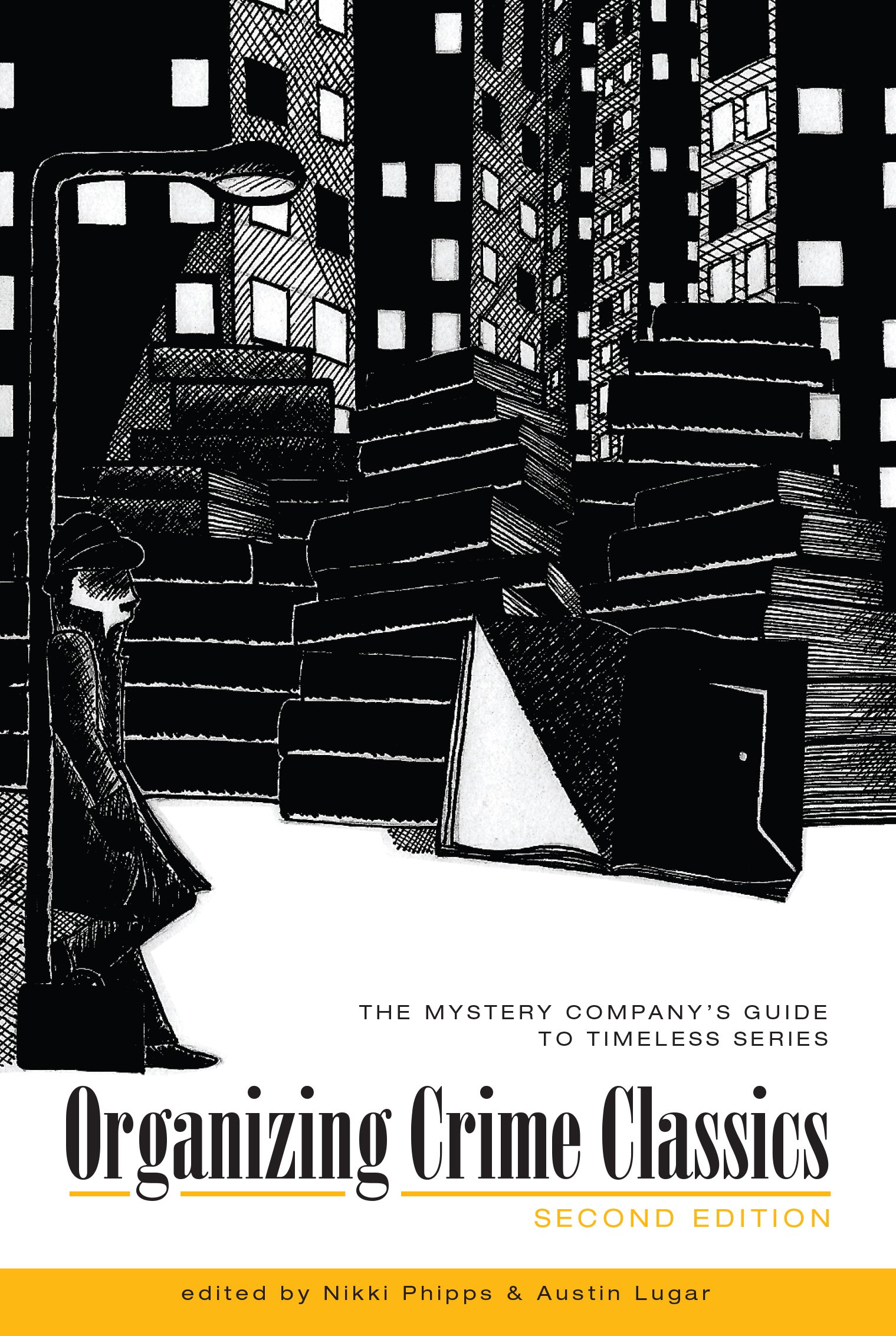
ORGANIZING CRIME CLASSICS, SECOND EDITION By Nikki Phipp & Austin Lugar

Organizing Crime Classics: Second Edition (2016) takes over 4400 titles in over 260 timeless mystery series and organizes them in handy lists. This Second Edition updates the series that were first organized in Organizing Crime Classics, First Edition (2012). You can read my review of the first volume here. If you’re into lists, you’ll love Organizing Crime Classics, Second Edition. GRADE: A

How do you organize your books?

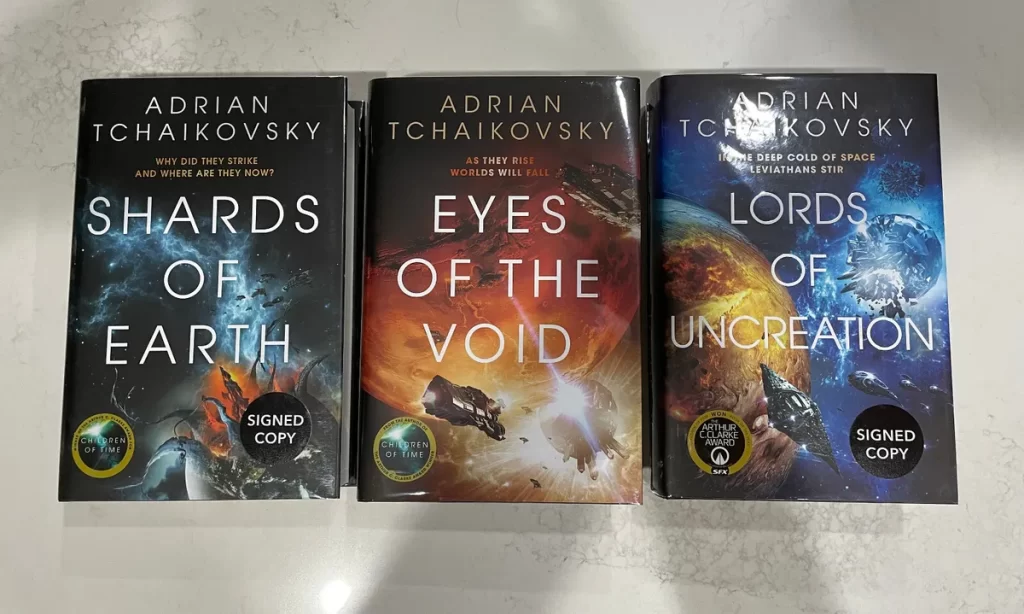
SHARD OF EARTH, EYES OF THE VOID, and LORDS OF UNCREATION By Adrian Tchaikovsky

Three Big Fat Books, over 1800 pages all together. That’s what I read when I tackled Adrian Tchaikovsky’s “The Final Architecture” series. I’m always a little wary of novels that include “reference” sections of dozens of characters, worlds, species, and space ships. In this case, my wariness was justified.

Shards of Earth (2021) opens the series with a massive space battle between mostly humans and a moon-sized space craft with an Architect inside that will rebuild a planet while killing the billions of inhabitants. The only defense humans have is a group of “Intermediaries”–surgically modified navigators who can pilot space ships through unspace. One of the Intermediaries (or Ints) is Idris Telemmier who actually connects with an Architect and ends the battle. But, after 50 years, the Architects are back to “remake” more worlds.

Idris is the key character in all three books. However, Tchaikovsky bulks up the story with subplot after subplot. Things start to slip out of control in Book #2, Eyes of the Void (2022) when more conspiracies spring up. You’d think with the fate of the inhabited planets are stake, the various groups would unite to save themselves. But, no. All the various alien groups also maneuver for leverage and advantage against an awesome opponent like the Architects.

Lords of Uncreation (2023) introduces more plots that swirl around The Eye–a working alien device that might turn the tide against the might Architects. Idris has the ability to search for secrets in unspace that may provide the solution to defeating the Architects. However, when the conclusion arrives, it’s ho-hum.

Was it worth reading 1800+ pages to conclude with disappointment? I’m not a happy camper.

Shards of Earth: GRADE: B

Eyes of the Void: GRADE: C

Lords of Uncreation: GRADE: C

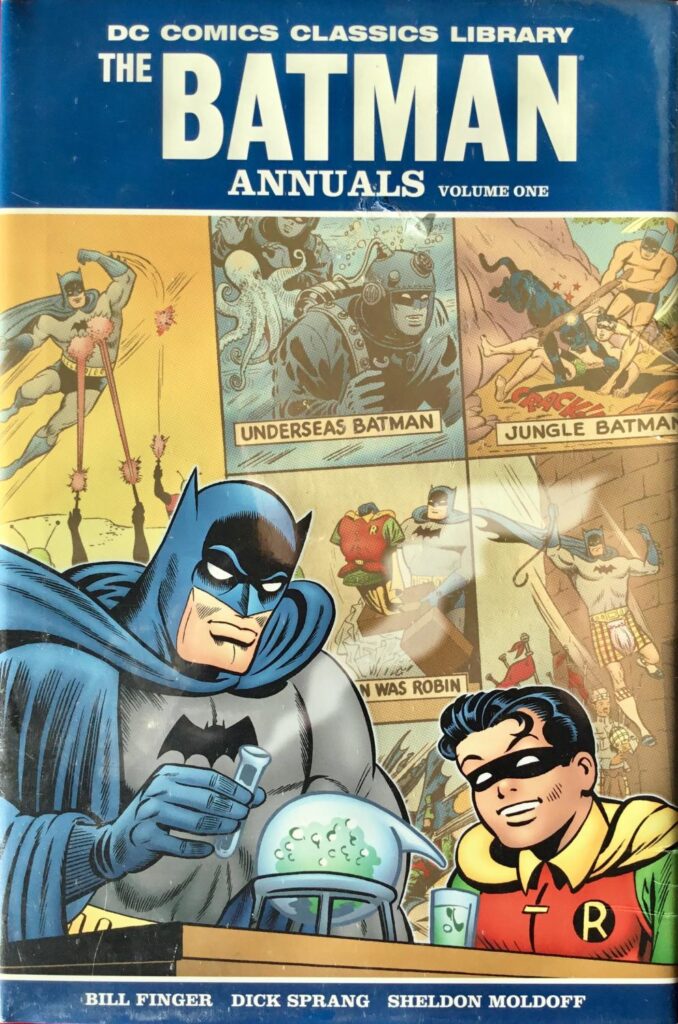
FRIDAY’S FORGOTTEN BOOKS #891: THE BATMAN ANNUALS, VOLUME ONE

I started reading comic books when I was about seven years old (1956). It began with Walt Disney comics–Uncle Scrooge was a favorite–then moved to Superman comic books, and sometime in 1957 I discovered Batman comic books.

The Batman comics in the late 1950s intrigued me because they had mystery elements. Batman and Robin were detectives investigating crimes. Sure, the crimes were exotic with criminals like The Joker, The Riddler, and other flamboyant characters pulling off incredible capers. But I loved the crime solving elements of these stories.

So when I saw this volume of Batman comics from the time period I started reading comics, I had to buy it! This volume reprints classic Batman and Robin stories from BatmanDetective Comics and World’s Finest Comics published between 1950 and 1958–a prime time period for me. 

Most of the stories are great Dick Sprang renditions as written by the prolific Bill Finger.  There are some classics here, including the story of the 1950’s Batmobile, the origin of the Batcave, tales of the Bat Signal, as well as Two-Face, The Joker, and other notable villains. 

Are you a Batman fan? Did you read these comic books way back when? GRADE: A

TABLE OF CONTENTS:

Batman Annual #1 (Summer 1961)

“How to be Batman” (Detective Comics #190, December 1952 – Origins of Batman and Robin retold)

“The Strange Costumes of Batman” (Detective Comics #165, November 1950)

“Untold Tales of the Bat-Signal” (Detective Comics #164, October 1950)

“The Origin of the Bat-Cave” (Detective Comics #205, March 1954)

“Batman’s Electronic Crime-File” (Detective Comics #229, March 1956)

“Thrilling Escapes of Batman and Robin” (Detective Comics #221, July, 1955)

“The Amazing Inventions of Batman” (Batman #109, August 1957)

Batman Annual #2 (Winter 1961)

“The Underseas Batman” (Batman #86, September 1954)

“The Lord of Batmanor” (Detective Comics #198, August 1953)

“Batman, Indian Chief” (Batman #86, September 1954)

“The Jungle Batman” (Batman #72, August/September 1952)

“When Batman was Robin” (Detective Comics #226, December 1955)

“Batman the Magician” (Detective Comics #207, May 1954)

“Batman – The Superman of Planet X” (Batman #113, February 1958)

Batman Annual #3 (Summer 1962)

“The Mad Hatter of Gotham City” (Detective Comics #230, April 1956)

“The Human Firefly” (Detective Comics #184, February 1952)

“The Mental Giant of  Gotham City (Detective Comics #217, March 1955)

“The Joker’s Aces” (World’s Finest Comics #59 (July-August 1952)

“The Gorilla Boss of Gotham City” (Batman #75, February-March 1953)

“The New Crimes of Two-Face” (Batman #68, December 1951-January 1952)

“The Mysterious Mirror Man” (Detective Comics #213, November 1954)

THE LANGUAGE OF LOVE: FROM THE HEART [2-CD Set]


With Valentine’s Day just around the corner, I thought I’d listen to one of the 22 volumes of Time-Life’s The Language of Love. Each volume includes 24 Love Songs.

The mix of songs on this 2-CD set range from “Drive” by The Cars to The Spinners” and Al Jarreau’s “We’re In This Love Together” to Gladys Knight and The Pips’ “Midnight Train to Georgia.”

TRACK LIST:

1-1Fleetwood MacHold Me3:46
1-2The CarsDrive3:57
1-3Roger*–I Want To Be Your Man4:05
1-4Smokey RobinsonJust To See Her4:05
1-5Air SupplyEven The Nights Are Better4:00
1-6America (2)I Need You3:07
1-7The Spinners*–I’ll Be Around3:13
1-8Todd RundgrenHello It’s Me3:42
1-9Bad EnglishWhen I See You Smile4:21
1-10Al JarreauWe’re In This Love Together3:48
1-11Aretha FranklinDay Dreaming4:01
1-12Ben E. KingStand By Me2:59
2-1OrleansDance With Me3:02
2-2Brook BentonRainy Night In Georgia3:52
2-3The PersuadersThin Line Between Love And Hate3:25
2-4Seals And Crofts*–Summer Breeze3:27
2-5CharleneI’ve Never Been To Me3:56
2-6Air SupplySweet Dreams5:21
2-7Quincy Jones With James IngramJust Once4:36
2-8Debbie GibsonLost In Your Eyes3:35
2-9LeBlanc And Carr*–Falling3:13
2-10Gladys Knight And The PipsMidnight Train To Georgia4:40
2-11England Dan And John Ford Coley*–We’ll Never Have To Say Goodbye Again2:52
2-12Carly SimonThat’s The Way I’ve Always Heard It Should Be4:16

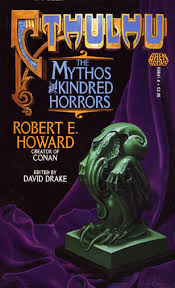
WEDNESDAY’S SHORT STORIES #259: CTHULHU: THE MYTHOS AND KINDRED HORRORS By Robert E. Howard

Robert E. Howard is best known for his Conan the Barbarian stories. But Howard–along with the Mythos circle of Robert Bloch, Clark Ashton Smith, Fritz Leiber, and August Derleth–were encouraged by Lovecraft to write stories using CthulhuAzathothYog-SothothNyarlathotepShub-NiggurathHastur, and Tsathoggua.

CTHULHU: THE MYTHOS AND KINDRED HORRORS (1987) includes some of Howard’s best Mythos stories. “The Black Stone” provides a creepy artifact. “The Thing on the Roof” shows what can happen if you read a book of forbidden knowledge like Junzt’s Nameless Cults (aka, The Black Book). Very scary!

Howard shows the result of selling your soul to the Devil in “Dig Me No Grave.” “The Shadow of the Beast” has this line: “There are worlds and shadows of worlds beyond our ken, it seems, and bestial earthbound spirits lurk in the dark shadows of our own world beyond their time.” (p. 131) That line could have been part of many of these stories about the mysterious aspects of the secrets of the Mythos.

Robert E. Howard even infused some Mythos elements in his famous Bran Man Morn story, “Worms of the Earth.” If you’re a fan of Lovecraft and enjoy eerie stories with incredible creatures, CTHULHU: THE MYTHOS AND KINDRED HORRORS will delight you! GRADE: B+

TABLE OF CONTENTS:

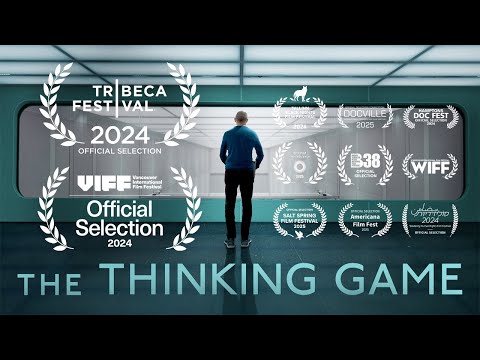
THE THINKING GAME [YouTube]

After watching The Thinking Game on YouTube, I came away with the conviction that Human History is going to be divided into pre-Artificial Intelligence and post-Artificial Intelligence. That moment will hit within our lifetimes…possibly in the next few years at the rate development is progressing.

The Thinking Game is a documentary about Demis Hassabis, a scientist obsessed with solving Artificial Intelligence. For much of his youth, Demis played competitive chess. His family was poor and his winnings help to support them. But then, after Demis lost one of his matches by committing an error, he decides that what he really wanted to do was to solve the Artificial Intelligence puzzle.

Demis applied to Graduate School, but he was told he had to wait until he was 17. So Demis spent a year working for Bullfrog, a European software game company. Demis worked on Theme Park which he infused with AI elements. Theme Park became a worldwide best selling game. Bullfrog offered Demis £1,000,000 pounds to stay–this was in the 1990s–and Demis turned them down so he could go to College.

DeepMind was founded by Demis HassabisShane Legg and Mustafa Suleyman in November 2010. The focus of the company was to develop a working Artificial Intelligence. In 2014, GOOGLE paid $400,000,000 for DeepMind while allowing Demis, Shane, and Mustafa to run it independently in London, England.

This 84 minute documentary shows how DeepMind developed its Artificial Intelligence. If you’re using Gemini as part of GOOGLE Crome you’re already in the AI world. Highly recommended! GRADE: A

THE GREATEST SENTENCE EVER WRITTEN By Walter Isaacson

I’ve read several books by Walter Isaacson and found him an engaging and profound writer. The Greatest Sentence Ever Written–“We hold these truths to be self-evident, that all men are created equal, that they are endowed by their Creator with certain unalienable Rights, that among these are Life, Liberty, and the pursuit of Happiness”–receives Isaacson’s intense focus word by word.

Although drafted by Thomas Jefferson, the Declaration of Independence was edited by Benjamin Franklin and John Adams. Isaacson shows where Franklin impacts the greatest sentence by making some canny changes. “Benjamin Franklin, who emerges here, once again, as a wily, practical intelligence who crossed out Jefferson’s original phrase, ‘We hold these truths to be sacred,’ and replaced ‘sacred’ with ‘self-evident.’” 

This slim little book, only 69 pages!, does a deep dive into America’s most famous document and parses its most famous 35 word sentence almost word by word. With the 250th Anniversary of America approaching, The Greatest Sentence Ever Written brings analysis and historical perspective to our troubled nation. GRADE: A

TABLE OF CONTENTS:

  • 1776 — 1
  • We — 3
  • Self-evident truths — 7
  • All men — 11
  • Created equal — 13
  • Endowed by their creator — 19
  • Certain unalienable rights — 23
  • Life, liberty and the pursuit of happiness — 25
  • Common ground — 27
  • The American dream — 33
  • Going forward — 39
  • Appendices:
  • The drafting process — 43
  • From John Locke’s Second Treatise of Government, 1690 — 48
  • From Rousseau’s The Social Contract, 1762 — 50
  • From the Virginia Declaration of Rights, June 1776 — 52
  • Jefferson’s “Original rough draught” of the Declaration of Independence, June 1776 — 53
  • The Declaration of Independence, July 4, 1776 — 61
  • A NOTE ON TYPE — 69