
For the past 10 years, I’ve had Synvisc injected into my arthritic knees. Synvisc works like a shock absorber and encourages cartilage growth. It’s not going to repair a bad knee, but it can reduce inflammation and pain. It can make bad knees bearable until the inevitable knee replacement surgery. If you’re struggling with knee problems, I urge you to consult with your orthopedic surgeon to see if Synvisc might help your situation. The Synvisc injection I received yesterday should be my last one. I’m planning to have my right knee replaced with a Titanium knee in June 2012. For details about Synvisc, click here.
SYNVISC INJECTION
4 Replies
 Patti Abbott asked for recommendations for Christmas music and I chipped in with Joy to the World by John Williams and The Boston Pops Orchesta. It’s been a favorite for years and is still available on CD (so many other favorite CDs aren’t). The sound is great and the mix of songs should please just about everyone. You can’t go wrong with this one! GRADE: A
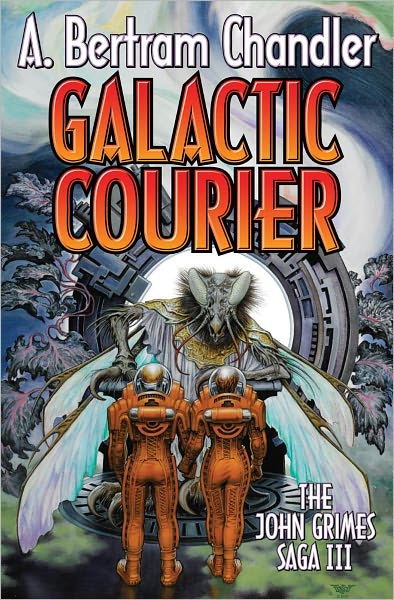 Baen Books has just published their third omnibus volume of A. Bertram Chandler’s John Grimes series, Galactic Courier. This volume collects four Grimes novels: Star Courier, To Keep the Ship, Matilda’s Stepchildren, and Star Loot. Grimes has become a privateer and travels the Rim Worlds to find business. And most of what he finds is unusual and dangerous. If you’re a fan of adventure, you might consider reading these entertaining SF novels. They have plenty of Sense of Wonder and fun!
 Those of you who saw THE ADDAMS FAMILY in Chicago or on Broadway saw a different version of the musical than this new touring company presentation. The central conflict is new, there’s added choreography, retooled orchestrations, and three brand-new songs. Diane and I loved the TV version starring Carolyn Jones and John Astin back in the Sixties. And, of course, we loved the Charles Addams’ cartoons in The New Yorker. We’ll see if this musical can bring Morticia and Gomez to life on the stage tonight.
 Margaret Atwood writes about story-telling and how the books she read in her youth led her to become a writer. Atwood grew up a voracious reader. She loved Sherlock and Oz and science fiction. Atwood read H. G. Wells, Verne, and more contemporary SF writers like John Wyndham. Her analysis of the differences between Wells and Verne are enlightening. Atwood tells how she came to write dystopian books like The Handmaiden’s Tale, Oryx and Crake, and Year of the Flood. I found Atwood’s insights clever and thought-provoking. GRADE: A
 George Clooney plays a real estate lawyer in Hawaii who is dealing with two crises. Clooney’s wife is in a coma from a boating accident. Clooney, an absentee father, has to deal with his two precocious daughters: one 17, the other 10. The second problem involves a family trust that’s worth $500 million in virgin land. Clooney is the Executor and his family is pressuring him to sell. The Descendants turns into a bit of a road movie as Clooney takes his daughters on a journey to discover some family secrets. The couple we viewed the movie with were disappointed that The Descendants wasn’t funnier. Yes, there are moments of humor, but Clooney’s character finds himself grappling with the past and the future. Those kinds of serious struggles rarely produce giggles. GRADE: B+
 The Consummata continues the adventures of Morgan the Raider. Morgan is on the run from the Feds after the events chronicled in The Delta Factor. The Consummata is set in the late 1960s so the slang and culture are consistent with the previous book. Morgan takes on a mission by the Cuban community in Miami to track down a vicious traitor who has stolen $75,000 from them. The traitor has a weakness for S&M so Morgan uses that fetish to lead him to a rendezvous with a super-secret dominatrix, The Consummata, at her secluded mansion. The action is unrelenting and there’s a twist at the end. My hat goes off to Max Allen Collins for channeling Spillane’s style so completely. GRADE: B
 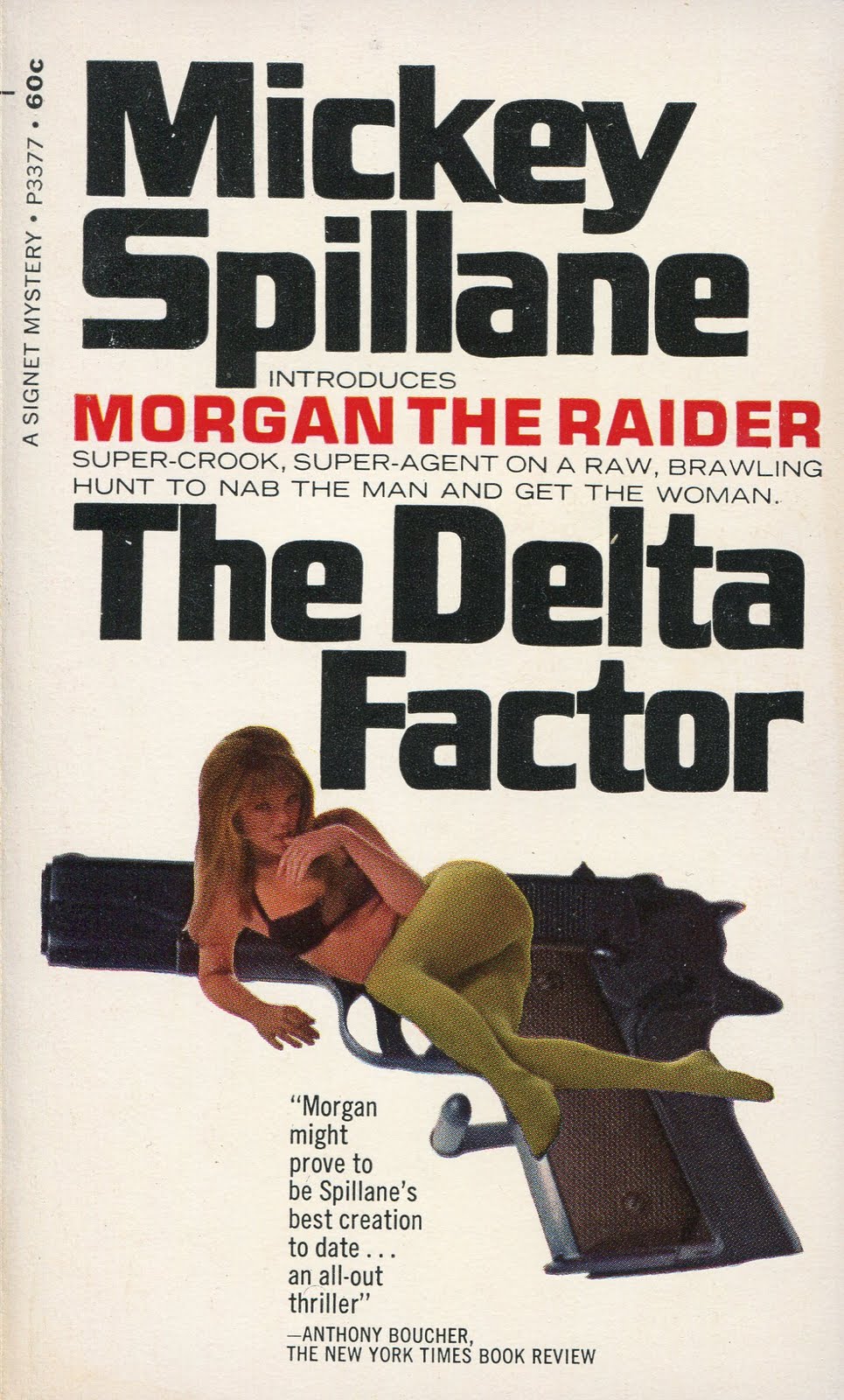 Back in 1967, Mickey Spillane’s The Delta Factor appeared with a new hero: Morgan the Raider. Morgan, being held on Federal charges of heisting $40 million in cash, is offered a deal by the U.S. Government. If Morgan agrees to break into a Latin American prison and free a political V.I.P. the Government will reduce Morgan’s jail-time. Of course, Spillane has to complicate things. Morgan finds himself assigned a minder: a beautiful C.I.A. agent. And the never-named Latin American country has a hurricane about to come ashore. Plenty of action and gunplay add up to an exciting conclusion. I’ll be reviewing the sequel to The Delta Factor, The Consummata, tomorrow.