Author Archives: george

THE SNARKIEST MOVIE REVIEW I’VE EVER READ

AN EPIC MISTAKE

The squabbles have been epic. Sir Christopher Nolan’s adaptation of “The Odyssey” was causing conniptions long before anyone had even seen the thing. Ahead of its release on July 17th, there was harrumphing over everything from the actress playing Helen (too black); the colour of the plume on Odysseus’s helmet (too red); the soldiers’ armour (also too black, and too Batman-like) and the vocabulary of Odysseus’s son (too American: at one point he says “Dad”). On YouTube the film’s trailer was met with criticism. “If I saw this on a plane, I’d still walk out,” reads one disgruntled comment.

The film itself is unlikely to allay any anxieties about anachronisms. In everything from its scenery to its psychology it says far more about the modern West than about ancient Greece. Startling liberties are taken with the plot to turn Odysseus, the archetypally flawed ancient hero, into a simple modern goody by flattening his flaws. Any bad behaviour is explained away either by drug use or hinted to be due to proto-ptsd (the overdiagnosis epidemic having apparently reached the ancient shores of Ithaca). The ending, which has him pierced by arrows and turned into a St Sebastian-style pincushion, is sillier still.

The scenery is similarly unsuitable, and often far too pretty. Soldiers in elegant gunmetal grey look less like ancient warriors than Warhammer toys. The ochre, candlelit palaces do not resemble warlords’ lairs but boutique hotels. During the beach scenes with the nymph Calypso (Charlize Theron), Odysseus (Matt Damon) seems less to be in agonising exile than on a Caribbean mini-break (they are wearing lots of linen). And the less said about the Cyclops, the better.

This is irksome but typical. Every adaptation of an ancient text is as much about its own era as the original work; less a lens than a mirror. The ancient Athenians transformed Homeric epic into psychologically acute tragedy. In the 18th century Alexander Pope’s translation managed to make Odysseus sound like an effete Enlightenment poet rather than an ancient warrior-king. In 1922 James Joyce’s version offered sex, stream of consciousness and that Modernist literary staple: boredom.

In this way, Sir Christopher’s retelling is part of a time-honoured tradition. It is manifestly a product of the present day. Female characters offer frequent apologias for feminism (not a noted strong suit of the ancients). The casus belli of the Trojan war is given as a desire to improve trade routes, as if Agamemnon were merely a blameless advocate for free trade rather than one of antiquity’s greatest thugs.

Adaptations have some latitude, for “The Odyssey” contains multitudes. In one of the most famous scenes, the god Proteus transforms into a lion, then a snake, then rushing water. “The Odyssey” is more protean still. In the three millennia since it was composed, it has been on an odyssey all its own.

The poem has become a noun (an odyssey) and an adjective (Odyssean). It has become a play, a tv series, a novel (“Ulysses”) and a porn film (“Odyssey: The Ultimate Trip”). It has become a lunar lander (im-1 Odysseus), a large asteroid (1143 Odysseus) and a body lotion (which, with notes of black pepper and sandalwood, no doubt smells better than its namesake would have).

It is therefore not surprising that Odysseus, the sacker of cities, has been transformed once again by Sir Christopher. In other ways it is surprising, as “The Odyssey” has been a wrecker of reputations. In 2024 a film starring Ralph Fiennes was dismissed as “dull” and a “slog”. A movie of 1954, starring Kirk Douglas, was described as “weird” and “vapid”.

Sir Christopher has form on tricky topics: his previous film, “Oppenheimer”, about particle physics and nuclear weapons, grossed almost $1bn at the box office. Still, he has learned that “The Odyssey” is not an easy book to film.

That porn flick hints at why: it describes itself, with admirable artistic honesty, as “Three unrelated stories”. The original “Odyssey” is not much better. It tells the tale of Odysseus’s ten-year journey home from the Trojan war and thus is commonly thought of as a kind of watery Greek road trip. But it is also a sex-and-sea-monsters film, a father-and-son film and a husband-and-wife film.

Its structure is fiendishly twisty. It is about Odysseus—but readers do not meet him for four books. Moreover, many of the stories that you think of as archetypally Odyssean are either not told at all or told in brisk narrative flashback: the Sirens slip by in some 60 lines and the Lotus-Eaters in about 20. It is, as Sir Christopher said, “the original non-linear narrative”. It is, says Emily Wilson, a classicist who published a dazzling translation in 2017, “complicated”.

It is also very famous. The second work of Western literature, it was once assumed to be secondary in seriousness to its more manly prequel, “The Iliad”. Yet in recent years its fame has far eclipsed it. The first Penguin Classic ever printed was “The Odyssey”. The pyramid of intellectual biomass resting upon it is vast. It is only 12,000 lines long, but look up “Odyssey” in the British Library and you are offered 34,000 titles: almost three for every line. “Iliad” returns a mere 9,000.

That it has become yet another film—and created yet more debates—is further proof of its permanence. There are two ways to see such squabbles. One is to engage with them on their own terms. These gripes have some validity: in Homer, Helen is clearly described as “white-armed”; Odysseus probably didn’t wear a red-plumed helmet (red was a Spartan habit); ancient Greek armour was bronze, not Batman-ish; and Odysseus’s son definitely didn’t say “Dad”. As Tim Whitmarsh, Regius professor of Greek at Cambridge University, points out: “The ancient Greeks spoke Greek.”

The other way to see these arguments is as proof of the malleability of “The Odyssey”. In an era in which people bristle at American influence in Europe, it lets people bristle at Americanisms (“Dad!”) in ancient Greece. In an era anxious about the excessively manly manosphere, people can fret over excessively manly armour. In an era riven by debates about race, people have engaged in bad-tempered rows over casting. We are not arguing about “The Odyssey” when we argue about “The Odyssey”. We are arguing about ourselves.

Each generation remakes “The Odyssey” in its own image: you get the version you deserve. The clever, quarrelsome ancient Athenians took Homer and transformed him into clever, quarrelsome tragedy. The Modernists turned him into Modernist prose and poetry. The simplistic, visual modern world has taken Homer and turned him into social-media spats and an absurd Cyclops—and thus into a tragedy that is all its own. ■

The Economist, July 18, 2026 p. 67-68
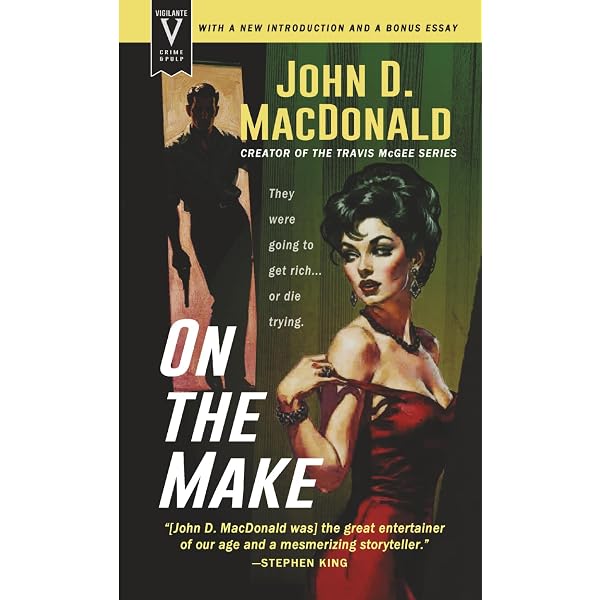
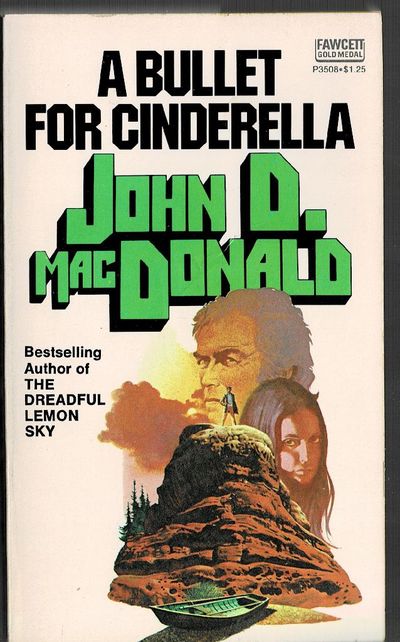
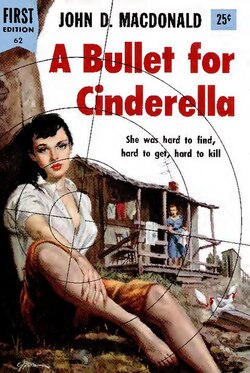
FRIDAY’S FORGOTTEN BOOKS #918: ON THE MAKE By John D. MacDonald

John D. MacDonald’s On the Make was first published in 1955 by Dell Publishing (Dell First Edition #62) as A Bullet for Cinderella. Later it was reprinted by Fawcett Gold Medal Books. Now it’s back in print from Vigilante Crime & Pulp, an imprint of Gutter Books.

Tal Howard spent time in a Chinese prisoner of war camp during the Korean War. While he was there, Howard met Timmy Warden, a dying soldier who shares a secret. Warden managed to embezzle $60,000 before he was drafted. The money is buried in canning bottles in a secret location. Before he dies, Warden gives Howard a clue: “Cindy will know where it is.” Also in the camp was a psychopath, Earl Fitzmartin. Fitzmartin heads for the town Warden came from–Hillston–and gets a job. But he’s really busy searching for the money. Howard arrives in Hillston, and Fitzmartin threatens him.

The secret to the location of the buried $60,000 is hidden in Timmy Warden’s past. Howard is determined to find the money before Fitzmartin can. But Warden’s Past is tangled and leads Howard to two women important in Timmy Warden’s Life: Ruth Stamm who cares for animals and Toni Rossele who is involved with gangsters.

John D. MacDonald writes suspenseful books and One the Make is certainly a page-turner. Also included in this new edition is an Introduction–“The Two Sides of John D.”–by Martin L. Kohler and an essay by Matthew Louis, “John D. MacDonald in Context” which delivers a detailed picture of the publishing industry that JDM was writing for. Are you a John D. MacDonald fan? GRADE: B+

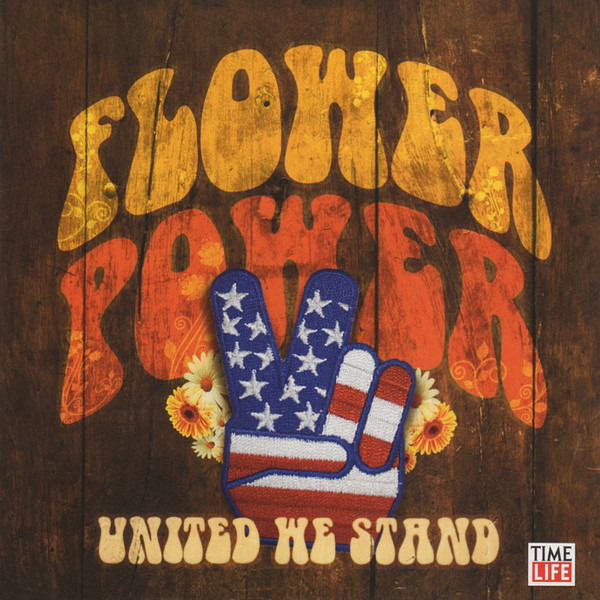
FLOWER POWER: UNITED WE STAND (2-CD Set)

I’m not sure I understand the criteria for what makes a hit a “Flower Power” song. Does Steppenwolf’s “Rock Me” resound with Flower Power? Or Steam’s classic “Na Na Hey Kiss Him Goodbye”? Or Elton John’s “Honkey Cat”?

Whatever the definition of Flower Power TIME-LIFE used in assembling this compilation CD, it certainly is elastic! “Crocodile Rock” rubs shoulders with Strawberry Alarm Clock’s “Tomorrow.”

I’ve always liked “Dedicated to the One I Love” by The Mamas & The Papas. When is the last time you heard Spanky and Our Gang sing “Lazy Day”?

Do you remember these songs from the late 1960s and early 1970s? Flower Power: United We Stand from 2008 is a hodgepodge of hits from that era–some seldom heard on the radio anymore. GRADE: B-

TRACK LIST:

Disc 1

1 Rock Me BY Steppenwolf  

2 I Feel Like I’m Fixin’ to Die Rag BY Country Joe & the Fish  

3 Clair BY Gilbert O’Sullivan   

4 People Get Ready BY The Impressions   

5 Na Na Hey Kiss Him Goodbye BY Steam  

6 Tuesday Afternoon Forever Afternoon BY The Moody Blues  

7 Monterey BY The Animals  

8 Jam Up Jelly Tight BY Tommy Roe  

9 Indian Lake BY The Cowsills  

10 Daniel BY Elton John   

11 A Salty Dog BY Procol Harum  

12 Black Night BY Deep Purple  

13 Stop the War Now BY Edwin Starr  

14 Honky Cat BY Elton John  

Disc 2

1 Crocodile Rock BY Elton John   

2 Tomorrow BY Strawberry Alarm Clock  

3 Dizzy BY Tommy Roe   

4 Dedicated to the One I Love BY The Mamas & the Papas  

5 The Night Chicago Died BY Paper Lace   

6 You Ain’t Seen Nothing Yet BY Bachman-Turner Overdrive   

7 Choice of Colors BY The Impressions  

8 Twenty-Five Miles BY Edwin Starr   

9 United We Stand BY Brotherhood of Man 

10 Lazy Day BY Spanky & Our Gang   

11 Go Now! BY The Moody Blues   

12 Let It Out (Let It All Hang Out) BY The Hombres   

13 98.6 BY Keith   

14 Conquistador BY Procol Harum

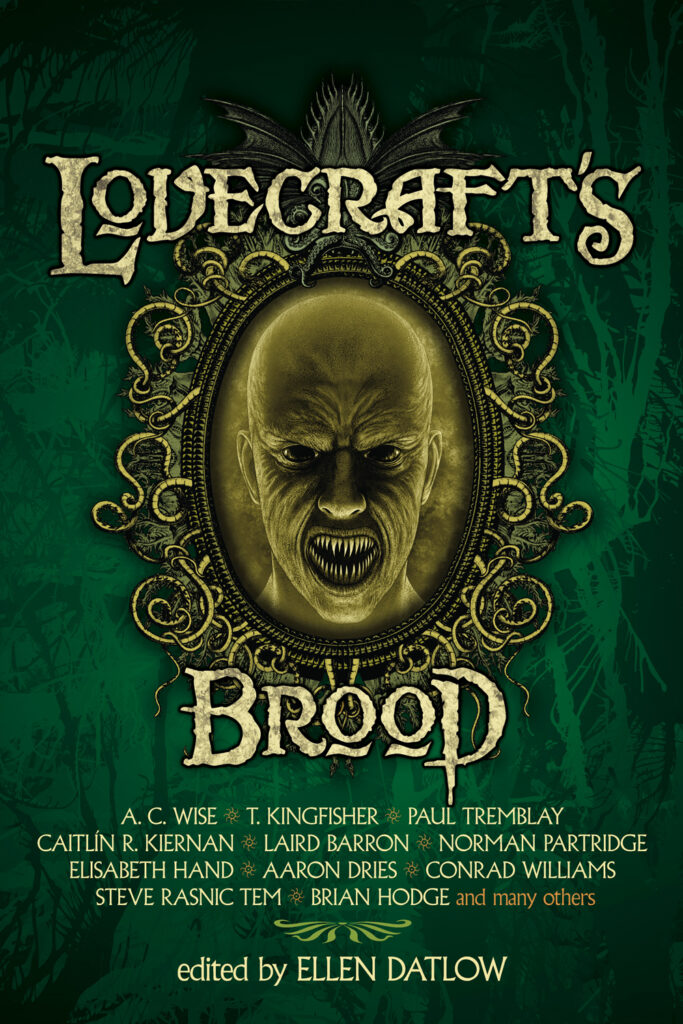
WEDNESDAY’S SHORT STORIES #280: LOVECRAFT’S BROOD Edited by Ellen Datlow

I’ve read over a dozen Ellen Datlow anthologies. In her “Introduction” Datlow claims “most of the stories collected here are infused with cosmic dread” (p. 8). Wrong! All of the stories–except one–are infused with dullness. Only one of the 19 stories captures the essence of a Lovecraft pastiche. That one story is Caitlin R. Kiernan’s “The Beholder’s Share.”

“The Beholder’s Share” starts out conventionally. The narrator’s friend Maggie buys a box of books at an estate sale. Maggie leaves the box of books with the narrator claiming she’s planning to sell the books on Ebay. As you can guess in a Lovecraft pastiche, the books in that box are not just any books.

The books have a history full of dread–the kind that Datlow claimed infused the stories in Lovecraft’s Brood (2026). Kiernan takes the reader through the strange history of the books and the implications that the books have the power to control human actions…in a Bad Way.

Other than “The Beholder’s Share,” I found the rest of the stories of Lovecraft’s Brood disappointing. This anthology is not a brood, but just an only child. GRADE: D (for dull)

TABLE OF CONTENTS:

INTRODUCTION by Ellen Datlow — 7

“Once Seen” by Conrad Williams — 11
“Mister Ainsley” by Steve Rasnic Tem — 27
“Sideways” by Ray Cluley — 37
“Empty Shells on a Cold Shore” by Jacob Steven Mohr — 65
“The Keep Quiet” by Aaron Dries — 73
“Agent of Chaos” by T. Kingfisher — 95
“The Beholder’s Share” by Caitlín R. Kiernan — 105
“Backbite” by Norman Partridge — 133
“Eat the Wyrm” by Elisabeth Hand — 153
“The Note” by Paul Tremblay — 159
“A strange form of life” by Laird Barron –179
“Call of the Void—L’appel du Vide” by Carol Gyzander — 191
“Hypnopompia” by L. Marie Wood — 203
“Volcano” by Livia Llewellyn — 207
“Halogen Sky” by Wendy N. Wagner — 233
“Wind Come Down the Mountain” by A. C. Wise — 247
“Infantum” by Ian Rogers — 261
“Diving Deep” by Gary McMahon — 275
“One Possible Shape of Things to Come” by Brian Hodge — 289

About the Authors — 310

About. the Editor — 315

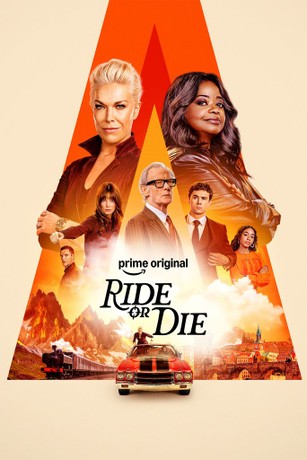
RIDE OR DIE [AMAZON PRIME Video]

If you are in the mood for a Summer thrill ride disguised as a buddy movie, you might want to check out the 8-episode series, Ride or Die. Hannah Waddingham and Octavia Spencer have great chemistry and will carry you along for an unpredictable joy ride. Hannah Waddingham plays Judith Burton, a forensic accountant–NOT! Judith is a deadly assassin working for a Secret Agency headed by Bill Nighy.

Octavia Spencer plays Debbie Claybourne who has a 20 year marriage with a British MP named David (Jaime Parker). Debbie is grooming her husband to be the next British Prime Minister when he tells her he wants a divorce. Meanwhile, Judith’s Secret Agency thinks she’s too old (50) to do her job any more. Both women face life-changing situations that will test their friendship.

I’ve watched the first three episodes and I’m hooked! Action, adventure, and humor with gunplay, explosions, chase scenes, and hand-to-hand combat mixed in. What more can you ask for? GRADE: Incomplete but trending towards a B+

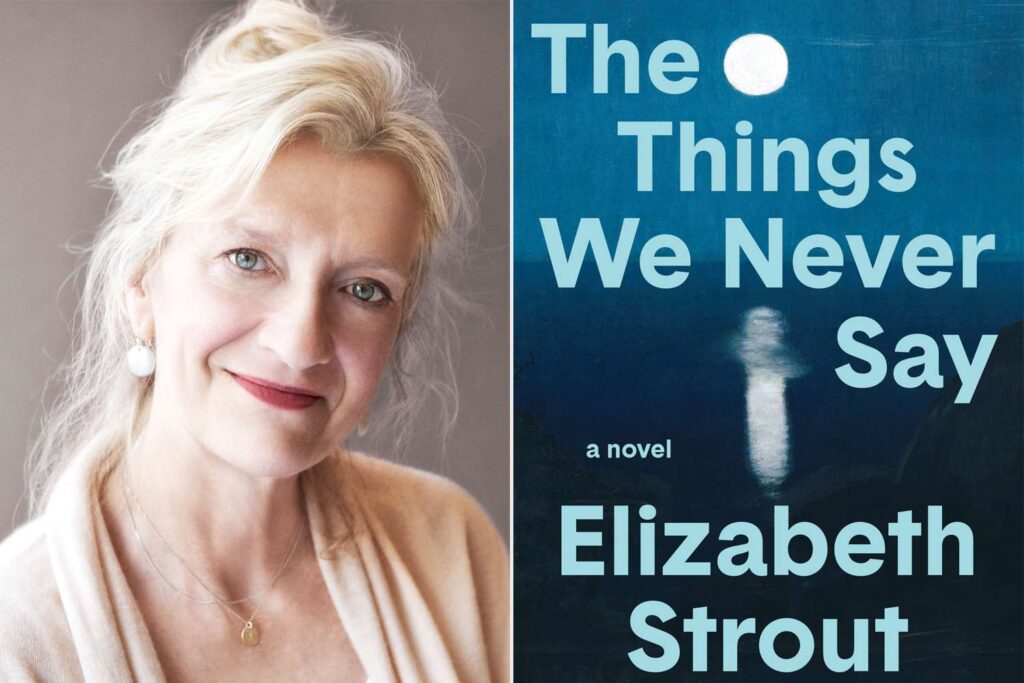
THE THINGS WE NEVER SAY By Elizabeth Strout

Every character in Elizabeth Strout’s new novel has a Secret. Hence, the title: The Things We Never Say. One of the main characters, popular History teacher Artie Dam, doesn’t want to live anymore. His wife, Evie, is holding a Secret 20 years old. Artie and Evie’s son, Rob, who was the driver in an accident that killed his passenger, grapples with two major Secrets.

Pulitzer Prize winner, Elizabeth Strout is at the top of her game in The Things We Never Say. She even manages to slam Trump!

My favorite scene in The Things We Never Say is when Artie asks his favorite class–soon to graduate–what they want to do in the Future. Clearly, the students are full of fear about the world–Trump just won the 2024 Election–and the uncertainties they face. But Artie, a master teacher, manages to allay their trepidation about their lives after High School by engaging them in a game of What Do You Want To Be When You Grow Up? One student engages Artie after class one-on-one. Danny is a jock, but he loves Shakespeare. Artie counsels Danny on his career choices. Danny’s father is a plumber and wants Danny to become a plumber, too. But Artie maps out a different career path–one that will change Danny’s Life.

Elizabeth Strout packs a lot of surprises in The Things We Never Say. The fact that this is an outstanding book…is no Secret. GRADE: A

THE ODYSSEY [IMAX]

Alexander Pope (1726)

As with his translation of the Iliad, Pope changed the metre from the dactylic hexameter used by the Homeric Greek text into heroic couplets, rhyming pairs of lines in iambic pentameter.

Robert Fitzgerald (1961)

For decades, Fitzgerald’s translation was widely regarded as the literary standard: elegant, lyrical, and deeply attentive to the poem’s beauty. His Odyssey feels reflective and musical rather than fast-paced.

Richmond Lattimore (1965)

Long favored in academic circles, Lattimore’s translation attempts to remain structurally close to the Greek, including its repetitions and formulaic qualities. His six-beat line echoes Homeric rhythm more directly than most modern literary translations.

Robert Fagles (1996)

Still one of the most commonly assigned translations, Fagles leans toward contemporary free verse and emphasizes narrative energy, drama, and accessibility. For many readers, this is the most cinematic Odyssey.

These are the four translations I’ve read of Homer’s Odyssey. All four have their strengths and weaknesses, but if I had to pick my favorite, I would go with Robert Fagles.

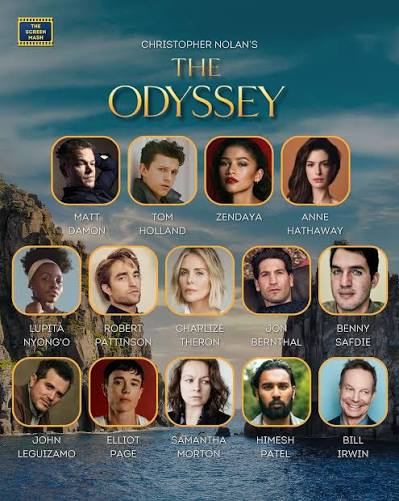
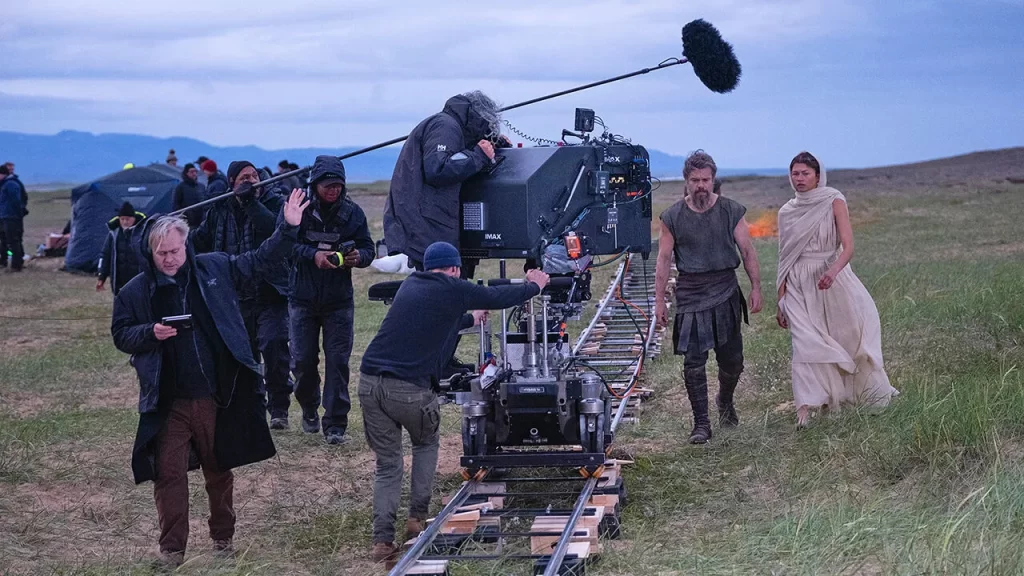
That being said, let’s turn to Christopher Nolan’s “translation” of the Odyssey now in cinemas across the land. I attended the 2:00 p.m. showing at our local AMC Theaters. The theater I was in was about half full. The three hour movie lagged in parts–which gave me the opportunity to run to the Men’s Room–and yet held my attention with the vivid scenes on the screen. When I think of Odysseus, the man who is credited with winning the Trojan War with his sneaky Trojan Horse trick, I think “cunning.” When Christopher Nolan thinks of Odysseus, he thinks Jason Bourne (aka, Matt Damon).

In my readings of the Odyssey, I don’t remember Odysseus being a great fighter. I remember Odysseus being clever and brilliant. In Nolan’s Odyssey there’s a lot of fighting. And I was getting sea-sick from all the scenes on boats. At the end of Nolan’s Odyssey, there was a smattering of applause. But not from me. GRADE: B

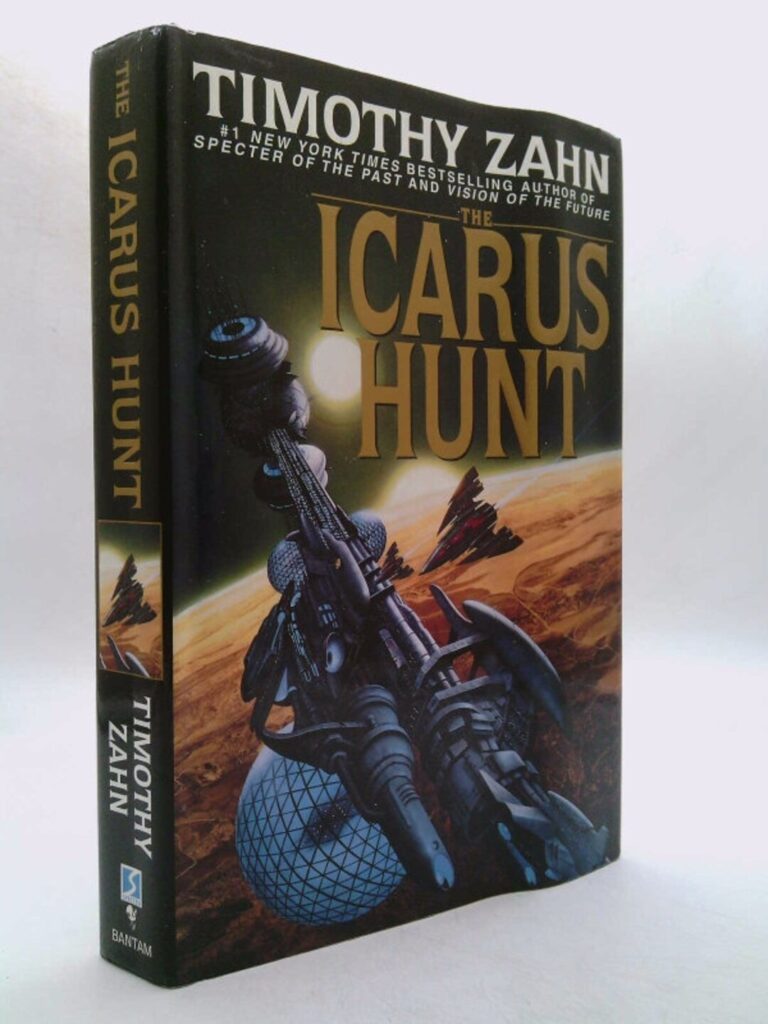
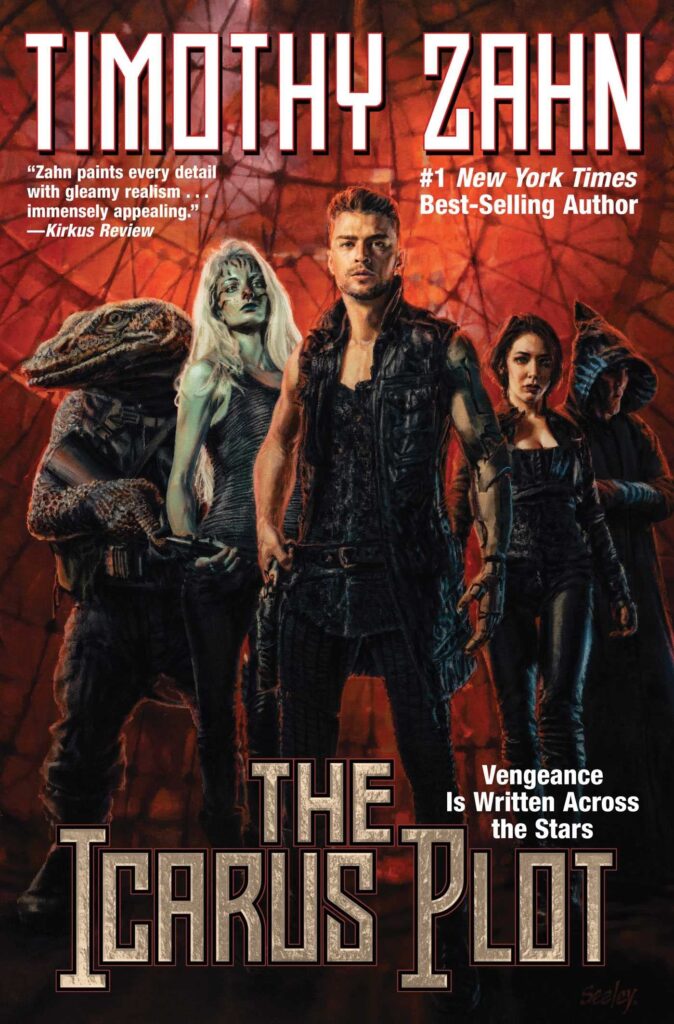
FRIDAY’S FORGOTTEN BOOKS #917: THE ICARUS HUNT and THE ICARUS PLOT By Timothy Zahn

Summer reading to me is Big Fat Books (500+ pages) and series that have been on my bookshelf for far too long. I’m going to start with a series called The Icarus Saga by prolific SF writer, Timothy Zahn (60 published novels and still going strong). It’s an odd series because Zahn wrote The Icarus Hunt in 1999 and then 20 years later, wrote six more novels in the series.

The Icarus Hunt is basically a chase novel. Starship pilot Jordon McKell is hired to deliver an unconventional craft to Earth. A crew of random hires join McKell in his travels, but at least one of them is a murderer. As the novel progresses, McKell learns what the secret of Icarus is and why so many groups and governments in the Galaxy want the ship he’s piloting.

I’m one of those guys that likes to read blurbs. Here’s one from The Icarus Plot (2022): “Take the espionage of John le Carre, the deduction of Sherlock Holmes, the twisty nature of The Sting, and you have The Icarus Plot.” (Upstream Reviews)

And the writer who wrote that blurb is right! Former bounty hunter Gregory Roarke and his partner Selene are hired by two men who claim they are searching for valuable planets. That turns out to be a ruse. What they are really seeking is a member of the Icarus crew from The Icarus Hunt. The Bad Guys are working for the Patth, aliens who monopolize The Talariac Drive which is fastest in the galaxy. But the Patth fear Icarus and its advanced technology threatens their hold on the interstellar trade. The Patth and their deadly minions are hunting for Icarus crew members so they can take control of Icarus and keep their power.

Roarke and Selene (who has super Olfactory powers) track down Tera, an Icarus crew member, but then double-cross the Patth. Little by little, Roarke and Selene learn the secrets of Icarus while being chased from planet to planet by the Patth who will stop at nothing to seize Icarus.

If you’re in the mood for fast-paced Summer Reading, I recommend The Icarus Saga. I’ll be reading the rest of the books in the series over the next few weeks. GRADE: B+ (for both)

THE ICARUS SAGA:

Icarus (Timothy Zahn)

THE 80s PARTY PLAYLIST and HOT LADIES OF THE 80’s

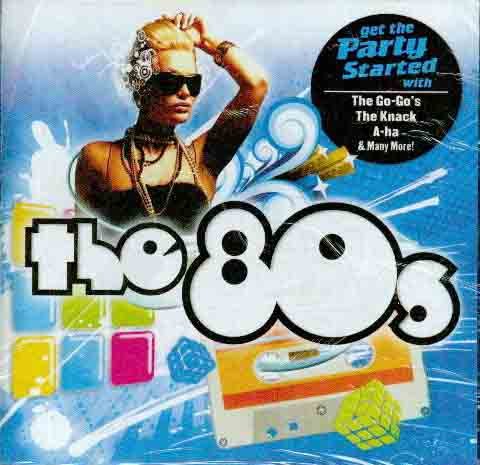
I was in the mood for some Eighties music and these two compilation CDs were handy. The 80s Party Playlist (2000) includes hits like “Walking on Sunshine” by Katrina and The Waves–which has made over $100 million by being featured in 300 TV commercials over the years. I’m a fan of “867-5309/Jenny” by Tommy Tutone. And I’m sure most of remember “Walk Like An Egyptian” by The Bangles–the top selling song of 1986!

Hot Ladies of the 80s (1990) includes Taylor Dayne’s dance music hit, “Don’t Rush Me” and the infectious “Head to Toe” by Lisa Lisa and Cult Jam.

Both CDs include songs that are seldom played on local Oldies radio. They sure jogged my memories! GRADES: The 80s Party Playlist: B; Hot Ladies of the 80s: B-

TRACKLIST:

We got the beat / The Go-Go’s (2:30)

Walking on sunshine / Katrina & the Waves (3:59)

Come on Eileen / Kevin Rowland & Dexy’s Midnight Runners (4:14)

Take on me / A-ha (3:49)

Karma chameleon / Culture Club (4:12)

Centerfold / J. Geils Band (3:38)

My Sharona / The Knack (4:54)

867-5309 /Jenny / Tommy Tutone (3:47)

Whip it / Devo (2:40)

Walk like an Egyptian / Bangles (3:22)

Everybody have fun tonight / Wang Chung (4:48)

Mony mony (live) / Billy Idol (4:08)

Rebel yell / Billy Idol (4:46)

Miss me blind / Culture Club (4:29)

Love stinks / J. Geils Band (3:37)

Good girls don’t / The Knack (3:09)

Do you want crying / Katrina & the Waves (3:33)

TRACK LIST:

1Paula Abdul–Forever Your Girl Written-By – Lieber*4:58
2Taylor Dayne–Don’t Rush Me Written-By – Steinberg, Kelly*3:47
3Neneh Cherry–Buffalo Stance Written-By – McVey*, Morgan*, Cherry*, Ramacon*5:42
4Pebbles–Mercedes Boy Written-By – Pebbles5:10
5Samantha Fox–I Wanna Have Some Fun Written-By – Full Force4:08
6Karyn White–The Way You Love Me Written-By – Babyface, Simmons*, L.A. Reid4:56
7Tina Turner–Typical Male Written-By – Lyle*, Britten*4:14
8Lisa Lisa And Cult Jam*–Head To Toe Written-By – Full Force5:01
9Exposé–Come Go With Me Written-By – Martineé*4:15
10Sheena Easton–Strut Written-By – Dore*, Littman*3:59