When the Mighty Detroit Lions shocked the Super Bowl Champion Kansas City Chiefs a few nights ago, that signaled that this NFL season would feature plenty of surprises.
The NFL season swings into full action today with a complete slate of games. The Bills play the Jets on Monday Night Football so I’ll just be watching the action around the League. How will your favorite NFL team do today?
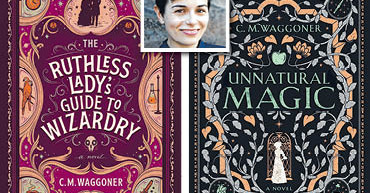
Unnatural Magic (2019) starts with the struggles of a gifted girl, Onna Gebowa, who lives in the tiny town of Cordridge-on-Sea (known for its production of excellent pencil erasers). Onna aspires to go to the magic school, Weltsit, but because she is a girl, she doesn’t get admitted.
A second plot line concerns a troll named Tsira who rescues a human called Jeckran. All three characters end up in the city of wizards, Hexos. Someone is murdering trolls and Onna, Tsira, and Jeckran are on the trail of the killer.
The events in The Ruthless Lady’s Guide to Wizardry (2021) take place a couple of decades after the troll murders in Unnatural Magic. The central character is a down-and-out fire witch called Delaria Wells (aka, “Delly”). Delly signs on as part of a security team to protect a wealthy Bride-to-Be. Also on the team is a troll named Winn Cynallum (who Delly falls in love with). Together, they fight magical mechanical killer spiders and other murderous devices to protect the Bride-to-Be. Who is trying to kill the Bride-to-Be…and why?
If you’re in the mood for some frothy fantasy adventures with some clever mysteries surrounded by magic, I recommend Unnatural Magic and The Ruthless Lady’s Guide to Wizardry. GRADE: B (for both)
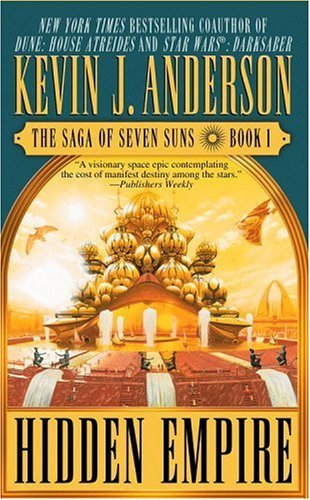
Kevin J. Anderson has written over 120 books–he’s best known for the Dune series written with Frank Herbert’s son, Brian–and this is the first Kevin J. Anderson novel I’ve read.
Hidden Empire: The Sage of Seven Suns Book 1 was published in 2002 and sets up the action and characters for the six books which appeared yearly after this initial book.
I’m a fan of Space Opera so I’m ready to tackle this series as a cast of characters numbering in the couple dozen struggle with the menace of a hidden alien empire that emerges in a murderous way. My favorite character so far is Margaret Colicos, a xeno-archaeologist. She travels around the galaxy with her husband Louis, exploring the ruins of the insect like Klikiss race, searching for clues to explain what happened to their vanished civilization. So far, only ghost cities and enigmatic giant beetle-like robots remain.
Hidden Empire opens with a major scientific experiment in deep space. Margaret and Louis discovered a way to turn a gas-giant planet into a sun using Klikiss technology. The experiment is a success…but alien objects emerge from the gas-giant planet. That event triggers series of attacks by the mysterious aliens on the benign Ildirans–an ancient, senescent civilization–and humans.
Humans are fragmented into three main groups: the Earth-based Terran Hanseatic League, the telepathic Green Priests of Theroc, and the fiercely rebellious, starship-dwelling Roamers. These divisions need to be resolved as the powerful enemy threatens everyone! GRADE: Too soon to tellbut trending towards a B
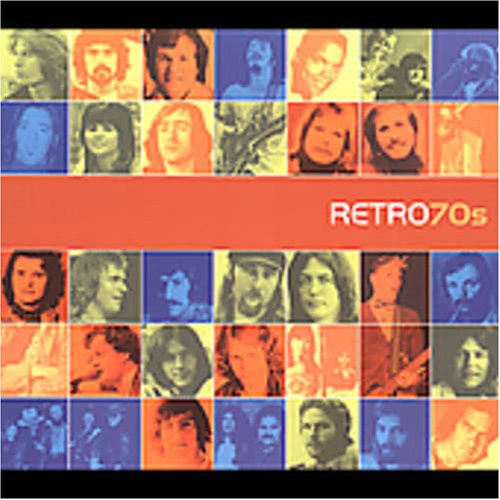
This is the end of my three-week fling with Seventies music. But Retro 70s is a good place to wrap things up. This is one of the few compilation discs that includes “Werewolves of London” by Warren Zevon. I always loved Linda Ronstadt’s “Blue Bayou.” And Hall & Oates’ “She’s Gone” is excellent blue-eyed soul. Of course, I could do without “A Horse With No Name” by America and Jonathan Edwards’ “Sunshine.”
I liked Disc Two better than Disc One. Santana’s “Black Magic Woman/Gypsy Queen” kicks things off. Boz Scaggs’ “Lowdown” and Dave Mason’s “We Just Disagree” are favorites. And while Eddie Money’s “Baby Hold On” isn’t as good as “Two Tickets to Paradise,” It still rocks.
Do you remember these songs from the Seventies? Any favorites here? GRADE: B
TRACK LIST:
DISC ONE:
Summer Breeze — Seals & Crofts
Black Water — Doobie Brothers
A Horse With No Name — America
Werewolves of London — Warren Zevon
Cat’s in the Cradle — Harry Chapin
Dance with Me — Orleans
Blue Bayou — Linda Ronstadt
Welcome Back — John Sebastian
Sunshine (Go Away Today) –Jonathan Edwards
She’s Gone — Hall & Oates
How Much I Feel — Ambrosia
Dream Weaver — Gary Wright
I’d Really Like to See You Tonight — England Dan & John Ford Coley
When I Need You — Leo Sayer
Make It with You — Bread
Never Ending Song of Love — Delaney & Bonnie & Friends
DISC TWO:
1.Black Magic Woman/Gypsy Queen — Santana
2. Your Mama Don’t Dance– Loggins & Messina
3. Cover of the Rolling Stone — Dr. Hook and The Medicine Show
4. Lowdown — Boz Scaggs
5. Hold Your Head Up — Argent
6. Long Cool Woman (In a Black Dress)– The Hollies
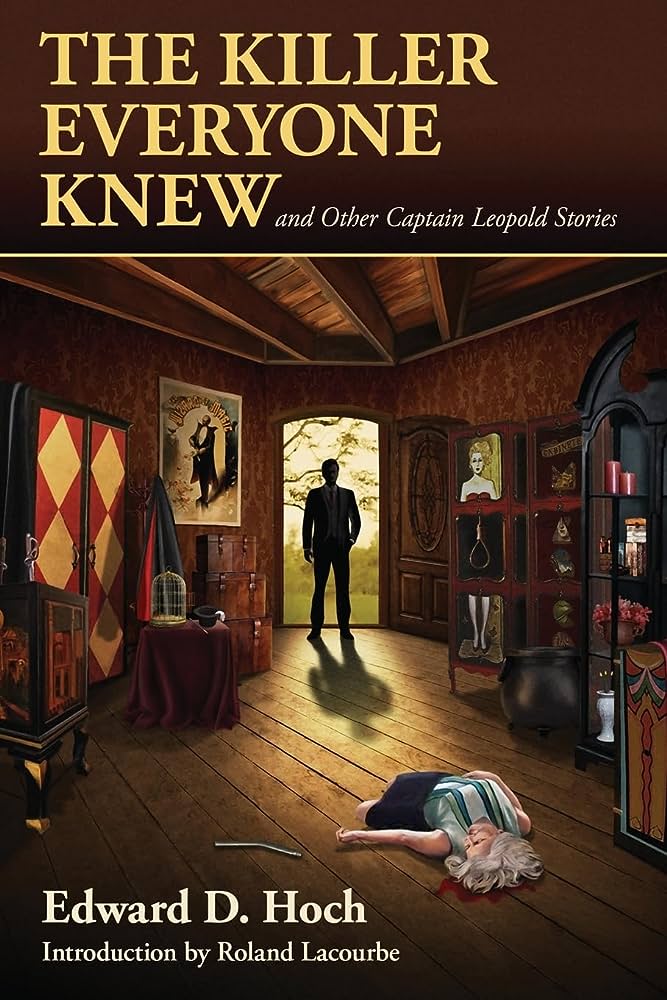
Ed Hoch wrote over 100 stories featuring Captain Leopold and Crippen & Landru’s new The Killer Everyone Knew collects 15 of the best stories in this series. “Captain Leopold’s Birthday” has been anthologized many times and might be one of Hoch’s best known stories. “The Retired Magician” is one of my favorite Ed Hoch stories.
Roland Lacourbe’s Introduction/Preface to The Killer Everyone Knew and Other Captain Leopold Stories goes into some detail about the stories in this collection. If you’re an Ed Hoch aficionado like me, you’ll enjoy this volume of wonderful stories. If you’re a casual fan of Hoch’s stories, you’ll find The Killer Everyone Knew and Other Captain Leopold Stories entertaining and compelling. GRADE: A
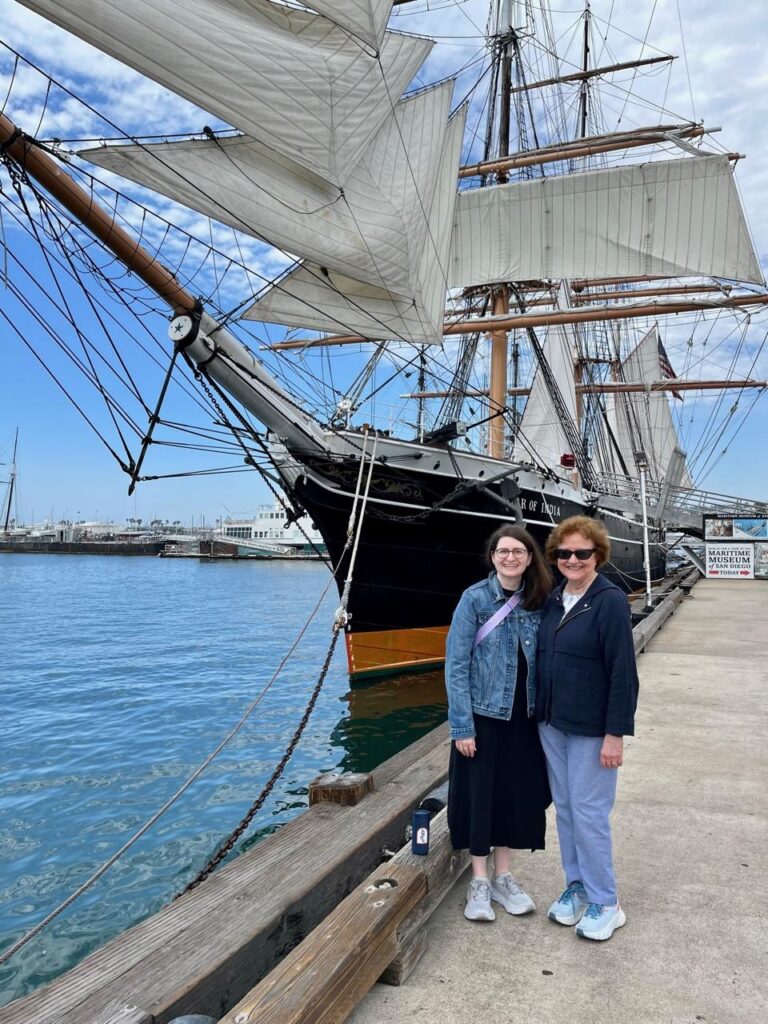
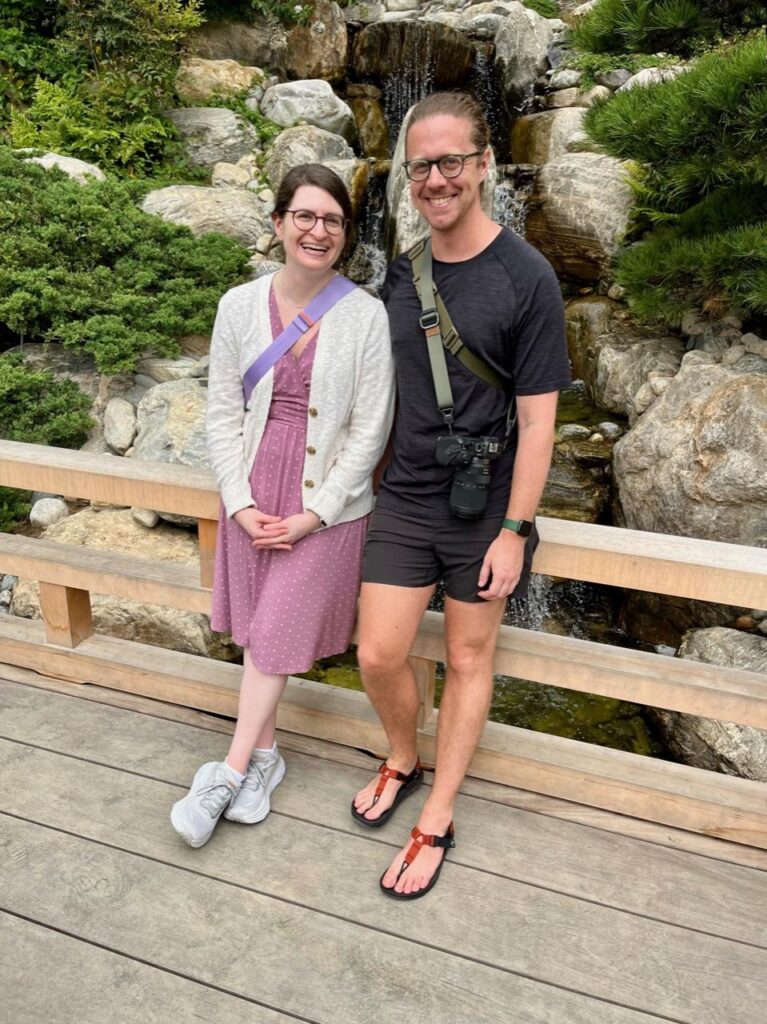
Diane and I met up with Katie and Patrick at the San Diego Airport on August 30. Patrick and Katie spent the previous weekend in Vegas for the Beyonce concert. We grabbed an Uber and arrived at the Marriott Bayside hotel a short time later. Beautiful weather! Sunny and 70s.
Here’s my BOUCHERCON 2023 summary:
THE GOOD:
Diane is a big fan of Jacqueline Winspear so we both enjoyed her performance on the panel “Historical Hard Times: Conflict in Mysteries.” Winspear was also interviewed one-on-one by Hank Phillippi Ryan in a Standing Room Only session. Diane loved hearing all her stories!
Hank Phillippi RyanInterviews Jacqueline Winspear
We also enjoyed Sara Paretsky on “You Can’t Kill Me–Why the PI Novel Won’t Die.” And Megan Abbott was impressive on “Hollywood and Writers–Working for TV or the Movies Plus Publishing Stories.” Martin Edwards was his usual informative self on “Agatha and Company: The Elements of Traditional Mysteries That Appeal to So Many.”
While Patrick, Katie, and Diane did some sight-seeing, I went to hear Mark Greaney talk about “Dark Villains.” After that, on a whim, I went to an overflow one-on-one interview in the Grand Ballroom with David Baldacci. I came away impressed by a smart guy who has written 54 best sellers. And, of course, there was Jeff Smith’s favorite mystery writer, Ann Cleeves!
THE BAD:
We planned a wonderful meal at a swanky restaurant with Beth Fedyn…but then we got the phone call that Beth had to go to the Emergency Room. Maggie Mason was taking care of Beth. But, at the BOUCHERCON Banquet, Maggie’s knee went out on her, and she had to leave in a wheelchair. So many heath issues!
THE UGLY:
For about the dozenth time, the BOUCHERCON folks gave me a Name Tag with “George Kelly” instead of the correct “George Kelley.” Ironically, they spelled Diane’s Name Tag correctly!
SUMMARY:
We had a great time! Wish more of you could have joined us in San Diego. We loved the restaurants especially The Huntress which featured fabulous steaks! Do you have a favorite BOUCHERCON? Check out the photo gallery below! GRADE: A
“There is nothing that man fears more than the touch of the unknown.” (p. 312)
Elias Canetti, who was awarded the Nobel Prize in Literature in 1981, displays his intellectual prowess in I Want to Keep Smashing Myself Until I Am Whole. This volume captures key aspects of Canetti’s life and thought. I would say it’s the definitive introduction to a writer whose books and essays interpreted world-historical changes while being skeptical about the knowability of the Self.
Born into a Sephardi Jewish family in Bulgaria, Canetti later lived in Austria, England, and Switzerland. Canetti was drawn to politics, identity, mortality, and power. I consider Canetti’s Crowds and Power, an analysis of authoritarianism and mobs, to be one of the Great Books of the 20th Century. The events of January 6th provide a vivid demonstration of Canetti’s ideas of mob behavior in action.
I Want to Keep Smashing Myself Until I Am Whole is introduced by Pulitzer Prize winner Joshua Cohen (Book of Numbers, The Netanyahus). Cohen supplies a clear summary of Canetti’s life and thought. The selections in I Want to Keep Smashing Myself Until I Am Whole start from memories of Canetti’s polyglot childhood to his friendships and rivalries with Hermann Broch, James Joyce, Karl Kraus, Thomas Mann, and Robert Musil.
I like the aphorisms and diary entries sprinkled in this volume that reveal Canetti’s range of interests and his writing style. Canetti–reacting against Freud’s obsession with the Self–with arguments that reveal the the instability of Identity, provides one of the great critiques of Psychology. Canetti sums up his ideas on the Self with this observation: It all depends on this: with whom we confuse ourselves.
“Prophecies have lost all value ever since we entrusted them to machines; the more we chip away at ourselves, the more we place our trust in lifeless objects, the less control we have over what happens to us.” (p. 356) Canetti’s I Want to Keep Smashing Myself Until I Am Whole brings plenty of ideas to think about. GRADE: A
Table of Contents
Introduction A Note on the Contents
Part I: Notes and Memoirs 1. From Notes from Hampstead: The Writer’s Notes, 1954–1971 2. From The Tongue Set Free, Part I: “Ruschuk, 1905–1911” 3. From Notes from Hampstead 4. From The Tongue Set Free, Part II: “Manchester, 1911–1913”
Part II: Auto-da-Fé 5. From Auto-da-Fé, Part I: “A Head Without a World” 6. From Notes from Hampstead 7. From Auto-da-Fé, Part II: “Headless World”
Part III: Memoirs and Senses 8. From The Torch in My Ear, Part II: “Storm and Compulsion” (Vienna, 1924–1925) 9. From Earwitness: Fifty Characters 10. From The Play of the Eyes, Parts III and IV: “Chance” and “Grinzing” 11. From The Voices of Marrakesh: A Record of a Visit
Part IV: Crowds and Power 12. From The Torch in My Ear, Part III: “The School of Hearing” (Vienna, 1926–1928) 13. From Crowds and Power: “The Crowd” 14. From Crowds and Power: “The Entrails of Power” 15. From Crowds and Power: “The Survivor” 16. From The Human Province, The Secret Heart of the Clock, and The Agony of Flies: Notes, 1942–1993
Part V: Death and Transformation 17. “The Profession of the Poet” 18. From Das Buch gegen Tod [The Book Against Death]
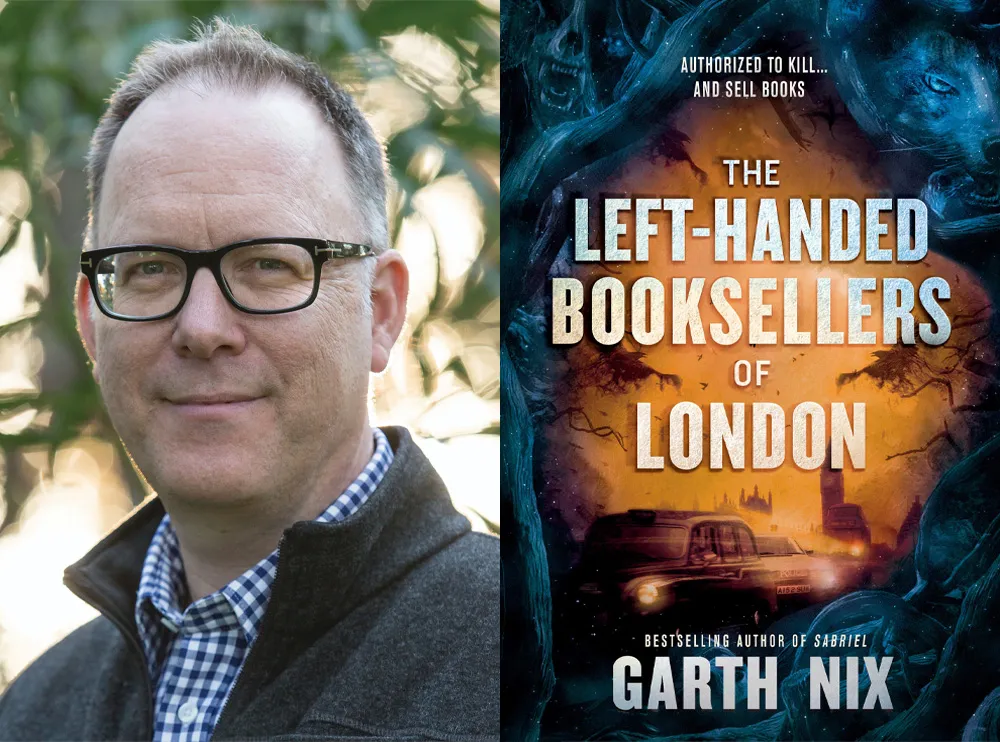
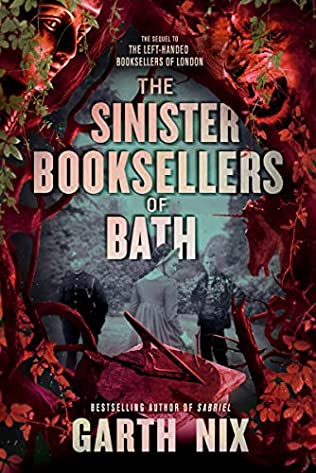
I’ve enjoyed Garth Nix’s tales of Sir Hereward and Mister Fitz (you can read my review here) so I decided to try Nix’s new series: The Left-Handed Booksellers of London (2020) and The Sinister Booksellers of Bath (2023). As you can see on the cover of The Left-Handed Booksellers of London above, the phrase “Authorized to Kill…And Sell Books” drew me in!
Susan Arkshaw has just turned 18 and before she goes off to art school, she wants to learn who her father was. Her mother, Jassmine (yes, two “s”s), seems to have a faulty memory of who Susan’s father was. So Susan goes to London to visit a family friend, “Uncle Frank (aka,Frank Thringley, Crime Boss).
Susan’s stay at Uncle Frank’s mansion is cut short by a violent incident where Susan meets Merlin. “Merlin is a young left-handed bookseller (one of the fighting ones), who with the right-handed booksellers (the intellectual ones), are an extended family of magical beings who police the mythic and legendary Old World when it intrudes on the modern world, in addition to running several bookshops.” Merlin and Susan are chased by a creepy creature called The Shuck, just one of the many magical creatures who will threaten them in this book.
Susan’s quest to find her father becomes problematic as she learns she both human and magical. And she’s going to have to tap her powers in order to survive.
The Sinister Booksellers of Bath takes place two years after the events of The Left-Handed Booksellers of London. Merlin is trapped in a magical maze in a bubble reality and Susan has to go there to draw a magic map that will bring them both back to Bath. Susan learns another magical entity is out to get her and the Booksellers of Bath might not be enough to save her. If you’re in the mood for some exciting adventures full of action and magic, give these two Garth Nix books a try! GRADE: B+ (for both)
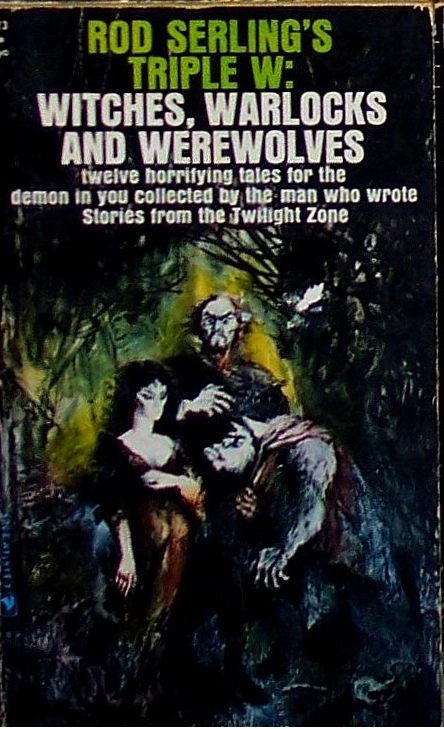
Rod Serling’s Triple W: Witches, Warlocks and Werewolves from 1963 seems like a perfect anthology to include in the run-up to the Halloween month of October. My favorite story is Jack Sharkey’s “The Final Ingredient” where a young woman who wants to be a witch finds her spells not working…until she discovers the final ingredient.
Two classic stories, Hawthorne’s “Young Goodman Brown” and Kipling’s “The Mark of the Beast,” show witches, warlocks and werewolves engaged writers more than a century ago.
I remember reading Fritz Leiber’s “Hatchery of Dreams” in Fantastic back in 1961 and this story has lost none of its power decades later. A coven of witches are threatened by technology. Rod Serling’s Triple W: Witches, Warlocks and Werewolves delivers entertaining stories for the spooky season. GRADE: B