









All I want for Christmas is for the Buffalo Bills to win in Chicago today despite the single-digit temperatures and chilling winds! The Bills are 8-point favorites, but the weather conditions could be dicey–both in Chicago and Buffalo. After the Bills game, some friends were supposed to come over to celebrate Christmas Eve with us but right now we have a county-wide Travel Ban in effect. Have a hot toddy or hot chocolate to enjoy the countdown to Christmas!
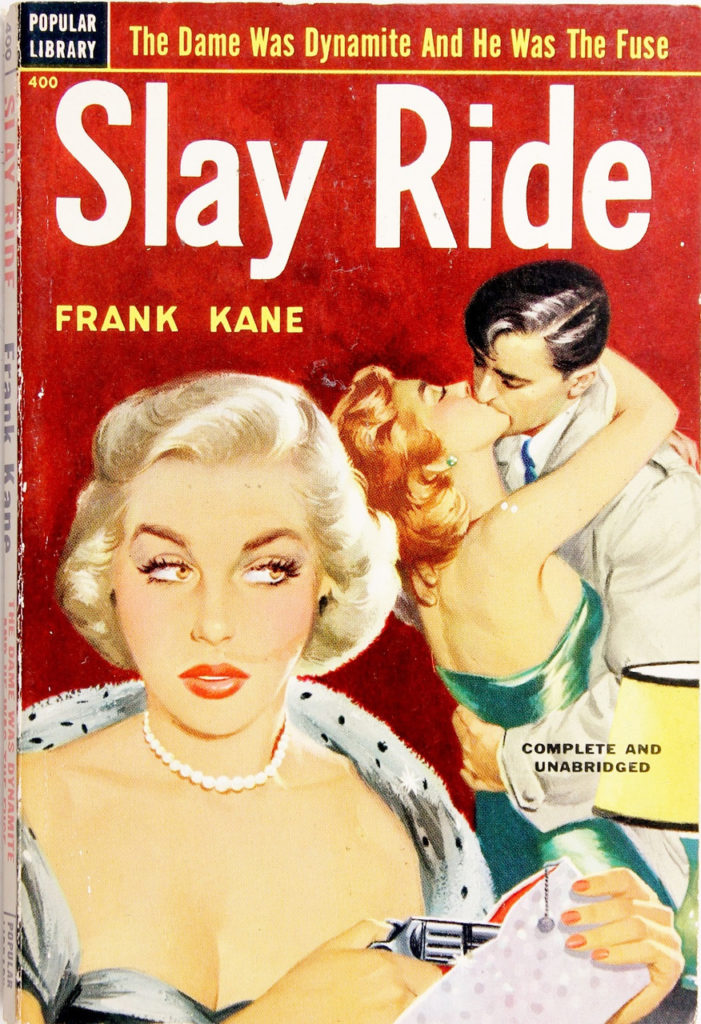

I couldn’t resist reviewing Frank Kane’s Slay Ride (a far cry from Leroy Anderson’s “Sleigh Ride”) for an FFB this close to Christmas. Frank Kane wrote a series of private eye novels featuring a tough investigator named Johnny Liddel. I enjoyed Kane’s clever titles for his novels (check them out below).
Slay Ride involves Johnny Liddel in an insurance transaction: trade money for jewels stolen from a client. Of course the hand-off goes wrong and one of Liddel’s colleagues gets killed. Liddel resisted the whole “swap of money for stolen jewels” scheme so this debacle only fires up his motivation to take down the jewel heist ring who shakes-down insurance companies for Big Bucks.
If you’re a fan of the Mike Shayne series, you’ll find Johnny Liddel a similar type of private eye. Do you have a favorite Private Eye? GRADE: B
Frank Kane’s Johnny Liddel Series:
About Face (1947)
Green Light for Death (1949)
Slay Ride (1950)
Bullet Proof (1951)
Dead Weight (1951)
Bare Trap (1952)
The Icepick Artists (1953)
Poisons Unknown (1953)
Red Hot Ice (1955)
A Real Gone Guy (1956)
The Living End (1957)
Trigger Mortis (1958)
Grave Danger (1960)
A Short Bier (1960)
Time to Prey (1960)
Due Or Die (1961)
The Mourning After (1961)
Stacked Deck (1961)
Crime of Their Life (1962)
Dead Rite (1962)
Hearse Class Male (1963)
Johnny Come Lately (1963)
Ring-a-ding-ding (1963)
Barely Seen (1964)
Fatal Undertaking (1964)
Final Curtain (1964)
The Guilt Edged Frame (1964)
Esprit De Corpse (1965)
Two To Tangle (1965)
Maid In Paris (1966)
Margin For Terror (1967)
Johnny Liddell’s Morgue (2012)
Stairway To Hell (2016)
Johnny Liddell Mystery Crime Box Set (2016)
Frame (2022)

I’ve been a fan of Alicia Keyes for years so buying her new Christmas CD should come as no surprise. Santa Baby is a mix of Christmas standards and some new songs. I heard an interview with Alicia Keyes on National Public Radio (you can listen to it here) and marveled at the discussion about how difficult it is to sing “Ave Maria.” GRADE: A
I also enjoy Dave Koz and his mellow smooth jazz music. If you’re looking for a soothing Christmas CD for those cold winter nights, Christmas Ballads would be the perfect choice! Are you all ready for the Holidays? GRADE: A
TRACK LIST:
| No. | Title | Writer(s) | Producer(s) | Length |
|---|---|---|---|---|
| 1. | “Santa Baby“ | Joan Javits Philip Springer Tony Springer | Alicia Keys | 3:53 |
| 2. | “Christmas Time Is Here“ | Vince Guaraldi Lee Mendelson | Keys | 3:26 |
| 3. | “My Favorite Things“ | Richard Rodgers Oscar Hammerstein II | Tommy Parker Joshua “YNG Josh” Comerly[a] | 3:54 |
| 4. | “December Back 2 June” | Alicia Keys | Keys | 2:43 |
| 5. | “Please Come Home for Christmas“ | Charles Brown Gene Redd | Keys | 3:17 |
| 6. | “Happy Xmas (War Is Over)“ | John Lennon Yoko Ono | Keys | 4:05 |
| 7. | “You Don’t Have to Be Alone” | Keys | Keys | 2:19 |
| 8. | “The Christmas Song (Chestnuts Roasting on an Open Fire)“ | Robert Wells Mel Tormé | Keys | 2:47 |
| 9. | “Old Memories on Christmas” | Keys Natalie Hemby | Keys | 2:59 |
| 10. | “Not Even the King“ | Keys Emeli Sandé | Keys | 3:00 |
| 11. | “Ave Maria“ | Franz Schubert Walter Scott | Keys | 3:46 |

TRACK LIST:
1. The Christmas Waltz
2. Away In The Manger / Silent Night
3. Happy Xmas (War Is Over) / Imagine (feat. Rebecca Jade)
4. Greensleeves
5. God Rest Ye Merry Gentlemen / My Favorite Things
6. Ave Maria
7. It Came Upon A Midnight Clear / Happy Holiday
8. Merry Christmas Darling
9. Petit Papa Noël
10. Wrapped Up In Your Smile
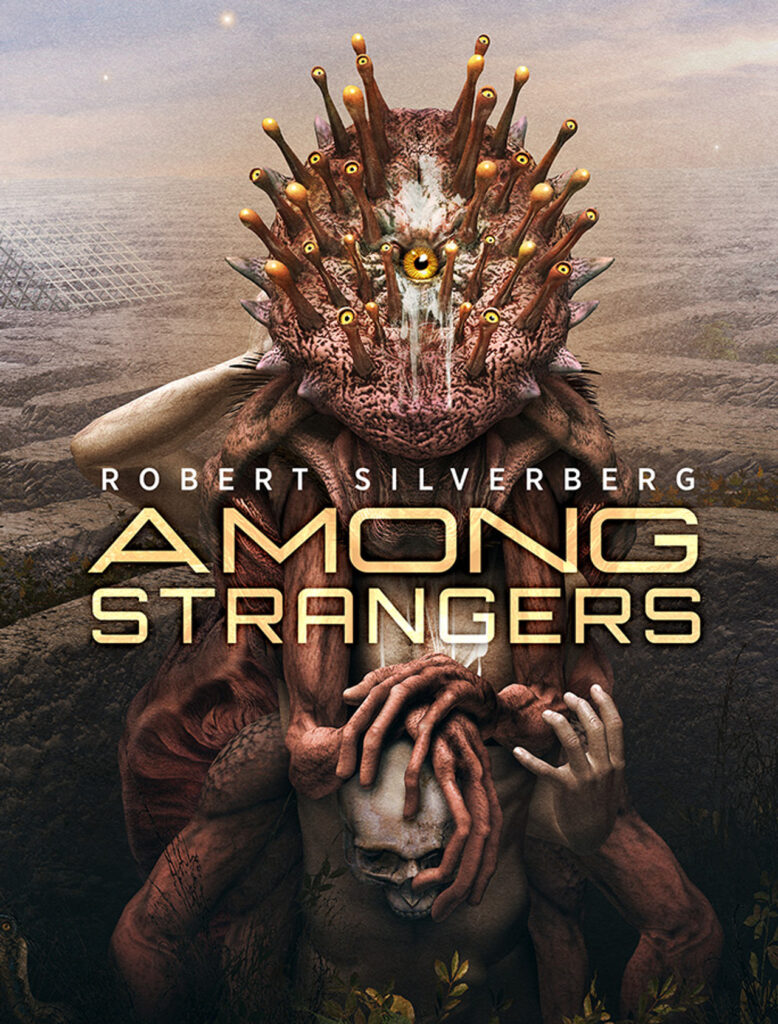
Just in time for that Robert Silverberg fan on your Holiday gift list, Subterranean Press has published a 750-page collection of three novels and a novella.
“In Those Who Watch (1967) three New Mexico humans, an eleven-year-old Hopi boy, a widowed single mother, and a divorced Air Force Colonel, unwittingly become entangled with aliens who have long monitored human civilization. Further complicating affairs, an agent from a rival alien species lands on Earth determined to chase down the three renegade observers.”
“The Man in the Maze (1968) is Dick Muller, an engineered telepath, once a hero but now exiled by an ungrateful humanity to the labyrinth on Lemnos. When administrator Boardman tries to enlist Muller once more for a dangerous mission and Muller refuses, the eponymous maze takes on a mental meaning warped enough to rival any physical construct.”
“An overlooked gem, the near-future, post-apocalyptic Tom O’Bedlam (1985)—presented here for the first time in the author’s definitive version—explores the gossamer boundary between rapture and rupture. The denizens of a frayed world begin experiencing collectively shared dreams just as a space probe light years away sends back images eerily similar to their dreamscapes. Is the titular Tom O’Bedlam humanity’s destined prophet to the stars, or a deranged cult leader fated to push a fragile civilization over the brink?”
“The Way to Spook City” (1992), a fabulous novella, takes us through an unforgettable rite of passage, a life-changing voyage into the alien Occupied Zone. This story will haunt you long after you finish it.
I support small presses like Subterranean and I urge you to do so, too! GRADE: A
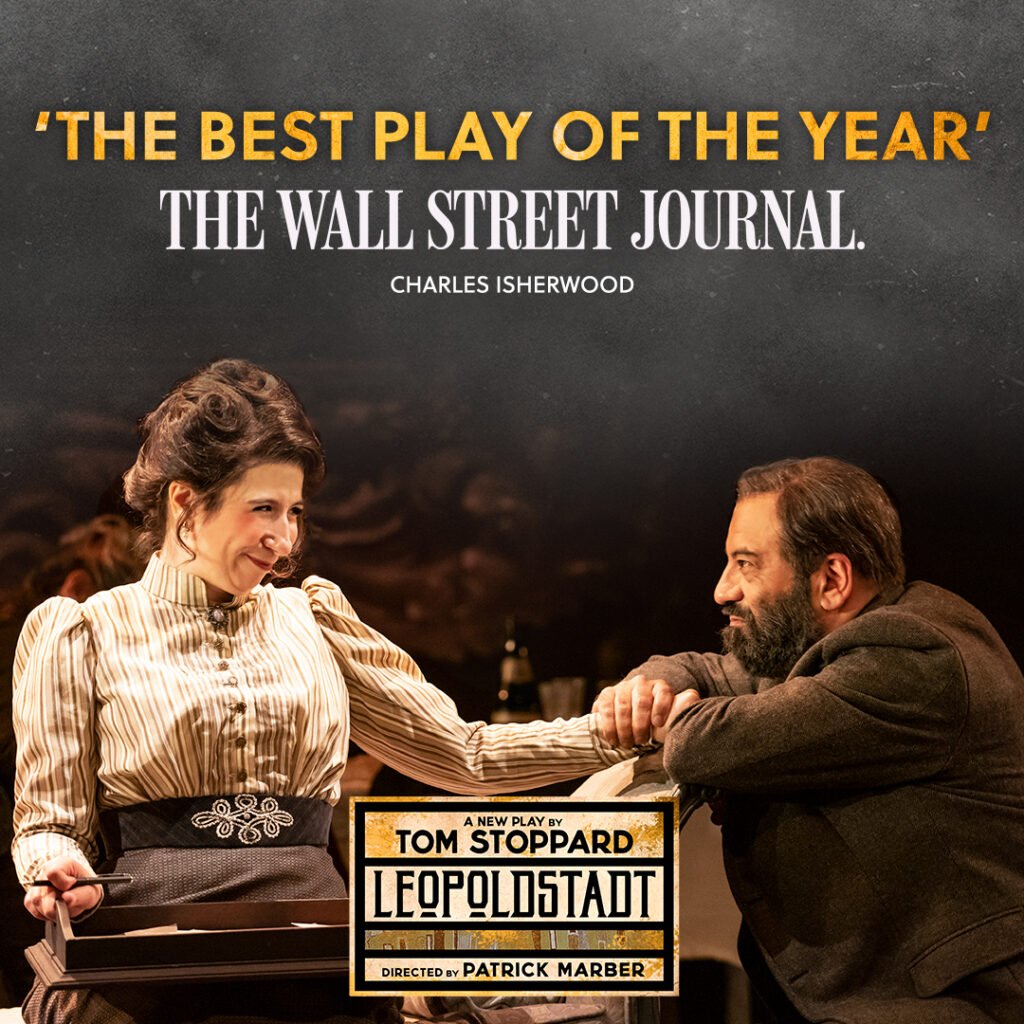
Leopoldstadt is set among the Jewish community of Vienna in the first half of the 20th century and follows the lives of “a prosperous Jewish family who had fled the pogroms in the East”.
According to Tom Stoppard, the play “took a year to write, but the gestation was much longer. Quite a lot of it is personal to me, but I made it about a Viennese family so that it wouldn’t seem to be about me.” All four of Stoppard’s Jewish grandparents died in Nazi concentration camps.
The play begins in 1899 and we hear about the “acceptance” of Jews in Vienna. The large Jewish family seems happy but are unaware of the changes coming. In 1900, beautiful Gretl begins an affair with Fitz (who is anti-Semitic) that leads to dire implications for the family.
The action shifts to 1924 and the post World War I social and political order. Already some of the family members have lost their lives. The optimism the Jewish community shared erodes.
The true horror begins in 1935 as the Nazis burst into the ancestral home and terrorize the now poverty-stricken family. Concentration camps loom.
The play concludes in 1955 with the three remaining survivors of the Holocaust. We saw the family dwindle as Vienna became a toxic place for Jews in the first half of the 20th Century. Both the Wall Street Journal and the New York Times have hailed Leopoldstadt as one of the best plays of the year. I agree. It’s a powerful, cautionary tale. GRADE: A