
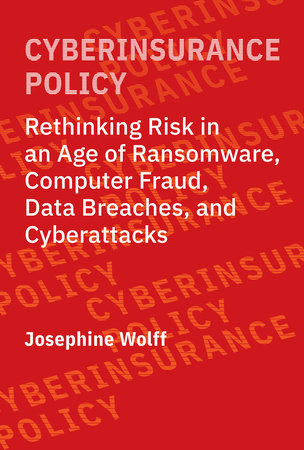
SPOILER ALERT! “[The cyberinsurance industry has] met this demand at considerable long-term financial risk to themselves since very little is known about how these threats will evolve over time or how courts will interpret the coverage and exclusions in the policies in light of future incidents.” (p. 226). END OF SPOILER ALERT!
Josephine Wolff, Associate Professor of Cybersecurity Policy at the Fletcher School of Law and Diplomacy at Tufts University, presents a history of risk and insurance in Cyberinsurance Policy that helps explain why current cyberinsurance is a dicey proposition. You would think that protecting your computer and cell phone would be like buying insurance for your car or house…but think about the range of online hacking threats and phishing attacks we face today. And, these threats continue to morph like Covid-19 variants to increase the danger.
The flaw in this industry is the inability to accurately assess risk. Until that happens, what cyberinsurance companies are selling is smoke and mirrors. Has your computer, cell phone, or credit card been hacked lately? GRADE: A
TABLE OF CONTENTS:
Series Editor’s Introduction ix
Acknowledgments xiii
1 Introduction: A Market-Driven Approach to Cybersecurity 1
1 History of Cyberinsurance
2 Breach on the Beach: Origins of Cyberinsurance 27
II Cybersecurity Claims Under Non-Cyber Coverage
3 “The Hackers Did This”: Data Breach Lawsuits and Commercial General Liability Insurance 65
4 “The Point of No Return”: Computer Fraud Insurance and Defining Cybercrime 87
5 “Insurrection, Rebellion, Revolution, Riot”: NotPetya, Property Insurance, and War Exclusions 111
III Cyber Coverage and Regulation
6 “The Big Kahuna”: Stand-Alone Cyber Coverage 153
7 “What Is the Point of Collecting Data?”: Global Growth of Cyberinsurance and the Role of Policymakers 181
8 Conclusion: Is Cyber Risk Different? 215
Notes 227
References 249
Index 265