
BYE WEEK 2021!
22 Replies

Director Denis Villeneuve’s DUNE covers about a third of Frank Herbert’s classic Science Fiction novel. DUNE was scheduled to be released about this time last year, but the Pandemic postponed the date until now. DUNE is available in IMAX format, regular 2-D at your local movie theater, and on HBO Max.
Villeneuve, who directed two other SF movies–Arrival and Blade Runner 2049–spent $165 million on this sprawling tale of a desert planet which is the only source of spice. Spice becomes the most valuable commodity in the Galaxy because it allows interstellar travel.
My favorite character in this movie is Lady Jessica, played by Rebecca Ferguson, who is a powerful member of the Bene Gesseritt sisterhood. Much of DUNE–both the novel and the movie–concerns politics on a galactic scale. The Bene Gesseritt, who operate behind the scene of Power, play the Long Game for control. Their designs extend for centuries.
The cast features Timothée Chalamet, Rebecca Ferguson, Oscar Isaac, Josh Brolin, Stellan Skarsgård, Dave Bautista, Stephen McKinley Henderson, Zendaya, David Dastmalchian, Chang Chen, Sharon Duncan-Brewster, Charlotte Rampling, Jason Momoa, and Javier Bardem.
When I saw DUNE at my local AMC Theater, the showing I attended was sold out. I, and a dozen other viewers, wore masks. When the movie ended, there were a lot of groans as the realization that the bulk of the story of Frank Herbert’s DUNE is yet to be told…and only if this movie makes a lot of money. Are you a fan of DUNE? GRADE: Incomplete

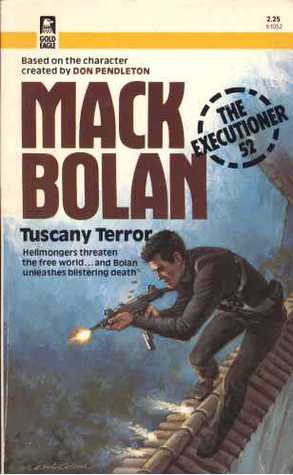
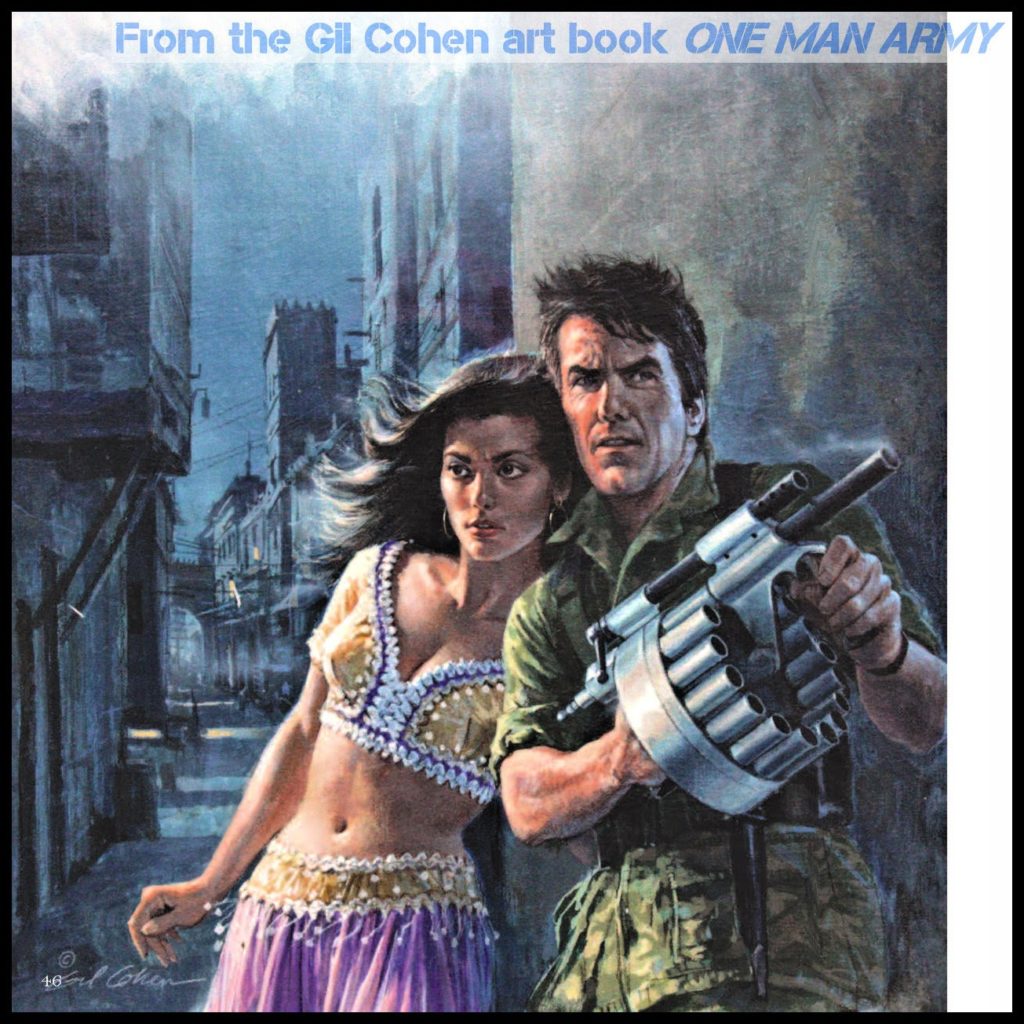
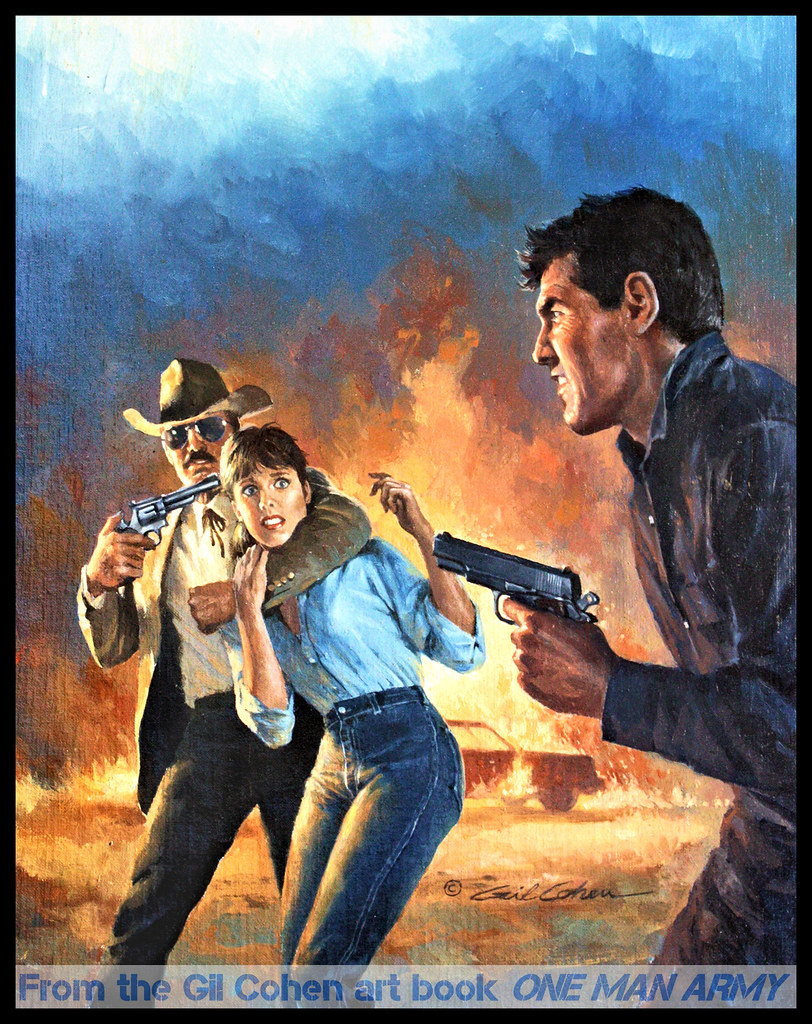
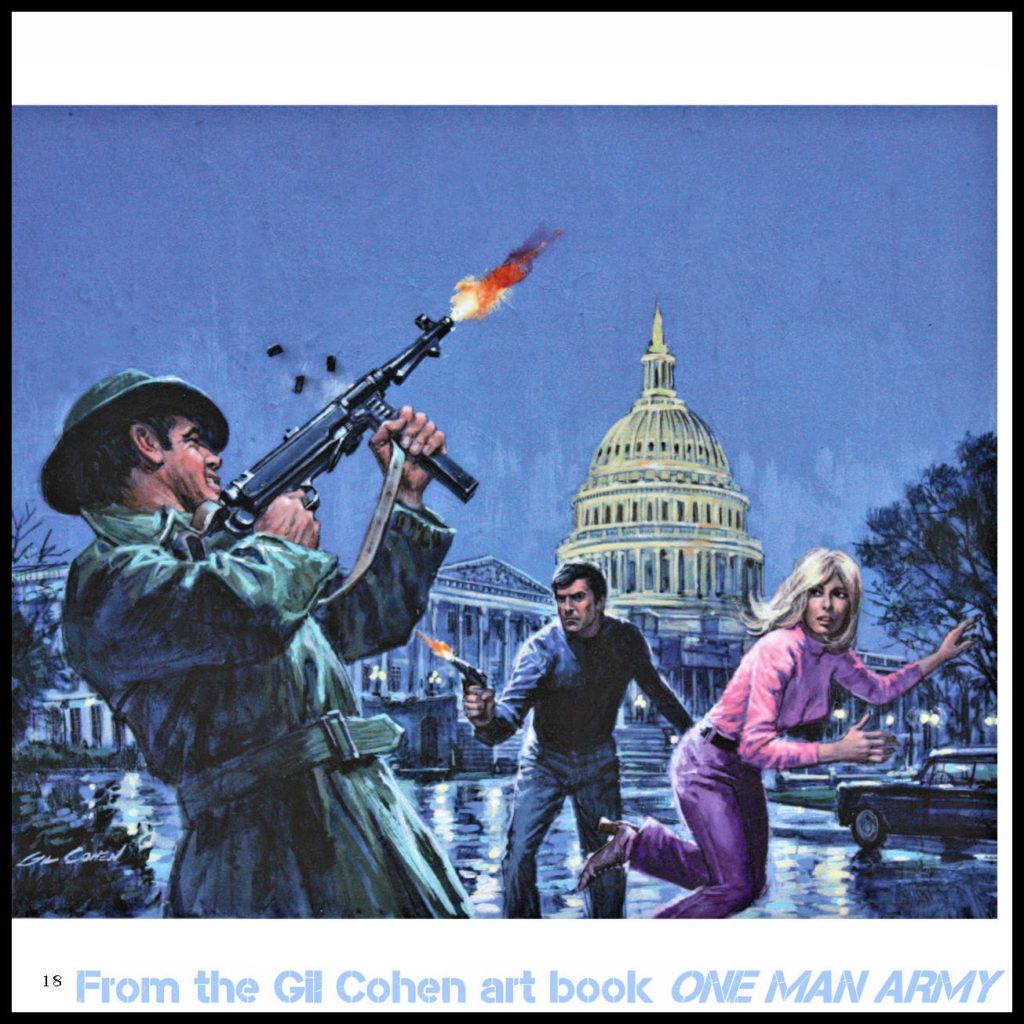
Men’s Action Series used to be a huge publishing category. The Executioner, the Death Merchant, the Destroyer, and many other series sold millions of copies. One of the best selling series was the Mack Bolan series (aka, The Executioner) published initially by Pinnacle Books and later by Gold Eagle Books. Gold Eagle hired the talented paperback artist, Gil Cohen, to provide the eye-catching covers on their profitable line of Men’s Action novels. Check out some samples below. If you’re a fan of paperback cover artwork, One Man Army: The Action Paperback Art of Gil Cohen is a must-buy! GRADE: A

One of the more unusual acquisitions here lately is this Pioneer CD 6 Pack that was issued in 1992 as a promotion. Apparently, if you bought a Pioneer CD player, the retailer gave you this FREE 6 CD set:
Volume 1: Rock Classics
Volume 2: Pop Greats
Volume 3: Rhythm & Blues
Volume 4: Country Gold
Volume 5: Jazz Tracks
Volume 6: Classical Notes
Right on the cover of this set–in BIG LETTERS–is the notification: COMPILED FROM THE CHARTS OF BILLBOARD MAGAZINE. There’s a lot here. Obviously, the people at Pioneer were trying to appeal to every musical taste with this set. What do you think? Do you see anything you’d listen to? GRADE: B+
| ▼CD 2: Volume 2: Pop Greats | ||||
|---|---|---|---|---|
| # | Title | Artist | Rating | Length |
| 1 | Rosannarecording engineer:Al Schmittproducer:Toto (US rock group)mixer:Greg Ladanyibass guitar:David Hungatecongas and percussion:Lenny Castrodrums (drum set):Jeff Porcaroguitar:Steve LukatherHammond organ and synthesizer:David Paich and Steve Porcaropiano:David Paichsaxophone:Jim Horn (saxophonist, hornist, flutist and oboist) and Tom Scott (saxophonist, Blues Brothers, LA Express, Starsky & Hutch)trombone:James Pankowtrumpet:Gary Grant (brass) and Jerry Heybackground vocals:Tom Kelly (songwriter), Bobby Kimball, Steve Lukather and David Paichlead vocals:Bobby Kimball and Steve Lukatherbrass [horns] arranger:Jerry Hey and David Paichphonographic copyright by:CBS, Inc. (US broadcasting company; file no releases here!) (in 1982) and Sony Music Entertainment (not for release label use! company owned by Sony Corporation of America since Oct 1, 2008; operates worldwide except in JP) (in 1982)recording of:Rosannalyricist and composer:David Paichpublisher:Hudmar Publishing Co. Inc., Sony Music Publishing (Japan), Inc., A Division and Spirit Two Music | Toto | 3.9 | 5:34 |
| 2 | American Pieengineer:Tom Flyeproducer:Ed Freemanelectric guitar:David Spinozapiano:Paul Griffin (American pianist, session musician)performer:Don McLeanrecorded at:The Record Plant (New York) in Manhattan, New York, New York, United States (from 1971-05 until 1971-06)recording of:American Pielyricist and composer:Don McLeanpublisher:Benny Bird Co. Inc., MCA Music (not for release label use! this is a music publisher, ASCAP-affiliated), MCA Publishing Ltd., Songs of Universal, Inc., Universal(plain logo: “Universal”; for use as release label only when no sub-label/imprint is specified), Universal Music Publishing Ltd. (Hong Kong/China subsidiary of Universal Music Publishing Group) and Universal Records (“RECORDS” must be a part of the logo; read annotation) | Don McLean | 4.25 | 8:35 |
| 3 | Manic Mondayproducer:David Kahnemixer:David Leonard (US producer and engineer)lead vocals:Susanna Hoffsrecording of:Manic Mondaylyricist and composer:Christopher (“The Artist Formerly Known as…”) | The Bangles | 4.1 | 3:05 |
| 4 | God Only Knowsengineer:Chuck Britz (on 1966-03-10) and Ralph Valentin (from 1966-03 until 1966-04)producer:Brian Wilson (Beach Boys co-founder)accordion:Carl Fortina (on 1966-03-10) and Frank Marocco (on 1966-03-10)bass clarinet:Leonard Hartman (on 1966-03-10)bell and drums (drum set):Hal Blaine (on 1966-03-10)cello:Jesse Erlich (on 1966-03-10)clarinet:Leonard Hartman (on 1966-03-10) and Jay Migliori (on 1966-03-10)double bass:Lyle Ritz (on 1966-03-10)electric bass guitar:Ray Pohlman (on 1966-03-10)flute:Bill Green (flute, sax) (on 1966-03-10) and Jim Horn (saxophonist, hornist, flutist and oboist) (on 1966-03-10)French horn:Alan Robinson (on 1966-03-10)guitar:Carol Kaye (on 1966-03-10)harpsichord:Larry Knechtel (on 1966-03-10)percussion:Jim Gordon (Drummer (Derek and the Dominos)) (on 1966-03-10)tack piano:Don Randi (on 1966-03-10)tambourine:Terry Melcher (on 1966-03-10)viola:Darrel Terwilliger (on 1966-03-10)violin:Leonard Malarsky (on 1966-03-10) and Sid Sharp (on 1966-03-10)lead vocals:Carl Wilson (Beach Boys) (from 1966-03 until 1966-04)vocals:Bruce Johnston (US singer‐songwriter, member of The Beach Boys) (from 1966-03 until 1966-04) and Brian Wilson (Beach Boys co-founder) (from 1966-03 until 1966-04)arranger:Brian Wilson (Beach Boys co-founder)recorded at:Western Recorders (@ 6000 Sunset Blvd., part of United Western Recorders studio complex 1957–1985) in Los Angeles, California, United States (on 1966-03-10)and Columbia Studios (Hollywood, 1961-1972) in Hollywood, Los Angeles, California, United States (from 1966-03 until 1966-04)part of:The Rolling Stone Magazine’s 500 Greatest Songs of All Time: 2021 edition (number: 11) and The Rolling Stone Magazine’s 500 Greatest Songs of All Time (as at 2016-06-10) (number: 25)recording of:God Only Knows (from 1966-03 until 1966-04)lyricist:Tony Asher (US lyricist, worked on Pet Sounds)composer:Brian Wilson (Beach Boys co-founder)publisher:Irving Music (BMI), Irving Music, Inc., Universal Music Publishing, Synch Division and Yamaha Music EH(CM) | The Beach Boys | 4.3 | 2:51 |
| 5 | Walk on Waterengineer:Phil Kaffelproducer:Eddie Money and Richie Zitomixer:Chris Lord‐Algearranger:Eddie Money and Richie Zitorecorded at:Rumbo Recorders in Canoga Park, Los Angeles, California, United States (from 1988-04 until 1988-08)recording of:Walk on Water (from 1988-04 until 1988-08)writer:Jesse Harms | Eddie Money | 5 | 4:38 |
| 6 | Don’t Worry, Be Happyengineer:Chris Tergesenproducer:Linda Goldsteinvocals:Bobby McFerrinphonographic copyright by:EMI Manhattan (Manhattan Records after Jul 1987 acquisition of EMI America; discontinued in Sep 1988) (in 1988)recording of:Don’t Worry, Be Happylyricist and composer:Bobby McFerrinpublisher:BMG Music Publishing Ltd. | Bobby McFerrin | 5 | 4:51 |
| 7 | Midnight Confessions | The Grass Roots | 3 | 2:47 |
| 8 | Endless Summer Nightsrecording of:Endless Summer Nightslyricist and composer:Richard Marx | Richard Marx | 4:32 | |
| 9 | Rock ‘n’ Roll Heaven | The Righteous Brothers | 3:34 | |
| 10 | What About Loveengineer:Bruce Lampcov, Mark McKenna and Rhett Daviesproducer:Rhett Daviesmixer:Bruce Lampcovbass guitar:Aimee Mannguitar:Robert Holmes (guitarist, member of ‘Til Tuesday)membranophone and percussion:Michael Hausmanpiano and synthesizer:Joey Pescebackground vocals:Joey Pesce and Robert Holmes (guitarist, member of ‘Til Tuesday)vocals:Aimee Mannphonographic copyright by:Sony BMG Music Entertainment (Aug 5, 2004 – Oct 1, 2008; do not use if a specific sub-label is available) (in 1986)recording of:What About Lovelyricist:Aimee Manncomposer:Aimee Mann | ’Til Tuesday | 2.5 | 3:59 |
| 11 | Wordslive recording of:Words (Missing Persons)writer:Terry Bozzio and Warren Cuccurullorecording of:Words (Missing Persons)writer:Terry Bozzio and Warren Cuccurullo | Missing Persons | 5 | 4:27 |
| 13 | If Ever You’re in My Arms Againrecording of:If Ever You’re in My Arms Againwriter:Michael Masser, Tom Snow (US keyboardist/songwriter) and Cynthia Weil | Peabo Bryson | 4 | 4:17 |
| 14 | Here and Nowrecording of:Here and Nowwriter:David L. Elliott and Terry Steele | Luther Vandross | 4:54 |
| ▼CD 5: Volume 5: Jazz Tracks | ||||
|---|---|---|---|---|
| # | Title | Artist | Rating | Length |
| 1 | Autumn Leavesengineer:Rudy van Gelderproducer:Alfred Lionalto saxophone:Julian “Cannonball” Adderley (on 1958-03-09)double bass:Sam Jones (jazz bassist) (on 1958-03-09)drums (drum set):Art Blakey (on 1958-03-09)piano:Hank Jones (on 1958-03-09)trumpet:Miles Davis (jazz trumpeter, bandleader, songwriter) (on 1958-03-09)performer:Miles Davis (jazz trumpeter, bandleader, songwriter) (on 1958-03-09)phonographic copyright by:Blue Note Records (this is the record company; for release labels use its imprint “Blue Note”) (in 1999, in 2012), Mastercorp Pty Ltd (in 2011) and Count Records (in 2013)recorded at:Van Gelder Studio (Hackensack – July 1,1959) in Hackensack, New Jersey, United States (on 1958-03-09)instrumental recording of:Autumn Leaves (jazz standard) (on 1958-03-09)lyricist:Jacques Prévert (in 1945)composer:Joseph Kosma (composer) (in 1945)translator:Johnny Mercer (in 1947)publisher:Ardmore Music Corp., Enoch & Cie., Morley Music Corp. and MPL Communications Inc. (Paul McCartney-related, NYC-based company)translated version of:Les Feuilles mortes | Cannonball Adderley with Miles Davis | 11:00 | |
| 2 | Stella by Starlightinstrumental recording of:Stella by Starlightlyricist:Ned Washington (in 1946)composer:Victor Young (American composer, arranger, violinist & conductor) (in 1944)publisher:BMG Music Publishing Ltd., Famous Music (renamed since 2007-05 as Sony/ATV Harmony/Melody) and Famous Music Corporation | Maynard Ferguson | 7:17 | |
| 3 | Black Byrdassistant engineer:Chuck Davis (production/engineer) and Steve Waldman (sound engineer)engineer and mixer:David Hassingerexecutive producer:George Butlerproducer:Larry Mizellassistant mixer:Chuck Davis (production/engineer)congas and tambourine:Stephanie Spruill (on 1972-11-24)drums (drum set):Harvey Mason (jazz drummer) (on 1972-11-24)electric bass guitar:Chuck Rainey (American bassist) (on 1972-11-24)electric piano, piano and synthesizer:Freddie Perren (on 1972-11-24)electric piano and piano:Joe Sample (on 1972-11-24)flugelhorn, trumpet [electric trumpet] and lead vocals:Donald Byrd (American jazz trumpeter) (on 1972-11-24)flute and saxophone:Roger Glenn (on 1972-11-24)guitar:David T. Walker (on 1972-11-24)trumpet:Donald Byrd (American jazz trumpeter) (on 1972-11-24) and Fonce Mizell (on 1972-11-24)vocals:Fonce Mizell (on 1972-11-24), Larry Mizell (on 1972-11-24) and Freddie Perren (on 1972-11-24)arranger:Larry Mizellrecorded at:Sound Factory Studio (Helsinki, Finland) in Helsinki, Uusimaa, Finland (on 1972-11-24)recording of:Black Byrd (on 1972-11-24)lyricist and composer:Laurence C. Mizellpublisher:Alruby Music Inc. | Donald Byrd | 7:21 | |
| 4 | Birdlandengineer:Ron Maloassistant producer:Wayne Shorter (US jazz saxophonist and composer)co-producer:Jaco Pastoriusproducer:Jaco Pastorius, Wayne Shorter (US jazz saxophonist and composer) and Joe Zawinul (jazz and fusion keyboard player)bass and mandolin:Jaco Pastorius (from 1976 until 1977)drums (drum set):Alex Acuña (from 1976 until 1977)grand piano, melodica and synthesizer:Joe Zawinul (jazz and fusion keyboard player) (from 1976 until 1977)saxophone and sopranino saxophone:Wayne Shorter (US jazz saxophonist and composer) (from 1976 until 1977)tambourine:Manolo Badrena (from 1976 until 1977)vocals:Jaco Pastorius (from 1976 until 1977) and Joe Zawinul (jazz and fusion keyboard player) (from 1976 until 1977)orchestrator:Joe Zawinul (jazz and fusion keyboard player)recorded at:Devonshire Sound Studios in Burbank, California, United States (from 1976 until 1977)recording of:Birdland (instrumental) (from 1976 until 1977)composer:Joe Zawinul (jazz and fusion keyboard player)publisher:Mulatto Music, Songs of Universal, Inc., シンコーミュージック・エンタテイメント and ユニバーサル・ミュージック・パブリッシング Synch事業部 | Weather Report | 6:00 | |
| 5 | Always Thererecording of:Always There (with lyrics)lyricist:Paul Allen (US songwriter)composer:William Jeffrey and Ronnie Lawsversion of:Always There (instrumental) | Ronnie Laws & Pressure | 4:50 | |
| 6 | I Heard It Through the Grapevinecover recording of:I Heard It Through the Grapevinewriter:Barrett Strong and Norman Whitfieldpublisher:EMI Music Publishing Ltd. and Jobete Music (UK) Ltd. | Earl Klugh | 7:29 | |
| 7 | Eleanor Rigby | Stanley Jordan | 7:03 | |
| 8 | Herbal Scentproducer:Dave Grusin and Larry Rosenbass:Marcus Miller (jazz musician)clavinet and Minimoog:Dave Grusincongas and percussion:Sue Evanselectric piano:Bernard Wrightguitar:Ronald Millermembranophone:Buddy Williams (drummer)trumpet:Tom Browne (US jazz trumpeter)conductor:Dave Grusinarranger:Dave Grusinrecording of:Herbal Scentcomposer:Marcus Miller (jazz musician) | Tom Browne | 5:24 | |
| 9 | Captain Cariberecording of:Captain Caribewriter:Dave Grusin | Earl Klugh | 5:20 |
| ▼CD 6: Volume 6: Classical Notes | ||||
|---|---|---|---|---|
| # | Title | Artist | Rating | Length |
| 1 | Brandenburg Concerto no. 2orchestra:Taverner Playersconductor:Andrew Parrott (conductor)compilation of:Brandenburg Concerto no. 2 in F major, BWV 1047: I. [Allegro] by Paul Goodwin, John Holloway, David Staff, Marion Verbruggen, Taverner Players, Andrew Parrott, Brandenburg Concerto no. 2 in F major, BWV 1047: II. Andante by Paul Goodwin, John |
| 2 | String Quartet no. 19 in Cstring quartet:Budapest String Quartet (before 1967; do not use for Budapest Strings)recording of:Quartet for Strings no. 19 in C major, K. 465 “Haydn Quartetti”, “Dissonance”composer:Wolfgang Amadeus Mozart (classical composer)dedicated to:Joseph Haydn (composer)part of:Köchelverzeichnis (original numbering) (number: 465) and Köchelverzeichnis (sixth edition, 1964, K⁶) (number: 465) | Wolfgang Amadeus Mozart | 24:09 | |
| 3 | Symphony no. 6 in F, (“Pastorale”): First Movementproducer:Lawrance Collingwoodorchestra:Wiener Philharmoniker (from 1952-11-24 until 1952-12-01)conductor:Wilhelm Furtwängler (conductor) (from 1952-11-24 until 1952-12-01)balance engineer:Robert Beckett (classical recording engineer, EMI mainly)phonographic copyright by:EMI Records Ltd. (not for release label use! UK parent of EMI-owned labels until Sept 2012) (from 1953 to present)recorded at:Wiener Musikverein: Großer Musikvereinssaal in Wien, Austria (from 1952-11-24 until 1952-11-25, from 1952-11-24 until 1952-12-01)recording of:Symphony no. 6 in F major, op. 68 “Pastorale”: I. Allegro ma non troppo “Awakening of cheerful feelings upon arrival in the country” (from 1952-11-24 until 1952-12-01)composer:Ludwig van Beethoven (German composer) (in 1808)part of:Symphony no. 6 in F major, op. 68 “Pastorale” | Ludwig van Beethoven | 11:53 | |
| 4 | Funéraillespiano:Vladimir Horowitz (American pianist and composer) (on 1932-11-15)recording of:Harmonies poétiques et religieuses, S. 173: No. 7. Funérailles (on 1932-11-15)composer:Franz Lisztpart of:Harmonies poétiques et religieuses, S. 173 | Franz Liszt | 9:14 | |
| 5 | “On the Beautiful, Blue Danube”producer:Walter Legge (British classical record producer, 1906-1979)orchestra:Philharmonia Orchestra (London orchestra, known as New Philharmonia Orchestra from 1964-1976) (from 1955-05 until 1955-07)conductor:Herbert von Karajan (conductor) (from 1955-05 until 1955-07)balance engineer:Douglas Larter (from 1955-05 until 1955-07)recorded at:Kingsway Hall in London, England, United Kingdom (from 1955-05 until 1955-07)recording of:An der schönen blauen Donau, op. 314 (from 1955-05 until 1955-07)premiered in:Wien, Austria (on 1867-02-15)composer:Johann Strauss (Austro-German composer, „Walzerkönig“, Johann Strauss II, Sohn, Jr., the Younger, the Son) (in 1866)part of:Works of Johann Strauss Jr. by opus number (number: op. 314) | Johann Strauss II | 9:31 |
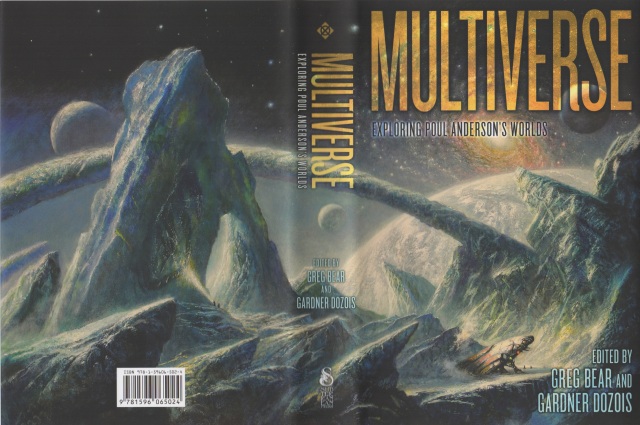
Rick Robinson brought Multiverse: Exploring Poul Anderson’s Worlds to my attention (you can read Rick’s blog post here). Somehow, Multiverse slipped past my radar. I quickly ordered a copy and when it arrived, I read Multiverse in one day.
Tribute anthologies vary in quality. Multiverse is one of the best. I was a big Poul Anderson fan while growing up. The first Poul Anderson SF novel I read was Vault of the Ages, a volume in the classic Winston Science Fiction series aimed at Young Adults. Then, I discovered Poul Anderson was being published in ACE Doubles format. Later, I read many of Anderson’s works in SF magazines.
The best parts of Multiverse are the reminiscences of Poul Anderson’s family and friends. They all loved Anderson and write about the influence he had on their lives, personally and professionally. It’s rare when one person can touch so many lives so positively. Anderson helped rookie writers get started and pros perfect their craft. Anderson was natural story-teller.
My favorite story in Multiverse is David Brin’s “Latecomers,” a tale with a very Poul Anderson flavor. The characters find themselves under attack by a combat robot (think Berserker!). Their battle for survival, and the other secrets the characters find on an ancient asteroid, capture the essence of Poul Anderson’s style of story. Marvelous!
The stories, commentaries, and remembrances make Multiverse a superior tribute anthology. If you’re a Poul Anderson fan, Multiverse is a must-read! GRADE: A
TABLE OF CONTENTS:
I saw Etta James perform live in a small nightclub in Madison, Wisconsin in 1976. She was fabulous!
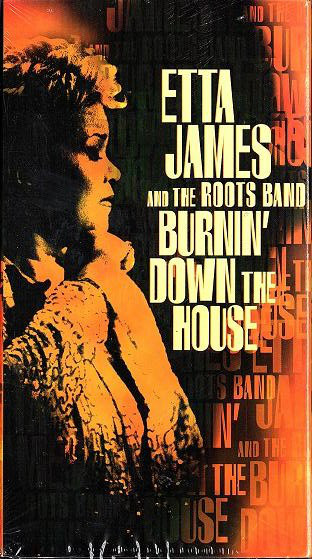
Etta James and The Roots Band Burnin’ Down the House is a 2001 performance. Etta James was near the end of her career.
In front of an enthusiastic audience, Etta James sings 15 songs in her trade-mark style. Check out the Track List and note that the songs in Etta James’ set covers blues, soul, rhythm and blues, jazz, funk, and even some rock & roll. Etta James is seated throughout the concert. When I saw Dionne Warwick in concert a decade ago, she sat during her concert, too.
Etta James is backed by The Roots Band, a group of talented musicians that includes two of Etta’s sons. The sound on this DVD rocks my speakers!
If you’re looking for an enjoyable concert DVD, I recommend Etta James and The Roots Band Burnin’ Down the House. GRADE: A
TRACK LIST:
| 1. | “Introduction” | 0:50 | |
|---|---|---|---|
| 2. | “Come to Mama“ | Willie Mitchell, Earl Randle | 5:13 |
| 3. | “I Just Want To Make Love To You” / “Born to Be Wild“ | Willie Dixon / Mars Bonfire | 5:22 |
| 4. | “I’d Rather Go Blind“ | Billy Foster, Ellington Jordan | 6:21 |
| 5. | “All The Way Down” | Catherine Williamson, Gabe Mekler, Trevor Lawrence | 6:30 |
| 6. | “At Last“ | Mack Gordon, Harry Warren | 4:44 |
| 7. | “Leave Your Hat On“ | Randy Newman | 5:33 |
| 8. | “Something’s Got a Hold on Me“ | Etta James, Leroy Kirkland, Pearl Woods | 5:10 |
| 9. | “Your Good Thing Is About To End“ | Isaac Hayes, David Porter | 7:40 |
| 10. | “Rock Me Baby“ | 4:28 | |
| 11. | “Love and Happiness / “Take Me to the River” / “My Funny Valentine“ | Al Green, Mabon “Teenie” Hodges / Al Green, Mabon “Teenie” Hodges / Richard Rodgers, Lorenz Hart | 9:57 |
| 12. | “Sugar on the Floor“ | Kiki Dee | 11:04 |
| Total length: | 72:52 |

The Buffalo Bills (4-1) travel to Nashville to take on the Tennessee Titans (3-2) in a rematch of 2020’s infamous Covid-19 game. The Bills are 5 1/2 point favorites.
Last year, the Titans had plenty of infected players and coaches. The Bills v. Titans game was postponed and finally scheduled for a rare Tuesday afternoon time slot. The Titans beat the Bills 42-16 in a game with Covid-19 infections playing a key role in player psychology. This year, with the recent outbreak with the Arizona Cardinals, Covid-19 threatens to affect teams every week. Is your favorite NFL team fully vaccinated?

The Buffalo Bills play the Tennessee Titans tomorrow on Monday Night Football. How will your favorite NFL team do today?
Jeff Meyerson mentioned that Stephen Sondheim evaluated other Broadway composers in Finishing the Hat so I checked it out. Sondheim respected Cole Porter, but noted that Porter was a “list-maker” and cited several song lyrics to prove his point.
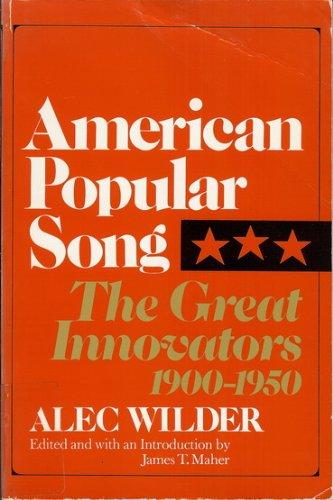
That led me to Alec Wilder’s American Popular Song: The Great Innovators 1900-1950 (1972). I’m a fan of Wilder’s songs, especially “I’ll Be Around.” Alec Wilder isn’t afraid of making song judgments. Just check out this critique of a Richard Rodgers classic:
“No, I don’t like Some Enchanted Evening. I find it pale and pompous and bland. Where, oh where, are all those lovely surprises, those leaps in the dark, those chances? I’m in church and it’s the wrong hymnal!” (p. 221)
Stephen Sondheim ranked Cole Porter at the top of his list of great Broadway composers. Alec Wilder has a different opinion:
“There is considerable irony in the fact that, though Cole Porter was the most thoroughly trained musician of all the writers discussed in this book, he is better known and more highly considered for his lyrics than his music. And there is no question but that his lyrics were high fashion, witty to a markedly sophisticated degree, turned out, often-times it seemed, for the special amusement of his social set. Yet they seldom risked or indulged in tenderness or vulnerability.” (p. 223)
Although you might think Wilder was being too critical of Porter, he does provide an insightful assessment: “For many years Porter had been suffering great pain from a shattered leg. It had been operated on countless times. His surgeon once told me that Porter’s pain must have been so excruciating as to cause virtual sleeplessness for years. Yet this anguished man managed not only to write good songs and witty lyrics, but, in 1948, to create possibly his most successful score, Kiss Me, Kate.” (p. 249)
Of all the song writers and composers in AMERICAN POPULAR SONG: THE GREAT INNOVATORS 1900-1950, Alec Wilder’s favorite is Harold Arlen. Wilder knew Arlen and spoke with him about their craft:
“Interestingly, when I discussed song writing with him, Arlen never spoke of hits, he talked only of good songs. My feeling was that he simply didn’t equate quality with sales.” (p. 254)
After reading Wilder’s chapter on Harold Arlen, I wanted to drop everything and listen to Arlen’s music!
Wilder sums up his survey of a half century of popular songs with these conclusions: “Overall, I find Rodgers warmer, Arlen more hip, Gershwin more direct, Vernon Durk more touchable, Berlin more practical. But no one can deny that Porter added a certain theatrical elegance, as well as interest and sophistication, wit, and musical complexity to the popular song form. And for this we are deeply indebted.” (p. 252)
If you’re interested in American popular songs from the first half of the Twentieth Century, Alec Wilder has a lot to say. GRADE: A
TABLE OF CONTENTS:
Author’s Note — xxi
Acknowledgements
Introduction by James T. Maher — xxiii
1. The Transition Era: 1885 to World War I — 3
2. Jerome Kern (1885-1945) — 29
3. Irving Berlin (1888-1989) — 91
4. George Gershwin (1898-1937) — 121
5. Richard Rodgers (1902-1979) — 163
6. Cole Porter (1891-1964) — 223
7. Harold Arlen (1905-1986) — 243
8. Vincent Youmans (1898-1946) and Arthur Schwartz (1900-1984) — 292
9. Burton Lane (1912- 1997), Hugh Martin (1914-2011), and Vernon Duke (1903-1969) — 331
10. The Great Craftsmen –370
Hoagy Carmichael (1899-1981)
Walter Donaldson (1893-1947)
Harry Warren (1893-1981)
Isham Jones (1894-1956)
Jimmy McHugh (1894-1969)
Duke Ellington (1899-1974)
Fred Ahlert (1892-1953)
Richard Whiting (1891-1938)
Ray Noble (1907-1978)
John Green (1908-1989)
Rube Bloom (1902-1976)
Jimmy Van Heusen (1913-1990)
11. Outstanding Individual Songs: 1920 to 1950 — 452
12. Additional Songs and Composers — 521
Index –525
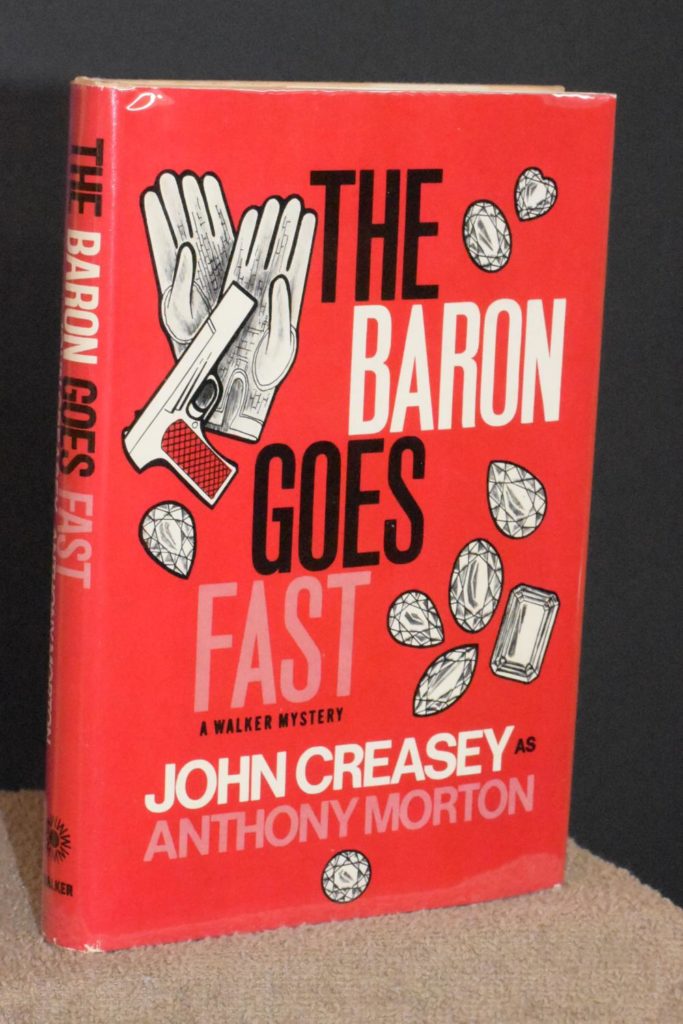
Jerry House mentioned recently that he had been reading some John Creasey novels. I’ve read John Creasey novels over the years and still have about 100 Creasey novels waiting to be read. Inspired by Jerry, I read The Baron Goes Fast (1953). The Baron is ex-jewel thief and antiques dealer, John Mannering. The Baron is often compared to Simon Templar because he involves himself in other people’s problems like a latter day Robin Hood. THE BARON, a 1960s TV series starring Steve Forrest as The Baron, captured the vibe of the Creasey’s book series.
The Wannamaker Diamond Heist triggers a battle for the fortune in diamonds. The Baron sold the original Wannamaker diamonds so he decides to get involved in who stole the fabulous diamonds.
Mannering finds the thugs who pulled off the heist have more evil intentions. And he intends to stop them.
Like most of the John Creasey novels I’ve read, The Baron Goes Fast speeds right along at breakneck speed. If you’re looking for an entertaining, exciting novel just fasten your seat belt and start flipping the pages! Are you a John Creasey fan? GRADE: B
The Baron series was written under the pseudonym Anthony Morton between 1937–1979.