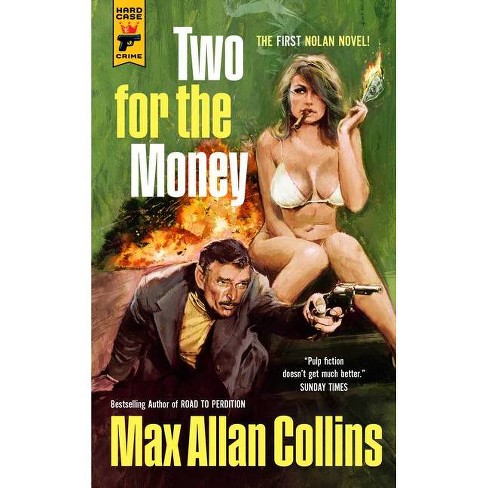
Two for the Money (2021) includes the first two Nolan novels: Bait Money (1973) and Blood Money (1973). The Nolan novels are a pastiche of “Richard Stark” (aka, Donald E. Westlake), the professional thief, Parker. Like Parker, Nolan is a craftsman of crime, executing heists with precision and caution. In Bait Money (aka, First and Last Time)–Max Allan Collins’ first published book–Nolan wants to retire from his criminal profession and work a legitimate job like running a nightclub.
But Nolan has baggage. Nearly 20 years ago, Nolan killed the brother of a Mafia member. Although time has passed, the Mafia member wants revenge on Nolan. Nolan realizes he needs to settle this score in order for his retirement to happen.
The deal Nolan works out requires Nolan to pull off another caper: a bank robbery. But, since professional thieves can’t work with Nolan because of Mafia rules, Nolan has to pull of the heist using two young man and a young woman who have never robbed a bank before. I enjoyed all the planning and complications that lead up to the crime. The aftermath of the robbery is explosive.
Blood Money continues the story with Nolan avenging the murder of two of his friends. But with his money stolen, Nolan needs to track down the murderers and the cash they took from him. Once again, the plot is twisty with plenty of surprises. If you like Richard Stark’s Parker novels, you’ll enjoy these wonderful pastiches! GRADE: B+
NOLAN SERIES:
1. Bait Money (1973)
2. Blood Money (1973)
3. Fly Paper (1981)
4. Hush Money (1981)
5. Hard Cash (1981)
6. Scratch Fever (1982)
7. Spree (1987)
8. Mourn the Living (1988)
9. Skim Deep (2020)
10. Double Down (2021)