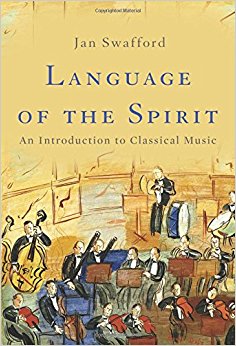
I’m always looking for well-written guides to complicated subjects. Language of the Spirit: An Introduction to Classical Music provides a handy one-volume book that covers the subject in enough detail to satisfy my needs. Swafford provides witty commentary and intriguing anecdotes about the composers. And at the end of each chapter, Swafford suggests musical pieces for further listening. If you’re looking for a concise, insightful commentary on great music, Language of the Spirit accomplishes those goals with a breezy style. GRADE: A
TABLE OF CONTENTS:
Table of Contents
Introduction vii
Part I Music from the Beginning
Chapter 1 Through the Middle Ages (up to 1400) 3
Chapter 2 The Renaissance (ca. 1400-1600) 13
Part II Baroque
Chapter 3 The Baroque Period (ca. 1600-1750) 19
Chapter 4 Claudio Monteverdi (1567-1643) 27
Chapter 5 Johann Sebastian Bach (1685-1750) 31
Chapter 6 George Frideric Handel (1685-1759) 44
Chapter 7 Further Baroque Listening 52
Part III Classical
Chapter 8 The Classical Period (ca. 1750-1830) 57
Chapter 9 Joseph Haydn (1732-1809) 66
Chapter 10 Wolfgang Amadé Mozart (1756-1791) 77
Chapter 11 Ludwig van Beethoven (1770-1827) 91
Part IV Romantic
Chapter 12 The Romantic Period (ca. 1830-1900) 107
Chapter 13 Franz Schubert (1797-1828) 114
Chapter 14 Hector Berlioz (1803-1869) 126
Chapter 15 Robert Schumann (1810-1856) 133
Chapter 16 Frédéric Chopin (1810-1849) 140
Chapter 17 Richard Wagner (1813-1883) 145
Chapter 18 Franz Liszt (1811-1886) 155
Chapter 19 Johannes Brahms (1833-1897) 159
Chapter 20 Pyotr Ilich Tchaikovsky (1840-1893) 170
Chapter 21 Antonín Dvorák (1841-1904) 175
Chapter 22 Gustav Mahler (1860-1911) 179
Chapter 23 Further Romantic Listening 186
Part V Modernism and Beyond
Chapter 24 The 20th and 21st Centuries (ca. 1900-present) 193
Chapter 25 Claude Debussy (1862-1918) 211
Chapter 26 Richard Strauss (1864-1949) 218
Chapter 27 Maurice Ravel (1875-1937) 223
Chapter 28 Igor Stravinsky (1882-1971) 229
Chapter 29 Arnold Schoenberg (1874-1951) 240
Chapter 30 Charles Ives (1874-1954) 250
Chapter 31 Bela Bartok (1881-1945) 258
Chapter 32 Dmitry Shostakovich (1906-1975) 266
Chapter 33 Benjamin Britten (1913-1976) 273
Chapter 34 Aaron Copland (1900-1990) 277
Chapter 35 György Ligeti (1923-2006) 281
Chapter 36 Further Modernist Listening 286
Conclusions 298
Suggested Further Reading 304
Index 306
JURASSIC WORLD: FALLEN KINGDOM

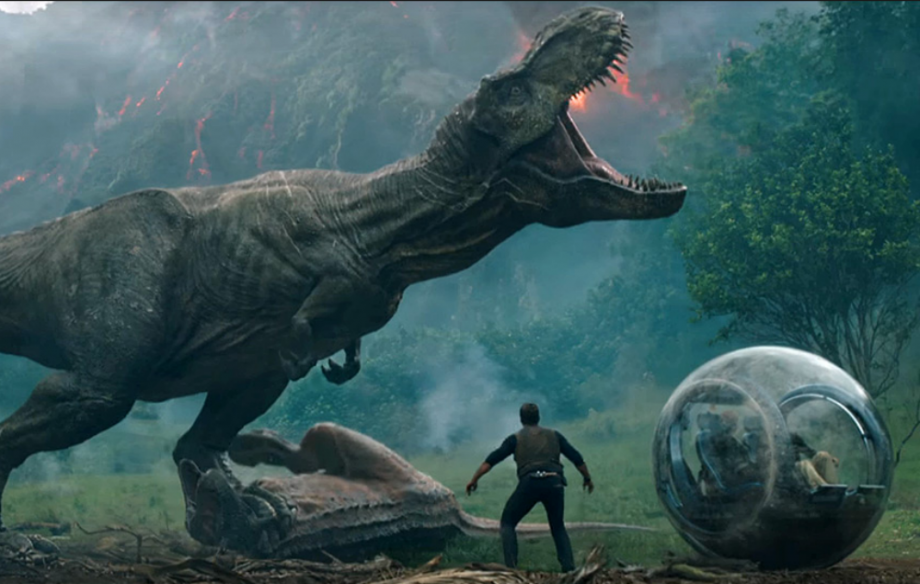
I’m sorely tempted to say the Jurassic series is getting long-in-the-tooth. Yes, the Jurassic series has been around for 25 years and the latest installment, Jurassic World: Fallen Kingdom, ratchets up the rampaging dinosaurs factor to hold the attention of jaded audiences. Chris Pratt returns as the dinosaur-whisperer. He joins Bryce Dallas Howard to try to save the giant saurians lurking around the trashed theme park on Isla Nublar when the island’s volcano erupts. Yes, Jeff Goldblum returns for a cameo as chaos theoretician Ian Malcolm (taking a break from analyzing the Trump Administration, perhaps). If you’re looking for a Summer popcorn movie, Jurassic World: Fallen Kingdom fits the bill. GRADE: B-
FRIDAY’S FORGOTTEN BOOKS #481: YEAR’S BEST SCIENCE FICTION NOVELS: 1953 Edited by Everett F. Bleiler & T. E. Dikty

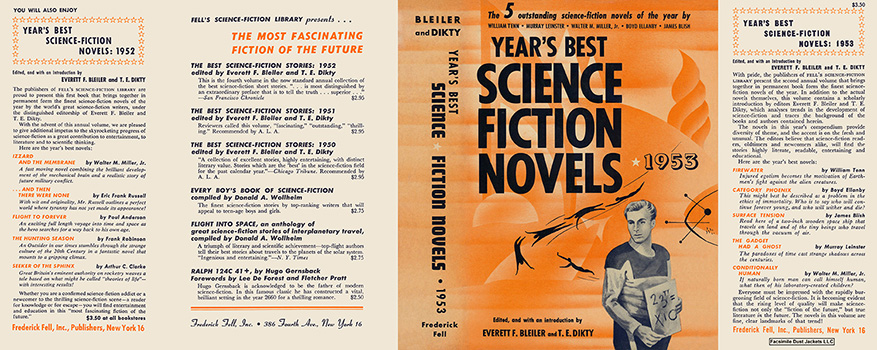
I read James Blish’s “Surface Tension” sometime in the early 1960s and was blown away. This story of a crashed generational starship captured the essence of the Future. The crew, knowing humans in their present form could not survive on a planet of mostly puddles of water, create a version of humans–tiny and aquatic–who could live in a puddle of water. What an amazing concept decades before genetic engineering was invented! Murray Leinster’s “The Gadget Had a Ghost” is both a mystery and a mediation on Time Travel. Walter M. Miller, Jr.’s “Conditionally Human” explores the ramifications of a controlled birthrate policy where “enhanced” pets are genetically designed to take the place of children. “Firewater” is another of William Tenn’s unique takes on Aliens and business. And “Boyd Ellanby” shows what can happen in a totalitarian society when a scientist invents life-extension technology. I enjoyed all the novellas in this collection! GRADE: A-
TABLE OF CONTENTS:
Introduction, by Everett F. Bleiler & T. E. Dikty 9
“Firewater”, by William Tenn (Astounding Science Fiction, February 1952) 17
“Category Phoenix”, by Boyd Ellanby (Lyle C. Boyd & William C. Boyd) (Galaxy Science Fiction, May 1952) 81
“Surface Tension”, by James Blish (Galaxy Science Fiction, August 1952) 131
“The Gadget Had a Ghost”, by Murray Leinster (Thrilling Wonder Stories, June 1952) 181
“Conditionally Human”, by Walter M. Miller, Jr. (Galaxy Science Fiction, February 1952) 251
POPS: FATHERHOOD IN PIECES By Michael Chabon

Patrick and Katie gave me a copy of Pops: Fatherhood in Pieces for Father’s Day. Since it’s a short book, I read Pops immediately. I’ve read several of Michael Chabon’s books over the years. Chabon won a Pulitzer Prize for The Amazing Adventures of Kavalier and Clay. Wonder Boys is a pretty good novel and a pretty good movie. The essays in Pops cover a lot of ground. I was especially impressed with Chabon’s tale, “My Son, the Prince of Fashion,” of taking his son, Abraham, to France for the Paris Men’s Fashion Week as a bar mitzvah gift. Chabon’s son loves fashion and Chabon shows that feeding a son’s enthusiasm pays off. I was less impressed with Chabon’s recollections of playing baseball as a kid in “The Old Ball Game.” But, the most moving piece in this collection is the final one: “Pops.” Chabon’s father was a physician and would occasionally take his son on his patient visits. You’ll see fairly quickly why Chabon didn’t follow in his father’s footsteps. Chabon manages to hit the right notes in these essays. I’m sure Pops will become a steady seller around Father’s Day for the next decade. GRADE: B+
TABLE OF CONTENTS:
Introduction: The Opposite of Writing 1
Little Man (aka, “My Son, The Prince of Fashion,” GQ) 15
Adventures in Euphemism (aka, “The Unspeakable in Its Jammies,” atlantic.com 45
The Bubble People (aka, “One of Us,” Details 53
Against Dickitude Details 63
The Old Ball Game Details 77
Be Cool or Be Cast Out Details 93
Pops 107
I FIND YOUR LACK OF FAITH DISTURBING: STAR WARS AND THE TRIUMPH OF GEEK CULTURE By A. D. Jameson

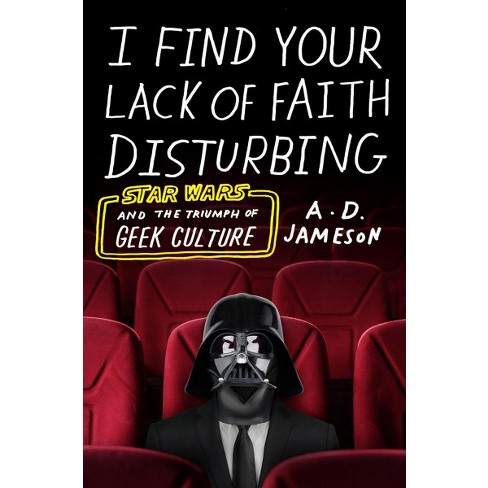
A. D. Jameson celebrates Geek Culture in I Find Your Lack of Faith Disturbing. Jameson shows how geeks came to dominate the best Box Office with movies like The Avengers, the Star Wars series, the Batman series, and Avatar. Comics, graphic novels, YouTube videos, and fan fiction affect an audience hungry for more content. But, amid this glorification of Geek Culture, I detect some cracks. The Solo movie just underperformed leading to speculation of “Star Wars fatigue.” How many MARVEL series can succeed on Netflix? Do people still want to see the rampaging dinosaurs in Jurassic Park movies? Are you a geek? Do you like Star Wars and MARVEL/DC super-hero movies? GRADE: B
TABLE OF CONTENTS:
Introduction: The Golden Age of Geekdom 3
Part I: The Story So Far
1. “Oh, I’m Back Out in Space Again”: The Realism of Star Wars 23
2. The Children of Spielberg and Lucas 43
3. Geek Goes Mainstream 65
Part II: What Every Geek Wants
4. Do You Bleed? 87
5. Historical Documents 111
6. The Great Geek Game 123
7. Geeking Out 157
Part III: To Be Continued . . .
8. I’ve Got a Bad Feeling about This: The Importance of Being Geeky 177
9. Why So Serious? 203
10. Back Out in Space Again: The Beauty of Star Wars 225
Notes 247
Acknowledgments 273
Index 275
THE SEAGULL

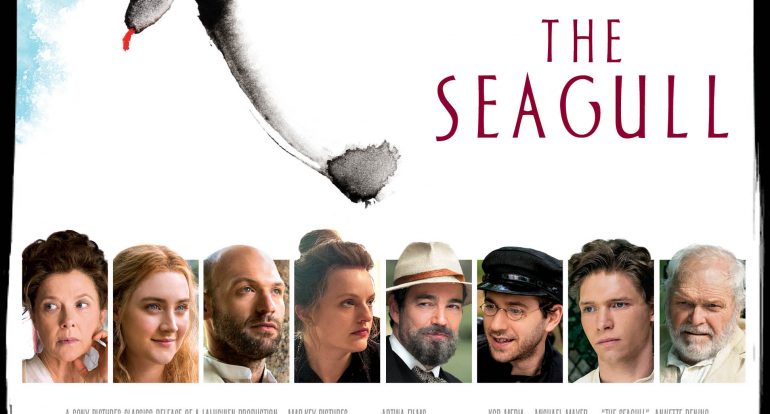
In The Seagull, Anton Chekhov’s classic play, everyone wants something they’re not getting. Actress Irina (Annette Bening) wants to hold on to her lover, Boris (Corey Stoll). Boris wants the younger and hotter Nina (Saorise Ronan). Irina’s troubled son, Konstantin (Billy Howle), wants Nina. Masha (Elizabeth Moss), the daughter of the farm managers, wants Konstantin. The schoolteacher, Medvenko (Michael Zegen) wants Masha. Everyone is unhappy and take actions that create even more sadness. Director Michael Mayer and screenwriter Stephen Karam capture the essence of this somber group. The only thing lacking would be the Rolling Stones singing “You Can’t Always Get What You Want” in the background. GRADE: A
SEE WHAT CAN BE DONE: ESSAYS, CRITICISM, AND COMMENTARY By Lorrie Moore

Lorrie Moore is best known for her short story collections (1985 – Self-Help; ISBN 0-446-67192-4, 1990 – Like Life; ISBN 0-375-71916-4, 1998 – Birds of America; ISBN 0-312-24122-4, and 2008 – The Collected Stories; ISBN 978-0-571-23934-4. 2014 – Bark; ISBN 0-307-59413-0). Lorrie Moore also wrote dozens of book reviews, essays, and articles over the past 30 years. See What Can Be Done collects much of this material and as you might expect there are some hits here–and some clunkers. My favorite essay was “Steven Stills” from 2017. I’ve been a Steven Stills fan since the Sixties, but Lorrie Moore told me a lot about the performer and song-writer that I didn’t know. Naturally, Moore’s reviews of short story collections–“V. S. Pritchett’s A Careless Widow,” “Ann Beattie’s New and Selected Stories,” “John Updike’s The Early Stories–provide key insights into the art of short story writing. I enjoyed Moore’s essay on The Wire. Many of Lorrie Moore’s notions of artistic creation show up in her essay “On Writing.” If you’re in the mood for some intelligent, insightful writing then give See What Can Be Done a try. GRADE: B+
TABLE OF CONTENTS:
Publication Acknowledgments p. xi
Introduction p. xv
Nora Ephron’s Heartburn (1983) p. 3
Kurt Vonnegut’s Galápagos (1985) p. 6
Malcolm Bradbury’s Cuts (1987) p. 9
Anaïs Nin, Marilyn Monroe (1987) p. 13
John Cheever (1988) p. 18
Bobbie Ann Mason’s Love Life (1989) p. 24
V. S. Pritchett’s A Careless Widow (1989) p. 29
Stanley Elkin’s The MacGuffin (1991) p. 33
Don DeLillo’s Mao II (1991) p. 37
Election Day 1992: Voters in Wonderland (1992) p. 41
Charles Baxter’s Shadow Play (1993) p. 44
Margaret Atwood’s The Robber Bride (1993) p. 48
On Writing (1994) p. 54
Amos Oz (1996) p. 63
Christmas for Everyone (1997) p. 67
Starr-Clinton-Lewinsky (1998) p. 69
Ann Beattie’s New and Selected Stories (1998) p. 71
JonBenét Ramsey by Lawrence Schiller (1999) p. 77
Joyce Carol Oates’s Broke Heart Blues (1999) p. 82
Dawn Powell (1999) p. 89
Best Love Song of the Millennium (1999) p. 95
Titanic (2000) p. 98
Claudia Roth Pierpont’s Passionate Minds (2000) p. 102
Philip Roth’s The Human Stain (2000) p. 112
Matthew Klam’s Sam the Cat (2000) p. 118
Legal Aide: My First Job (2001) p. 126
Frederic Cassidy (2001) p. 129
Alice Munro’s Hateship, Friendship, Courtship, Loveship, Marriage (2002) p. 132
Edna St. Vincent Millay (2002) p. 139
Darryl Pinckney and Caryl Phillips (2002) p. 152
Margaret Atwood’s Oryx and Crake (2003) p. 161
John Updike’s The Early Stories (2003) p. 167
Nicholson Baker’s Checkpoint (2004) p. 179
Alice Munro’s Runaway (2004) p. 184
Joan Silber (2005) p. 190
Eudora Welty (2006) p. 199
Alice Munro’s The Moons of Jupiter (2006) p. 212
Shakespeare: The Modern Elizabethan (2006) p. 216
One Hot Summer, or a Brief History of Time (2006) p. 221
Stephen Sondheim’s Sweeney Todd (2007) p. 228
Peter Cameron (2007) p. 234
Donald Barthelme (2009) p. 243
Clarice Lispector (2009) p. 252
Barack Obama (2009) p. 260
The Wire (2010) p. 262
Memoirs (2011) p. 273
Friday Night Lights (2011) p. 282
9/11/11 (291)
GOP Primary Debate (2011) p. 294
Werner Herzog’s Into the Abyss (2011) p. 297
Suzzy Roche’s Wayward Saints (2012) p. 301
Lena Dunham (2012) p. 305
Wisconsin Recall (2012) p. 309
Richard Ford’s Canada (2012) p. 314
Ethan Canin’s “The Palace Thief” (2012) p. 320
Homeland (2013) p. 322
Jane Campion’s Top of the Lake (2013) p. 329
Blue Is the Warmest Color (2013) p. 335
Bernard Malamud (2014) p. 341
Miranda July (2014) p. 343
True Detective (2015) p. 350
Making a Murderer (2016) p. 361
Helen Gurley Brown (2016) p. 370
Ezra Edelman’s O.J.: Made in America (2016) p. 380
Thoughts on Hillary Clinton, December 2016 (2017) p. 393
Stephen Stills (2017) p. 398
Acknowledgments p. 409
HAPPY FATHER’S DAY!
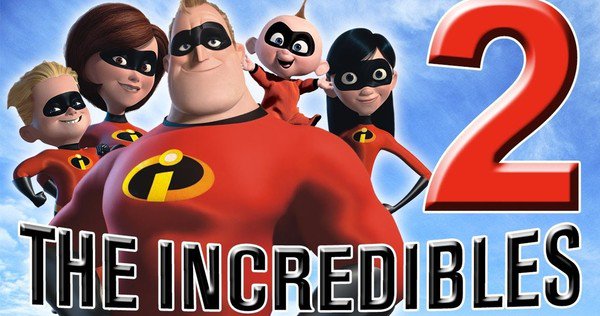
THE INCREDIBLES 2

It’s been 14 years since The Incredibles burst on the scene. Why it took Pixar so long to come up with a sequel to the original hit movie is a bit of a mystery. Holly Hunter is back as the voice of Elastigirl, Craig T. Nelson voices Mr. Incredible, Violet (Sarah Vowell) and Dash (Huck Milner) are back with their baby brother, Jack-Jack. In 14 years, the technology has advanced so The Incredibles 2 looks fabulous. My quibble is that the storyline borders on predictability. All the cool special effects and family angst doesn’t make up for that weakness. In Bill Crider’s famous words, The Incredibles 2 is good, but not great. GRADE: B+
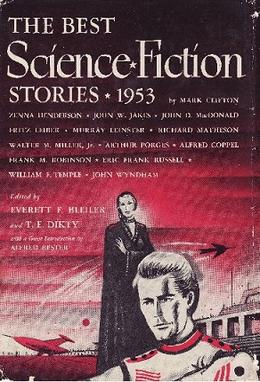
FRIDAY’S FORGOTTEN BOOKS #480: THE BEST SCIENCE FICTION STORIES: 1953 Edited by Everett F. Bleiler & T. E. Dikty

The 1953 anthology of The Year’s Best Science Fiction Stories demonstrates the increasing diversity of science fiction from that era. Zenna Henderson makes her first appearance with “Ararat.” John Jakes, who would later find fame writing the historical Kent Family Chronicles, explores the drama of “Machine.” John D. MacDonald, who would be best remembered for the Travis McGee series, plays a “Game for Blondes.” Of course, veteran SF writers like Murray Leinster, Erie Frank Russell, Fritz Leiber, and Alfred Bester are represented. But Brits like John Wyndham and William F. Temple make their presence known with strong stories. I continue to be impressed by these Bleiler & Dikty anthologies. GRADE: A
TABLE OF CONTENTS:
Trematode, a Critique of Modern Science-Fiction, by Alfred Bester
“The Fly”, by Arthur Porges
“Ararat”, by Zenna Henderson
“Counter-Transference”, by William F. Temple
“The Conqueror”, by Mark Clifton
“Machine”, by John W. Jakes
“The Middle of the Week After Next”, by Murray Leinster
“The Dreamer”, by Alfred Coppel
“The Moon Is Green”, by Fritz Leiber
“I Am Nothing”, by Eric Frank Russell
“Command Performance”, by Walter M. Miller, Jr.
“Survival”, by John Wyndham
“Game for Blondes”, by John D. MacDonald
“The Girls from Earth”, by Frank M. Robinson
“Lover, When You’re Near Me”, by Richard Matheson
“Fast Falls the Eventide”, by Eric Frank Russell
About the Authors