
For the past few weeks, I’ve been watching DVDs of Ibsen plays, Strindberg plays, and Chekhov plays in order to understand Stella Adler’s analysis in Stella Adler on Ibsen, Strindberg, and Chekhov. Stella Adler had an acting career (you might have seen her in Shadow of the Thin Man (1941). She founded the Stella Adler Studio of Acting in 1949. Her students included Marlon Brando, Judy Garland, Dolores del Río, Robert De Niro, Elaine Stritch, Martin Sheen, Manu Tupou, Harvey Keitel, Melanie Griffith, Peter Bogdanovich and Warren Beatty. Stella Adler was generally considered the best acting teacher in the U.S. After reading Stella Adler on Ibsen, Strindberg, and Chekhov I have a more detailed understanding of what these playwrights were attempting in their works. Adler confesses that Chekhov is her favorite writer. But his plays are usually failures outside of Russia because international actors don’t grasp Chekhov’s story-telling technique. The actual story happens in the past or off-stage. If you’re interested in theater, I highly recommend this book. GRADE: A
STELLA ADLER ON IBSEN, STRINDBERG, AND CHEKHOV Edited By Barry Paris
6 Replies


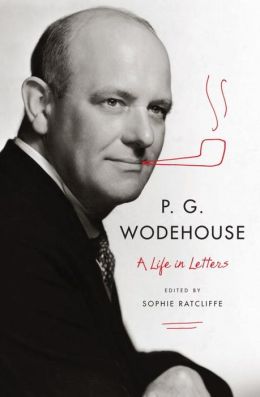 P. G. Wodehouse is one of the great writers of the Twentieth-Century. He was prolific, talented, and witty. I’ve read dozens of Wodehouse books, listened to many of them on audio books, and watched TV adaptations of Wodehouse (mostly by the BBC). Now, P. G. Wodehouse: A Life in Letters shows up to reveal even more about this comic genius. In a letter to Lawrence Durrell, Wodehouse writes about where the idea Jeeves (the iconic valet) came from. Plenty of other insights are revealed in these 600+ pages. Wodehouse wrote every day, sometimes up to 4000 words. His writing methods and thought process is on display in these letters. If you’d like to read Christopher Buckley’s review of P. G. Wodehouse: A Life in Letters just click
 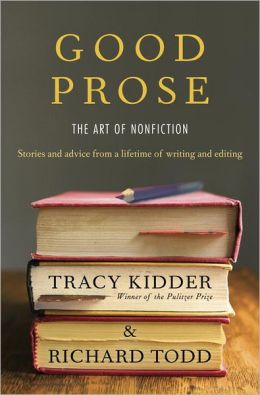 Tracy Kidder, writer of award-winning books like The Soul of the New Machine, House, and Among School Children and his long-time editor, Richard Todd (not the Jets QB) write about their writing relationship. Topics include style, grammar, memoirs, essays, and the editing process. Tracy Kidder shows how he takes a book from idea to published text. Richard Todd shows what editors really do (at least, what the good ones do). If you’re interested in improving your writing skills, Kidder and Todd provide valuable commentary. There’s also a nice appendix of useful writing guides. GRADE: A
 Plenty of my health-conscious friends recommended that I try Fage (pronounced Fa-yeh) Greek yogurt. I did and came away impressed. There are only 6 grams of carbohydrates per serving. The texture of the yogurt is smooth and creamy. I jazzed the Fage yogurt up with some peach slices and walnuts. Yum! Yogurt has been shown to lower blood pressure when eaten regularly. And, the active cultures in the yogurt keep your digestive system in tip-top shape. If you’re a yogurt fan, give Fage Total Greek Yogurt a try. GRADE: A

