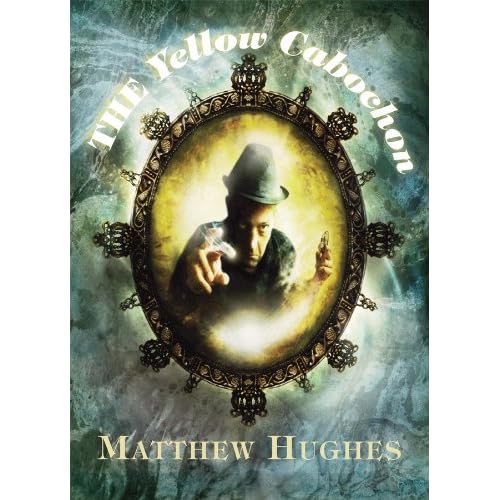
I’ve been reading the Best American Essays series since it started in 1986. This 2012 edition features some excellent essays. My favorite is Marcia Angell’s brilliant “The Crazy State of Psychiatry” which exposes the drug-culture luring in our mental health system. Ten percent of Americans over the age of six are on anti-depressants. And Angell’s analysis shows many psychotropic drugs increase rather than reduce mental problems. Scary stuff! I also enjoyed Geoffrey Bent’s “Edward Hopper and the Geometry of Despair.” I wanted to drop everything and look at some Hopper paintings. Joseph Epstein’s “Duh, Boring” was a fun read. Malcolm Gladwell’s “Creation Myth” about the inventor of the laser printer fascinated me. David Brooks did a fine job selecting these top-notch essays. GRADE: A
TABLE OF CONTENTS:
Foreword: Of Topics by Robert Atwan
Introduction by David Brooks
BENJAMIN ANASTAS. The Foul Reign of “Self-Reliance”
from The New York Times Magazine
MARCIA ANGELL. The Crazy State of Psychiatry
from The New York Review of Books
MIAH ARNOLD. You Owe Me
from Michigan Quarterly Review
GEOFFREY BENT. Edward Hopper and the Geometry of Despair
from Boulevard
ROBERT BOYERS. A Beauty
from Agni
DUDLEY CLENDINEN. The Good Short Life
from The New York Times Sunday Review
PAUL COLLINS. Vanishing Act
from Lapham’s Quarterly
MARK DOTY. Insatiable
from Granta
MARK EDMUNDSON. Who Are You and What Are You Doing Here?
from The Oxford American
JOSEPH EPSTEIN. Duh, Bor-ing
from Commentary
JONATHAN FRANZEN. Farther Away
from The New Yorker
MALCOLM GLADWELL. Creation Myth
from The New Yorker
PETER HESSLER. Dr. Don
from The New Yorker
EWA HRYNIEWICZ-YARBROUGH. Objects of Affection
from Ploughshares
GARRET KEIZER. Getting Schooled
from Harper’s Magazine
DAVID J. LAWLESS. My Father/My Husband
from Prism
ALAN LIGHTMAN. The Accidental Universe
from Harper’s Magazine
SANDRA TSING LOH. The Bitch Is Back
from The Atlantic
KEN MURRAY. How Doctors Die
from Zocalo Public Square
FRANCINE PROSE. Other Women
from Granta
RICHARD SENNETT. Humanism
from The Hedgehog Review
LAUREN SLATER. Killing My Body to Save My Mind
from Elle
JOSE ANTONIO VARGAS. Outlaw
from The New York Times Magazine
WESLEY YANG. Paper Tigers
from New York Magazine


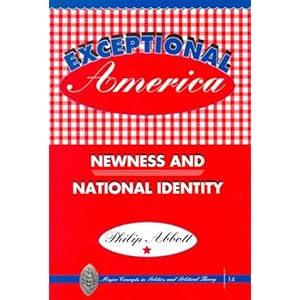 Patti Abbott generously sent me a copy of Phil’s insightful Exceptional America. What better way to honor Presidents’ Day than by reviewing a book that explores what it means for America to be “special.” Through the “Declaration of Independence” to “The Federalist Papers,” to “Democracy in America,” to “Walden,” and other classic American political texts, Phil guides the reader like Virgil in Dante’s Inferno. Many Americans are cynical of “American Exceptionalism” today because our place in the world seems declining. China seems poised to take over the top spot while America drifts into mediocrity with failing schools, gun-violence, increasing drug dependency, and a dysfunctional health care system. But, as the Republicans and Tea Party know, voters love to hear stories about how we’re better than everyone else so “American Exceptionalism” remains a potent political tool. I highly recommend Exceptional America. GRADE: A
 I confess: I bought Josh Groban’s All That Echoes CD because “The Moon Is a Harsh Mistress” is on it. I’m a big fan of Jim Webb’s classic song (and it’s one of Robert Heinlein’s best novels, too). Some people love Josh Groban (mostly women) and many people dislike Groban’s bombastic singing. I’m on the fence. I like some of Groban’s songs, and quickly skip over others like “Un Alma Mas” and “E Ti Prometterò.” Since I bought the “deluxe” version of All That Echoes at TARGET, I got four “Bonus Tracks” not include on the CD if you buy it elsewhere. Of the Bonus Tracks, “Satellite” is my favorite. GRADE: B+
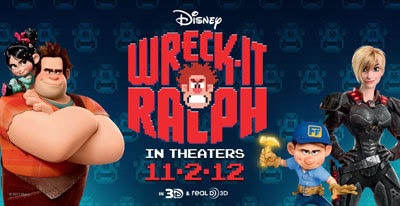 I loved Wreck-It Ralph! This animated feature explores video-game characters who are anything but ordinary. Wreck-It Ralph’s life consists of wrecking a video game hotel. Then players get Fix-It Felix (with his magic hammer) to fix the damage Ralph has caused. But, after 30 years, Ralph finds his role unsatisfying. Ralph wants to be a Good Guy not a Bad Guy. Ralph’s quest for an item that might turn his life around creates plenty of laughs and tears. John C. Reilly is the voice of Ralph. Jane Lynch wowed me as Calhoun, the sexy Space Commando from Hero’s Duty. And Sarah Silverman is perfect as “the glitch” character Vanellope. I haven’t had this much fun at an animated feature since UP and The Incredibles! GRADE: A