
HAPPY VALENTINE’S DAY!
11 Replies
 Alex Ross is one of those few music critics who can write about Mozart and Radiohead with equal authority and insight. Alex Ross is the music critic for The New Yorker. The wonderful essays in Listen to This cover classical music in China, composer Esa-Pekka Salonen, Schubert, John Luther Adams, the St. Lawrence Quartet, Sonic Youth, Verdi, Bob Dylan, the late Brahms, Bjork, and much more. If you’re going to only read one book about music this year, make it Listen to This. GRADE: A
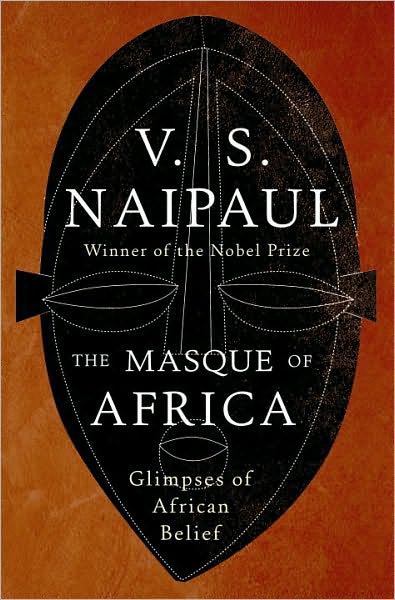 Nobel Prize winner V. S. Naipaul travels to Africa and reports what he finds. In an acerbic style that angered some critics, Naipaul describes an Africa hopelessly stuck in beliefs in magic and a mythical glorious past. Naipaul begins in Uganda, then goes to Ghana and Nigeria. From there, he treks to the Ivory Coast and Gabon, and ends up in South Africa. Naipaul is critical of evangelical “rock-and-roll” churches and the slow demise of African religions. In South Africa, Naipaul quotes its extraordinary writer Rian Malan who says, “In Africa the white people built themselves a moonbase for their civilization; when that crumbles there is nothing for black or white.” The Masque of Africa is a gloomy assessment that rings true. GRADE: A
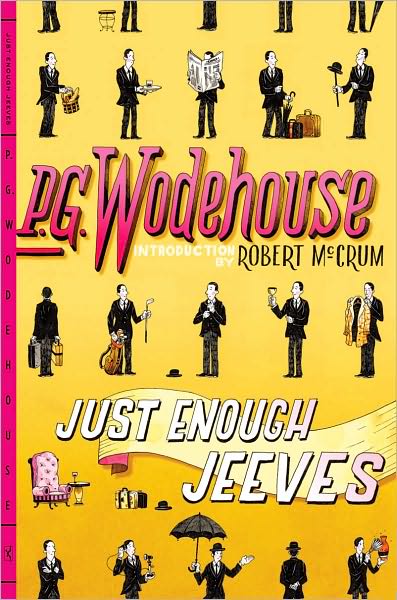
Some P. G. Wodehouse fans would argue there couldn’t be enough stories about Bertie Wooster and Jeeves (his genius butler). If you’ve never read any of these Jeeves classics, I envy you the delight and laughter that will enter your life the instant you start reading this book. Just Enough Jeeves includes Joy in the Morning, Very Good, Jeeves, and Right Ho, Jeeves, three very funny works. Robert McCrum’s “Introduction” provides plenty of information about P. G. Wodehouse and his Jeeves series. Just Enough Jeeves is just enough for you to want more!
Other Forgotten Book reviews can be found at the excellent blogs listed below. Patti Abbott returns next week to resume her role as Queen of Forgotten Books!
Bill Crider
B. V. Lawson
Craig Clarke
Ed Gorman
Eric Peterson
Evan Lewis
James Reasoner
Jerry House
John F. Norris
Juri Nummelin
Kerrie Smith
Martin Edwards
Paul Bishop
Rick Robinson
Randy Johnson
Richard L. Pangburn
Scott Cupp
Pete Dragovich
Todd Mason
Kevin R. Tipple
Kate Laity
Rob Kitchin
 For 35 years an intrepid band of mystery fans contributed to an amateur press association (aka, apa) known as DAPA-EM. Every other month, the members would duplicate their zines and mail their copies to the Official Editor. For most of those years, that Official Editor was Art Scott. And, in all those years, Art never missed an issue. With the January 2011 issue that just arrived at my home, DAPA-EM ends. Over the years I’ve learned about mysteries (and a lot of other things) from John Nieminski, Ellen Nehr, Barry Gardner, Marv Lachman, Bill Crider, Jeff Meyerson, Dan Stumpf, Beth Fedyn, Bob Briney, Len and June Moffatt, Steve Stilwell, Bruce Taylor, Dave Lewis, Rick Robinson, Bob Napier, Steve Lewis, Tina Karelson, Walter Albert, Maggie Mason, and dozens of other knowledgeable fans who were members of DAPA-EM at one time or another. Yes, some of these folks will transfer their energies to blogs, but it won’t Be The Same. This is a sad day.
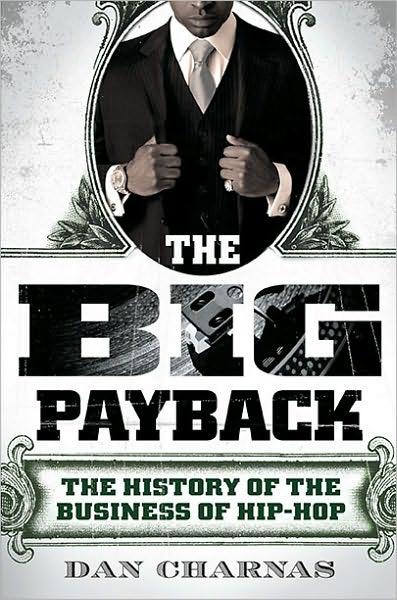 The students in my MANAGEMENT class are enthralled by my stories of Sugar Hill Records and Grandmaster Flash, Run DMC’s crossover breakthrough on MTV, the marketing of gangsta rap, and the rise of multi-millionaire rappers like Jay-Z and Sean “Diddy” Combs. My stories are all based on The Big Payback with its almost Harvard Business School case-study approach to the business of hip-hop. Charnas covers four decades of the growth of hip-hop from the street corner to the board room. Plenty of double-dealing, violence, and deception surround these stories. If you even have a mild interest in this subject, Dan Charnas’ book is the mother-lode. GRADE: A
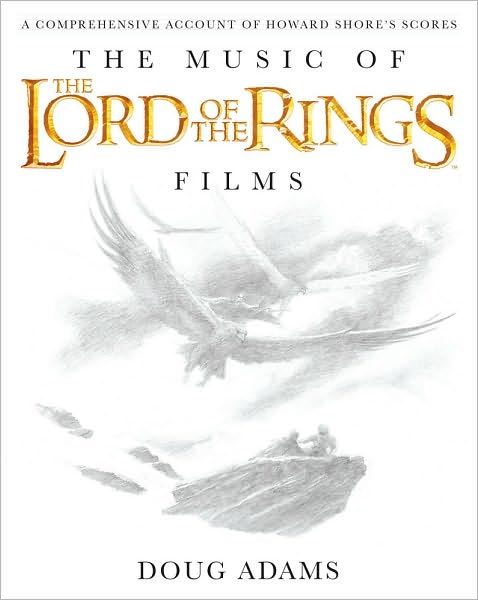
In 2001, Doug Adams was invited by Howard Shore to observe and document his writing of the soundtrack for Peter Jackson’s motion picture trilogy of The Lord of the Rings. Doug Adams is a Chicago-based author and musicologist. Adams attended recording sessions, examined the original scores, and was given total access to the composer’s archives. This book, a culmination of a decade of writing and research, illuminates some of the greatest film music ever written. The Music of the Lord of the Rings Films is an interpretation of J.R.R. Tolkien’s Middle-earth as a musical quest. Adams’ book includes plenty of music examples, original manuscript scores, and an exploration of the process of writing film music with insights from the composer himself. Also included are a foreword by Howard Shore and a rarities CD. If you love The Lord of the Rings as much as I do, you’ll want this wonderful book! GRADE: A
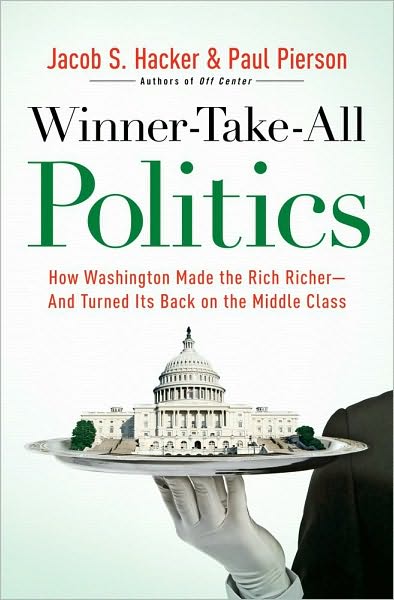
Do you feel like your salary has stagnated? Do you feel like your economic situation has gotten worse? Jacob S. Hacker and Paul Pierson, in Winner-Take-All Politics: How Washington Made the Rich Richer–and Turned Its Back on the Middle Class says middle-class incomes have gone nowhere since the Seventies, but the Rich have had their net worth skyrocket. It’s not a secret. Federal tax returns that Hacker and Pierson use for their analysis show how things changed 30 years ago as the Government changed the rules to give advantages to the Rich. Operating like detectives, Hacker and Pierson follow the economic clues to explain the system that allows the Rich to escape taxation and regulation. How can hedge fund managers make billions of dollars yet pay a lower tax rate than their secretaries? How did the top 0.1 percent of Americans come to control almost 25% of the total wealth of the U.S.? Prepare to be enlightened and outraged if you read this excellent book. GRADE: A


When a cartoon movie is narrated as a flashback, you know most of the little kids sitting in the seats around you are Not Going To Get It. MEGAMIND tells the story of two aliens sent to Earth by their parents to avoid the destruction of their home planets (sound familiar?). One becomes a Superman clone (called Metro Man) with super-strength, the ability to fly, and X-ray vision. The other, the blue alien, only has his incredible intelligence as his strength. The blue alien, after being shunned by the other kids, becomes a Super Villain called Megamind. He has a cute fish called “Minion.” And, of course, there is an intrepid woman reporter, Roxanne Ritchie. I don’t know who the target audience for this movie is. Its exploration of identity issues is too complex for little kids. Teenagers are going to be bored by its traditional, preachy message. Adults (in the company of little kids) will Get It. Will Ferrell does a grand job as the outlandish Megamind. Tina Fey brings her predictable character to life. Despite its potential, this is a pretty average movie. B-