 Bill Crider, gifted writer and astute judge of blogging talent at http://billcrider.blogspot.com/ was nice enough to include me as one of the recipients of the ONE LOVELY BLOG AWARD.
Now, it is now my pleasure to pass on this award. These are the rules for the individual I chose:
1) Accept the award, and don’t forget to post a link back to the awarding person.
2) Pass the award on.
3) Notify the award winners.
And the envelope, please (drum roll): the winner of the One Lovely Blog Award is my son, Patrick at http://patrickgage.com/ who happens to be the creator of this blog. The picture of Megan Fox in my Library is a totally gratuitous gesture for Steve Stilwell.
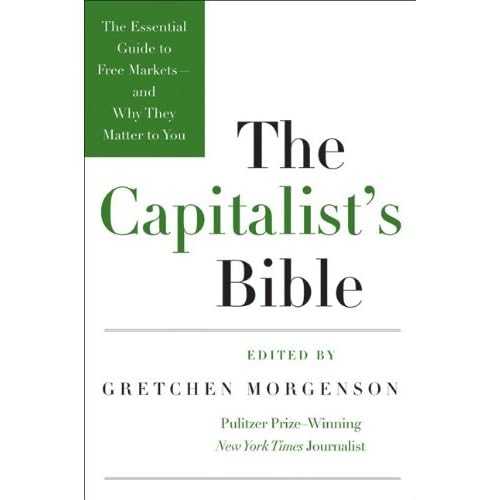 Gretchen Morgenson is the New York Times business columnist who won a Pulitzer Prize in 2002 for her coverage of Wall Street. The subtile of The Capitalist Bible is “The Essential Guide to Free Markets and Why They Matter to You.” With the meltdown of the economy and the lingering bitterness of the recession, many people are questioning capitalism (as Michael Moore’s new movie will) and the need for free markets. The Capitalist Bible provides an eloquent defense not only of capitalism, but the need to keep markets free from excessive regulation and meddling (well-intentioned or otherwise) by Government. Capitalism and free markets are not panaceas but useful tools to improve economic well-being and our own individual life-styles. Despite their flaws, no other system yet invented comes close to the immensity of their wealth-creating powers. The articles assembled in this book provide plenty to think about. GRADE: B+
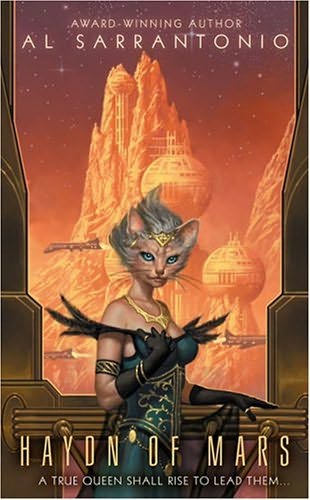 Ever buy a book just because it has a cool cover? That’s why I own Al Sarrantonio’s Haydn of Mars. I’m allergic to cats, but the cat on the eye-catching cover of this book is very enticing. The covers of the sequels, Sebastian of Mars and Queen of Mars lack the magic of that first cover. No, I have not read the books and I doubt if I ever will. But the cover of Haydn of Mars has that “It” factor that classic covers possess. The cover artist is Matt Stawicki, if you want to see more of his fine artwork look here:

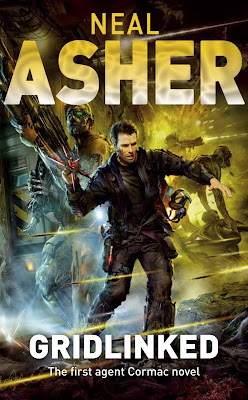 Why did a transporter station explode and kill 10,000 humans? That’s the mystery behind Neal Asher’s third Polity novel, Gridlinked. Gridlinked is actually Asher’s first novel, published in 2001. It features Polity agent Ian Cormac, a futuristic James Bond. There are plenty of subplots: an enigmatic alien who calls itself “Dragon,” a Separatist plot to kill Cormac, and the personal struggle Cormac has in withdrawing from the grid after having been linked with the Artificial Intelligences for 30 years. Like most first novels, Gridlinked has plenty of excesses: too many characters, too many plots, too much violence. But there are lots of action and suspense to make up for the flaws in Gridlinked. Again, if you like space opera as much as I do, you’ll enjoy Gridlinked. GRADE: B.
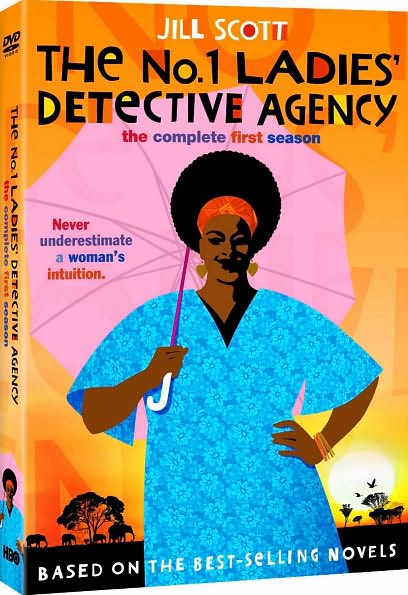 AMAZON wants $42.99 for this three DVD set (it retails for $59.99). However, if you have a B. J.’s Warehouse near you, you’ll find The No. 1 Ladies Detective Agency for a mere $34.99. If you’ve seen these episodes on HBO, you know they follow Alexander McCall Smith’s novels fairly closely. Jill Scott, the R&B singer, displays some terrific acting talent in this series. But my favorite actress is Scott’s quirky secretary, Grace Makutsi, played by Anika Noni Rose who also wowed me in the recent Star Trek movie. HBO hasn’t decided if they’re going to renew this series, but I hope they do. Diane and I found it very entertaining. GRADE: B+
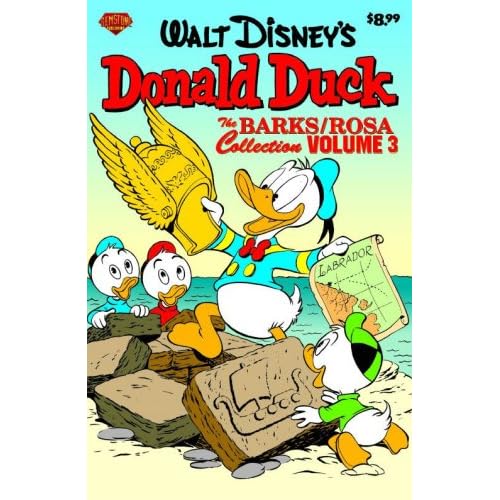 I loved these comics when I was growing up and every time I read these magical pages I turn into a kid again. In a time when graphic novels have a different meaning, these adventures of Donald Duck and his nephews take on almost a mythic power. I find their antics delightful and memorable even after 50 years. If you somehow missed these classics, you should seek them out and make up for lost time! You’re missing a lot of fun. And, if you’re a Carl Barks fan, you might want to read:
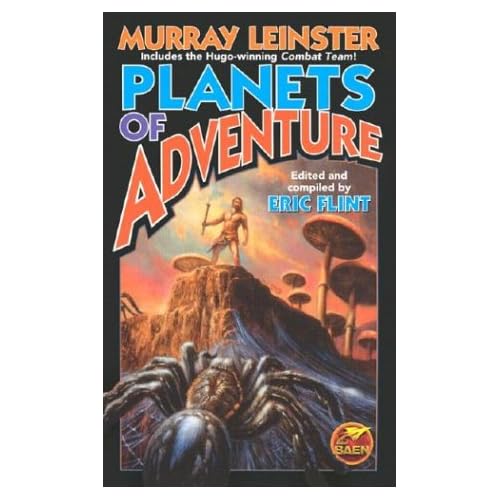 This satisfyingly thick volume of Murray Leinster’s work includes two “fix-up” novels: The Planet Explorer and The Forgotten Planet. The Forgotten Planet affected me powerfully when I read it as a kid: a starship is marooned on a planet whose existence has been forgotten by the galactic bureaucracy. The marooned crew have to battle the planet’s giant insects to survive. At the time, I read it as a metaphor for surviving Junior High School. The Planet Explorer shows how Leinster invented the SF concept of “First Contact.” It also includes the Hugo Award-winning novella, “Combat Team.” Leinster knows how to spin a story and Planets of Adventure includes some of his best work.
  I hesitate to recommend a bimonthly magazine that sets me back about $300 an issue. No, the American Record Guide doesn’t cost $300 (it’s actually a reasonable $7.99 per issue) but as I read the 500 or so classical CD reviews, I find a dozen or more that I just NEED to own. Art Scott recommended ARG to me about 15 years ago and I’ve read every issue since. The reviewers vary in their tastes, but I’ve found a few whose tastes coincide with mine. In addition to the classical CD reviews, there are occasional “Overview” articles that review the best recordings of a composer or a genre. The current September/October 2009 issue has an article on Mahler recordings. ARG has little advertising so most of the expenses are paid by subscriptions or sales of individual copies of the zine. If you’re interested in classical music, I highly recommend American Record Guide. There may be glitzier magazines, but ARG gives you honest, straight-forward reviews. It’s been my selection tool of choice for buying classical recordings.
 “First, it is hard to beat the market. If you have money to invest, the only sensible place to start is with the asumption that the market is smarter than you.” Justin Fox’s The Myth of the Rational Market: A History of Risk, Reward, and Delusion on Wall Street brings enlightenment to the dismal science of economics. Fox is a journalist, but he understands the theories behind the Capital Asset Pricing Model (CAPM) and “efficient markets.” His clear writing and penetrating analysis shows how Warren Buffett made his billions and how lesser investors lost their shirts. If you have any interest in stocks, bonds, and investments this is a “must-read” book. The Myth of the Rational Market tells the financial history of the past 50 years with great insight and energy. It’s one of the best books on business that I’ve ever read. GRADE: A
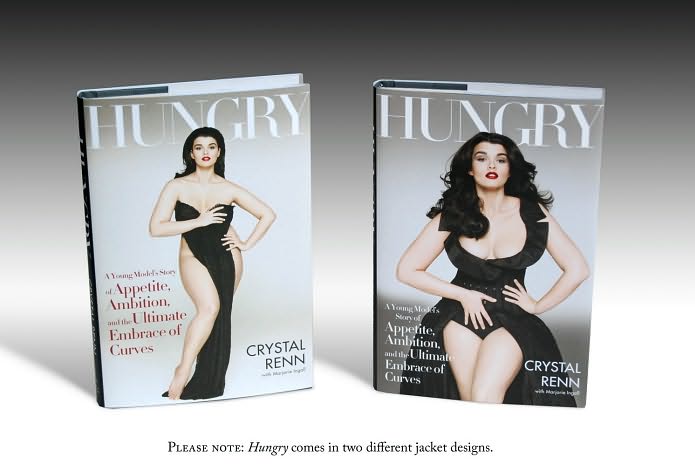 Our society is not kind to women when it comes to body image. Most women feel there’s something “wrong” with their bodies: too thin or too chubby, lips not alluring enough, too short or too tall, the curse of “combination skin.” As you can imagine, the whole issue of ideal beauty is infinitely more difficult for a fashion model. Crystal Renn’s story begins with starvation. In order to become a model at 14, she lost 70 pounds. Crystal moves to New York City and develops anorexia and exercise bulimia to keep her body within modeling tolerances. But Crystal’s health suffers: her hair starts falling out and she experiences heart palpitations. HUNGRY is a true story of the balance between ambition and health. As someone who has a love affair with food, I could relate to Crystal’s situation and her eventual solution to her problems. This is a surprisingly insightful book. GRADE: B+