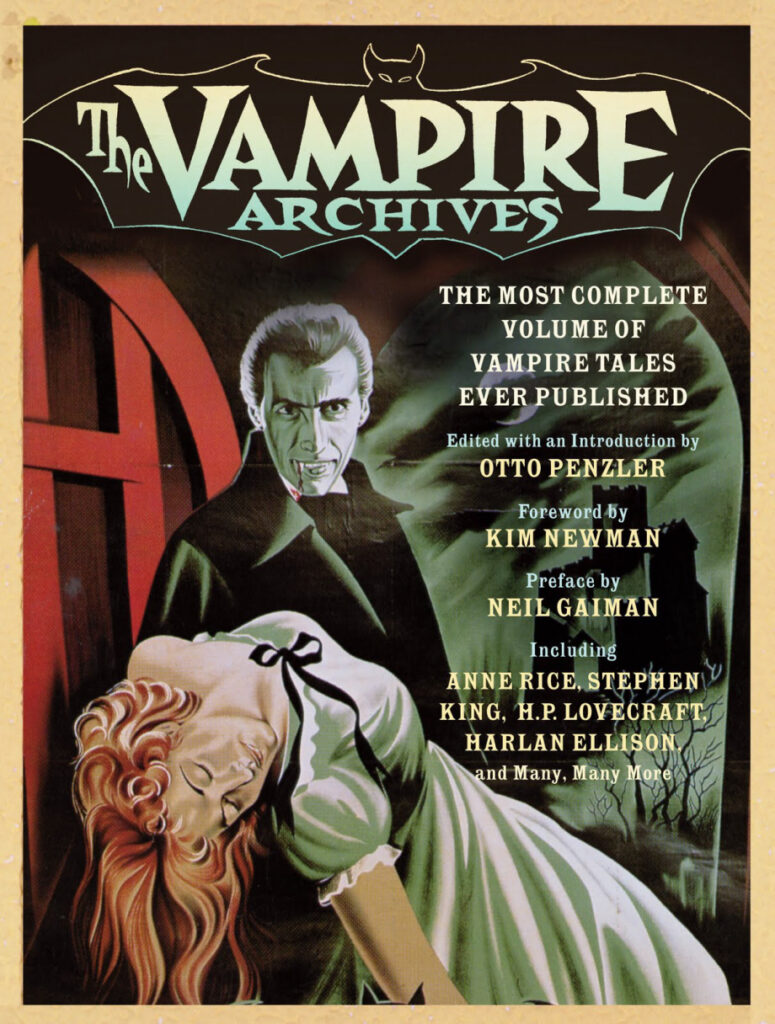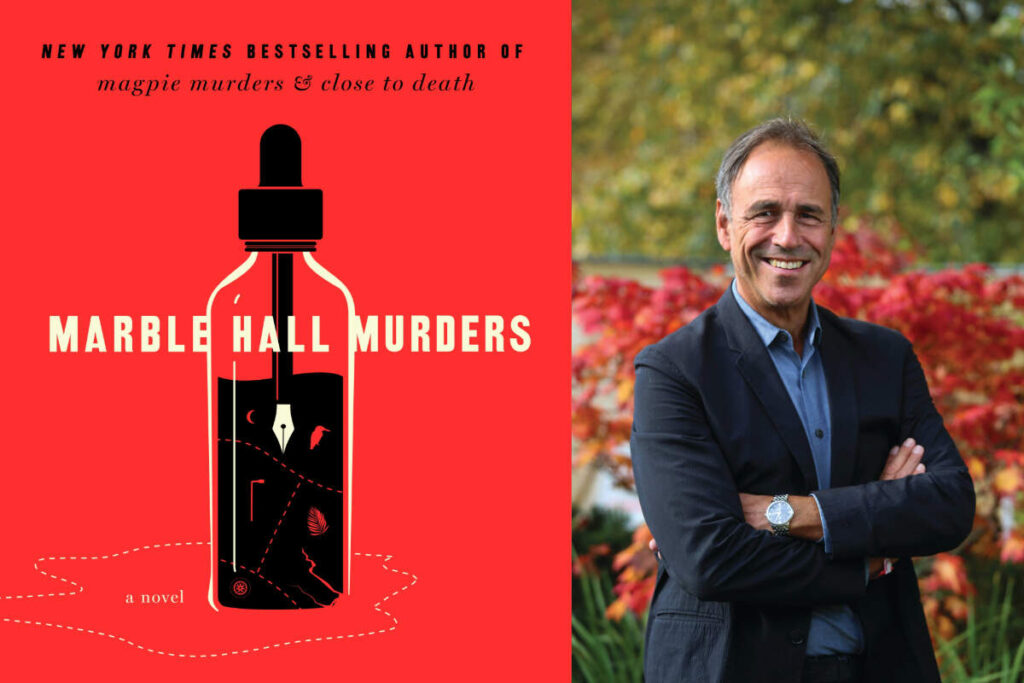
Anthony Horowitz has written over 50 books and 22 scripts for Foyle’s War. I’m a fan of Horowitz’s Young Adult spy novel series featuring teenager Alex Rider. I’ve had The Word is Murder on my shelves since 2017 and I finally got around to reading it.
Early in the book, Horowitz (who makes himself the narrator) mentions he just wrote a Sherlock Holmes pastiche, The House of Silk. This is a hint that the lead character in The Word is Murder–a crusty, cantankerous ex-police detective named Daniel Hawthorne–is really Sherlock Holmes in disguise. Hawthorne rubs everyone the wrong way, but he has Holmes-level observation skills and a canny sense of detection.
The Word is Murder starts out with a wealthy woman–Diana Cowper–who plans her own funeral in London and is found strangled in her home just six hours later. Acting as Watson to Hawthorne’s Holmes, Horowitz follows Hawthorne around the crime scenes with the intention to write up the murder as a True Crime book while Hawthorne pursues clues as a Police Consultant.
The Word is Murder is perfect Summer Reading. The plot is clever with plenty of twists. Horowitz and Hawthorne clash throughout the novel, but it takes both of them to solve this crime. I can’t wait to read the other mysteries in this series! GRADE: A
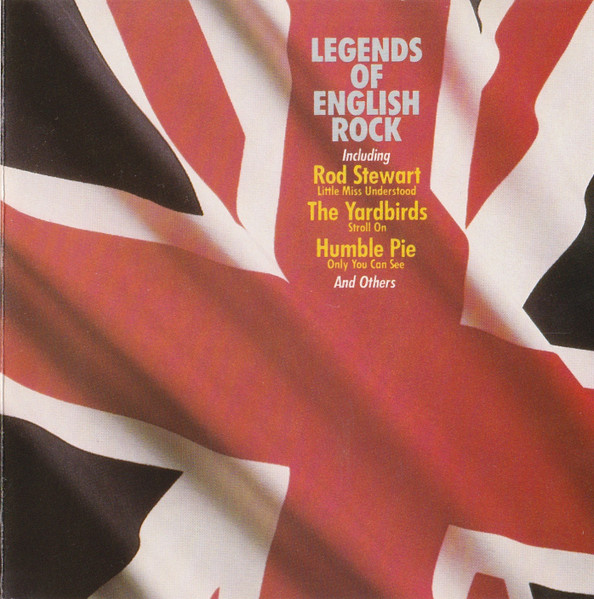
I was in the mood to listen to some of the dozens of GREATEST HITS CDs on my shelves. I picked two of the most successful groups of the 1980s: Hall & Oates and Huey Lewis and The News.
Hall & Oates sold 40 million records during the 1980s. However: “Despite generating what would amount to nearly $100 million across the decade, the duo famously saw much of their wealth disappear during this time due to high-flying lifestyles, lavish spending, and costly management and legal structures.” (Wikipedia)
During the Eighties, Hall & Oates had FIVE Number One hits:
“Rich Girl” (1977) – Their first single to top the chart. “Kiss on My List” (1981) – A major pop-rock smash from the Voices album. “Private Eyes” (1981) – The title-track chart-topper from 1981. “I Can’t Go for That (No Can Do)” (1982) – A crossover R&B and pop phenomenon. “Maneater” (1982) – Their longest-running number-one hit, staying at the top for four weeks. “Out of Touch” (1984) – Their final career chart-topper, released from the album Big Bam Boom.
Huey Lewis and The News were also making money during the Eighties with their touring and album sales. Their number-one singles were:
“The Power of Love” (1985)
“Stuck with You” (1986)
“Jacob’s Ladder” (1987)
Additionally, the band achieved 12 top-ten hits on the Billboard Hot 100 during the 1980s and early 90s, with their album Sports (1983) reaching number one on the Billboard 200 albums chart.
Are you a fan of Hall & Oates and/or Huey Lewis and The News? GRADE: B+ (for both)
Jerry House mentioned The Space Force Chronicles (2914) that somehow escaped my notice. I have dozens of Fred Saberhagen’s books and have read a couple dozen of them. I first read Saberhagen’s Berserkers series in the 1960s. Then I moved on to Saberhagen’s fantasy novels and vampire novels. All recommended!
The first story in The Space Force Chronicles is Planeteer, a First Contact story Boris Brazil and his team have to contend with two warring groups on an Earth-type planet. Brazil and his team are attacked but their superior technology saves them. The solution Brazil and his team arrive at will grate on readers who support women’s rights (like me) but the challenges of solving ending a war–as Trump discovered–is never easy. GRADE: B
I read The Golden People back in 1964 when it was half of an ACE Double. Saberhagen revised and expanded it for BAEN Books in 1984. I own both editions but have not read the BAEN edition yet.
The same for The Water of Thought which I read in 1965, but have not read the 1981 edition. I’ll be reading The Golden People and The Water of Thought in The Space Force Chronicles later this week. If you like Fred Saberhagen’s work, The Space Force Chronicles is a must-buy!
The Golden People (Ace Double 1964) / revised & expanded: (Baen September 1984) –71
The Water of Thought (Ace Double 1965) / text restored and/or revised: (Pinnacle/Tor May 1981 : First Complete Edition. Illustrated by Janet Aulisio — 309
Diane and I started watching The Chelsea Detective on our local PBS station. Then, for no apparent reason, our local PBS station stopped showing it. What to do?
I checked the North Tonawanda Public Library and sure enough, they had The Chelsea Detective on DVD. Now we’re watching the episodes where we left off.
Detective Inspector Max Arnold (played by Adrian Scarborough) is a dyslexic police detective working with DS Priya Shamsie (played by Sonita Henry). Together, Arnold and Shamsie solve difficult murder cases.
Arnold lives in a houseboat (just like Travis McGee) on the river because he’s separated from his wife, Astrid (Anamaria Marinca).
If you are in the mood for some intelligent and challenging mysteries, I recommend The Chelsea Detective. If your PBS station isn’t offering it, it’s available on AMAZON PRIME video…or your local Library. GRADE: B+
“I started writing sci-fi stories during my senior year of high school and through college I’d been submitting them to journals and magazines. I still read mostly science fiction but my reading had expanded a bit : I left behind Heinlein and Lackey now. I liked Maureen McHugh, Kelly Link, Lucius Shepherd, Michael Swanwick, Navy Kress, John Brunner, and a whole host of other New Wave and humanist sci-fi writers. One of my favorites, Kelly Link, had attended a graduate program in creative writing, so I figured that I belonged in a writing program as well. In between drinking bouts, I applied to eleven programs.” (p. 28)
Naomi Kanakia was rejected by all 11 creative writing programs. Her solution: “I heard Michael Dirda, a Pulitzer Prize-winning Washington Post book critic, talk about how Fadiman’s Lifetime Reading Plan had taught him how to read the classics. So I went to Barnes and Noble, bought the book’s latest edition, wrote out a list of all 268 works that it mentioned, and started to read.” (p. 29)
What’s So Great About the Great Books (2026) is Naomi Kanakia’s reading journey through Great Books. Her journey starts out in shaky fashion: “When I began college, really the moment I began, I commenced a vigorous self-study program of alcoholic drinking, and I can’t recall ever fully reading an assigned text. I chose classes with large enrollment sizes and a lecture format, and I rarely went to class unless there was a midterm or a final. I enjoyed college quite a bit, particularly the quarter where I dropped LSD every weekend.” (p. 53)
Off to a dubious start, Naomi Kanakia stumbles in a course called INTRODUCTION TO HUMANITIES. “My course syllabus contained Plato’s Republic, Nietzsche’s Ecce Homo, and Dostoyevsky’s Brothers Karamazov, among others–I didn’t read any of thes books, because I was too busy drinking…” (p. 54)
Not a promising college experience so far. But wait, there’s more! “I identified as gay and was sporadically hooking up with men from the internet, but it wasn’t totally satisfying to me, and that activity eventually tailed off.” (p. 206) Not surprisingly, Naomi Kanakia started going to therapy and started taking anti-depressants.
I bring up Naomi Kanakia’s troubles because What’s So Great About the Great Books shows how Great Books helps her get her Life together so she could become a successful writer and blogger. Actually Great Books save her.
What’s So Great About the Great Books includes a list of 250 Great Books and Naomi Kanakia discusses many of the books that changed her Life. Yes, this is an unusual book with an important message. Do you like Great Books? GRADE: A
TABLE OF CONTENTS:
Why should I read the Great Books?
pp. 1-14
What do you mean by “The Great Books”?
pp. 15-27
Have people always read the Great Books?
pp. 28-36
Isn’t it true that the Great Books are too difficult to read on your own?
pp. 37-60
Where did your list of Great Books come from?
pp. 61-78
Aren’t the Great Books kinda problematic?
pp. 79-102
Why not read other books that are equally beautiful but have better politics?
pp. 103-115
Does it matter what we read? Isn’t it more important to develop our thinking skills?
pp. 116-134
How do we know whether a book is “Great”?
pp. 135-151
Why do we need a list at all?
pp. 152-173
When we say, “The Great Books are worth reading,” do other people hear, “White men are inherently superior”?
pp. 174-181
Can’t reading the Great Books be psychologically damaging for marginalized people?
pp. 182-197
Weren’t some of the Great Books written by reprehensible people?
pp. 198-203
What if, at the end of the day, I simply prefer to read other books?
Machiavelli continues to fascinate me (and other readers) with his analysis of Government and the behavior of people in power. Patrick Boucheron spent a summer reading Machiavelli and pondering the “lessons” of The Prince. Few books have the power to speak to the Future for hundred of years like The Prince.
Machiavelli died in 1527, yet his ideas live on into the 21st Century. Patrick Boucheron, in a series of short 2-4 page essays, explores Machiavelli’s ideas in clear, accessible prose. Mixed in with the consideration of ideas is a series of conjectures about Machiavelli’s life and how events shaped his thoughts.
I enjoyed Machiavelli: The Art of Teaching People What to Fear after reading dozens of denser, much longer books on Machiavelli. This slim–150 page–book presents a series of inquires into Machiavelli’s writings that make sense. I found Boucheron’s scrutiny and reasoning very revealing. GRADE: A
Translated from the French by Willard Wood TABLE OF CONTENTS:
Introduction — 1 YOUTH
1.The seasons — 15
2. Machiavellianism — 19
3. 1469, time returns — 23
4. A father’s ambition — 27
5. Story of a dangerous book — 31 A TIME FOR ACTION
6. Suddenly savonarola — 39
7. A young man in politics — 43
8. Travel — 47
9. The cutting edge of language — 51
10. Coup d’etat — 55 AFTER DISASTER
11. An exile’s letter — 61
12. How to read The Prince — 65
13. To conquer and preserve — 69
14. Evil in politics — 73
15. State of emergency — 77 POLITICS OF WRTING
16. The comedy of power — 83
17. Machiavelli the joker — 87
18. Politics of obscenity — 91
19. The courage to name — 95
20. The political art of taking a position — 99 REPUBLIC OF DISAGREEMENTS
21.What is a republic? — 105
22. In praise of disagreement — 109
23. We are disarmed — 113
24. Violence in politics — 117
25. The end does not justify the means — 121 NEVER TOO LATE
26. Writing history — 127
27. Is it too late? — 131
28. 1527, end of a world — 135
29. Anatomy of a ghost — 139
30. Philosophizing in a storm — 143 Reading Machiavelli — 147 Image Credits — 155
Tom Holland, fresh off his role as Odysseus’s son, Telemachus, in The Odyssey returns for his fourth movie as a superhero in Spider-Man:: Brand New Day. I’ve seen Holland in Spider-Man: Homecoming (2017), Spider-Man: Far From Home (2019), and Spider-Man: No Way Home (2021).
I’m blaming Director Destin Daniel Cretton and his scriptwriters–Chris McKenna and Erik Sommers–for this deadly dull move. Spider-Man is tormented by headaches. One cause is the spider DNA that gives him his Powers is increasing its affect on him. Also, as Peter Parker, he’s friendless because of the events of Spider-Man: No Way Home where he had Doctor Strange wipe his friends’ memories of him.
Cretton, McKenna, and Sommers try to jazz things up with special guest stars like The Hulk (Mark Ruffalo) and The Punisher (John Bernthal). But the fight scenes are low-energy going-through-the-motions exercises.
What might have saved this movie are the scenes with Peter Parker’s former forgetful friends, MJ (played by Zendaya–Holland’s wife in Real Life) and his pal Ned Leeds (Jacob Batalon). But those scenes are few and far between the mind-numbing “Action” escapades.
On top of all this boredom, the 20 minutes of Previews–none of which interested me–foretells that the Fall movie season might be as dreary as the Summer movie season of 2026. The only move I’m looking forward to is Avengers: Doomsday coming in December. GRADE: C-
I’ve had this Young Adult fantasy series on my shelves for years. It seemed like a Good Time to finally read them. The Troubletwisters series follows the adventures of Jaide and Jack whose house has blown up forcing them to move to Portland, a small town with a lot of secrets.
Jaide and Jack move in with their Grandmother, who also withholds a lot of information. At the same time, Jaide and Jack–twins who are both 13 years old–discover they have “Gifts.” Jack has the power to control darkness and shadows. Jaide has the power to control wind.
Jaide and Jack’s father is roaming around in Europe looking for rare antiques. Their mother is an EMT nurse who knows nothing about the changes her children are going though.
The first volume of the series basically introduces the characters and the threats against them by an invading entity called The Evil.
Things get serious in Book Two, The Monster. Jaide and Jack work at mastering their Gifts as the threats against Portland increase.
My favorite book of the series in Book Three, The Mystery. Jack and Jaide Shield must find a hidden magical artifact inside a dead man’s castle before it falls into the hands of The Evil.
The Final Book in the series seemed like an overstuffed sausage to me. So much going on! An inter dimensional rescue mission, Jack and Jaide discovering more Gifts, dealing with Stefano Battaglia–another mysterious troubletwister–whose secrets affect all the plot lines.
All the books are quick reads. This series is aimed at a teenage audience. If you’re looking for a fun experience, look no further. GRADE: B (for all four volumes)
TROUBLETWISTERS SERIES:
The Magic (2011) (aka Troubletwisters)
The Monster (2012)
The Mystery (2013) (aka Mystery of the Golden Card in Australia)
The Missing (2014) (aka Missing, Presumed Evil in Australia and the UK)
Last week I reviewed Flower Power: United We Stand (you can read my review here). I found another volume in the Flower Power compilation series by TIME-LIFE, Flower Power: Age of Aquarius from 2007. Several commentors complained Flower Power: United We Stand didn’t have some of the classic “Flower Power” songs. This set includes Scott McKenzie “San Francisco (Be Sure To Wear Flowers In Your Hair) as well as The 5th Dimension’s “Aquarius/Let the Sun Shine In.”
Strawberry Alarm Clock is included with their best known hit, “Incense And Peppermints”. I’m not sure The Byrds’ “Mr. Tambourine Man” qualifies as a “Flower Power” song, but here it is. And who doesn’t like Jefferson Airplane’s “Somebody To Love”?
Do you remember these songs? Any favorites here? GRADE: B+
Last week I review John D. MacDonald’s A Bullet for Cinderella (aka, On the Make)…you can read my review here. Now I’ve read Fred Blosser’s classic A Bullet for Cthulhu and its sequel, Cthulhu Yuletide.
For fans of Cthulhu, the first story blends pulp fiction with cosmic horror. Two Mob enforcers face the dreaded Cthulhu and the dangers of Lovecraft ‘s domain.
Cthulhu Yuletide takes Nicky Ringo into a trap where other gangsters have planned to frame him for the murder of another mobster. But no one counted on the appearance of a deadly entity from Cthulhu’s realm.
If you’re a Cthulhu fan looking for a quick Lovecraft fix, give Fred Blosser’s stories a try! GRADE:B (for both)