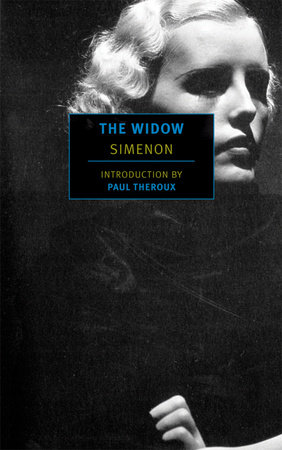
The Widow (aka, La veuve Couderc and Ticket of Leave) was first published in 1942 and has been reprinted several times. Simenon’s story of a stranger called Jean who arrives in a small French town and enters into a relationship with Tati, a widow, fascinated critics like Andre Gide and Paul Theroux. Theroux provides an insightful Introduction to The Widow and puts the novel in context with the hundreds of other novels Simenon wrote. It becomes clear after the first page of Theroux’s Introduction that he’s read plenty of Simenon and admires the prolific writer. Theroux points out that Simenon distrusted critics and scholars. Most scholars dismissed Simenon as a commercial writer and hack. Yet, as Theroux notes, The Widow, published the same year as Camus’s The Stranger, is a deeper and more profound work.
Tati lives with her father-in-law who abuses her. Tati’s sister-in-law plots to oust her brother’s widow and take over the family homestead. Amid all this drama, Simenon explores guilt, love, and desperation. For a slim, 152-page book, The Widow packs a wallop that will stay with you for a while. Do you have a favorite Simenon book? GRADE: A