ALL THE MARVELS By Douglas Wolk

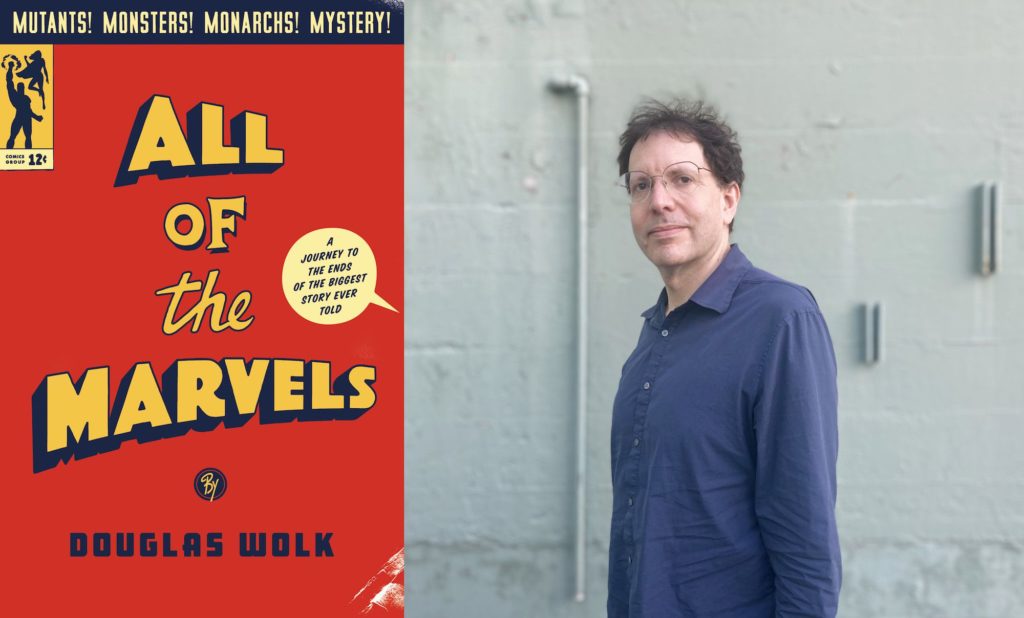
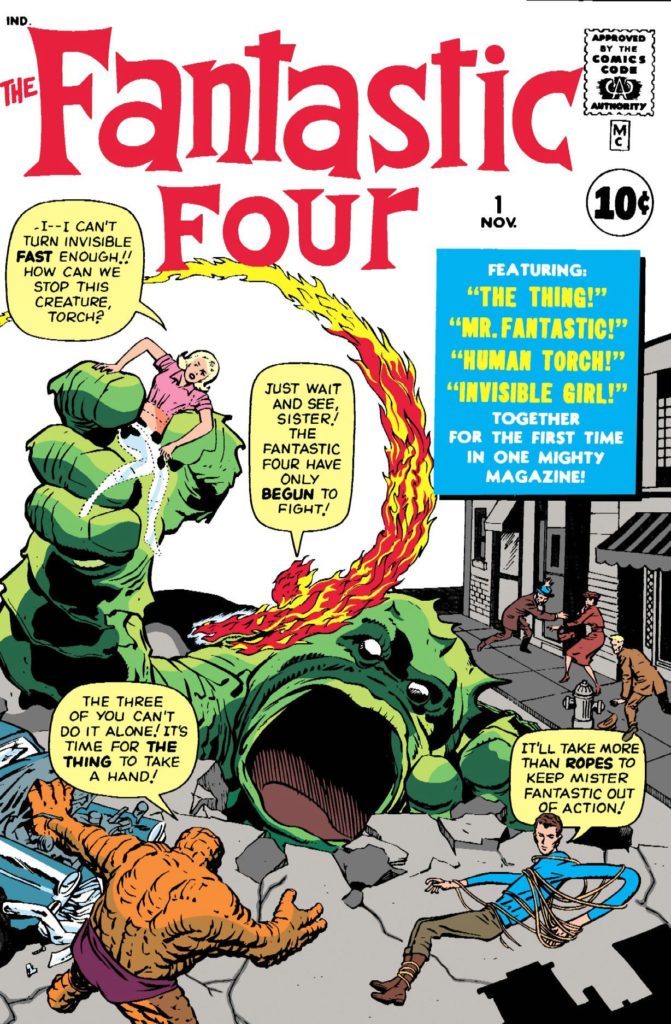
The first MARVEL COMICS comic book I remember buying was The Fantastic Four #1 in 1961 (check out the cover below to see why a 12-year-old kid might want to part with a dime to buy it!). This issue plays a role in Douglas Wolk’s story of MARVEL COMICS and his quest.

Since 1961, Wolk estimates MARVEL COMICS has published 27,000 different issues of their comic books. And Wolk has read all of them! Yes, all 540,000 pages of those comic books! What an incredible feat!

Douglas Wolk not only gives the reader a detailed history of MARVEL COMICS and the various successful characters–Spider-Man, the Incredible Hulk, the X-Men, Iron Man, and the Avengers–he also recommends various issues that deserve attention. If you are a comic book fan, you’ll marvel at Douglas Wolk’s quest of reading all the MARVEL COMICS. If you like obsessive-compulsive quests like this one, there’s plenty here to enlighten you! Did you read comic books as a kid? GRADE: A

Table of Contents:

1 The Mountain of Marvels 1

2 Where to Start, Or How to Enjoy Being Confused 16

3 Curse of the Weird (Frequently Asked Questions) 33

4 The Junction to Everywhere 49

5 Interlude: Monsters 69

6 Spinning in Circles 79

7 Interlude: Lee, Kirby, Ditko 106

8 Rising and Advancing 113

9 Interlude: The Vietnam Years 131

10 The Mutant Metaphor 136

11 Interlude: Diamonds Made of Sound 171

12 Thunder and Lies 176

13 Interlude: Before the Marvel Cinematic Universe 199

14 What Kings Do 206

15 Interlude: Presidents 231

16 The Iron Patriot Acts 239

17 Interlude: March 1965 261

18 The Great Destroyer 267

19 Interlude: Linda Carter 293

20 Good is a Thing You Do 298

21 Passing it Along 321

Acknowledgments 329

Appendix: Marvel Comics: A Plot Summary 331

Index 355
EXCELLENT WOMEN By Barbara Pym

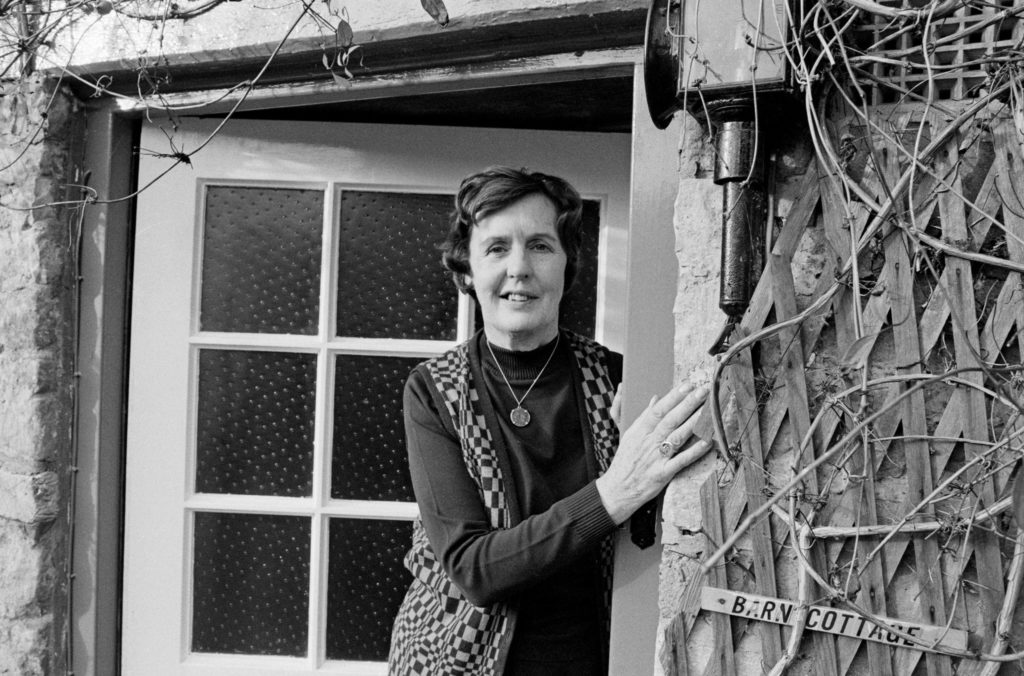
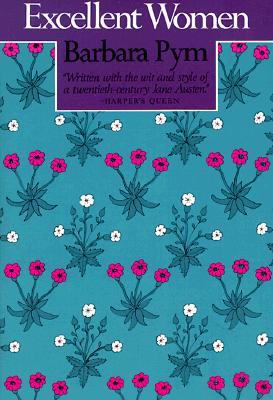
I’ve had some of Barbara Pym’s novels on my shelves for decades. My resolution to deal with books that have been patiently waiting for years for me to read them finally brought me to Barbara Pym’s Excellent Women (1952).

One of my favorite poets, Philip Larkin, was a huge fan of Barbara Pym and her novels which caused me to buy Pym’s books…and then not read them until now.

The New Yorker published an article on Barbara Pym that provided some context: “Pym published six novels between 1950 and 1961, before her work fell out of favor. Through the nineteen-sixties and most of the nineteen-seventies, she continued to write but was unanimously rejected by publishers; these were not years receptive to comedies of manners set around a parish or an anthropological society. ‘It seems as if nobody could ever like my kind of writing again,’ she wrote in a letter in 1970.”

“She was wrong. In 1977, the Times Literary Supplement asked a number of figures in the field to name the most underrated writers of the previous seventy-five years. Pym was the only living writer to appear on the list twice, chosen by the biographer Lord David Cecil and Philip Larkin, the latter praising her ‘unique eye and ear for the small poignancies and comedies of everyday life.’ Almost immediately, Macmillan agreed to publish her next book, Quartet in Autumn. It was shortlisted for the Booker Prize. The Sweet Dove Died followed, in 1978; Macmillan reissued all her previous novels. That same year, Dutton began bringing out her books in the United States. Pym died in 1980.”

Barbara Pym’s Excellent Women reminded me of the novels of Anthony Trollope who also could capture the life of characters involved in community and church activities like Pym’s lead character, Mildred Lathbury, a clergyman’s daughter and a mild-mannered spinster in 1950s England. Mildred is one of those “excellent women,” the smart, supportive, repressed women who men take for granted. As Mildred gets embroiled in the lives of her new neighbors—anthropologist Helena Napier and her handsome, dashing husband, Rocky, there’s the complication of Julian Malory, the vicar next door, who Mildred is ambivalent about.

Pym captures the arid life for women in Oxford in the 1950s. Mildred lives her quiet life…but is it much of a life? The reader will have to judge. GRADE: B+

FRIDAY’S FORGOTTEN BOOKS #698: INVITATION TO VIOLENCE/A PARTY TO MURDER By Lionel White

I’ve been a Lionel White fan since I first read his work in Gold Medal paperbacks in the 1960s. Stark House has reprinted much of White’s work and I’ve reviewed them on this blog (check the links below).

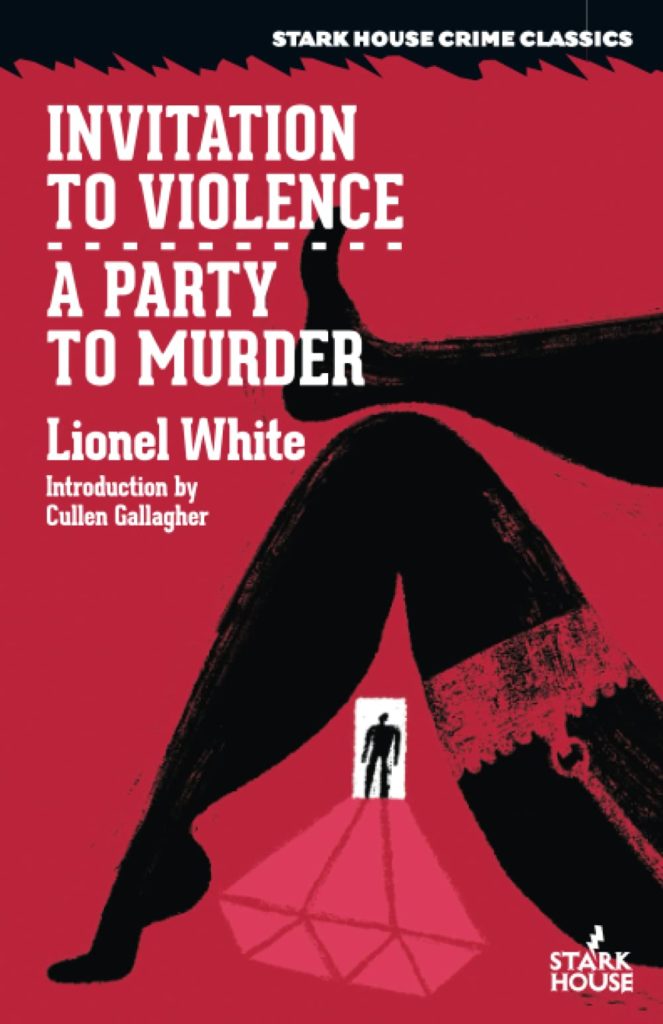
Stark House’s latest Lionel White omnibus is Invitation to Violence (1958) and A Party to Murder (1966) collects two of Lionel White’s most innovative crime novels. Invitation to Violence puts an insurance adjuster, Gerald Hanna, in a unique situation. An armed man jumps in Hanna’s car and orders him to drive. The man dies from a gunshot wound and Hanna finds a case filled with jewels from a robbery. Does he turn the jewels in…or does he keep it and change his life forever? GRADE: B+

A Party to Murder involves a Christmas Party where one of the attendees is found dead from a gunshot wound after midnight. Who murdered her? Why? All the participants at the party have secrets that they narrate chapter by chapter, taking turns telling their stories. Detective Goodwin knows that everyone attending the party is hiding something and lying to him. But, little by little, the investigation reveals what really happens. GRADE: A-

If you haven’t read Lionel White’s cunning storytelling, Invitation to Violence/A Party to Murder is the perfect place to start.

STARK HOUSE OMNIBUS VOLUMES OF LIONEL WHITE:

PRETENDERS: LIVE IN LONDON [Blu-ray]

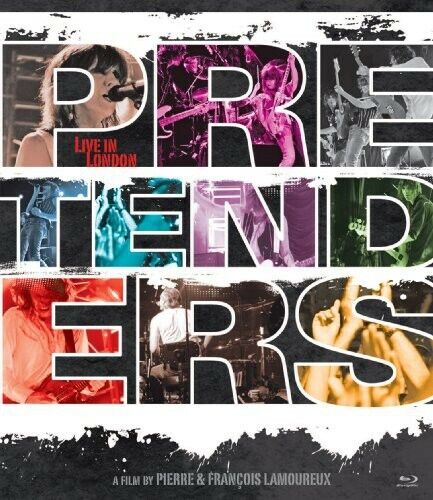
To finish off my binge of listening to live concerts, this Blu-ray from 2010, Pretenders: Live in London, seems a good way to wrap things up. I’ve been a fan of the Pretenders since I heard “Brass in Pocket” back in 1979. Over the years, I bought Pretenders CDs and enjoyed them. This concert in 2010 captures the energy of the band and the vocal artistry of Chrissie Hynde.

The sell-out London audience reveled in the Pretender’s concert. The group performed many of their hits (and my favorite songs) like “Talk of the Town” (1980), “Back on the Chain Gang” (1982), “I’ll Stand By You” (1994), and “Love’s a Mystery” (2008).

Things got pretty heated–literally–during this concert because Chrissie Hynde’s eye shadow started running down her face a la Rudy Giuliani. Are you a Pretenders fan? GRADE: A

TRACK LIST:

1Boots Of Chinese Plastic
2Don’t Cut Your Hair
3Talk Of The Town
4Message Of Love
5Kid
6The Nothing Maker
7Don’t Lose Faith In Me
8Back On The Chain Gang
9Love’s A Mystery
10Rosalee
11I Go To Sleep
12Don’t Get Me Wrong
13Tequila
14Stop Your Sobbing
15Day After Day
16Cuban Slide
17Break Up The Concrete
18Thumbelina
19Middle Of The Road
20The Wait
21Tottooed Love Boys
22Precious
Bonus Tracks
23I’ll Stand By You
24Brass In Pocket

WEDNESDAY’S SHORT STORIES #79: ELEVATION By Stephen King

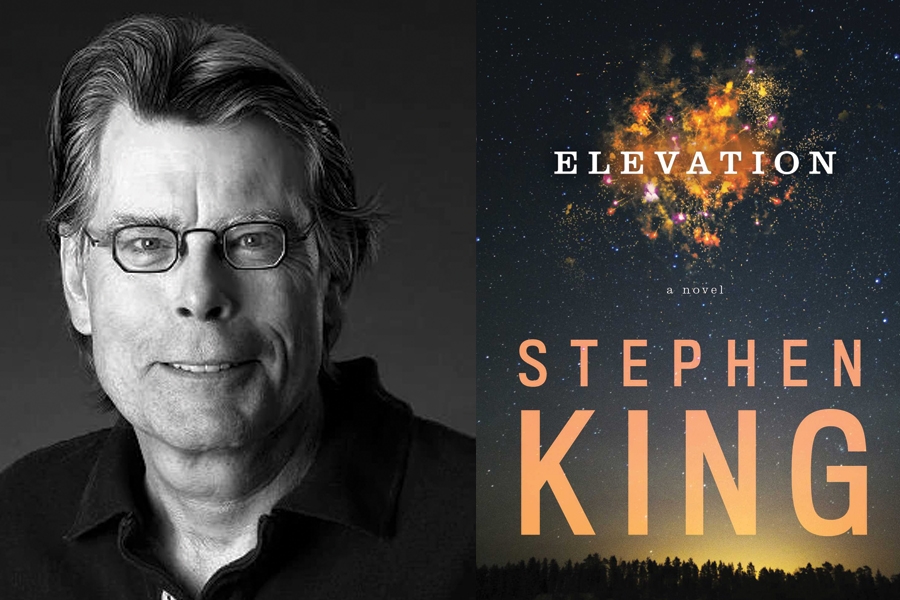
I’m usually on top of Stephen King’s output but somehow this story from 2018 slipped past my radar. Elevation looks like a chapbook with B&W drawings by Mark Edward Geyer, who previously illustrated King’s first editions of Rose Madder and The Green Mile. There’s plenty of white space.

This novella concerns an incredible situation. In Castle Rock, Maine, Scott Carey faces a mysterious illness which causes bizarre effects on his body and makes him rapidly lose weight, even if he appears healthy on the outside. Carey goes from about 250 pounds to under 200 in a short time with no clue why this is happening to him.

While Carey battles this strange disease with his trusted doctor, he also tries fixing a dire situation involving a lesbian couple trying to open a restaurant surrounded by a disapproving, conservative public.

I’ve read several of Stephen King’s mammoth novels, but I prefer his shorter work like Elevation. Are you a Stephen King fan? GRADE: B

A STRANGE LOOP

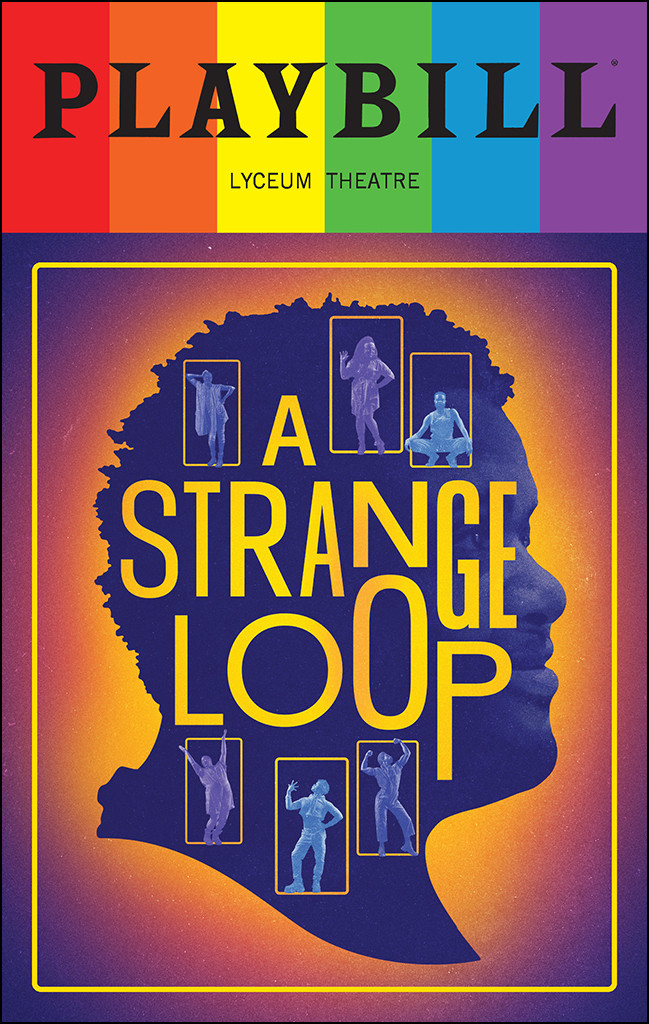
A Strange Loop is a musical with book, music, and lyrics by Michael R. Jackson. It won the 2020 Pulitzer Prize for Drama and the 2022 Tony for Best Musical.

A Strange Loop follows Usher (Jaquel Spivey) a black, queer writer writing a musical about a black, queer writer writing a musical about a black, queer writer. The title refers to a cognitive science term coined by Douglas Hofstadter, as well as the song by Liz Phair.

Remember the Pixar movie Inside Out where within the mind of a young girl named Riley are the basic emotions (aka, Thoughts) that control her actions: Joy, Sadness, Fear, Disgust, and Anger. 

A Strange Loop adds a couple more Thoughts like Self-Contempt and Denial to the mix to show how a young man struggles to establish his identity in a hostile world. I thought Jaquel Spivey was incredible in the role of Usher–who is on-stage 95% of the time. The depiction of making choices (some bad) after debating the Thoughts in his mind makes A Strange Loop a provocative, memorable musical. GRADE: A

Musical numbers:

  • “Intermission Song” – Usher, Thoughts
  • “Today” – Usher, Thoughts
  • “We Wanna Know” – Thoughts
  • “Inner White Girl” – Usher, Thoughts
  • “Didn’t Want Nothin'” – Thought 5, Thoughts
  • “Exile in Gayville” – Usher, Thoughts
  • “Second Wave” – Usher
  • “Tyler Perry Writes Real Life” – Usher, Thought 3, Thoughts
  • “Writing a Gospel Play” – Usher, Thoughts
  • “A Sympathetic Ear” – Thought 1
  • “Inwood Daddy” – Usher, Thought 6, Thoughts
  • “Boundaries” – Usher
  • “Periodically” – Thought 4, Usher
  • “Didn’t Want Nothin’ Reprise” – Thought 5
  • “Precious Little Dream / AIDS Is God’s Punishment” – Usher, Thoughts
  • “Memory Song” – Usher, Thoughts 2-6
  • “A Strange Loop” – Usher, Thoughts

INDEX, THE HISTORY OF THE By Dennis Duncan

It takes a certain sort of person to write a history of the Index and Dennis Duncan is the right kind of guy to write it: he’s smart and snarky! The subtitle to Index, A History of is A Bookish Adventure from Medieval Manuscripts to the Digital Age. Duncan takes the reader on a chronological adventure from the early times of scrolls to today’s ebooks.

Along the way Duncan shares plenty of juicy facts. Did you know the first English work printed on a printing press was William Caxton’s Recuyell of the Historyes of Troye in 1473. Did you know that William F. Buckley sent Norman Mailer a complimentary copy of his The Unmaking of a Mayor and in the Index next to Mailer’s name, Buckley wrote “Hi!” knowing Mailer would check his name first. Snarky, indeed!

Along with the history of the development of the Index, Duncan spices things up with references to how authors used the Index in various works. Vladimir Nabokov played plenty of Index games in his Pale Fire. Duncan shows where the Index is a key factor in “A Scandal in Bohemia” where Irene Adler outwits Sherlock Holmes.

Duncan deals with contemporary indexing by quoting Google engineer Matt Cutts who explains that “The first thing to understand is that when you do a Google search, you aren’t actually searching the web. You’re searching Google’s index of the web” (p. 1-2).

There was an old saying in Graduate School that if you could master the use of the Index, you would have access to all knowledge. That not far from true. Index, The History of is a great book filled with knowledge and fun! GRADE: A

Table of Contents:

Introduction 1

1 Point of Order On Alphabetical Arrangement 19

2 The Births of the Index Preaching and Teaching 49

3 Where Would We Be Without It? The Miracle of the Page Number 85

4 The Map or the Territory The Index on Trial 113

5 ‘Let No Damned Tory Index My History!’ Sparring in the Back Pages 136

6 Indexing Fictions Naming was Always a Difficult Art 171

7 ‘A Key to All Knowledge’ The Universal Index 203

8 Ludmilla and Lotaria The Book Index in the Age of Search 230

Coda: Archives of Reading 261

Notes 273

List of Figures 299

Acknowledgements 303

Appendix: A Computer-generated Index 307

Index 313

DIANE’S DECK GETS AN AWNING (Part I)

Diane decided that her deck needed an awning to protect her from the sun. She chose a local awning company and a crew arrived to install the piping that would support the awning. Now that the piping has been installed, the material Diane chose for the actual awning is being sewed and fitted. Another crew will show up in a couple of weeks and install the finished awning. What do you think?

THE SUPREME COURT OVERTURNS ROE V. WADE

Just when you think things couldn’t get worse…the Supreme Court overturns Roe v. Wade. Sure, we all knew this was coming since the leak of Justice Samuel Alito’s draft opinion a month ago. But, now it’s Real.

In his concurring opinion, Justice Clarence Thomas suggests this opens the door to overturning gay marriage, contraception, and transgender rights. With their super majority, Roberts, Alito, Thomas, Gorsuch, Kavanaugh, and Barrett can do whatever they want.

There are Dark Days ahead, my friends. Real Dark!

FRIDAY’S FORGOTTEN BOOKS #697: ASPECTS By John M. Ford

JOHN M. FORD

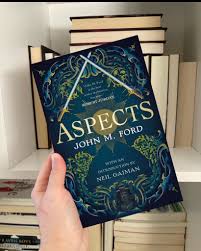
John M. Ford died in 2006 of a heart attack. He was 49 years old. Aspects, with a brilliant Introduction by Ford’s friend Neil Gaiman, consists of a 480 page novel that Ford’s death left unfinished.

John M. Ford won the 1983 World Fantasy Award for his novel The Dragon Waiting. Ford also won the Philip K. Dick Award in 1993 for Growing Up Weightless.

Aspects is being marketed as a fantasy novel, but it is much more than that. The main character, Varic, Coron of the Corvaric Coast, opens the novel with a duel. The politics of this world Ford invents is complicated with many factions including sorcerers.

As you might expect, there’s plenty of action, conspiracies, and skullduggery. I have other John M. Ford books and now I’d like to drop everything and read them. Have you read unfinished books? GRADE: B+