
The Buffalo Bills play the Tennessee Titans tomorrow on Monday Night Football. How will your favorite NFL team do today?
The Buffalo Bills play the Tennessee Titans tomorrow on Monday Night Football. How will your favorite NFL team do today?
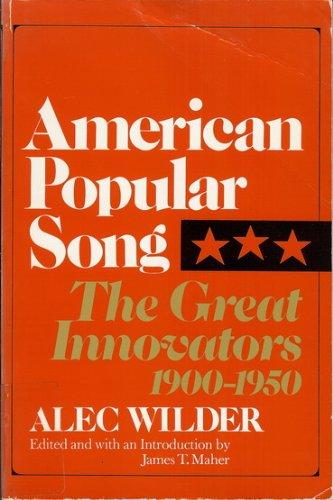
Jeff Meyerson mentioned that Stephen Sondheim evaluated other Broadway composers in Finishing the Hat so I checked it out. Sondheim respected Cole Porter, but noted that Porter was a “list-maker” and cited several song lyrics to prove his point.
That led me to Alec Wilder’s American Popular Song: The Great Innovators 1900-1950 (1972). I’m a fan of Wilder’s songs, especially “I’ll Be Around.” Alec Wilder isn’t afraid of making song judgments. Just check out this critique of a Richard Rodgers classic:
“No, I don’t like Some Enchanted Evening. I find it pale and pompous and bland. Where, oh where, are all those lovely surprises, those leaps in the dark, those chances? I’m in church and it’s the wrong hymnal!” (p. 221)
Stephen Sondheim ranked Cole Porter at the top of his list of great Broadway composers. Alec Wilder has a different opinion:
“There is considerable irony in the fact that, though Cole Porter was the most thoroughly trained musician of all the writers discussed in this book, he is better known and more highly considered for his lyrics than his music. And there is no question but that his lyrics were high fashion, witty to a markedly sophisticated degree, turned out, often-times it seemed, for the special amusement of his social set. Yet they seldom risked or indulged in tenderness or vulnerability.” (p. 223)
Although you might think Wilder was being too critical of Porter, he does provide an insightful assessment: “For many years Porter had been suffering great pain from a shattered leg. It had been operated on countless times. His surgeon once told me that Porter’s pain must have been so excruciating as to cause virtual sleeplessness for years. Yet this anguished man managed not only to write good songs and witty lyrics, but, in 1948, to create possibly his most successful score, Kiss Me, Kate.” (p. 249)
Of all the song writers and composers in AMERICAN POPULAR SONG: THE GREAT INNOVATORS 1900-1950, Alec Wilder’s favorite is Harold Arlen. Wilder knew Arlen and spoke with him about their craft:
“Interestingly, when I discussed song writing with him, Arlen never spoke of hits, he talked only of good songs. My feeling was that he simply didn’t equate quality with sales.” (p. 254)
After reading Wilder’s chapter on Harold Arlen, I wanted to drop everything and listen to Arlen’s music!
Wilder sums up his survey of a half century of popular songs with these conclusions: “Overall, I find Rodgers warmer, Arlen more hip, Gershwin more direct, Vernon Durk more touchable, Berlin more practical. But no one can deny that Porter added a certain theatrical elegance, as well as interest and sophistication, wit, and musical complexity to the popular song form. And for this we are deeply indebted.” (p. 252)
If you’re interested in American popular songs from the first half of the Twentieth Century, Alec Wilder has a lot to say. GRADE: A
TABLE OF CONTENTS:
Author’s Note — xxi
Acknowledgements
Introduction by James T. Maher — xxiii
1. The Transition Era: 1885 to World War I — 3
2. Jerome Kern (1885-1945) — 29
3. Irving Berlin (1888-1989) — 91
4. George Gershwin (1898-1937) — 121
5. Richard Rodgers (1902-1979) — 163
6. Cole Porter (1891-1964) — 223
7. Harold Arlen (1905-1986) — 243
8. Vincent Youmans (1898-1946) and Arthur Schwartz (1900-1984) — 292
9. Burton Lane (1912- 1997), Hugh Martin (1914-2011), and Vernon Duke (1903-1969) — 331
10. The Great Craftsmen –370
Hoagy Carmichael (1899-1981)
Walter Donaldson (1893-1947)
Harry Warren (1893-1981)
Isham Jones (1894-1956)
Jimmy McHugh (1894-1969)
Duke Ellington (1899-1974)
Fred Ahlert (1892-1953)
Richard Whiting (1891-1938)
Ray Noble (1907-1978)
John Green (1908-1989)
Rube Bloom (1902-1976)
Jimmy Van Heusen (1913-1990)
11. Outstanding Individual Songs: 1920 to 1950 — 452
12. Additional Songs and Composers — 521
Index –525
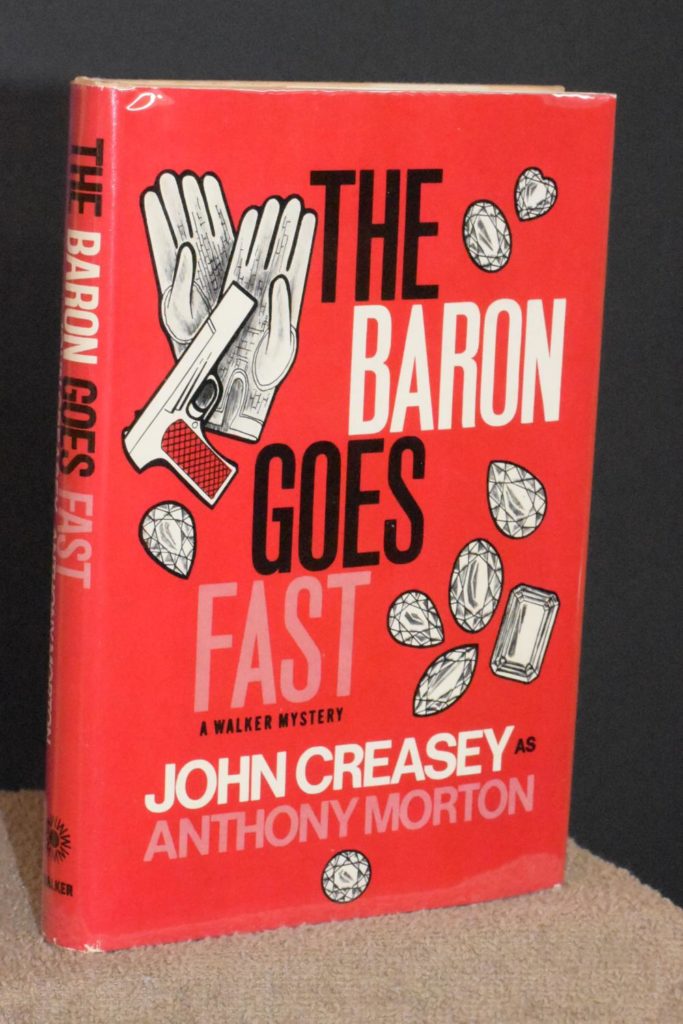
Jerry House mentioned recently that he had been reading some John Creasey novels. I’ve read John Creasey novels over the years and still have about 100 Creasey novels waiting to be read. Inspired by Jerry, I read The Baron Goes Fast (1953). The Baron is ex-jewel thief and antiques dealer, John Mannering. The Baron is often compared to Simon Templar because he involves himself in other people’s problems like a latter day Robin Hood. THE BARON, a 1960s TV series starring Steve Forrest as The Baron, captured the vibe of the Creasey’s book series.
The Wannamaker Diamond Heist triggers a battle for the fortune in diamonds. The Baron sold the original Wannamaker diamonds so he decides to get involved in who stole the fabulous diamonds.
Mannering finds the thugs who pulled off the heist have more evil intentions. And he intends to stop them.
Like most of the John Creasey novels I’ve read, The Baron Goes Fast speeds right along at breakneck speed. If you’re looking for an entertaining, exciting novel just fasten your seat belt and start flipping the pages! Are you a John Creasey fan? GRADE: B
The Baron series was written under the pseudonym Anthony Morton between 1937–1979.
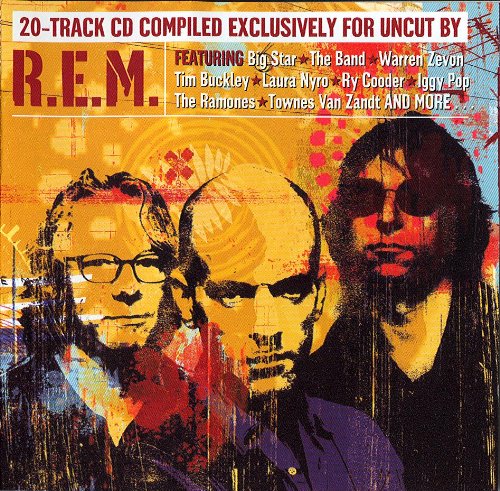
In a comment, Michael Padgett mentioned how much he liked R.E.M. That reminded me that I had a compilation CD of songs selected by R.E.M. This CD was given away free with Uncut Magazine #11 in 2003. As you can see, the members of R.E.M. have various tastes in music.
I liked The Band’s live version of “Don’t Do It.” I also liked Warren Zevon’s “Porcelain Monkey.” I wasn’t familiar with Joseph Arthur’s “In the Sun,” but I liked it so I ordered his album Come To Where I’m From that includes this song. I also recognized Laura Nyro’s “And When I Die (Live)” which was a hit for Blood, Sweat & Tears in 1969.
How many of these songs do you recognize? Any favorites here? GRADE: B+
TRACK LIST:
| 1 | The Band– | Don’t Do It (Live) Written-By – Holland, Dozier, Holland* | 4:32 |
| 2 | Merle Haggard– | Workin’ Man Blues Written-By – Haggard | 2:35 |
| 3 | The Ramones*– | Blitzkrieg Bop (Live) Written-By – Ramone*, Ramone*, Ramone*, Ramone | 1:39 |
| 4 | Townes Van Zandt– | Kathleen (Live) Written-By – Van Zandt | 2:35 |
| 5 | Louis Jordan & The Tympany Five*– | Saturday Night Fish Fry Producer – Milt Gabler Written-By – Walsh*, Gabler | 4:32 |
| 6 | Big Star– | Holocaust Producer – Jim Dickinson Written-By – Chilton | 3:48 |
| 7 | The Detroit Cobras– | Ya Ya Ya (Looking For My Baby) Producer – The Detroit Cobras Written-By – Starkes | 2:29 |
| 8 | Warren Zevon– | Porcelain Monkey Producer, Engineer – Paul Q Kolderie*, Sean Slade Written-By – Calderon*, Zevon | 3:31 |
| 9 | Ornette Coleman– | Tears Inside Alto Saxophone – Coleman *Bass – Percy Heath Drums – Shelly Manne Producer – Lester Koenig Trumpet – Don Cherry Written-By – Coleman | 5:02 |
| 10 | Joseph Arthur– | In The Sun Producer – Joseph Arthur Written-By – Arthur | 5:37 |
| 11 | Sandy Bull– | Carmina Burana Fantasy Arranged By – Sandy Bull Producer – Tom Vickers | 4:34 |
| 12 | Suicide– | Dream Baby Dream Producer – Ric Ocasek Written-By – Vega*, Rev | 6:22 |
| 13 | Dock Boggs– | Pretty Polly Written-By – Traditional | 3:04 |
| 14 | Laura Nyro– | And When I Die (Live) Executive-Producer – Eileen Silver-Lillywhite Producer – Laura Nyro Written-By – Nyro | 2:43 |
| 15 | Iggy Pop– | Family Affair Featuring, Guitar – Steve Jones (2) Written-By – Stone | 3:01 |
| 16 | Tim Buckley– | Dolphins (Live) Producer – Bill Inglot, Lee Hammond Written-By – Neil | 6:12 |
| 17 | Jimmy Smith– | Organ Grinder’s Swing Drums – Grady Tate Guitar – Kenny Burrell Organ – Jimmy Smith Producer – Eric Miller (6) Tenor Saxophone – Stanley Turrentine Written-By – Mills*, Parrish*, Hudson* | 5:08 |
| 18 | John Lee Hooker– | Jump Me One More Time Producer – Bernie Besman* Written-By – Josea | 2:29 |
| 19 | Ry Cooder & Manuel Galban*– | Los Twangueros Producer – Ry Cooder Written-By – Galban | 4:42 |
| 20 | Otha Turner* & The Rising Star Fife and Drum Band– | Short’nin’/Henduck Producer – Luther Dickinson Written-By – Turner | 2:52 |
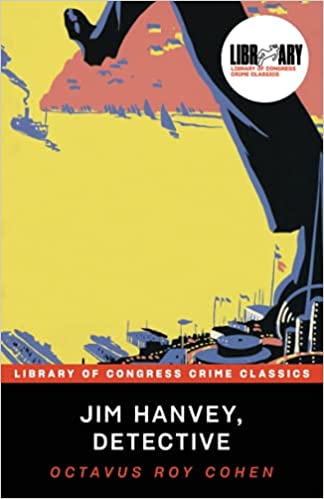
TABLE OF CONTENTS:
Poisoned Pen Press is publishing the Library of Congress Crime Classics Series in paperback. Octavus Roy Cohen’s Jim Hanvey, Detective, first published in 1923, was praised in Ellery Queen’s Queen’s Quorum.
In his informative Introduction, Leslie S. Klinger suggests that Jim Hanvey was an earlier incarnation of Columbo, the rumpled detective who lulled criminals in thinking he was stupid while hiding his intelligence. Jim Hanvey is a massive man, ill-dressed, and armed with a gold tooth-pick. People dismiss Hanvey as a clown, but his razor-sharp thinking solves a lot of crimes.
In “Fish Eyes,” Hanvey foils what looks like a perfect crime as a bank teller steals $100,000. My favorite story in this collection is “The Knight’s Gambit.” A rich young woman falls for a con-man. Her father hires Jim Hanvey to break up the planned marriage. The girl is smart, but stubborn so Hanvey adopts a counter-intuitive strategy to expose the con-man’s game. Very clever!
These Jim Hanvey stories were written in the 1920s and some of them show their age. But, Octavus Roy Cohen creates a durable detective whose exploits are worth reading. GRADE: B
Foreword by Carla D. Hayden — vii
Introduction by Leslie S. Klinger — ix
Fish eyes — 1
Homespun silk — 34
Helen of Troy, N.Y. — 62
Caveat emptor — 119
The knight’s gambit — 149
Pink bait — 189
Reading Group Guide — 226
Further Reading — 227
About the Author — 229
Library of Congress Crime Classics:
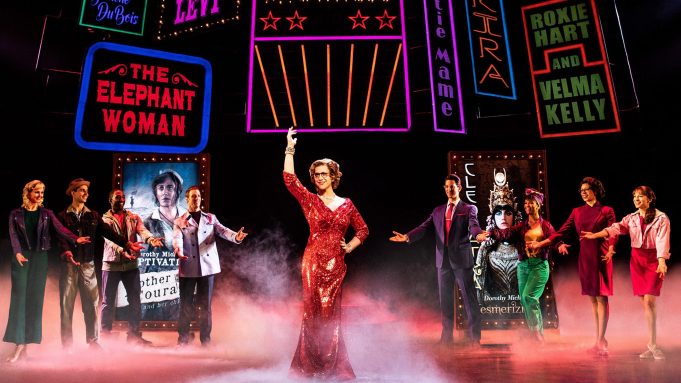
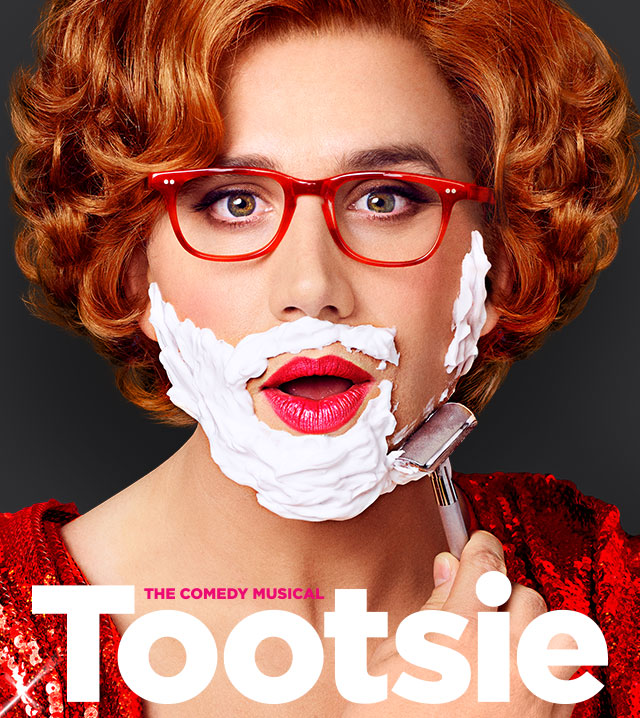
Diane and I donned our N95 masks and went to the Shea’s Performing Arts Center for the Sunday matinee of Tootsie: The Comedy Musical. I had seen Tootsie a couple years ago when it was playing in our hotel, the Marriott Marquis (you can read my review here). This touring company didn’t have all the pazazz of the Broadway version, but it was still a lot of fun. The lead actor, Drew Becker, lacked the antic energy of Santino Fontana who won the 2019 Tony Award for Best Actor in a Leading Role in a Musical, Drama Desk Award for Outstanding Actor in a Leading Role in a Musical. But Becker delivers a capable performance as the difficult actor, Michael Dorsey, who transforms himself into a woman, Dorothy Michaels, in order to gain a role in a Broadway play.
Ashley Alexandra plays Julie Nichols, Dorsey’s love interest. Payton Reilly plays Sandy Lester, Dorsey’s other love interest. Jared David Michael Grant is convincing as Dorsey’s roommate and friend.
Tootsie focuses on the dangers of obsession, ambition, and bending the Truth. The music is fun and clever. If Tootsie comes to your neighborhood, you might want to see it. If not, there’s always the movie version (which is completely different). GRADE: B

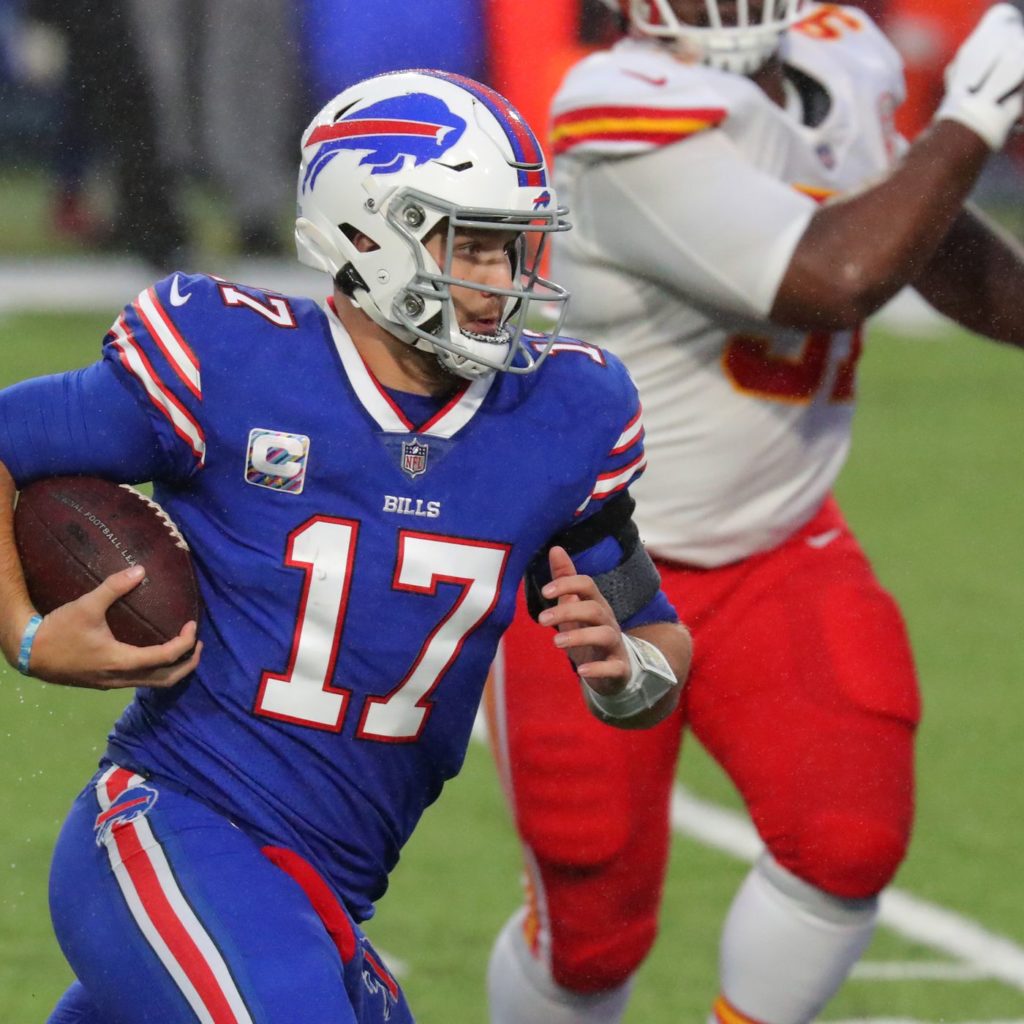
The Buffalo Bills (3-1) travel to take on the Kansas City Chiefs (2-2) in a rematch of the AFC Championship game. The Bills lost to the Chiefs 38-24 in that game. But riding a three-game win streak, the Bills hope to achieve a road victory in one of the toughest stadiums to win in. The Bills are 3-point underdogs.
Meanwhile legions of whiners, back-seat drivers, curbside experts, rear-view-mirror thinkers, and second guessers still consider the KC Chiefs the best team in the AFC. We’ll see how that plays out. How will your favorite NFL team perform today?
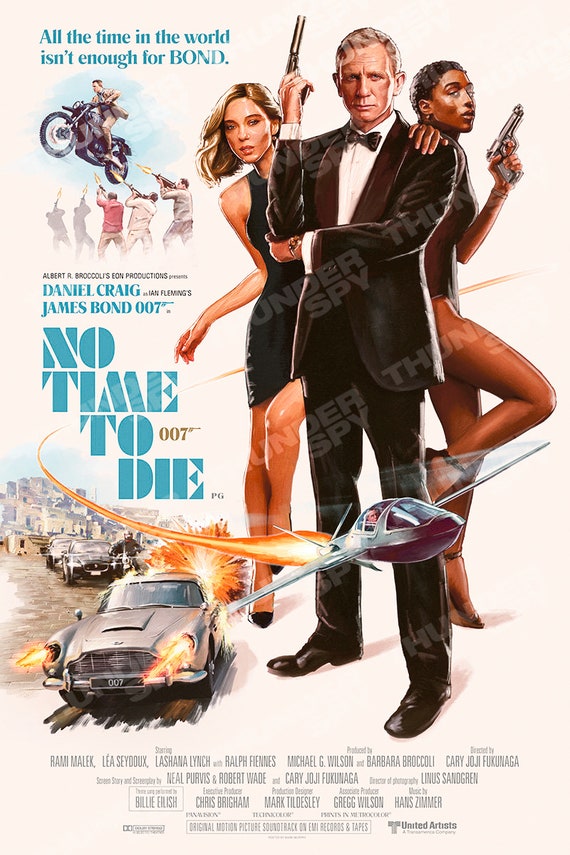
At 163 minutes, No Time to Die is the longest James Bond movie. Daniel Craig ends his run as 007 by being called out of retirement to undertake a mission in Cuba. Bond meets up with his old friend Felix (Jeffrey Wright) and two fascinating women. Ana de Armas (Craig’s co-star in Knives Out) plays a screwball agent full of surprises. And then there’s Lashana Lynch, the present 007. She’s impressive, too.
What’s not impressive is the villain: Rami Malek’s mumbling psychopath who plans to spread his deadly nanobots all over the planet. I was less than impressed with the final confrontation between Bond and his old SPECTRE nemesis, Blofeld (Christoph Waltz). The love affair between Bond and Vesper Lynn is replaced by a love affair between Bond and Dr. Madeleine Swann (Lea Seydoux)–a step down in my opinion.
Director Cary Joji Fukunaga (Beasts of No Nation), keeps this long film chugging along with frequent chase scenes and a body count higher than a John Wick movie!
I’ve enjoyed Daniel Craig as James Bond. But No Time to Die delivers a mixed message of suspense and the blandness of an awkward retirement party. What’s your favorite Bond movie? GRADE: B
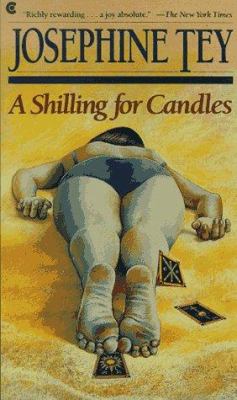
I read my first Josephine Tey mystery, The Daughter of Time, a few weeks ago and enjoyed it (you can read my review here). Deb mentioned Tey’s A Shilling for Candles in her comment so I figured I’d give that mystery a try.
A Shilling for Candles was published in 1936 the Josephine Tey pseudonym that Elizabeth MacKintosh used. The mystery follows the investigation of the drowning of a film actress, known as Christine Clay. But Inspector Alan Grant determines the death was murder, not an accident. Christine Clay’s frenetic life-style generated a number suspects who would like to see her dead.
A Shilling for Candles is the second of Tey’s five mysteries featuring the wily Inspector Alan Grant, and the first book written under the Josephine Tey pseudonym. A Shilling for Candles kept me guessing right until the end! GRADE: A