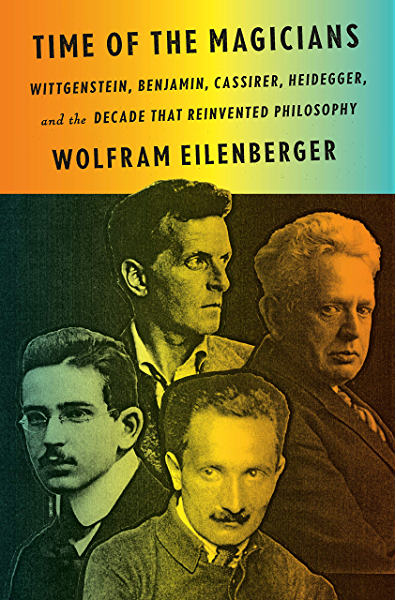
TIME OF THE MAGICIANS: WITTGENSTEIN, BENJAMIN, CASSIRER, HEIDEGGER By Wolfram Eilenberger

TABLE OF CONTENTS:

 Prologue: The Magicians 1

The Arrival of God

High Fliers

Maintaining One’s Composure The Davos Myth

Human Questions

Without Foundation Two Visions

At a Crossroads

Where Is Benjamin? Fail Better

Does My Life Need a Goal?

The One-Man Republic

II Leaps: 1919 29

What to Do?

A Refuge

Critical Days

Romantic Theses New Self-Awareness

Flights

The Transformation

Ethical Acts

A Sorrow Beyond Dreams

An Interesting Condition Exposed Flanks

A World Without a View

The Primal Scientist No Alibi

The New Realm

Fidelity to the Event German Virtues

Unloved

Electrified

III Languages: 1919-1920 61

Figuratively Speaking

Viennese Bridges

Poetic Precision Against the World

Three Dots in The Hague Pictures of Facts

The Barber

Russell on the Ladder

Why the World Does Not Exist

Under Pressure The Obscured Gaze

Lonely Together

Two Oddballs Worlds Ahead

The Breakthrough of Authenticity Something in Media

Flappers

The Task Radical Translation

Cult and Sound

Goethe in Hamburg The Fundamental Phenomenon

The Will to Multiplicity Onward

Does the Language Exist?

IV Culture: 1922-1923 115

A Hut of One’s Own

Strange Callings

Existential Health Check

Stormy Weather

Wars of Attrition

Bad Neighbors Good Neighbors

Utopia on the Bookshelf

The Outcome of Myth The New Enlightenment

Across the River In the Maelstrom

The Third Man

Goethe in Weimar More Light

Freedom or Fate

Choice or Decision The Divorced Republic

Leap of Salvation Redeeming Transcendence

Ruthlessness Three-Quarters Understood

In Therapy

Top Down

V You: 1923-1925 163

The Idiot

It’s Complicated

Hospitality From Hamburg to Bellevue

Snake Experiments Tunnel and Light

Weimar Topples

Mighty Fortresses Being an Event

You, Demon

In the Midst of Being To Think the Hardest Thing

Amor Mundi

Hunger Cures Goodbye Deutschland

Grapes and Almonds

New Beginnings

VI Freedom: 1925-1927 205

Red Stars

Critical Prologues

A Case for Adam Grief Work

Remembered Perception

Tristes Tropiques Critical Album

Palestine or Communism

Neighbors To Work

Exposing the Question The Time of Dasein Philosophizing with a Hammer: The Study of Equipment Sturm und Angst That Certain Something: Running Ahead into Death The Hamburg School

The Hidden Origin Plurality of Outcome

Self-Fashioning Through Openness The Fault in Our Stars

Out of the Mouths of Babes Engineers of Speech

A Little List

The Responsibility Principle A Fainting Fit

VII Arcades: 1926-1928 263

Technical Talent

For Gods Alone A Circle Without a Master

Much to Learn You Still Have Instability

Moscow or Bust

The Hell of Other People A Man Without a Framework

Party for One

High Seas In the Eye of the Storm

An Emergency in Frankfurt Individual and Republic

Building Work

Age of the Demon After Being

Foundation and Abyss Back to the Origin

Homecoming

Dizzy Heights

VIII Time: 1929 317

Slaloming

Among People

On the Eve

Relax! Verbal Storms: The Davos Debate

Licking Wounds Spring Awakenings

The Three-Hundred-Penny Opera The Doors

Breathless

Gaslight

The Self-Destructive Personality Hot Dogs

The Hiker

A Day Off Internal Difficulties

Back to the Everyday Naples in Cambridge

Useful Reminders The City of Words

Against the Wall

Epilogue 363

Acknowledgments 367

List of Works 369

Notes 373

Selected Bibliography 387

Photograph Credits 397

Index 401

I know Steve Oerkfitz isn’t a fan of philosophers–especially Kant–but the positive reviews of Time of The Magicians lead me to read this fascinating book. It’s not so much about each philosopher’s conceptions (although there is some of this included) but more about the strangeness of these men. Take Ludwig Wittgenstein for example. Wittgenstein thought that maybe three people in the world would understand his Tractatus logic-philosophicus. Wittgenstein gave away hundreds of millions to his family members and lived in poverty for the rest of his life.

Martin Heidegger may be the best known philosopher in this group, but not for his philosophy. Heidegger cozied up to the Nazis and had an affair with Hannah Arendt. Ernest Cassirer labored diligently at Hamburg University, but barely escaped Germany. Cassirer ended up teaching in the United States.

Walter Benjamin, a polymath with gambling and drug problems, fled for Spain when the Nazis took over Paris. “On the night of September 26, 1940, fleeing in fear of deportation by the Nazis, Benjamin committed suicide with morphine in a hotel in the Pyrenean town of Portbou, only a few hundred meters from the Spanish border.” (p. 364)
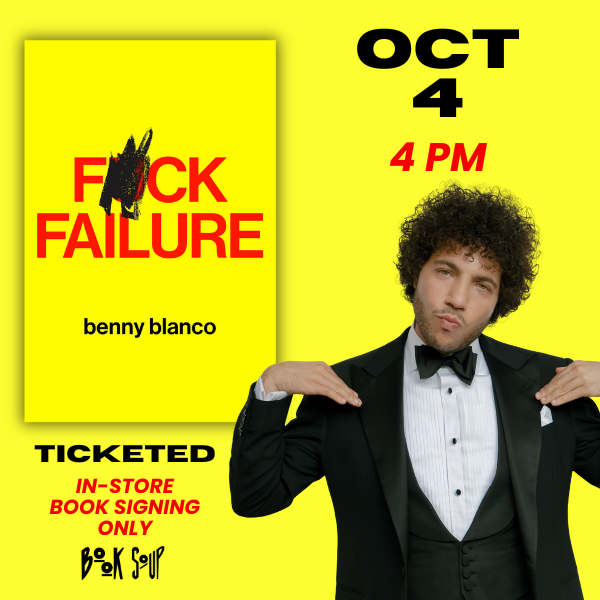

F*CK FAILURE By Benny Blanco

Benny Blanco is a writer and producer who has worked with Bruno Mars, Ed Sheeran, Britney Spears, Rihanna, Katey Perry, Kesha, Justin Bieber, and many other singers. How can a kid with ADHD and OCD manage to overcome his problems to become a successful record producer, songwriter, artist, actor, record executive…and now an author?

Much of F*CK FAILURE is a litany of Benny Bianco’s mistakes. I’m surprised anyone would want to admit making this many mistakes. But Benny isn’t afraid of failure. In F*CK FAILURE Benny says if you want to be successful, you need to embrace failure. And learn from it!

The chronicle of Benny’s screw-ups shows that he learned how to be persistent. Things go wrong for Benny all the time as he pursues his dreams. Of course, things go wrong for many of the people he works with, too.

Benny Blanco worked on “Teenage Dream” and “California Girls”, and 19 other Number One hits. I’m always interested in success stories. But F*uck Failure delivers a very different picture of how to get to the top. GRADE: B+

TABLE OF CONTENTS:

YOU ARE A FAILURE — 1

  1. Shut up — 13

2. Dream big — 19

3. Live like it’s real — 47

4. Fail until it feels good — 87

5. Don’t be a dick — 119

6. Be nice to yourself — 153

7. Relax (there’s always tomorrow) — 187

Acknowledgements — 191

LA CHARGERS VS. BUFFALO BILLS (CBS)

The 2-0 Buffalo Bills take on the 0-2 LA Chargers in what might be a “Trap Game.” The Bills are favored by 7 points and the Chargers are riddled with injuries. But LA Chargers’ Head Coach Jim Harbaugh is already on the Hot Seat and desperately needs a win. I’m expecting the Chargers to pull out all the stops against the Bills today.

How will your favorite NFL team perform today?

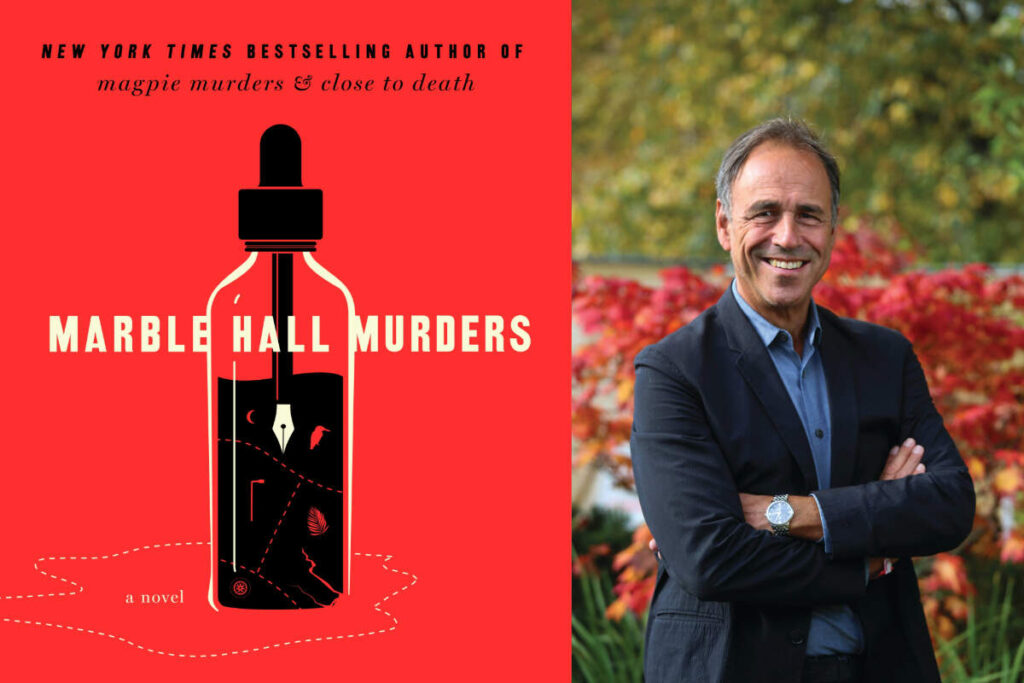
MARBLE HALL MURDERS (PBS)

I’ve enjoyed the PBS Susan Ryeland / Atticus Pünd Series--Magpie Murders (see my review here) and Moonflower Murders (see my review here). It looks like Marble Hall Murders will conclude the series and complete the trilogy.

Like the first two novels, Magpie Murders and Moonflower Murders, Marble Hall Murders runs on two tracks: Susan Ryeland investigating suspicious deaths, and fictional detective, Atticus Pund, investigating the poisoning of a wealth matriarch. The story within a story format might annoy some viewers especially when Ryeland speaks to the fictional Pund.

I’ve read Anthony Horowitz’s novel that this series is based on. Horowitz also wrote the screenplay for all six episodes. I’ve watched three of the six episodes and I’m enjoying what I’m seeing. GRADE: Incomplete but trending towards a B+

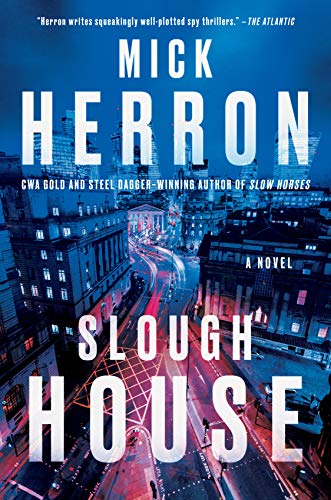
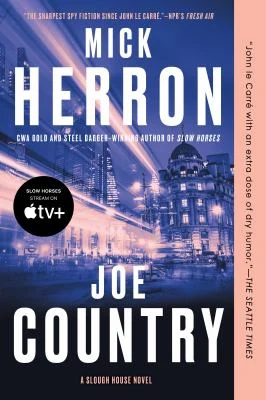
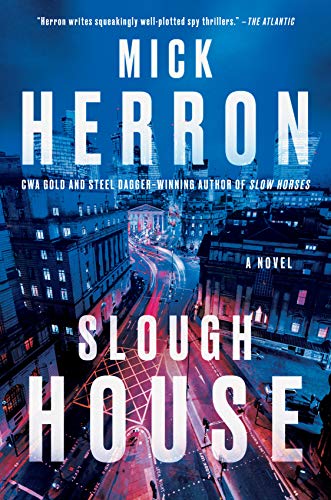
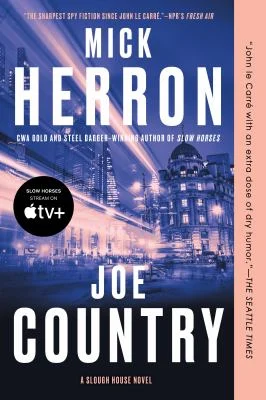
FRIDAY’S FORGOTTEN BOOKS #927: JOE COUNTRY and SLOUGH HOUSE By Mick Herron

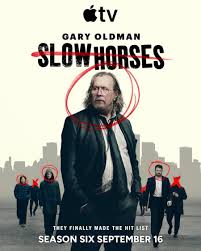
I’ve watched the first five seasons of SLOW HORSES on Apple TV+. Each of those series were based on one Mick Herron book. Now, with SLOW HORSES, SEASON 6, something has changed. Season 6 is based on not one, but TWO Mick Herron books: Joe Country and Slough House.

I have yet to read the reason why Season 6 mashes up two of Herron’s books, but if I do I’ll share the reason with you.

Both books have commonalities. Members of Slough House (a group of MI5 spies who made mistakes that have lead to their exile at Slough House) are killed as a result of some very twisty plots.

(Mild Spoiler) A character from an early Mick Herron novel who was declared dead by MI5 shows up at River Cartwright’s grandfather’s house. The members of Slough House find they’re being followed. Political shenanigans from an assassination in Russia lead to more deaths in England in response.

I’m only a couple episodes into SLOW HORSES, SEASON 6 so it’s too early for me to weigh in on the blending of Joe Country and Slough House. All I know is…I love this series–both novels and TV series!

’80s FAVORITES and Casey Kasem Presents American’s Top Ten 1980s

It was time for me to gravitate back to the 1980s with two more compilation CDs. ’80s Favorites (2010) has more Name singers and groups. Kim Carnes’ “Bette Davis Eyes” still gets air play on our local Oldies station. So does Irene Cara’s “Flashdance.”

Casey Kasem Presents America’s Top 10 Hits (2005) has Foreigner asking “I Want to Know What Love Is” and Pat Benatar asking someone to “Hit Me With Your Best Shot.” REO Speedwagon wants to “Keep on Loving You” while The Cars want to “Shake It Up.”

Yes, this is the type of music I listen to while I’m cleaning up the garage. Do you remember these hits? Any favorites here? GRADE: B (for both)

TRACK LIST:

1Starship (2)–Nothing’s Gonna Stop Us Now4:23
2Kim Carnes–Bette Davis Eyes3:43
3Night Ranger–Sister Christian5:20
4Katrina, Formerly Of Katrina And The Waves*–Walking On Sunshine3:42
5The Motels–Only The Lonely3:17
6Robbie Dupree–Steal Away3:20
7Lita Ford–Close My Eyes Forever5:26
8Escape Club*–Wild, Wild, Wild West4:05
9The Motels–Suddenly Last Summer3:43
10Irene Cara–Flashdance…What A Feeling4:07
11Howard Jones–Things Can Only Get Better6:57
12Todd Rundgren–Bang On The Drum All Day3:34

TRACK LIST:

1Quiet Riot–Cum On Feel The Noize3:26
2White Lion–Wait3:59
3Skid Row–18 And Life3:51
4Foreigner–I Want To Know What Love Is5:01
5Bryan Adams–Run To You3:54
6The J. Geils Band–Centerfold3:35
7Night Ranger–Sister Christian4:21
8Yes–Owner Of A Lonely Heart3:51
9Whitesnake–Here I Go Again3:52
10Warrant–Heaven4:06
11The Grateful Dead–Touch Of Grey4:37
12REO Speedwagon–Keep On Loving You3:21
13Genesis–Tonight, Tonight, Tonight4:28
14Pat Benatar–Hit Me With Your Best Shot2:50
15Poison (3)–Every Rose Has Its Thorn4:18
16The Georgia Satellites–Keep Your Hands To Yourself3:29
17The Kinks–Come Dancing3:53
18Phil Collins–Sussudio4:23
19Boston–Amanda4:13
20The Cars–Shake It Up3:35

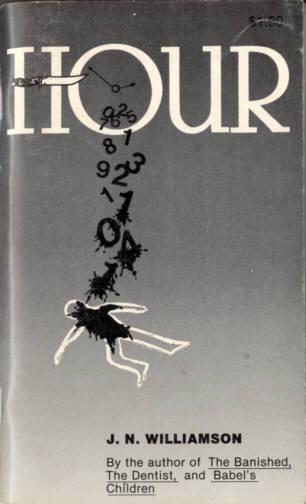
WEDNESDAY’S SHORT STORIES #289: HOUR By J. N. Williamson

HOUR is a 63-page story published in 1983 by MACLAY & ASSOCIATES. It cost me $1.50. A young girl is threatened in her bedroom. She calls her parents and the police…but they don’t take her seriously. So this is the last hour of her Life.

The curious thing about HOUR is the inscription on the Title Page: 2/12/84 “For George Kelley–Show it to a man who needs it!” All Best, J. N. Williamson

I’m drawing a blank on this. I don’t recall meeting J. N. Williamson. I do know Bill Crider was a great fan of J. N. Williamson. Bill got me into reading Williamson’s horror novels and stories. I’m wondering if Bill Crider met J. N. Williamson and picked up HOUR for me. I wish I could remember….

SLOW HORSES, SEASON 6

For the first time in Apple TV+’s SLOW HORSES series, two Mick Herron books are being used in Season 6 episodes. Joe Country (2019) and Slough House (2021) show the threats to the spies of Slough House both from evil mercenaries and bureaucratic enemies.

I thought SLOW HORSES, Season 5 was the best of the series. Could Season 6 be better? We’ll see. Apple TV+ releases one of the six episodes per week so it will take until the end of October to judge how good this new series is. GRADE: Incomplete but trending towards an A.

Slough House Reading Order

  • 1. Slow Horses (2010)
  • 2. Dead Lions (2013)
  • 2.5. The List (2015, novella)
  • 3. Real Tigers (2016)
  • 4. Spook Street (2017)
  • 5. London Rules (2018)
  • 5.5. The Marylebone Drop (2018, novella; also known as The Drop)
  • 6. Joe Country (2019)
  • 6.3. The Catch (2020, novella)
  • 6.7. The Last Dead Letter (2020, novella)
  • 7. Slough House (2021)
  • 8. Bad Actors (2022)
  • 8.3. Standing by the Wall (2022, novella collection containing The List, The Marylebone Drop, The Catch, and Standing by the Wall)
  • 9. Clown Town (2025) 

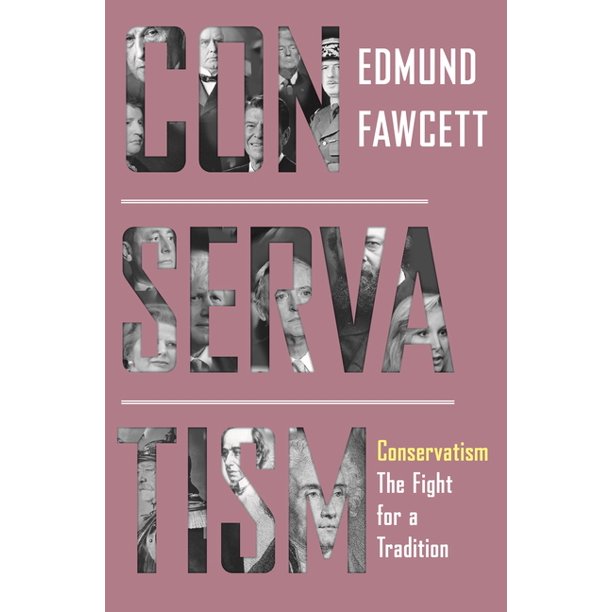
CONSERVATISM: THE FIGHT FOR A TRADITION By Edmund Fawcett

Edmund Fawcett, who wrote a book on Liberalism (you can read my review here), gives equal time to Conservatism. Fawcett sees these two political movements as Yin and Yang. They need each other and they also tend to counteract the other’s worst tendencies.

“Liberals, to schematize, embraced capital modernity. Conservatives responded by opposing the liberal embrace. The first liberals welcomed capitalism and critical thought, the twin turbines of a modern change. Liberals favored freer markets, moveable labor, and the self-generative force of money. They embraced religious indifference and social and cultural diversity, as well as the constructive power of disagreement.” (p. 42).

Conservatives resist change and embrace Tradition. “Popular distrust of higher education on the right is accordingly encouraged by conservative politicians. In 2016, Trump mocked universities for taking $200,000 of parents’ money to teach their children ‘zombie studies’ and how ‘to hate our country.’ ” (p. 371) The Right is also wary of experts. It’s painful to watch the ignorance of Rand Paul and Jim Jordan when they try to argue with Dr. Fauci.

If you want to understand the dynamics of Conservatism and where it is likely to go in the years ahead, I highly recommend Conservatism: The Fight for a Tradition (2020). GRADE: A

TABLE OF CONTENTS:

Preface xi

Acknowledgments xv

Part I Conservatism’s Forerunners

1 Critics of Revolution 3

i The Hard Authority of Punishment and Soft Authority of Custom: Maistre and Burke 3

ii The Call of Faith and Beauty: Chateaubriand 18

iii Order in Nations and among Nations: Gentz 25

iv Revolution to Prevent Revolution: Madison 31

v What the Critics Left to Conservatism 36

Part II What Conservatism Is

2 Character, Outlook, and Labelling of Conservatism 41

i Conservatism as a Political Practice 41

ii The Conservative Outlook 48

iii Conservative and Liberal Outlooks Contrasted 50

iv Bonding Spaces for Conservatives with Liberals 54

v The Adaptability of Conservative Ideas 56

vi “Conservatism,” “the Right” and Other Label Troubles 58

vii Dilemmas for Conservatives 62

viii Fighting for a Tradition 65

Part III Conservatism’s First Phase (1830-80): Resisting Liberalism: The Year 1830 71

3 Parties and Politicians: A Right without Authority 72

i Improvisations of the French Right 74

ii The British Right’s Divided Heart: Peel or Disraeli 80

iii German Conservatives without Caricature 88

iv United States: Whigs and Jacksonians; Republicans and Democrats 96

4 Ideas and Thinkers: Turning Reason against Liberalism 108

i Constitutions for Unacceptable Ends: Calhoun 111

ii Reason for the Right Replaces Nostalgia: Stahl 117

iii How Conservatives Should Defend Religion: Lamennais, Ketteler, Newman, Brownson, and Hodge 124

iv Conservatism’s Need for Intellectuals: Coleridge’s Clerisy 137

v Against Liberal Individualism: Stephen, Gierke, and Bradley 141

Part IV Conservatism’s Second Phase (1880-1945): Adaptation and Compromise: The Year 1880 159

5 Parties and Politicians: Authority Recovered and Squandered 160

i The Moderate Right in France’s Third Republic 164

ii British Conservatives Adapt 175

iii The Ambivalence of German Conservatives 186

iv The American Nonexception 194

6 Ideas and Thinkers: Distrust of Democracy and of Public Reason 205

i Defending Capitalism: Mallock, Sumner, and Schumpeter 207

ii Six Ways to Imagine the People: Treitschke, he Bon, Du Camp, Adams, Mencken, and Sorel 221

iii Cultural Decline and Ethical Anomie: Junger and Other Germans, Drieu la Rochelle, the Southern Agrarians, and Eliot 242

iv Funeral Oratory for Liberal Democracy: Schmitt and Maurras 255

Part V Conservatism’s Third Phase (1945-80): Political Command and Intellectual Recovery: The Year 1945 267

7 Parties and Politicians: Recovering Nerve and Rewinning Power 269

i Normality, Pride, and Rage in France: Pinay, de Gaulle, and Poujade 271

ii Tory Wets and Dries in Britain: Macmillan to Thatcher 277

iii Remaking the German Middle Ground: Adenauer and Christian Democracy 282

iv The US Right Divided: Eisenhower-Taft, Rockefeller-Goldwater, Ford-Reagan 288

8 Ideas and Thinkers: Answering Liberal Orthodoxies 295

i Herald of the Hard Right: Powell 297

ii Our Conservative Second Nature: Gehlen 300

iii The Liberal Moderns’ Fall from Grace: Weaver, Voegelin, and MacIntyre 305

iv Winning the US Stage: Kirk, Buckley, and Kristol 315

Part VI Conservatism’s Fourth Phase (1980-The Present): Hyper-Liberalism and the Hard Right: The Year 1980 327

9 Parties and Politicians: Letting in the Hard Right 328

i The Center-Right in the 1980s and 1990s 329

ii The Rise of the Hard Right: The Le Pens, AfD, Brexit, and Trump 339

iii The Theme Music of the Hard Right: Decline, Capture, Enemies, and Victimhood 349

iv What Populism Is and Isn’t 354

10 Ideas and Thinkers: Yes or No to a Hyper-liberal Status Quo 362

i Right-Wing Liberals, Antiglohalists, and Moral-Cultural Conservatives 364

ii The Hard Right in the American Grain: Buchanan, the Paleos, and Dreher 367

iii The New Voices of the Right in Germany and France 374

iv Three Unreconciled Thinkers: Finnis, Scruton, and Sloterdijk 383

v For the Status-Quo: Pragmatism, the Via Media, Anxiety, or “Realism” 406

Coda: Choices for the Right 415

Appendix A Conservative Keywords 419

Appendix B Philosophical Sources of Conservative Thought 424

Appendix C Conservative Lives: A Gazetteer 428

Works Consulted 467

Index of Names 495

Index of Subjects 507