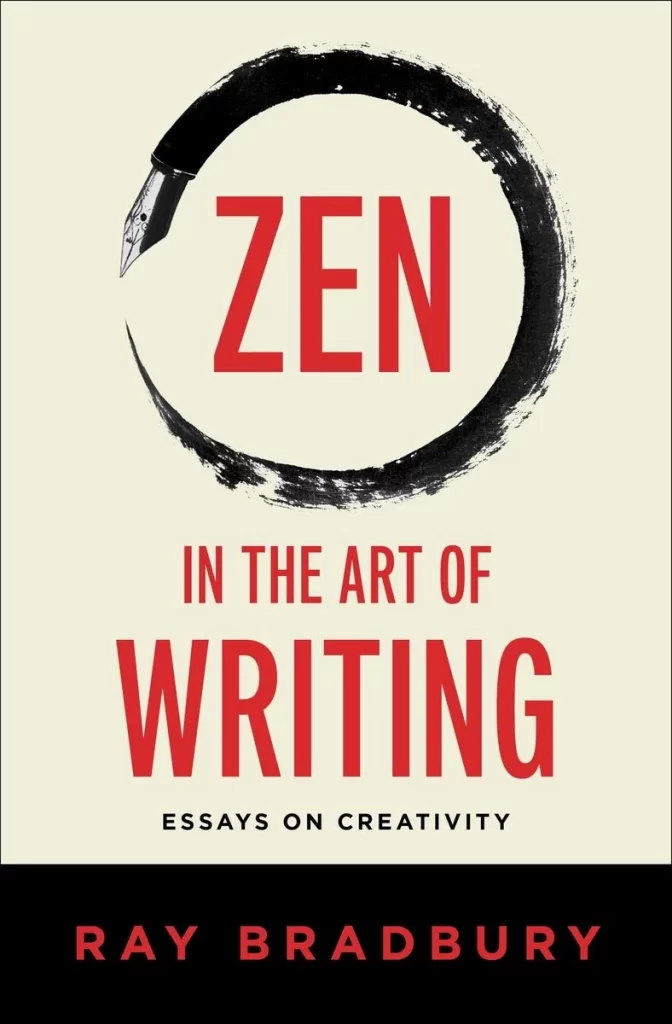
FRIDAY’S FORGOTTEN BOOKS #907: ZEN IN THE ART OF WRITING: ESSAYS ON CREATIVITY By Ray Bradbury

I started reading Ray Bradbury in the early 1960s. Dan Chaon–no slouch as a writer today–wrote Bradbury in the 1980s, sending him some of his stories. Bradbury offered practical advice and boosted Chaon’s hopes of becoming a writer.

FAHRENHEIT 451 had a big impact on me. So did The Martian Chronicles and DANDELION WINE. In Zen in the Art of Writing, Bradbury takes the reader through his writing process and points out key elements in being creative.

There’s plenty here to ponder and reflect upon. Reading a great writer sharing his writing wisdom is spectacular! GRADE: A

TABLE OF CONTENTS:

INTRODUCTION by Dan Chan — xi

PREFACE –1
THE JOY OF WRITING — 7
RUN FAST, STAND STILL, OR, THE THING AT THE TOP OF THE STAIRS, OR, NEW GHOSTS FROM OLD MINDS — 13
HOW TO KEEP AND FEED A MUSE — 27
DRUNK, AND IN CHARGE OF A BICYCLE — 41
INVESTING DIMES: FAHRENHEIT 451 — 57
JUST THIS SIDE OF BYZANTIUM: DANDELION WINE — 65
THE LONG ROAD TO MARS — 73
ON THE SHOULDERS OF GIANTS– 79
THE SECRET MIND — 89
SHOOTING HAIKU IN A BARREL — 99
ZEN IN THE ART OF WRITING — 109
… ON CREATIVITY — 123

Acknowledgements — 137

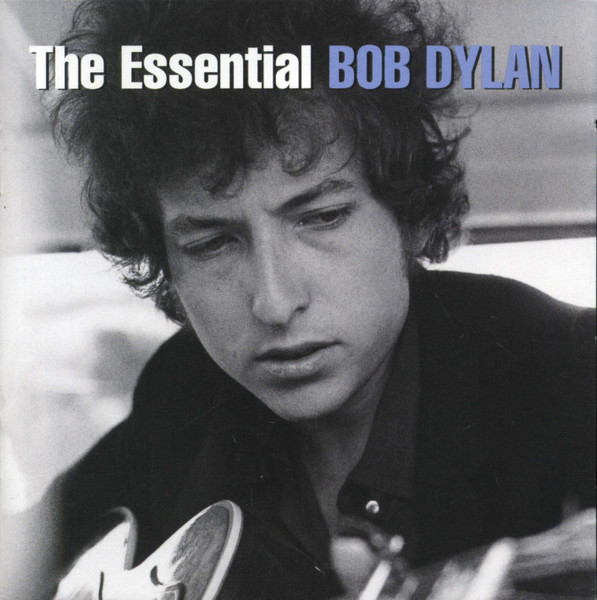
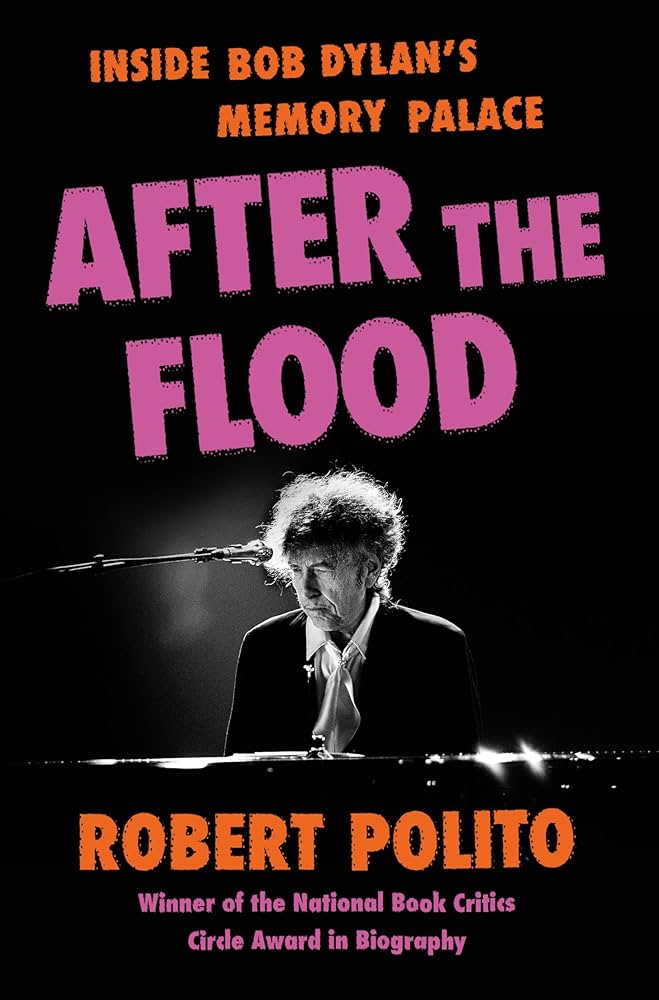
The Essential Bob Dylan and AFTER THE FLOOD: INSIDE BOB DYLAN’S MEMORY PALACE By Robert Polito

“Eight years between Tempest (2012) and Rough and Rowdy Ways (2020). This Bob Dylan is a man in his early fifties through this early eighties who revitalized himself and his art with a fresh, brilliant, intensified collage-style of crafting songs, vast, staggering concert tours–over three thousand shows from 1991 through 2024, writing books–Chronicles, Volume One (2004) and The Philosophy of Modern Song (2022); creating a movie, Masked and Anonymous (2003) and inspiring other other movies, I’m Not There (2007), No Direction Home (2005), and A Complete Unknown; hosting a weekly radio program, Theme Time Radio Hour (2005-2009); and exhibiting his paintings and welded sculptures in galleries and museums across America, Europe, and Asia.” (p. xvi)

“Everything was smashed, I had no connection to any kind of inspiration. …My own songs had become strangers to me, I didn’t have the skill to touch their raw nerves, couldn’t penetrate the surfaces. It wasn’t my moment of history anymore… The mirror had swung around and I couldn’t see the future–an old actor fumbling in garbage cans outside the theater of past triumphs. I had written and recorded so many songs, but it wasn’t like I was playing many of them. I think I was only up to the task of about twenty or so. The rest were too cryptic, too darkly driven, and I was no longer capable of doing anything radically creative with them. It was like carrying a package of heavy rotting meat…” (p. 16)

Robert Polito’s AFTER THE FLOOD: INSIDE BOB DYLAN’S MEMORY PALACE (2026) focuses on Bob Dylan’s career and the “higher mysteries” of Dylan’s output, spanning from Good as I Been to You (1992) to Shadow Kingdom (2023). Of course, in order to do an effective analysis, Polito refers frequently to the Bob Dylan of the 1960s and 1970s.

If you’re a Dylan fan, you’ll learn a lot from Robert Polito’s deep dive into Dylan’s career. Where many musicians retired from the music scene, Bob Dylan continued to tour and record new albums for decades.

Bob Dylan sold his songwriting catalog to Universal Music Publishing Group in December 2020 for an estimated $300-$400 million. Later, in January 2022, he sold his entire recorded music catalog (master rights) to Sony Music Entertainment for an estimated $150-$200 million, covering his work from 1962 onward. 

Will Bob Dylan and his music stay relevant? I think so. What do you think? Do you have a favorite Bob Dylan song? GRADE: A (for both the book and the CD)

TRACK LIST:

Blowin’ In The Wind2:46
Don’t Think Twice, It’s All Right3:37
The Times They Are A-Changin’3:11
It Ain’t Me, Babe3:32
Maggie’s Farm3:51
It’s All Over Now, Baby Blue4:14
Mr. Tambourine Man5:26
Subterranean Homesick Blues2:17
Like A Rolling Stone6:07
Positively 4th Street3:53
Just Like A Woman4:50
Rainy Day Women # 12 & 354:34
All Along The Watchtower2:31
Quinn The Eskimo (The Mighty Quinn)2:18
I’ll Be Your Baby Tonight2:39
Lay, Lady, Lay3:17
If Not For You2:40
I Shall Be Released3:02
You Ain’t Goin’ Nowhere2:44
Knockin’ On Heaven’s Door2:30
Forever Young4:56
Tangled Up In Blue5:41
Shelter From The Storm5:02
Hurricane8:33
Gotta Serve Somebody5:24
Jokerman6:15
Silvio3:06
Everything Is Broken3:13
Not Dark Yet6:28
Things Have Changed5:08

TABLE OF CONTENTS:

Preface: Shadows are falling — xv

A (“Admittedly, lies, fear, muddle, fury, the dead and their ghosts…”) Rough and Ready Ways — 1

B (“Backdrop: One version of my boo’s story goes…”) Overview — 14

C (“Chronology and facts aside…”) By HIs Own Account — 26

D (“Dylan live–or as some of his tour posters….”) Live #1 –40

E (“Everything Dylan put into practice…”) Time Out of Mind –53

F (“False impressions, Figmens, Fragments, Phantoms…”) Bootlegs/His Ghost World — 66

G (“Gatsby…? First take note of the obvious…”) Love and Theft — 77

H (“Hell…first with a small ‘h’…”) Masked and Anonymous — 93

I (“I wish someone had mentioned that to me earlier…”) Chronicles — 111

J (“Just when you thought…”) Live #2 — 130

K (“‘Kiss you, or kill you…'”) Art Noir — 140

L (“Latin at Boston College High School…”) Modern Times — 152

M (“Momento Mori…”) Tributes/Obits — 177

N (“Night…it is always at night…”) Theme Time Radio — 183

O (” ‘Oh! I have suffered/With those I saw suffer…’ “) — 196

P (“Piano. Who’s playing...?”) Live #3 — 220

Q (“Quotations– a too partial…”) Backdrops and Parallels — 230

R (“Rewrite O. It was to be the section…”) Otherworldly Inclinations — 238

S (“Sinatra, and not just once, but three distinct spins…”) Dylan and the Great American Songbook — 250

T (“Trial runs, false starts…”) Early Road Tests — 260

U (“‘Unless, of course, he dies first…'”) The Nobel Prize in Literature — 265

V (“Venice. The Grand Canal. The Palazzo. Chandeliers. Mirrors on mirrors…”) The Body — 275

W (“Where were we? After a nearly two-year suspension…”) Live #4 — 282

X (“X the unknown variable, but X rays, too…”) Hidden in Plain Sight — 292

Y (“You walk into the room…”) His Tulsa Archive — 303

Z (“Zero hours? Zero hour– Bob Dylan’s late albums tend…”) But not where it ends — 312

Acknowledgements — 325

Bibliography/Works Cited — 329

Index — 339

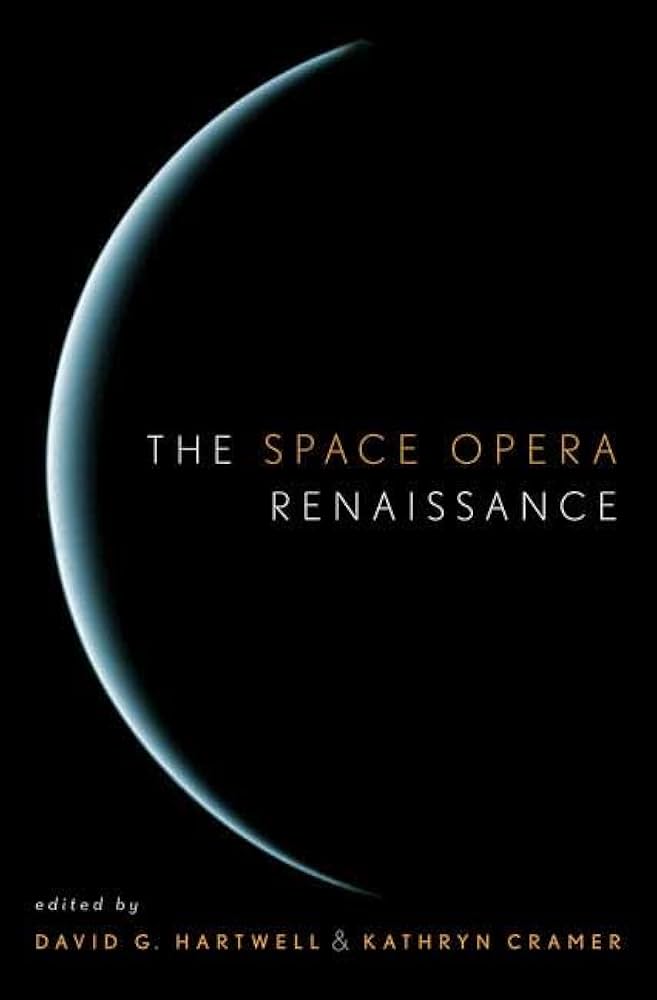
WEDNESDAY’S SHORT STORIES #270: THE SPACE OPERA RENAISSANCE Edited by David G. Hartwell & Kathryn Cramer (Section 3)

David G. Hartwell and Kathryn Cramer’s The Space Opera Renaissance, a 941 page mammoth volume from 2006, is divided into six sections.  I’ve already reviewed Section 1 (you can read my review here) and you can read my review of Section 2 here.

I’m a fan of David Brin’s Uplift Series and “Temptation” returns to an early episode in the series where intelligent dolphins are left on a planet full of water so they can reacclimatize after their years in space. Two of the dolphins kidnap a female as they begin to lose the Uplift aspects and revert to their more primitive sensibilities. But the Uplift female has other ideas… GRADE: B+

David Drake is one of the best military SF writers in the genre. “Ranks of Bronze” tells the story of a Roman Legion that has been “collected” by aliens to fight other aliens (on the same technological level as the Romans) on various planets. If you crave action, here it is! GRADE: B

Lois McMaster Bujold made a big splash in the 1980s with a series of books about Miles Vorkosigan, a physically handicapped young man who is the son of a Space Admiral. His diminutive size causes many of the military staff who work with Miles to underestimate him.

In “Weatherman,” Miles is sent to an arctic base on a frosty planet because his commanding officer feels Miles needs a 6-month stint to learn “how to get along with others.” Miles’ brilliance causes him to rub the other soldiers the Wrong Way. Almost immediately, Miles is almost killed by the hostile environment. He later finds a dead body and gets involved in a political incident. Miles is always up to something! Fun and exciting! GRADE: A

Iain M. Banks died too soon. But he left us a marvelous series of novels and short stories about The Culture, a post-scarcity future full of Artificial Intelligences and danger. In “A Gift from the Culture,” a man who has gambling debts is offered a deal: use a Culture weapon to shoot down a starship and the gambling debts will go away. GRADE: B

I enjoyed the diversity and variety of these four stories. You would, too!

Section 3: Transitions/Redfiners (Late 1970s to Late 1980s)

* 207 • Temptation • [The Uplift Series] • (1999) • novella by David Brin
* 243 • Ranks of Bronze • [Ranks of Bronze] • (1975) • short story by David Drake
* 251 • Weatherman • [Miles Vorkosigan] • (1990) • novella by Lois McMaster Bujold
* 297 • A Gift from the Culture • [Culture] • (1987) • short story by Iain M. Banks

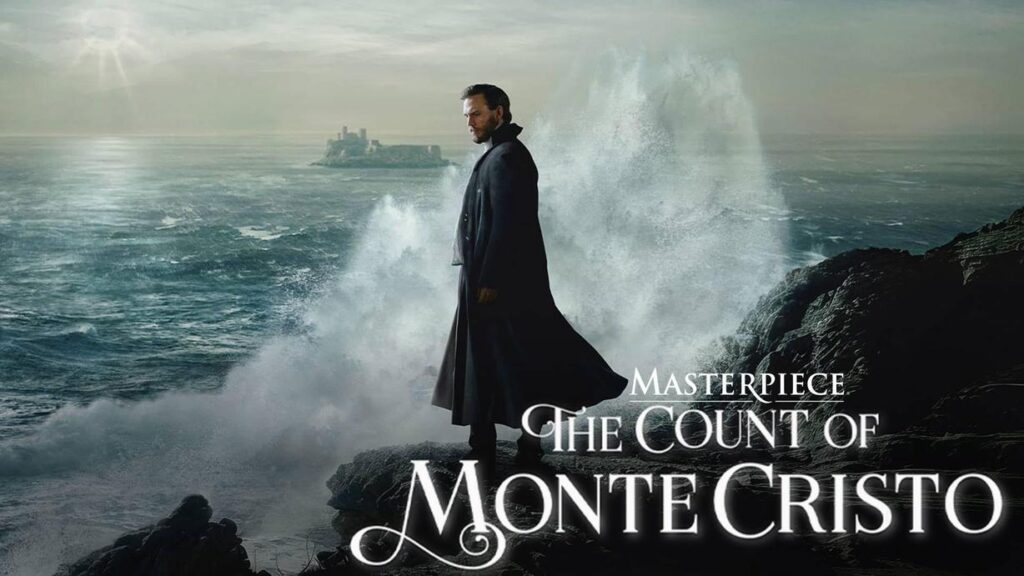
THE COUNT OF MONTE CRISTO (PBS)

About 20 years ago, I read Robin Buss’s brilliant, unabridged translation of Alexandre Duma’s The Count of Monte Cristo. (The Count of Monte Cristo was originally published as a newspaper serial in Le Journal des Débats in 18 parts, running from August 28, 1844, to January 15, 1846. Following its success as a serial, it was published in book form starting in 1846.)

As a kid, I read The Count of Monte Cristo in abridgments and Classics Illustrated. Reading Robin Buss’s translation of The Count of Monte Cristo was a revelation! Yes, it’s 1,243 pages but it is full of Edmond Dantes on a quest to punish the men who falsely sent him to the sinister Castle d’If prison for 15 years.

Here’s what Robin Buss says in his Introduction to he Count of Monte Cristo: “There are not many children’s books, even in our own time, that involve a female serial poisoner, two cases of infanticide, a stabbing and three suicides, an extended scene of torture and execution, drug-induced sexual fantasies, illegitimacy, transvestism and lesbianism, a display of the author’s classical learning and his knowledge of modern European history, the customs and diets of Italians, the effects of hashish, and so on.”

Although Dumas established his reputation as a playwright, once he started writing novels in the 1830s, Dumas became a writing machine. His collected works fill 300 volumes! And, for those who aren’t familiar with Tom Reiss’s Pulitzer Prize winning biography, The Black Count (2012), it might come as surprise to learn Duma’s father, Thomas-Alexandre Dumas, was the child of an enslaved Haitian and a French aristocrat. Thomas-Alexandre rose through the ranks of the French army and became a general. A falling out with Napoleon led to Dumas’ father being arrested and incarcerated for nearly two years in prison–perhaps inspiring The Count of Monte Cristo

The 8-hour series of The Count of Monte Cristo on PBS tries (and understandably fails) to convey all that happens in Dumas’ 1,243 pages. But this is the most detailed version of The Count of Monte Cristo that I’ve seen. In his much longer and more detailed review of The Count of Monte Cristo–both the novel and the PBS series–Michael Dirda points out differences between the two. Dirda also notes out the PBS final episode has an ending different from Dumas’ novel (you can check out “Dantes’s Inferno” in The New York Review of Books, April 9, 2026). If you’re a fan of The Count of Monte Cristo, don’t miss this series! GRADE: B+

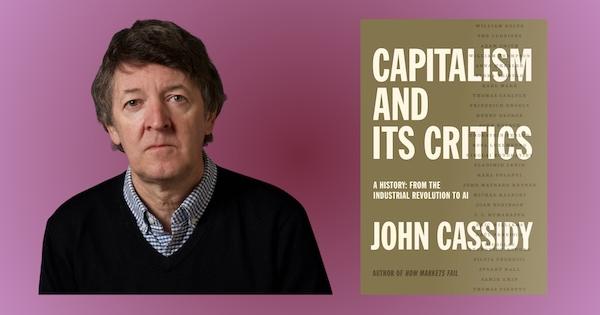
CAPITALISM AND ITS CRITICS: A HISTORY FROM THE INDUSTRIAL REVOLUTION TO AI By John Cassidy

A while ago I reviewed Martin Wolf’s The Crisis of American Capitalism (you can read my review here). I decided to follow that up with John Cassidy’s new Capitalism and Its Critics which provides an excellent overview of the history Capitalism.

To alter Winston Churchill’s famous saying about Democracy, Capitalism is the worst economic system…except for all the others. No other economic system yet invented increases the standard of living as fast and can improve the Economy as consistently. In its 611 pages, Capitalism and Its Critics, John Cassidy covers a lot of ground. Some of the reactions to Capitalism in the Past will no doubt erupt again with the arrival of more powerful Artificial Intelligence software.

“This is not a Religious Age,” Thomas Carlyle remarked. “Only the material, the immediately practical, not the divine and spirtual, is important to us. The infinite, absolute character of Virtue has passed into a finite, conditional one: it is no longer a worship of the Beautiful and Good; but a calculation of the Profitable.” (p. 102). This partly explains the growing rate of mental illness in our country. Capitalism produces Winners (like Elon Musk and Jeff Bezos) and millions of “Losers” who struggle from pay check to pay check.

Cassidy warns that AI could produce the reaction that made the Luddites, bands of English workers who destroyed machinery especially in cotton and woolen mills–because they believed that technology was threatening their jobs (1811–16). When AI causes massive layoffs of workers in call centers, truck drivers and taxi drivers (because of self-driving trucks and cars), and millions of workers in other jobs there might be a violent response. Our Government hasn’t prepared for this yet.

“During much of the 20th Century, the forces of convergence–wars, tax policies, progressive social norms, public education, the enhancement of worker skills, labor unions–had held in check some of the capitalistic system’s darker tendencies. But by the new millennium the combination of neoliberal policies, globalization, labor-saving technological progress, and a shareholder value movement that glorified wealth creation had shifted the balance of power (and material rewards) back to Capitalism.” (p. 488)

As the number of Have-Nots grow–and it will–the capitalistic system will be increasingly under attack. Politicians like Bernie Sanders advocate for socialistic policies that are also problematic. Cassidy concludes: “The system can be reformed: the challenge is to summon the will and the means to do it. With the rise of right-wing populism, profit-driven AI, and a tech and finance oligarchy that was increasingly uninhibited about exerting its political influence, the task, going into the second quarter of the 21st Century, seems more formidable that ever.” (p. 518) GRADE: A

TABLE OF CONTENTS:

Introduction — 3

1 : “The roguery practiced in this department is beyond Imagination” : William Bolts and the East India Company — 13

2 : “The mean rapacity, the monopolizing spirit of merchants and manufacturers” : Adam Smith on Colonial Capitalism and Slavery — 26

3 : “On the brink of the last struggle” : The Logic of the Luddites — 40

4 : “It is time . . . to seek for a radical, a permanent cure of the evils that afflict society” : William Thompson’s Utilitarian Socialism — 52

5 : “In speaking of the degraded position of my sex” : Anna Wheeler and the Forgotten Half of Humanity — 69

6 : “Abandon your isolation : unite with each other!” : Flora Tristan and the Universal Worker’s Union — 82

7 : “One of the shabbiest Gospels ever preached on Earth” : Thomas Carlyle on Mammon and the Cash Nexus — 100

8 : “The war of the poor against the rich will be the bloodiest ever waged” : Friedrich Engels and The Communist Manifesto — 116

9 : “Our friend, Moneybags” : Karl Marx’s Capitalist Laws of Motion — 137

10 : “We must make land common property” : Henry George’s Moral Crusade — 159

11 : “The ideal pecuniary man is like the ideal delinquent” : Thorstein Veblen and the Captains of Industry — 179

12 : “A particularly crude form of capitalism” : John Hobson’s Theory of Imperialism — 199

13 : “Capital knows no other solution to the problem of violence” : Rosa Luxemburg on Capitalism, Colonialism, and War — 215

14 : “The rhythm of long cycles” : Nikolai Kondratiev and the Capitalist Development — 237

15 : “The more troublous the times, the word does a laissez-faire system work” : John Maynard Keynes’s Blueprint for Managed Capitalism — 256

16 : “The time was ripe for the fascist solution” : Karl Polanyi’s Warnings About Capitalism and Democracy — 276

17 : “The bankruptcy of reform” : Two Skeptics of Keynesianism : Paul Sweezy and Michal Kalecki — 295

18 : “Economics once more became political economy” : Joan Robinson and the “Bastard Keynesians” — 311

19 : “Nature . . . faithful and submissive to those who respect her” : J. C. Kumarappa and the Economics of Permanence –331

20 : “Vast sugar factories by a camarilla of absentee capitalist magnates and worked by a mass of alien proletarians” : Eric Williams on Slavery and Capitalism — 349

21 : “The periphery of the economic system” : The Rise and Fall of Dependency Theory in Latin America — 371

22 : “Shock treatment” : Milton Friedman and the Rise of Neoliberalism — 391

23 : “Any use of the natural resources for the satisfaction of non-vital needs means a smaller quantity of life in the future” : Nicholas Georgescu-Roegen and the Limits to Growth — 408

24 : “A true masterpiece at the expense of women” : Silvia Federici and Wages for Housework — 423

25 : “It is a form of regressive modernisation” : Theorists of Thatcherism : Stuard Hall vs. Friedrich Hayek — 439

26 : “Social disintegration is not a spectator sport” : Parsing Globalization : Samir Amiin, Dani Rodrik, and Joseph Stiglitz — 458

27 : “A historically unprecedented situation” : Thomas Piketty and Rising Inequality — 480

28 : “A confluence that could propel a new paradigm” : The End of Capitalism, or the Beginning? — 501

Notes — 519

Acknowledgements — 571

Index — 573
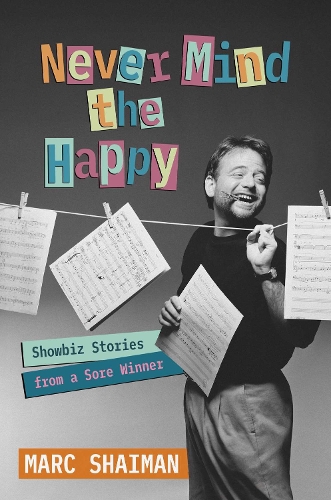
NEVER MIND THE HAPPY By Marc Shaiman

I’m fond of Marc Shaiman’s work so I decided to read his memoir: Never Mind the Happy: Showbiz Stories from a Sore Winner (2026).

Never Mind the Happy: Showbiz Stories from a Sore Winner tells the story of a kid who loved music and pursed his dream to be successful on Broadway.

And, Shaiman did.

Never Mind the Happy includes stories from Shaiman’s five-decade composing career. Shaiman’s biggest hits were musicals like Hairspray, Sister Act, and Smash

I especially enjoyed Shaiman’s stories about  his collaborations with stars like Bette Midler. If you’re a fan of musicals, you’ll find Shaiman’s stories of the creative process and the struggles to get Broadway shows up and running fascinating. GRADE: A

TABLE OF CONTENTS:

Prologue

1. Winding Brook Way

2. The Sound of Music

3. Manifesting Midler

4. God Save the City

5. It Takes an East Village

6. A Fur Chubby and a Miniskirt

7. Saturday Night Live

8. Suddenly, Nothing Is the Same

9. Barbra Is Upset

10. Skylark

11. Legends!

12. People Come and Go So Quickly Here!

13. Beaches

14. When Billy Met Marc

15. Talent Is Talent (Says Rob Reiner)

16. What Comes First? 

17. My Scott Rudin Era

18. One for My Baby

19. Sleepless With Nora

20. I’m the Schmuck

21. South Park: Bigger, Longer, & Uncut

22. The View From the Nosebleeds

23. I Killed Stephen Sondheim

24. Hairspray: Good Morning Baltimore

25. Hairspray: You Can’t Stop the Beat

26. Fame Dropping

27. Look What He Made

28. Martin Short: Fame Becomes Him

29. The Second Time Around

30. Catch Me If You Can

31. Charlie and the Chocolate Factory

32. Smash

33. Mary Poppins Returns

34. Some Like It Hot

Epilogue

Acknowledgments

STARBUCKS COFFEE & PROTEIN CAFFE MOCHA DRINK

As I’m sure you’ve noticed, the latest nutrition fad is protein. All sorts of food products are adding protein for “enhanced health.” From snacks to enhanced everyday staples, including protein bars (e.g., Quest, Bearbells), shakes (Fairlife, Premier Protein), yogurt (Chobani 20g, Oikos Triple Zero), and alternative pasta like Banza, protein enhanced products are showing up everywhere on the grocery shelves.

So, of course, Starbucks got into the act with their new Starbucks Coffee & Protein: Caffe Mocha.

The new STARBUCKS COFFEE & Protein: Caffe Mocha is a ready-to-drink, high-protein coffee beverage featuring Arabica coffee, reduced-fat milk, cocoa, and 20g–22g of protein per bottle. I bought a box (like the one above) at Sam’s Club for $24 and tried it out. It tastes a lot like chocolate milk…which is okay by me. If you want to boost your protein levels, this is a simple and tasty way to do it. GRADE: B+

Nutritional Breakdown (per 12 fl oz bottle):

Caffeine: Approximately 130mg 

Calories: 150

Protein: 22g

Total Fat: 2g – 2.5g

Saturated Fat: 1g – 1.5g

Total Carbohydrates: 13g – 15g

Dietary Fiber: 6g – 7g

Total Sugars: 2g

Sodium: 70mg – 75mg

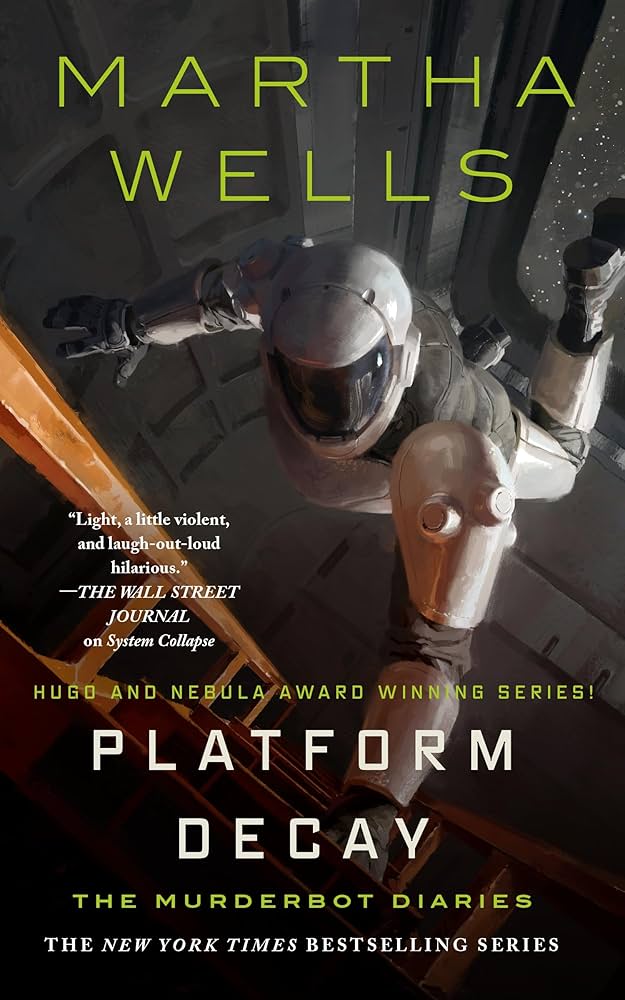
PLATFORM DECAY By Martha Wells

Last year Martha Wells’ Murderbot series got a boost from APPLE TV+ when they presented the first season of Murderbot (you can read my review here). The new installment in the series, Platform Decay, was just published by TOR.

I became a Murderbot fan the moment I finished All Systems Red a decade ago. And, with each Murderbot novel, eight so far, the character of the SecUnit got richer and richer (and more snarky). Platform Decay is a non-stop romp through a giant torus (think a massive space station that surrounds an entire planet). SecUnit needs to rescue some friends held hostage in the depths of the torus. His mission gets more complicated when he rescues the hostages, but finds he needs to rescue another group of hostages before they can flee the menacing, armed groups on the torus who intend to kill them.

Platform Decay is a thrill-ride you’ll completely enjoy! Are you a fan of Murderbot? GRADE: B+

THE MURDERBOT SERIES:

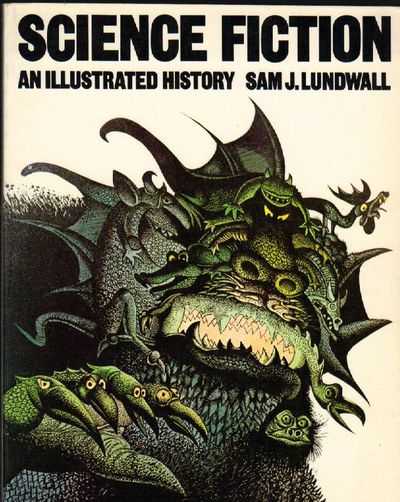
FRIDAY’S FORGOTTEN BOOKS #906: SCIENCE FICTION: AN ILLUSTRATED HISTORY By Sam J. Lundwall

Science Fiction: An Illustrated History by Sam J. Lundwall is like a time-machine taking the reader back to 1977 and looking backward from there. First, 95% of the the illustrations (mostly cover artwork) is in black & white. Yes, there are occasional color illustrations…but not many. But the strength of Science Fiction: An Illustrated History is Lundwall’s commentary on the development of the Science Fiction genre. Did you know the first Science Fiction magazine appeared in Sweden in 1916? Did you know that SF was being published in Europe, Latin America, Asia, Russia, and Australasia as well as the U. S. and British areas in the early 20th Century?

My favorite chapter in Science Fiction: An Illustrated History is “Galactic Patrol.” Lundwall takes a deep dive into the work of E. E. Smith, Edmond Hamilton’s Captain Future series, the 100 million copy bestselling Perry Rhodan ACE Books series, A. Bertram Chandler’s “Rim World” series, and Gregory Kern (E. C. Tubb) who wrote the popular Cap Kennedy paperbacks.

While contemporary SF isn’t included in Science Fiction: An Illustrated History, this is a fascinating international reference book about how SF took over the world. If you are a Science Fiction fan, you’ll learn a lot about the genre you thought you knew by reading this book. GRADE: A

TABLE OF CONTENTS:

Origins — 6

Tales from the crypt — 14

Science fiction at the crossroads — 36

The eternal bliss machine — 60

Nightmares — 82

Monsters and such — 102

Robots and mechanical men — 122

Galactic patrol — 150

The human angle — 170

Adventures in the pulp jungle — 186

Bibliography — 204

Index — 205

CRUSIN’ 4 and UNFORGETTABLE LOVE SONGS OF THE SIXTIES

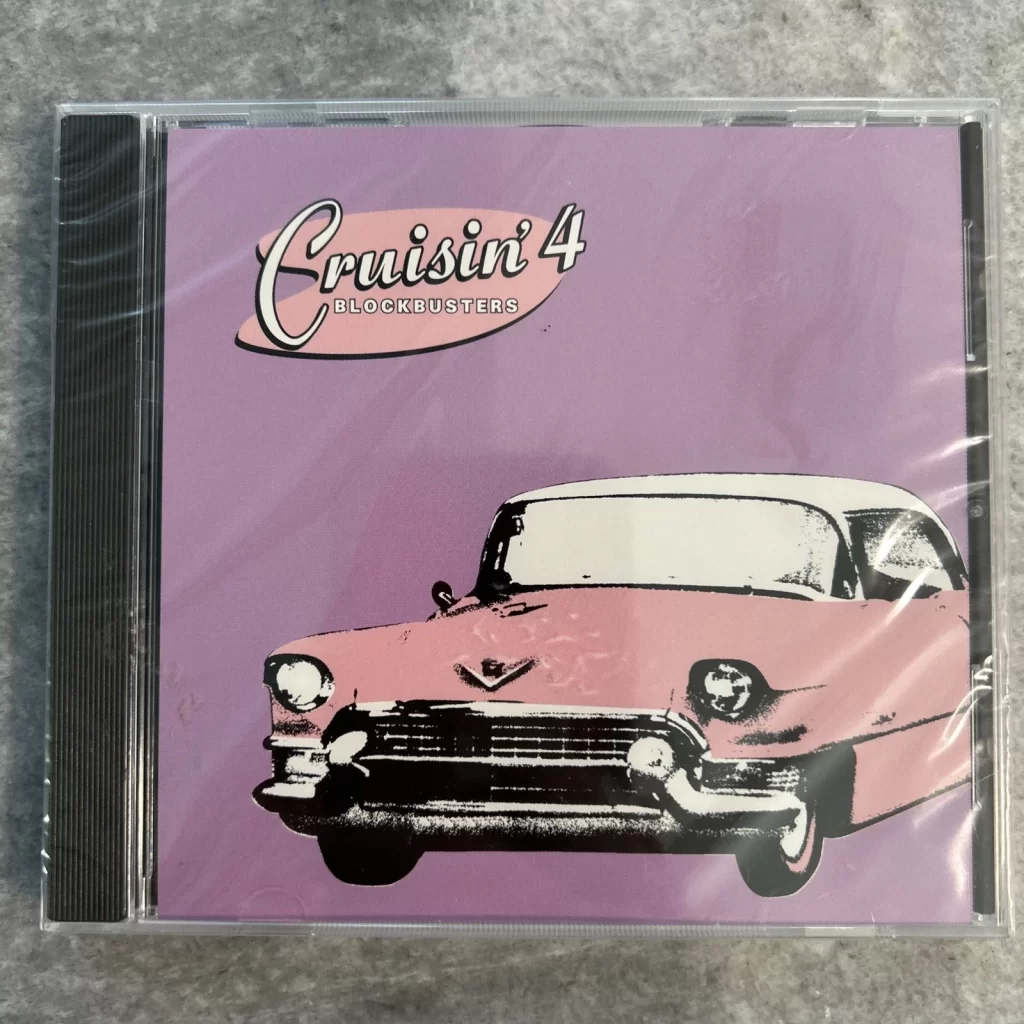
Back to the 1960s for some hits and love songs from that special era. I had fun listening to Crusin’ 4 with a range of music from The Beach Boys’ classic, “Good Vibrations,” to The Band’s classic, “The Weight.” There are also some songs on this compilation CD that I rarely hear on Oldies stations any more like The Outsiders’ “Time Won’t Let Me” and The Johnny Otis Show’s “Willie And The Hand Jive.”

Unforgettable Love Songs of the Sixties (1999) is a more retro collection of love songs. It’s been years since I heard Connie Francis sing “Don’t Break The Heart That Loves You” or Skeeter Davis sing “The End of the World.” Other singers from the early 1960s show up on this disc: Bobby Vinton, Andy Williams, Eddy Arnold, Al Martino, and Lenny Welch.

Our local Oldies radio stations rarely play music from the 1960s any more. It’s mostly 1970s and 1980s song with a few 1990s hits mixed in. The songs of Sixties are slipping in obscurity. Do you remember these songs? Any favorites here? GRADE: B (for both)

TRACK LIST:

TRACK LIST:

1Elvis Presley With The JordanairesAre You Lonesome Tonight?3:09
2Bobby VintonBlue Velvet2:51
3Henry Mancini And His OrchestraLove Theme From Romeo & Juliet2:37
4Andy WilliamsCan’t Get Used To Losing You2:23
5Engelbert HumperdinckRelease Me (And Let Me Love Again)3:20
6Eddy ArnoldMake The World Go Away2:40
7Al MartinoSpanish Eyes2:48
8Connie FrancisDon’t Break The Heart That Loves You3:05
9Nat King ColeRamblin’ Rose2:50
10Elvis Presley With The JordanairesCan’t Help Falling In Love3:02
11Skeeter DavisThe End Of The World2:39
12Lenny WelchSince I Fell For You2:55
13The LettermenWhen I Fall In Love2:29
14Henry Mancini And His OrchestraMoon River2:41