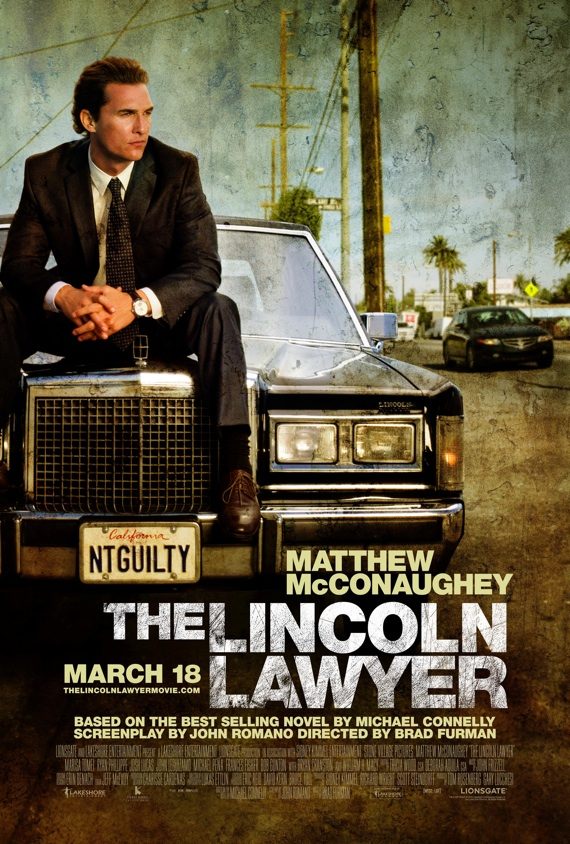
Mickey Haller (played by Matthew McConaughey) is a criminal defense lawyer whose office is the back seat of his Lincoln Town Car. Haller’s ex-wife, Maggie McPherson (played by Marisa Tomei), figures into the action as does their young daughter. Haller takes on a case involving a wealthy Beverly Hills real estate broker who is accused of attacking a prostitute. McConaughey’s client insists he was set up as a target of a lucrative civil suit. The plot is complicated and you’ll have to be willing to tolerate large doses of coincidence to accept the case’s resolution. I thought McConaughey was convincing as a slick defense lawyer who knows how to work the criminal justice system. I wish Marisa Tomei was given more to do. Clearly, the door is open for a sequel. GRADE: B+
If you love C. S. Forester and Patrick O’Brian and “sea stories” you’ll enjoy V. A. Stuart’s Philip Hazard series. What makes this series unusual is that V. A. Stuart is actually Vivian Stuart. A woman writing nautical fiction is a bit of a rarity. But I found Stuart’s novels of Philip Hazard’s adventures in the Crimean and the Sepoys in India grand entertainment. Phillip Hazard of the Royal Navy captures the Hornblower excitement. And, if you like The Valiant Sailors, Vivian Stuart wrote seven more Philip Hazard novels just as good. I can recommend them all. Phillip Hazard Series
1. The Valiant Sailors (1966)
2. The Brave Captains (1968)
3. Black Sea Frigate (1971) aka Hazard’s Command
4. Hazard of Huntress (1972)
5. Victory at Sebastopol (1973) aka Hazard in Circassia
6. Hazard to the Rescue (1974)
7. Guns to the Far East (1975) aka Shannon’s Brigade
8. Escape from Hell (1976) aka Sailors on Horseback
Grant Hill’s Response to Jalen Rose(FROM THE NY TIMES)
By GRANT HILL
“The Fab Five,” an ESPN film about the Michigan basketball careers of Jalen Rose, Juwan Howard, Chris Webber, Jimmy King and Ray Jackson from 1991 to 1993, was broadcast for the first time Sunday night. In the show, Rose, the show’s executive producer, stated that Duke recruited only black players he considered to be “Uncle Toms.” Grant Hill, a player on the Duke team that beat Michigan in the 1992 Final Four, reflected on Rose’s comments.
I am a fan, friend and longtime competitor of the Fab Five. I have competed against Jalen Rose and Chris Webber since the age of 13. At Michigan, the Fab Five represented a cultural phenomenon that impacted the country in a permanent and positive way. The very idea of the Fab Five elicited pride and promise in much the same way the Georgetown teams did in the mid-1980s when I was in high school and idolized them. Their journey from youthful icons to successful men today is a road map for so many young, black men (and women) who saw their journey through the powerful documentary, “The Fab Five.”
It was a sad and somewhat pathetic turn of events, therefore, to see friends narrating this interesting documentary about their moment in time and calling me a bitch and worse, calling all black players at Duke “Uncle Toms” and, to some degree, disparaging my parents for their education, work ethic and commitment to each other and to me. I should have guessed there was something regrettable in the documentary when I received a Twitter apology from Jalen before its premiere. I am aware Jalen has gone to some length to explain his remarks about my family in numerous interviews, so I believe he has some admiration for them.
In his garbled but sweeping comment that Duke recruits only “black players that were ‘Uncle Toms,’ ” Jalen seems to change the usual meaning of those very vitriolic words into his own meaning, i.e., blacks from two-parent, middle-class families. He leaves us all guessing exactly what he believes today.
I am beyond fortunate to have two parents who are still working well into their 60s. They received great educations and use them every day. My parents taught me a personal ethic I try to live by and pass on to my children.
I come from a strong legacy of black Americans. My namesake, Henry Hill, my father’s father, was a day laborer in Baltimore. He could not read or write until he was taught to do so by my grandmother. His first present to my dad was a set of encyclopedias, which I now have. He wanted his only child, my father, to have a good education, so he made numerous sacrifices to see that he got an education, including attending Yale.
This is part of our great tradition as black Americans. We aspire for the best or better for our children and work hard to make that happen for them. Jalen’s mother is part of our great black tradition and made the same sacrifices for him.
My teammates at Duke — all of them, black and white — were a band of brothers who came together to play at the highest level for the best coach in basketball. I know most of the black players who preceded and followed me at Duke. They all contribute to our tradition of excellence on the court.
It is insulting and ignorant to suggest that men like Johnny Dawkins (coach at Stanford), Tommy Amaker (coach at Harvard), Billy King (general manager of the Nets), Tony Lang (coach of the Mitsubishi Diamond Dolphins in Japan), Thomas Hill (small-business owner in Texas), Jeff Capel (former coach at Oklahoma and Virginia Commonwealth), Kenny Blakeney (assistant coach at Harvard), Jay Williams (ESPN analyst), Shane Battier (Memphis Grizzlies) and Chris Duhon (Orlando Magic) ever sold out their race.
To hint that those who grew up in a household with a mother and father are somehow less black than those who did not is beyond ridiculous. All of us are extremely proud of the current Duke team, especially Nolan Smith. He was raised by his mother, plays in memory of his late father and carries himself with the pride and confidence that they instilled in him.
The sacrifice, the effort, the education and the friendships I experienced in my four years are cherished. The many Duke graduates I have met around the world are also my “family,” and they are a special group of people. A good education is a privilege.
Just as Jalen has founded a charter school in Michigan, we are expected to use our education to help others, to improve life for those who need our assistance and to use the excellent education we have received to better the world.
A highlight of my time at Duke was getting to know the great John Hope Franklin, James B. Duke Professor of History and the leading scholar of the last century on the total history of African-Americans in this country. His insights and perspectives contributed significantly to my overall development and helped me understand myself, my forefathers and my place in the world.
Ad ingenium faciendum, toward the building of character, is a phrase I recently heard. To me, it is the essence of an educational experience. Struggling, succeeding, trying again and having fun within a nurturing but competitive environment built character in all of us, including every black graduate of Duke.
My mother always says, “You can live without Chaucer and you can live without calculus, but you cannot make it in the wide, wide world without common sense.” As we get older, we understand the importance of these words. Adulthood is nothing but a series of choices: you can say yes or no, but you cannot avoid saying one or the other. In the end, those who are successful are those who adjust and adapt to the decisions they have made and make the best of them.
I caution my fabulous five friends to avoid stereotyping me and others they do not know in much the same way so many people stereotyped them back then for their appearance and swagger. I wish for you the restoration of the bond that made you friends, brothers and icons.
I am proud of my family. I am proud of my Duke championships and all my Duke teammates. And, I am proud I never lost a game against the Fab Five.
Tonight on BRAVO (10 P.M. EDT) the final contestants for the title of TOP CHEF (and $200,000) will face off in the season finale. Richard (Season 4 Runner-up, top left) is the most gifted (but neurotic) chef. Antonia (Season 4 fourth place finish, top right) is excellent, but within a limited range of menus. Mike (Season 6, finished 7th, middle) resembles Homer Simpson: crude, clownish, and surprisingly talented. But, Mike has grown on me during this competition. He’s had a troubled past, struggled to perfect his craft, and has displayed an indomitable attitude in this arena. All three superb chefs will be vying for the prize tonight. I’ll be watching and listening for the lovely Padma (bottom) to announce: “Mike, you’re TOP CHEF!”
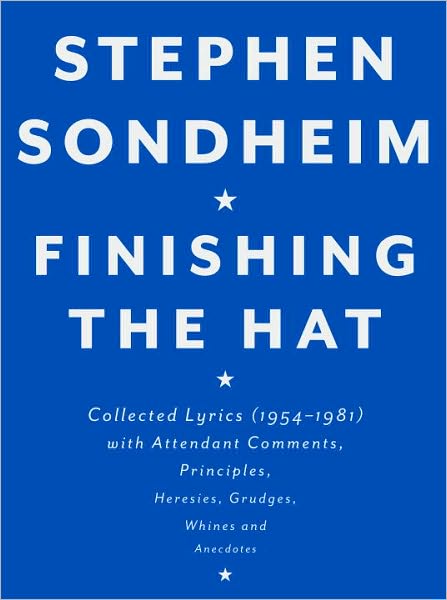
Bruce Taylor once charged Stephen Sondheim with the death of the Broadway musical. I don’t know about that, but I do know that Sondheim wrote one of my favorite songs: “Send in the Clowns” from A Little Night Music. Finishing the Hat: Collected Lyrics (1954-1981) with Attendant Comments, Principles, Heresies, Grudges, Whines and Anecdotes is both Sondheim’s quirky memoir and a textbook to writing songs for Broadway musicals. If you’re at all interested in how West Side Story,Gypsy, A Funny Thing Happened on the Way to the Forum, Company, A Little Night Music, and Sweeny Todd were made along with plenty of background information on the principals in the productions, you’re going to love this book.
I found Sondheim’s approach opinionated and unique. He takes you behind the curtain to see how producers, directors, stars, and even the guys who write “the Book” operate. I found Finishing the Hat fascinating. Love Sondheim or hate him, he certainly has a lot of acerbic insights about the craft of song writing and the state of musical theater in America. GRADE: A
Adele’s previous CD, 19, knocked me out a couple years ago. Adele is a British soul music singer who can power through a song like Aretha Franklin or Dionne Warwick. Adele is only 21 (hence the title), but she has the chops to belt out a song like “Rolling in the Deep” (see video below). If you love soul music, you’re going to love Adele and 21. And, if you love 21 you might consider listening to Adele’s first CD, 19. I’ll be listening to Adele’s music when she brings out her future CD, 42 (the answer to everything). GRADE: A TRACK LIST
1 Rolling in the Deep 3:48
2 Rumour Has It 3:43
3 Turning Tables 4:10
4 Don’t You Remember 4:03
5 Set Fire to the Rain 4:01
6 He Won’t Go 4:37
7 Take It All 3:48
8 I’ll Be Waiting 4:01
9 One and Only 5:48
10 Lovesong 5:16
11 Someone Like You 4:45
They are the “Faceless 50,” the unnamed operators who decided to stay at the Fukushima Nuclear Power Station and try to prevent a melt-down. They volunteered to pump seawater on the exposed nuclear fuel rods in hopes of cooling them enough to prevent a disaster. If the fuel rods melt down, the result would throw thousands of tons of radioactive dust into the air and produce a ecological catastrophe. Remaining that close to the leaking reactors and the heightened radiation means the Faceless 50 are risking their lives. Like the esprit de corps found among firefighters, police, and military units, these operators feel a sense of loyalty and comaraderie to stay at their posts until the crisis is resolved. I admire their dedication and selfless sacrifice.
Bill Crider recommended Don Winslow’s work to me years ago. And I dutifully bought Don Winslow’s books. But I hadn’t gotten around to reading one until now. Yesterday, I reviewed Shibumi, a thriller by Trevanian written in 1979. Now, 32 years later, Don Winslow creates an exciting prequel that begins in Japan in 1951. Trevanian’s super assassin, Nicholai Hel, agrees to a deal that will get him out of an American-run prison where he’s being held. The CIA requires Hel to acquire a new face and identity and then to carry out a secret mission to assassinate Soviet commissioner Yuri Voroshenin in China. Hel disguises himself as Michel Guibert, a French arms dealer. I liked the way Winslow develops Hel’s mixed heritage: son of an aristocratic Russian mother and a surrogate Japanese father and mentor. You don’t really need to read Trevanian’s Shibumi to enjoy Satori. Within the parameters of Trevanian’s template, I thought Winslow’s just published prequel was an entertaining, suspenseful novel. GRADE: B+
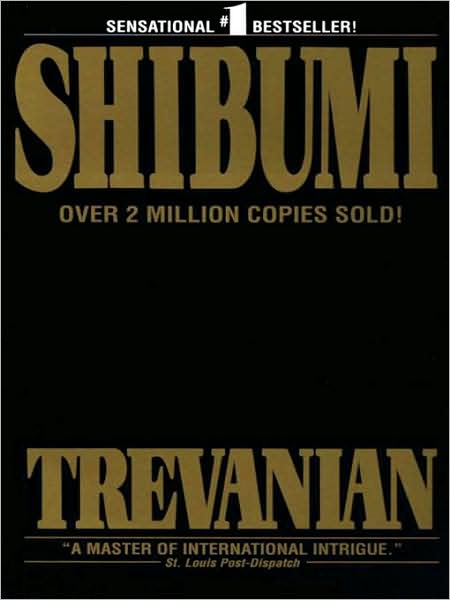
Shibumi was published in 1979 and features a cabal of sinister corporations (which makes it relevant today). Written by “Trevanian,” a pseudonym of Rodney William Whitaker (an academic who remained mysterious for most of his writing career), Shibumi is the kind of suspenseful thriller that engages you and won’t let you go until the last page. Shibumi is set in the 1970s. The plot of the novel revolves around the struggle between the “Mother Company” (a group of energy companies who secretly controls the world) and an assassin, Nicholaï Hel. Like most of the Trevanian novels, questions of identity, conspiracy, and secrecy swirl together. If you enjoy suspenseful fiction with plenty of action, Shibumi will delight you. I’ve enjoyed all the Trevanian novels and can recommend all of them. Tomorrow, I’ll review the new Don Winslow novel, Satori, which is the just published prequel to Shibumi (after 32 years!) featuring the back story to super-assassin, Nicholai Hel. Stop by tomorrow and check out the review.





 They are the “Faceless 50,” the unnamed operators who decided to stay at the Fukushima Nuclear Power Station and try to prevent a melt-down. They volunteered to pump seawater on the exposed nuclear fuel rods in hopes of cooling them enough to prevent a disaster. If the fuel rods melt down, the result would throw thousands of tons of radioactive dust into the air and produce a ecological catastrophe. Remaining that close to the leaking reactors and the heightened radiation means the Faceless 50 are risking their lives. Like the esprit de corps found among firefighters, police, and military units, these operators feel a sense of loyalty and comaraderie to stay at their posts until the crisis is resolved. I admire their dedication and selfless sacrifice.
 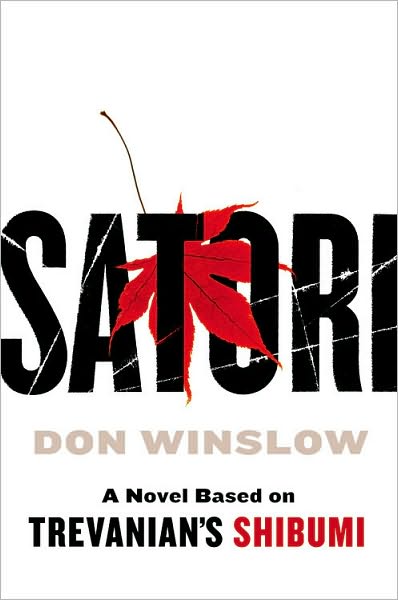 Bill Crider recommended Don Winslow’s work to me years ago. And I dutifully bought Don Winslow’s books. But I hadn’t gotten around to reading one until now. Yesterday, I reviewed Shibumi, a thriller by Trevanian written in 1979. Now, 32 years later, Don Winslow creates an exciting prequel that begins in Japan in 1951. Trevanian’s super assassin, Nicholai Hel, agrees to a deal that will get him out of an American-run prison where he’s being held. The CIA requires Hel to acquire a new face and identity and then to carry out a secret mission to assassinate Soviet commissioner Yuri Voroshenin in China. Hel disguises himself as Michel Guibert, a French arms dealer. I liked the way Winslow develops Hel’s mixed heritage: son of an aristocratic Russian mother and a surrogate Japanese father and mentor. You don’t really need to read Trevanian’s Shibumi to enjoy Satori. Within the parameters of Trevanian’s template, I thought Winslow’s just published prequel was an entertaining, suspenseful novel. GRADE: B+