
HAPPY 4th OF JULY!
8 Replies



Diane and I were watching the NBC Nightly News when there was a bright flash of light in our backyard. Then, the BOOOM! When we looked out, we saw one of our tall trees toppled by a lightning strike and it demolished our neighbor’s shed.
Diane, who is always thinking, told me: “Call the tree service and get on their list.” So I called Kelley Tree Service (no relation) that we’ve used before and the wife of the Tree Guy said, “We’ll drive over to your house to scope it out in a half hour.” That’s why we love these people!
Sure enough, the Tree Couple arrived in a half hour and we all walked out to assess the damage. There were tree limbs everywhere! Plus our neighbor’s shed was crushed. The Tree Guy told us: “We can clean this all up tomorrow. We’ll be here around noon. It will cost about $2000.”
Our home insurance deductible is $2500 so Diane and I knew we would be paying for this tree damage. I called AMICA INSURANCE and asked them about whether we would have to pay for our neighbor’s shed. “No, that lightning strike is an Act of God. Your neighbor’s insurance will have to pay for it.”
The next day the Tree Crew showed up with trucks, tractors, wood chippers, and a bucket truck with an Aerial Lift. The chain saws were busy buzzing and cutting. The chipper was grinding up the leaves and limbs. One of the trucks hauled the logs and stumps away. The whole operation took a couple hours. When the job was done and the Tree Crew were packing up their equipment, I went out and tipped each member $20. “Thank you for doing such a great job,” I told them. They worked in 90 degree heat with high humidity.
More lightning storms are predicted for the 4th of July weekend so this might not be over! Have you encountered a lightning strike?
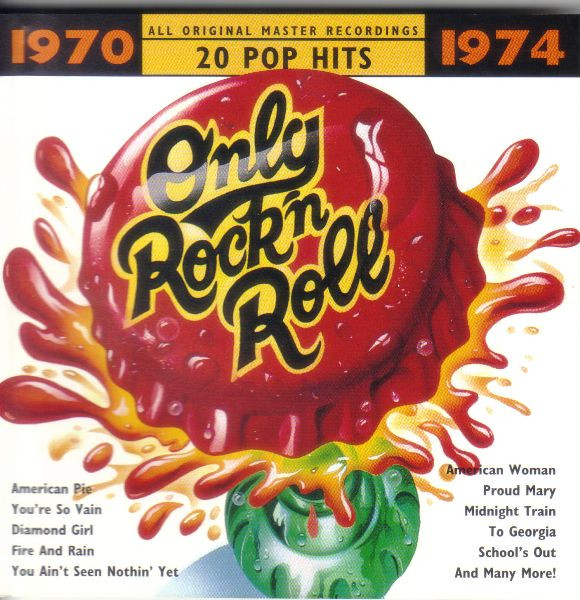
The early 1970s featured diverse styles of music. There was folk-rock like the Nitty Gritty Dirt Band’s “Mr. Bojangles,” R&B like Dionne Warwick and The Spinners’ “Then Came You,” and quirky novelty hits like Mungo Jerry’s “In the Summertime.”
Also included on this compilation CD are classics like Ike & Tina Turner’s “Proud Mary,” The Four Tops’ “Ain’t No Woman,” James Taylor’s “Fire and Rain,” and Carly Simon’s “You’re So Vain.”
And, of course, there are filler songs like Shocking Blue’s “Venus” and The 5 Stairsteps’ “O-O-H Child.” This is another hodgepodge of songs that manages to satisfy my ears as I’m driving around running errands. Do you remember these songs? Any favorites here? GRADE: B-
TRACKLIST:
| James Taylor (2)– | Fire And Rain | 3:16 | |
| Nitty Gritty Dirt Band– | Mr. Bojangles | 3:46 | |
| Don McLean– | American Pie | 4:10 | |
| Seals & Crofts– | Diamond Girl | 3:50 | |
| Dionne Warwick And The Spinners*– | Then Came You | 3:53 | |
| Mungo Jerry– | In The Summertime | 3:32 | |
| Three Dog Night– | Joy To The World | 3:15 | |
| Shocking Blue– | Venus | 3:01 | |
| Alice Cooper– | School’s Out | 3:29 | |
| Ike & Tina Turner– | Proud Mary | 2:45 | |
| Gladys Knight & The Pips*– | Midnight Train To Georgia | 4:38 | |
| Four Tops– | Ain’t No Woman (Like The One I Got) | 3:04 | |
| The 5 Stairsteps*– | O-O-H Child | 4:59 | |
| America (2)– | A Horse With No Name | 4:13 | |
| Melanie (2) Accompanied By The Edwin Hawkins Singers*– | Lay Down (Candles In The Rain) | 3:46 | |
| The Main Ingredient– | Everybody Plays The Fool | 3:24 | |
| Carly Simon– | You’re So Vain | 4:17 | |
| Three Dog Night– | Mama Told Me Not To Come | 3:19 | |
| The Guess Who– | American Woman | 5:07 | |
| Bachman Turner Overdrive*– | You Ain’t Seen Nothing Yet | 3:52 |
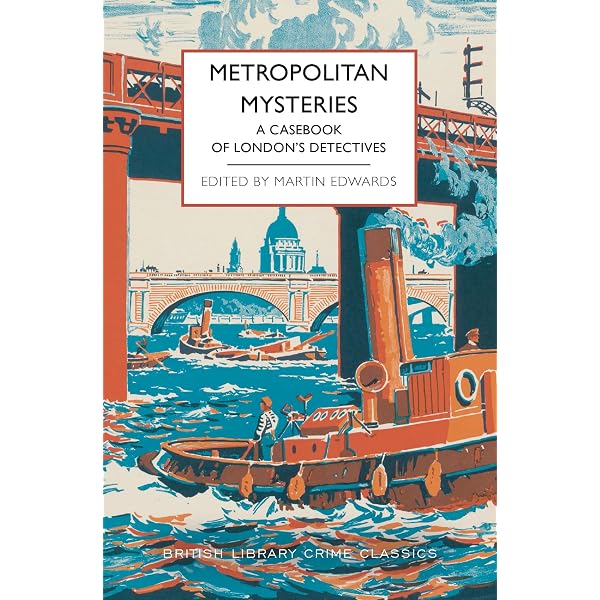
Metropolitan Mysteries (2025) is another of Martin Edwards’ wonderful anthologies. This one focuses on London and the mostly famous detectives who investigate the many crimes committed in that city.
If you glance at the Table of Contents, you’ll see a large number of Big Name Mystery Writers–Sayers, Conan Doyle, Baroness Orczy, Anthony Berkley, Anthony Gilbert, Carter Dickson/John Dickson Carr–mixed in with some lesser known authors.
These 18 mystery stories from 1908 to 1963 feature Lord Peter Wimsey, Dr. Gideon Fell, Superintendent Aldgate, and, of course, Sherlock Holmes. If you’re in the mood for some classic mystery stories from that era, check out Metropolitan Crimes. GRADE: A
TABLE OF CONTENTS:
Introduction / Martin Edwards — ix
A Note from the Publisher — xv
The vindictive story of the footsteps that ran / Dorothy L. Sayers — 1
The adventure of the Bruce-Partington plans / Arthur Conan Doyle — 24
The miser of Maida Vale / Baroness Orczy — 64
The real thing / Henry Wade — 102
These artists! / Henry Wade — 122
The case of the faulty drier / Josephine Bell — 141
Unsound mind / Anthony Berkley — 153
Man in Bond Street / Anthony Gilbert — 173
Death on Nelson’s Column / Eric Bennett — 184
The crime in nobody’s room / Carter Dickson — 208
The locked room / John Dickson Carr — 232
Sergeant Dobbin works it out / J. Jefferson Farjeon — 254
Mum knows best / Margery Allingham — 267
Sergeant Pockle in Parliament / William Fienburgh — 277
Murder in St. James’s / Malcolm Gair — 285
The most hated man in London / Patricia Moyes — 292
The dead man climbed upstairs / Raymond Postgate — 298
Back in five years / Michael Gilbert — 309

Toy Story 5 took in $227 million at the Box Office in its first week.Toy Story 5 might end up the most lucrative movie of the year. The Toy Story films have earned $4.5 billion so far.
The Toy Story franchise began in 1995 and has continued for 30 years of success. The latest installment features Lillypad (Greta Lee), an iPad-like device that 8-year-old Bonnie immediately becomes addicted to. Cowgirl Jessie (Joan Cusack) fears devices are stealing the youth from kids. Most of the toys from these movies we love–Rex (Wallace Shawn), Mr. and Mrs. Potato Head (John Hopkins), etc.–get relegated to a cardboard box in the garage.
In this toys vs. devices setup, Bonnie’s parents are oblivious to the changes in their child caused by her stopping playing with toys and her constant obsession with Lilypad. Toy Story 5 has a message behind its story.
Patti Abbott wrote that she liked Toy Story 5, but didn’t love it. Diane and I had the same reaction. GRADE: B
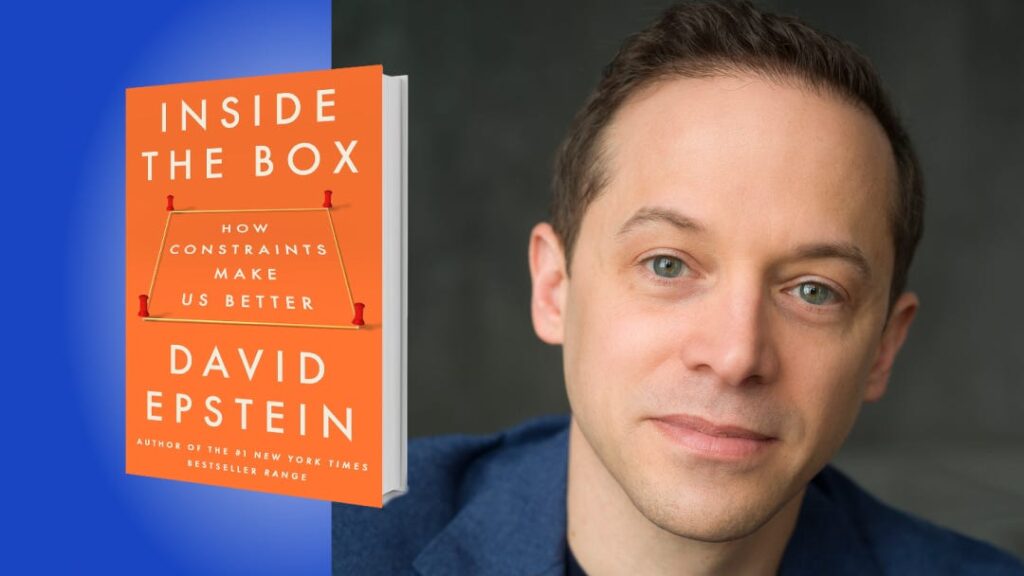
Both David Epstein–an expert in work design–and Herbert A. Simon–1978 Nobel Prize Winner for Economics–argue that work can be done more productively if we focus on how we do the work. Constraints, Epstein insists, can make the U.S. better. I remember taking a Psychology class in college where the professor told the class: “If you want to create a monster, just tell your child to do anything they want.”
Diane and I didn’t have a lot of rules for Patrick and Katie, but the rules we imposed we were strict about. Our key rules were: Don’t tell lies, Don’t steal, and Don’t cheat. We told our kids that if they did those things, they wouldn’t have any friends.
Diane and I also tried to model behavior for Patrick and Katie. Every night, we would all sit around the dining room table and do school work. Diane did her correcting of student papers, I did my lectures for the next day’s classes, and Patrick and Katie either did homework or read books. I think these good work habits carried over to our kids’ success in college and their careers.
Organization is another word for constraints. Both Epstein and Simon have worked with Artificial Intelligence and suggest models that might be used to integrate AI into the work flow.
Work environments will change radically in the years ahead. Inside the Box and Models of My Life provide insights into what the Future may look like. GRADE: A (for both books)
TABLE OF CONTENTS:
Introduction: A Textbook Case of Discovery — xiii
PART I: HOW BOUNDARIES CREATE BREAKTHROUGHS
PART II: CREATIVE CONSTRAINTS
INTERLUDE 1 — 47
4. The Green Eggs and Ham Effect — 51
5. Building a New Box — 71
6. The Remix of Everything — 87
PART III: WHERE (AND HOW) TO FOCUS
INTERLUDE 2 — 111
7. Designing for Constraints — 115
8. Widen the Bottleneck — 129
9. One Thing at a Time — 147
PART IV: COLLABORATION AND CONTENTMENT
INTERLUDE 3 — 171
10. The Rules of the Game — 175
11. Framing for Invention — 197
12. Maximizing by Satisfying — 213
Acknowledgements — 237
Notes — 241
Index — 265
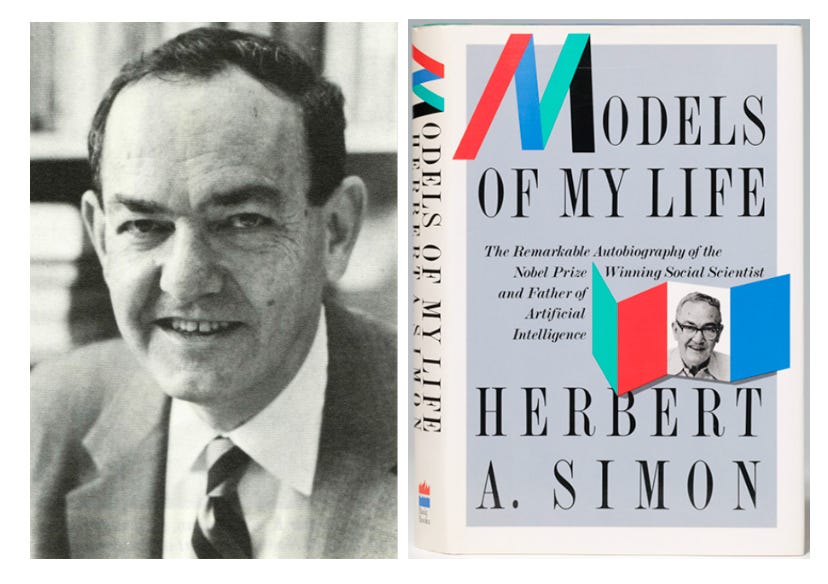
TABLE OF CONTENTS:
| PREFACE TO THE SERIES — xi Acknowledgements — xiii Introduction — xvii Prologue — xxiii The Boy in Wisconsin — 1 Forests and Fields | 24 |
| Education in Chicago | 36 |
| Encounter with a Scientific Revolution: | |
| Political Science at Chicago | 55 |
| THE SECOND PANEL | 67 |
| A Taste of Research: The City Manager’s Association | 69 |
| Managing Research: Berkeley | 78 |
| Teaching at Illinois Tech | 93 |
| A Matter of Loyalty | 117 |
| Building a Business School: The Graduate School of Industrial Administration | 135 |
| Research and Science Politics | 161 |
| Mazes Without Minotaurs Roots of Artificial Intelligence Climbing the Mountain Artificial Intelligence Achieved — 198 Exploring the Plain — 217 | 175 189 |
| Personal Threads in the Warp | 235 |
| Creating a University Environment for Cognitive Science and Α Ι | 248 |
| On Being Argumentative | 269 |
| The Student Troubles | 279 |
| The Scientist as Politician | 290 |
| Foreign Adventures | 305 |
| THE FOURTH PANEL RESEARCH AFTER SIXTY | 317 |
| From Nobel to Now | 319 |
| The Amateur Diplomat in China and the Soviet Union | 335 |
| Guides for Choice | 360 |
| The Scientist as Problem Solver | 368 |
| References | 389 |
| Index | 401 |
I’m a middling Stephen King fan. I became a fan after reading ‘Salem’s Lot and I stopped being a big fan after reading Cujo. I was so angry with the ending of Cujo I didn’t read anything by Stephen King for five years. Now, I occasionally read Stephen King “short” story collections–even though the stories are sometimes 100 pages long! No more 1,000 page Stephen King novels for me!
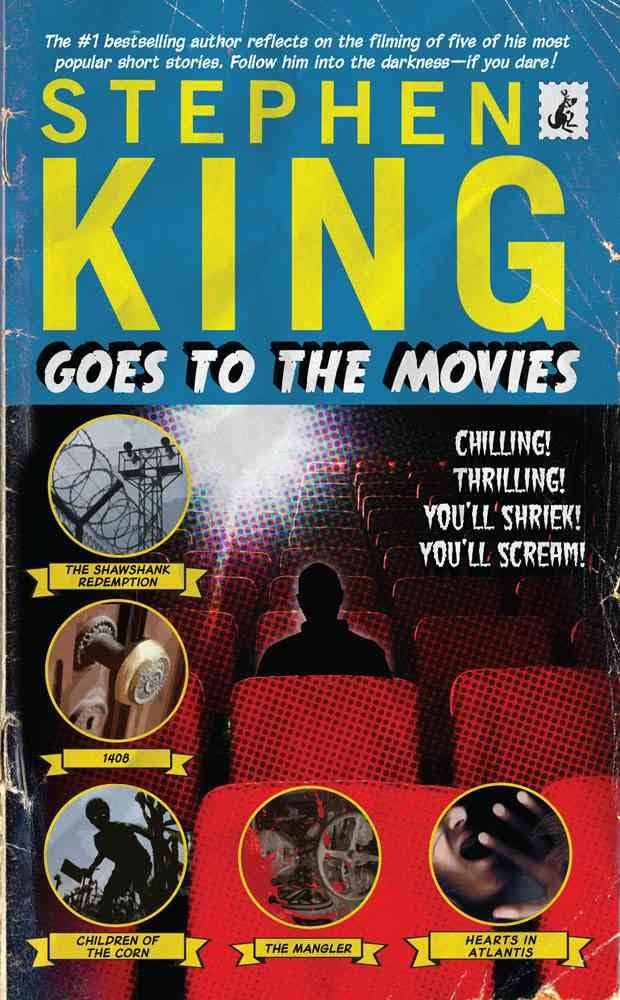
I am a big fan of King’s non-fiction: On Writing and Danse Macabre. And recently, I picked up a paperback I didn’t know existed: Stephen King Goes to the Movies (2009). As you know, the movies based on Stephen King’s work vary in quality. This book allows Stephen King to weigh in on how his work got translated to the Big Screen.
If you’re a Stephen King fan, you’ll find a lot to like in Stephen King Goes to the Movies as King reveals insights you’re probably not aware of in the production of these movies. Do you have a favorite Stephen King movie or TV series? GRADE: B+
TABLE OF CONTENTS:
1408 — 1
The Mangler — 57
Hearts in Atlantis (“Low men in yellow coats”) — 89
The Shawshank redemption (“Rita Hayworth and Shawshank Redemption“) –435
Children of the Corn — 581
My 10 Favorite Adaptations — 627
“The term sword-and-sorcery itself is phrase of Fritz Leiber’s, agreed upon in 1961 by the members of a loose association of writers of this fiction to identify this manner of story. Michael Moorcock desired a name to identify the sort of fiction written by Robert E. Howard, and he and Leiber both ‘were united in a desire to distance themselves from The Lord of the Rings‘… The matter was settled in correspondence published in the fanzine Amra.” (p. 11)
Way back in the 1960s, I discovered Sword-and-Sorcery paperbacks. I read Robert E. Howard’s Conan tales. I was transfixed by Michael Moorcock’s incredible Lancer paperbacks featuring Elric of Melnibone’s magic sword. Fritz Leiber’s “Bazaar of the Bizarre” in Fantastic–featuring The Gray Mouser and Fafhrd–triggered a hunger for more of their adventures.
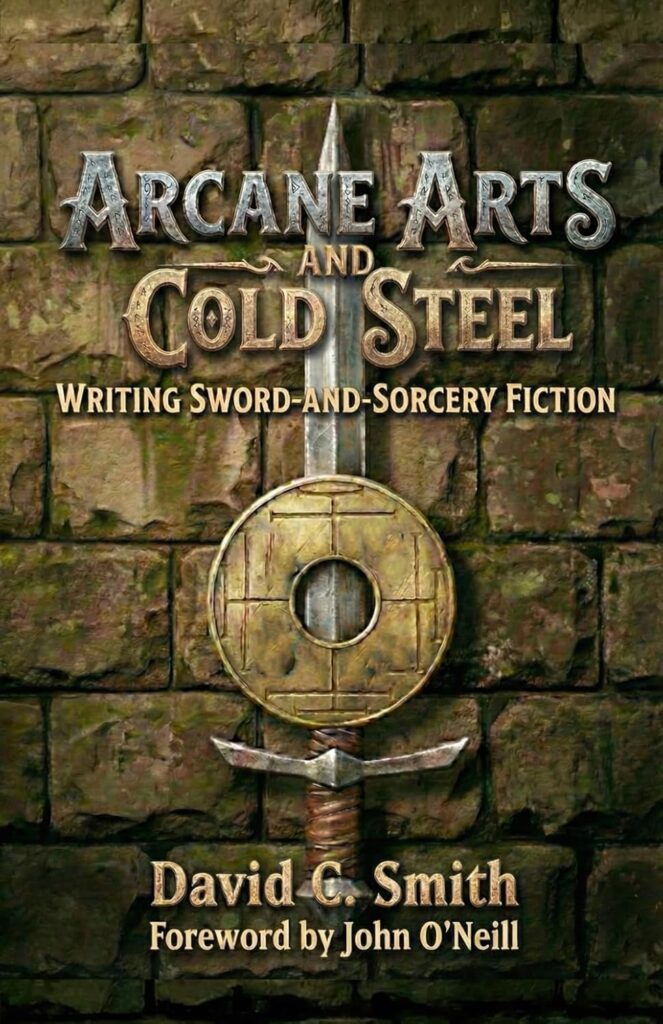
Arcane Arts and Cold Steel: Writing Sword-and-Sorcery Fiction (2025) isn’t just another writing manual. David C. Smith has published sword-and-sorcery novels. And a quick look at Smith’s Recommended Reading and Bibliography sections is clear proof he knows what he’s writing about. Not only does Arcane Arts and Cold Steel: Writing Sword-and-Sorcery Fiction give you a history of sword-and-sorcery fiction, but Smith gives detailed analysis of over a dozen major writers of the genre.
If you have any interest in sword-and-sorcery fiction, Arcane Arts and Cold Steel: Writing Sword-and-Sorcery Fiction will enhance your reading experience. Highly recommended! Are you a sword-and-sorcery fan? GRADE: A
TABLE OF CONTENTS:
Forward By John O’Neill
Robert E. Howard –11
After Howard — 13
Fritz Leiber — 21
Mid-Century Authors — 24
The 1970s and After — 36
Sword-and-Sorcery Fiction and Heroic Fantasy Fiction — 43
World Building — 50
The Mythic Dimension — 61
2. Story Structure –73
Character and Setting — 73
Must a Protagonist Even Be Human? — 108
Flat and Round Characters — 119
Plot and Scenes — 121
Style, Voice, and Tone — 161
Theme — 184
3. The New Edge: Current Sword-and-Sorcery Fiction — 187
4. Some Final Words — 229
AppendixI: Writing Sword-and-Sorcery Fiction — 231
Appendix II: Recommended Reading — 253
Interview with the Author — 257
Bibliography — 267
About the Author — 281
Index — 283

Where the Music Had to Go (2026) tracks the influence The Beatles and Boy Dylan had on each other over the years. Even after The Beatles broke up, Dylan worked with George Harrison and Paul McCartney on various musical projects.
“Recorded over a mere there days, Bringing It All Back Home was electric on one side, acoustic on the other.” (p. 102)
“Cher had already been part of a scheme to cash in on Beatle-mania. Days after the group’s arrival in the U.S., she had recorded the novelty sing “Ringo, I love You (Yeah, Yeah, Yeah)” and released it under the name of Bonnie Jo Mason. Cowritten and produced by Phil Spector, it failed to catch on. ‘My voice was so deep that a lot of people thought I was a gay guy singing a love song to Ringo,’ Cher recalled.” (p. 184)
“‘It was 10 pages long,’ Dylan said after writing it… ‘I had never thought of it as a song, until one day I was at the piano, and on the paper it was singing, ‘How does it feel?’ in a slow motion pace’ Like McCartney with “Yesterday,” Dylan didn’t know what to make of his own role in the creation of “Like a Rolling Stone.” ‘It’s like a ghost is writing a song like that,’ Dylan said. ‘It gives you the song and it goes away.'” (p. 134)
Jim Windolf manages to trace the careers of the four Beatles and Bob Dylan from the 1960s to the 21st Century. Their paths intersect more than you would imagine. Do you have a favorite Beatle song? A favorite Bob Dylan song? GRADE: A
TABLE OF CONTENTS:
Introduction — xi
SIDE ONE
Pilgrimage — 1
Disciples of Little Richard — 8
The Names — 19
Picture Imperfect — 35
It’ll Never Happen — 47
Ego Equals — 63
Beatlemania Here — 81
Hide Your Love –94
The Savoy — 111
How Does It Feel — 130
SIDE TWO
Number One — 151
Northern Songs — 163
Costars — 183
Retreat — 198
Penny Lane and Bourbon Street — 214
Everybody’s Song — 229
Beatles & Co — 251
Serve Yourself — 272
Rolling on — 294
Coda: McCartney on Dylan — 311
Acknowledgements — 319
Notes — 323
Index –351