
Hope you’re enjoying Columbus Day! I’m still basking in the glow of the new DOCTOR WHO, Jodie Whittaker!
HAPPY COLUMBUS DAY!
23 Replies
Hope you’re enjoying Columbus Day! I’m still basking in the glow of the new DOCTOR WHO, Jodie Whittaker!

After the Buffalo Bills found themselves shut out 22-0 in Green Bay last Sunday, this has been a week of reflection for the team. Too many Offensive Line breakdowns led to rookie QB Josh Allen running for his life on Lambeau Field. Today, the Bills face the mighty Tennessee Titans who are favored by 6 1/2 points over the hapless home team. A chance of rain is in the forecast so maybe the Bills will recover a few fumbles…unless they fumble the ball to the Titans! What are the prospects for your favorite NFL team?
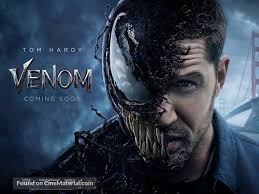
If you had a star like Michelle Williams in your film, wouldn’t you give her something to do? Director Ruben Fleischer, more interested in the alien Symbiote who calls itself Venom, reduces Michelle Williams’s role to “girlfriend” of Tom Hardy. Tom Hardy plays the edgy San Francisco investigative reporter, Eddie Brock, who is obsessed with telling the Story. When Brock antagonizes billionaire industrialist Carlton Drake (Aiz Ahmed)–a darker shade of Elon Musk–his TV network fires him. Brock is just scraping by when one of Carlton Drake’s scientists, Dr. Skirth (Jenny Slate), tells him that Drake is feeding people to alien organisms. Dr. Kirth smuggles Brock into the secret lab where the aliens are being kept and…Brock gets infected. And dangerous.
Carlton Drake wants his alien returned so he sends a small army to bring Brock and the Symbiote back. Plenty of havoc, chases, and violence result. Venom isn’t in the league of The Avengers: Infinity War but Tom Hardy and Michelle Williams do their best to make this movie entertaining. GRADE: B-
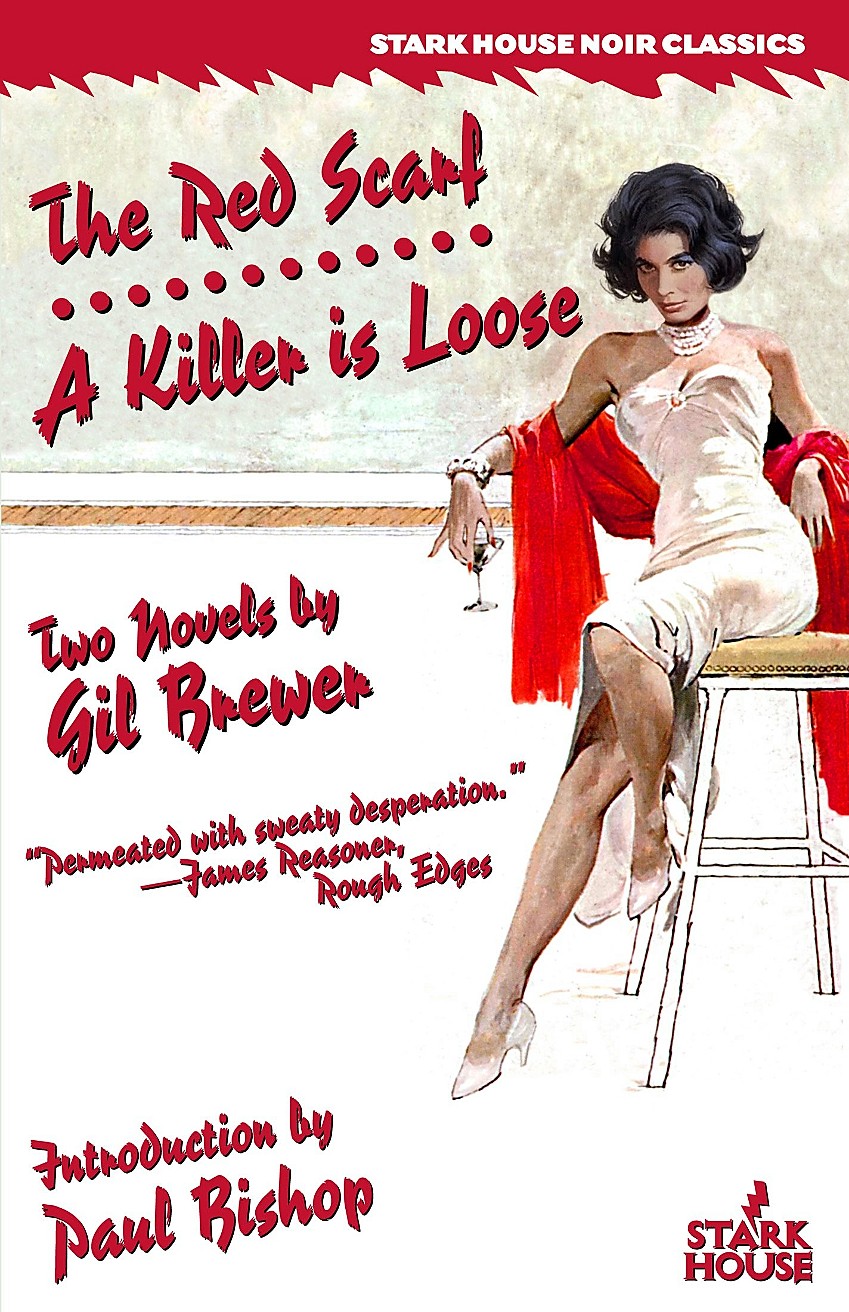
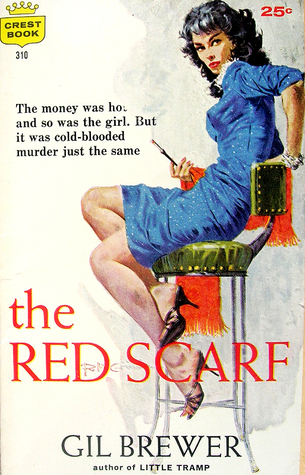
Roy Nichols, in debt and facing financial ruin, just got turned down for a loan by his brother. Making his way back home to break the Bad News to his wife, Nichols stops at ALF’S BAR-B-Q. After getting in a bar fight, Nichols leaves and gets a ride in a Lincoln sedan by a beautiful woman named Vivian and a thug named Noel. Their car goes off a cliff and crashes in the river below. And that’s just CHAPTER ONE of The Red Scarf (1954)!
As Paul Bishop points out in his excellent “Introduction” to this new Stark House omnibus, Gil Brewer was a top noir writer in the 1950s. Sadly, Brewer’s alcohol, drug, and depression problems damaged him and his writing career. At the tail end of the 1960s, Gil Brewer was reduced to writing novelizations of the TV show It Takes a Thief. Brewer died in January, 1983.
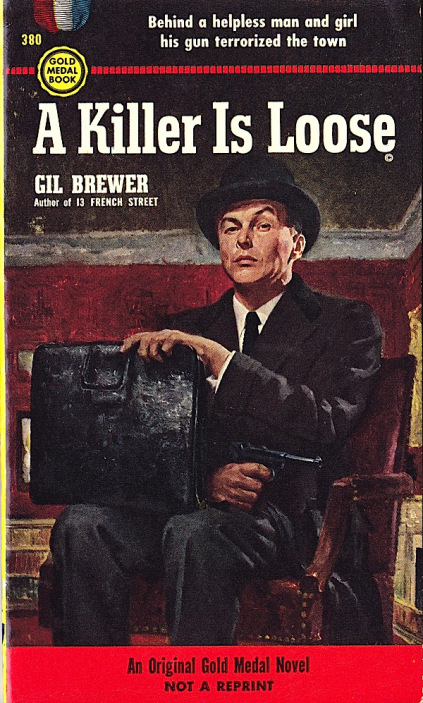
Gil Brewer wrote over 30 novels and dozens of short stories. As you might suspect, Brewer’s work varies in quality. When Brewer is “on”–like in The Red Scarf–he creates characters whose lives become pressure cookers of suspense and villainy. In A Killer is Loose starts with a domestic crisis. Steve’s wife is about to go to the hospital to have a baby. Steve is broke. He decides to go to a local bar and sell his gun, a Luger. Instead of getting money for his gun, Steve falls through a rabbit hole with a murderous psychopathic killer who dreams of building a hospital! Only Gil Brewer could invent that kind of madness! A Killer is Loose takes you on a whirlwind of chills and lunacy. If you’re a fan of noir fiction, The Red Scarf/A Killer is Loose are first-rate thrillers! GRADE: A

Doctors are predicting an early flu season for 2018 so Diane got her flu shot last week. Diane complained her arm hurt for a couple days afterward. I’m getting my flu shot today. Like Diane, I’m getting the “high-dose” flu vaccine for those 65 and older. The CDC reports that 80 to 90 percent of all flu-related deaths are among those over 65. Last year 80,000 Americans died of the flu so this is Serious Stuff for folks in our age group.
Have you gotten your flu shot yet?
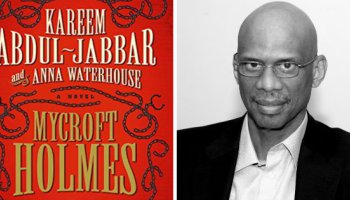
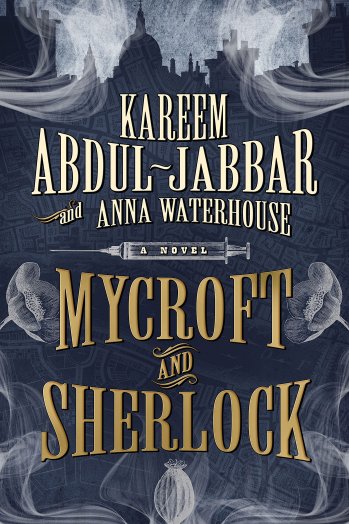

Mycroft and Sherlock is a sequel to 2015’s Mycroft. In Mycroft, the brilliant elder brother of Sherlock Holmes works for the British Government’s Secretary of State of War. Mycroft is only 23=years-old, but already understands the levers of power. Mycroft’s closest friend, Cyrus Douglas–a man of African descent with ties to Trinidad, learns of a series of mysterious deaths of children drained of their blood. Mycroft and Douglas travel to Trinidad to investigate the bizarre situation. Death and conundrums await them. Mycroft’s life spins onto a new and dangerous path as he learns the truth about the woman he loves. Mycroft delivers an exciting start to this new Holmes series. GRADE: B-
Mycroft and Sherlock takes place three years after these events. Sherlock is almost 19-years-old but is already a precocious puzzle-solver. While Mycroft is summoned by Queen Victoria to insure a tie in the first England vs. Scotland soccer game, Sherlock investigates the ritualistic murders of Asians in London. The murders lead to a nefarious conspiracy involving dolls and smuggling. I enjoyed the conversations between the exasperated Mycroft and Sherlock, a teenager with attitude. Both characters display their impressive deductive powers in solving the mysteries that result in a surprising solution. Fans of Holmes will enjoy this Mycroft and Sherlock mashup pastiche! GRADE: B
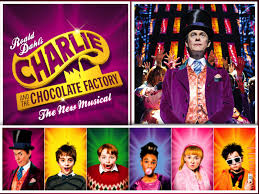
Roald Dahl’s Charlie and the Chocolate Factory: The New Musical thrilled the many children in the audience at Shea’s Performing Arts Center. Lots of dancing, pyrotechnics, engaging music, and a talented cast brought Roald Dahl’s creation to life. The story of a poor boy obsessed with chocolate who aspires to rise above his poverty generates a compelling power over the audience. Henry Boshart plays the plucky Charlie Bucket convincingly. Noah Weisberg plays Willie Wonka to snarky perfection. Diane really liked the way the production presented The Oompa-Loompas. Clever! This production is geared for a kid audience. I found the First Act dragged a bit as the Golden Ticket winners emerged. The Second Act set in the Chocolate Factory was more exciting. If Roald Dahl’s Charlie and the Chocolate Factory: The New Musical shows up in your neighborhood, you might consider checking it out. GRADE: B
Act I
“The Candy Man” – Willy Wonka & Ensemble
“Willy Wonka! Willy Wonka!” – Charlie Bucket & Ensemble
“The Candy Man” (reprise) – Charlie Bucket
“Charlie, You & I” – Grandpa Joe
“A Letter from Charlie Bucket” – Charlie Bucket, Mrs. Bucket, Grandparents
“More of Him to Love” – Mrs. Gloop, Augustus Gloop, Ensemble
“When Veruca Says” – Mr. Salt, Veruca Salt
“The Queen of Pop” – Mr. Beauregarde, Violet Beauregarde, Ensemble
“That Little Man of Mine” – Mrs. Teavee, Mike Teavee
“If Your Father Were Here” – Mrs. Bucket
“I’ve Got A Golden Ticket” / “Grandpa Joe” – Charlie Bucket, Grandpa Joe, Grandparents, Mrs. Bucket
“It Must Be Believed to Be Seen” – Willy Wonka, Ensemble
Act II
“Strike That! Reverse It!” – Willy Wonka, Ensemble
“Pure Imagination”† / “Grandpa Joe (reprise)” – Willy Wonka, Charlie Bucket, Grandpa Joe and the Golden Ticket Winners
“The Oompa Loompa Song” – Oompa Loompas
“Auf Wiedersehen Augustus Gloop” – Willy Wonka & The Oompa Loompas
“When Willy Met Oompa” – Willy Wonka & The Oompa-Loompas,
“Veruca’s Nutcracker Sweet” – Veruca & The Oompa-Loompas
“Vidiots” – Willy Wonka, Mike, Mrs. Teavee & The Oompa-Loompas
“The View From Here” – Willy Wonka & Charlie
“The Candy Man (Bows)” – Full Company
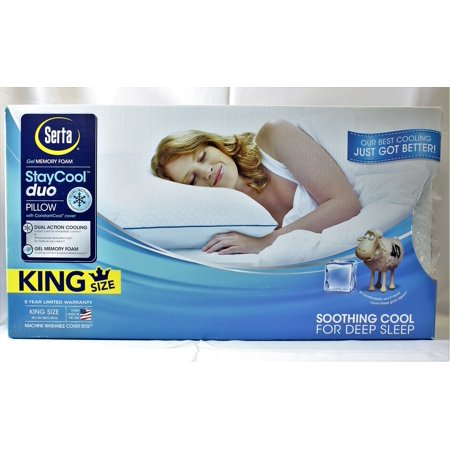
The Serta StayCool Duo Pillow is the most comfortable pillow I’ve ever slept on. A friend of mine recommended the Serta StayCool Duo Pillow because she hates pillows that get warm and force you to flip them over in the middle of the night. The Serta StayCool Duo Pillow listed for $119 for the King Size at Kohl’s, but it was on sale for $89.99. Diane had a 30% off coupon (Diane has a coupon for everything!) which brought the cost down to around $60. Diane had some Kohl’s Cash so that reduced the price to around $50. Worth every penny!
The Serta StayCool Duo Pillow features: “a unique 2-sided design allowing you to choose between firm and plush comfort. The firm side features our Cool Twist™ Gel Memory Foam for firm yet contouring comfort. The plush side features our EverCool® Memory Foam for enhanced cushioning comfort. The dual-comfort options makes this pillow ideal for all sleep positions and our unique two-sided design with Cool Twist™ Gel Memory Foam inside and EverCool® Memory Foam in the other side results in maximum comfort.”
I’m delighted with my new Serta StayCool Duo Pillow! How’s your pillow treating you?
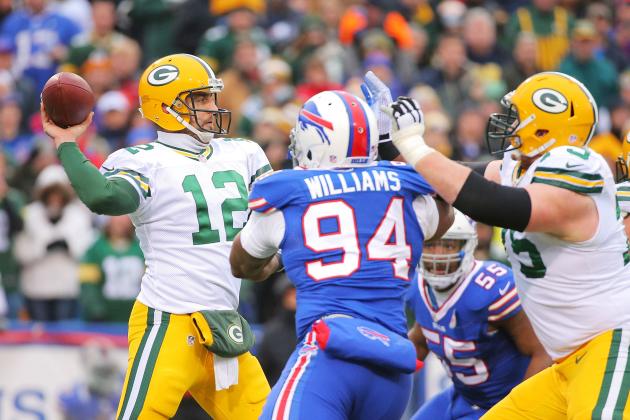
The Buffalo Bills shocked the sports world with their 27-6 beatdown of the Minnesota Vikings last week despite being 17-point underdogs. This week, the Bills travel to the frozen tundra of Lambeau Field to take on Aaron Rodgers and the Green Bay Packers. The Bills are 10-point underdogs. One reason for that point spread might be the fact that the Bills have never won in Green Bay. I’m looking for a close game today. How will your favorite NFL team do today?
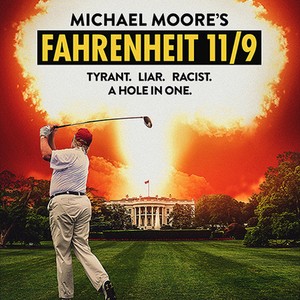
Michael Moore’s Fahrenheit 11/9 would be doing way better at the Box Office if Moore had cut a deal with Rick Wilson to “borrow” the title Everything Trump Touches Dies. Despite the unfortunate title, Moore documents the rise of Trump and the decline of Flint, Michigan (knowingly poisoned by Government officials). Although these two events seem unconnected, Moore shows how our broken political system results in growing disasters. Fortunately, Moore also documents a growing grassroots movement that may offer some hope in these Dark Times. Michael Moore is earnest and wants to show how we got into this awful mess, but I found Fahrenheit 11/9 a tad too long. How much Bad News and Fake News can an audience endure? In this case, Less would be Moore. GRADE: B+