Author Archives: george

CAPITALISM AND ITS CRITICS: A HISTORY FROM THE INDUSTRIAL REVOLUTION TO AI By John Cassidy

A while ago I reviewed Martin Wolf’s The Crisis of American Capitalism (you can read my review here). I decided to follow that up with John Cassidy’s new Capitalism and Its Critics which provides an excellent overview of the history Capitalism.

To alter Winston Churchill’s famous saying about Democracy, Capitalism is the worst economic system…except for all the others. No other economic system yet invented increases the standard of living as fast and can improve the Economy as consistently. In its 611 pages, Capitalism and Its Critics, John Cassidy covers a lot of ground. Some of the reactions to Capitalism in the Past will no doubt erupt again with the arrival of more powerful Artificial Intelligence software.

“This is not a Religious Age,” Thomas Carlyle remarked. “Only the material, the immediately practical, not the divine and spirtual, is important to us. The infinite, absolute character of Virtue has passed into a finite, conditional one: it is no longer a worship of the Beautiful and Good; but a calculation of the Profitable.” (p. 102). This partly explains the growing rate of mental illness in our country. Capitalism produces Winners (like Elon Musk and Jeff Bezos) and millions of “Losers” who struggle from pay check to pay check.

Cassidy warns that AI could produce the reaction that made the Luddites, bands of English workers who destroyed machinery especially in cotton and woolen mills–because they believed that technology was threatening their jobs (1811–16). When AI causes massive layoffs of workers in call centers, truck drivers and taxi drivers (because of self-driving trucks and cars), and millions of workers in other jobs there might be a violent response. Our Government hasn’t prepared for this yet.

“During much of the 20th Century, the forces of convergence–wars, tax policies, progressive social norms, public education, the enhancement of worker skills, labor unions–had held in check some of the capitalistic system’s darker tendencies. But by the new millennium the combination of neoliberal policies, globalization, labor-saving technological progress, and a shareholder value movement that glorified wealth creation had shifted the balance of power (and material rewards) back to Capitalism.” (p. 488)

As the number of Have-Nots grow–and it will–the capitalistic system will be increasingly under attack. Politicians like Bernie Sanders advocate for socialistic policies that are also problematic. Cassidy concludes: “The system can be reformed: the challenge is to summon the will and the means to do it. With the rise of right-wing populism, profit-driven AI, and a tech and finance oligarchy that was increasingly uninhibited about exerting its political influence, the task, going into the second quarter of the 21st Century, seems more formidable that ever.” (p. 518) GRADE: A

TABLE OF CONTENTS:

Introduction — 3

1 : “The roguery practiced in this department is beyond Imagination” : William Bolts and the East India Company — 13

2 : “The mean rapacity, the monopolizing spirit of merchants and manufacturers” : Adam Smith on Colonial Capitalism and Slavery — 26

3 : “On the brink of the last struggle” : The Logic of the Luddites — 40

4 : “It is time . . . to seek for a radical, a permanent cure of the evils that afflict society” : William Thompson’s Utilitarian Socialism — 52

5 : “In speaking of the degraded position of my sex” : Anna Wheeler and the Forgotten Half of Humanity — 69

6 : “Abandon your isolation : unite with each other!” : Flora Tristan and the Universal Worker’s Union — 82

7 : “One of the shabbiest Gospels ever preached on Earth” : Thomas Carlyle on Mammon and the Cash Nexus — 100

8 : “The war of the poor against the rich will be the bloodiest ever waged” : Friedrich Engels and The Communist Manifesto — 116

9 : “Our friend, Moneybags” : Karl Marx’s Capitalist Laws of Motion — 137

10 : “We must make land common property” : Henry George’s Moral Crusade — 159

11 : “The ideal pecuniary man is like the ideal delinquent” : Thorstein Veblen and the Captains of Industry — 179

12 : “A particularly crude form of capitalism” : John Hobson’s Theory of Imperialism — 199

13 : “Capital knows no other solution to the problem of violence” : Rosa Luxemburg on Capitalism, Colonialism, and War — 215

14 : “The rhythm of long cycles” : Nikolai Kondratiev and the Capitalist Development — 237

15 : “The more troublous the times, the word does a laissez-faire system work” : John Maynard Keynes’s Blueprint for Managed Capitalism — 256

16 : “The time was ripe for the fascist solution” : Karl Polanyi’s Warnings About Capitalism and Democracy — 276

17 : “The bankruptcy of reform” : Two Skeptics of Keynesianism : Paul Sweezy and Michal Kalecki — 295

18 : “Economics once more became political economy” : Joan Robinson and the “Bastard Keynesians” — 311

19 : “Nature . . . faithful and submissive to those who respect her” : J. C. Kumarappa and the Economics of Permanence –331

20 : “Vast sugar factories by a camarilla of absentee capitalist magnates and worked by a mass of alien proletarians” : Eric Williams on Slavery and Capitalism — 349

21 : “The periphery of the economic system” : The Rise and Fall of Dependency Theory in Latin America — 371

22 : “Shock treatment” : Milton Friedman and the Rise of Neoliberalism — 391

23 : “Any use of the natural resources for the satisfaction of non-vital needs means a smaller quantity of life in the future” : Nicholas Georgescu-Roegen and the Limits to Growth — 408

24 : “A true masterpiece at the expense of women” : Silvia Federici and Wages for Housework — 423

25 : “It is a form of regressive modernisation” : Theorists of Thatcherism : Stuard Hall vs. Friedrich Hayek — 439

26 : “Social disintegration is not a spectator sport” : Parsing Globalization : Samir Amiin, Dani Rodrik, and Joseph Stiglitz — 458

27 : “A historically unprecedented situation” : Thomas Piketty and Rising Inequality — 480

28 : “A confluence that could propel a new paradigm” : The End of Capitalism, or the Beginning? — 501

Notes — 519

Acknowledgements — 571

Index — 573

NEVER MIND THE HAPPY By Marc Shaiman

I’m fond of Marc Shaiman’s work so I decided to read his memoir: Never Mind the Happy: Showbiz Stories from a Sore Winner (2026).

Never Mind the Happy: Showbiz Stories from a Sore Winner tells the story of a kid who loved music and pursed his dream to be successful on Broadway.

And, Shaiman did.

Never Mind the Happy includes stories from Shaiman’s five-decade composing career. Shaiman’s biggest hits were musicals like Hairspray, Sister Act, and Smash

I especially enjoyed Shaiman’s stories about  his collaborations with stars like Bette Midler. If you’re a fan of musicals, you’ll find Shaiman’s stories of the creative process and the struggles to get Broadway shows up and running fascinating. GRADE: A

TABLE OF CONTENTS:

Prologue

1. Winding Brook Way

2. The Sound of Music

3. Manifesting Midler

4. God Save the City

5. It Takes an East Village

6. A Fur Chubby and a Miniskirt

7. Saturday Night Live

8. Suddenly, Nothing Is the Same

9. Barbra Is Upset

10. Skylark

11. Legends!

12. People Come and Go So Quickly Here!

13. Beaches

14. When Billy Met Marc

15. Talent Is Talent (Says Rob Reiner)

16. What Comes First? 

17. My Scott Rudin Era

18. One for My Baby

19. Sleepless With Nora

20. I’m the Schmuck

21. South Park: Bigger, Longer, & Uncut

22. The View From the Nosebleeds

23. I Killed Stephen Sondheim

24. Hairspray: Good Morning Baltimore

25. Hairspray: You Can’t Stop the Beat

26. Fame Dropping

27. Look What He Made

28. Martin Short: Fame Becomes Him

29. The Second Time Around

30. Catch Me If You Can

31. Charlie and the Chocolate Factory

32. Smash

33. Mary Poppins Returns

34. Some Like It Hot

Epilogue

Acknowledgments

STARBUCKS COFFEE & PROTEIN CAFFE MOCHA DRINK

As I’m sure you’ve noticed, the latest nutrition fad is protein. All sorts of food products are adding protein for “enhanced health.” From snacks to enhanced everyday staples, including protein bars (e.g., Quest, Bearbells), shakes (Fairlife, Premier Protein), yogurt (Chobani 20g, Oikos Triple Zero), and alternative pasta like Banza, protein enhanced products are showing up everywhere on the grocery shelves.

So, of course, Starbucks got into the act with their new Starbucks Coffee & Protein: Caffe Mocha.

The new STARBUCKS COFFEE & Protein: Caffe Mocha is a ready-to-drink, high-protein coffee beverage featuring Arabica coffee, reduced-fat milk, cocoa, and 20g–22g of protein per bottle. I bought a box (like the one above) at Sam’s Club for $24 and tried it out. It tastes a lot like chocolate milk…which is okay by me. If you want to boost your protein levels, this is a simple and tasty way to do it. GRADE: B+

Nutritional Breakdown (per 12 fl oz bottle):

Caffeine: Approximately 130mg 

Calories: 150

Protein: 22g

Total Fat: 2g – 2.5g

Saturated Fat: 1g – 1.5g

Total Carbohydrates: 13g – 15g

Dietary Fiber: 6g – 7g

Total Sugars: 2g

Sodium: 70mg – 75mg

PLATFORM DECAY By Martha Wells

Last year Martha Wells’ Murderbot series got a boost from APPLE TV+ when they presented the first season of Murderbot (you can read my review here). The new installment in the series, Platform Decay, was just published by TOR.

I became a Murderbot fan the moment I finished All Systems Red a decade ago. And, with each Murderbot novel, eight so far, the character of the SecUnit got richer and richer (and more snarky). Platform Decay is a non-stop romp through a giant torus (think a massive space station that surrounds an entire planet). SecUnit needs to rescue some friends held hostage in the depths of the torus. His mission gets more complicated when he rescues the hostages, but finds he needs to rescue another group of hostages before they can flee the menacing, armed groups on the torus who intend to kill them.

Platform Decay is a thrill-ride you’ll completely enjoy! Are you a fan of Murderbot? GRADE: B+

THE MURDERBOT SERIES:

FRIDAY’S FORGOTTEN BOOKS #906: SCIENCE FICTION: AN ILLUSTRATED HISTORY By Sam J. Lundwall

Science Fiction: An Illustrated History by Sam J. Lundwall is like a time-machine taking the reader back to 1977 and looking backward from there. First, 95% of the the illustrations (mostly cover artwork) is in black & white. Yes, there are occasional color illustrations…but not many. But the strength of Science Fiction: An Illustrated History is Lundwall’s commentary on the development of the Science Fiction genre. Did you know the first Science Fiction magazine appeared in Sweden in 1916? Did you know that SF was being published in Europe, Latin America, Asia, Russia, and Australasia as well as the U. S. and British areas in the early 20th Century?

My favorite chapter in Science Fiction: An Illustrated History is “Galactic Patrol.” Lundwall takes a deep dive into the work of E. E. Smith, Edmond Hamilton’s Captain Future series, the 100 million copy bestselling Perry Rhodan ACE Books series, A. Bertram Chandler’s “Rim World” series, and Gregory Kern (E. C. Tubb) who wrote the popular Cap Kennedy paperbacks.

While contemporary SF isn’t included in Science Fiction: An Illustrated History, this is a fascinating international reference book about how SF took over the world. If you are a Science Fiction fan, you’ll learn a lot about the genre you thought you knew by reading this book. GRADE: A

TABLE OF CONTENTS:

Origins — 6

Tales from the crypt — 14

Science fiction at the crossroads — 36

The eternal bliss machine — 60

Nightmares — 82

Monsters and such — 102

Robots and mechanical men — 122

Galactic patrol — 150

The human angle — 170

Adventures in the pulp jungle — 186

Bibliography — 204

Index — 205

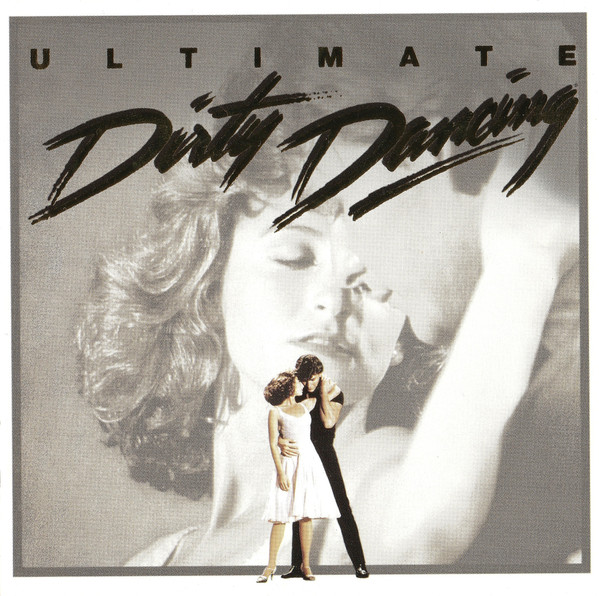
CRUSIN’ 4 and UNFORGETTABLE LOVE SONGS OF THE SIXTIES

Back to the 1960s for some hits and love songs from that special era. I had fun listening to Crusin’ 4 with a range of music from The Beach Boys’ classic, “Good Vibrations,” to The Band’s classic, “The Weight.” There are also some songs on this compilation CD that I rarely hear on Oldies stations any more like The Outsiders’ “Time Won’t Let Me” and The Johnny Otis Show’s “Willie And The Hand Jive.”

Unforgettable Love Songs of the Sixties (1999) is a more retro collection of love songs. It’s been years since I heard Connie Francis sing “Don’t Break The Heart That Loves You” or Skeeter Davis sing “The End of the World.” Other singers from the early 1960s show up on this disc: Bobby Vinton, Andy Williams, Eddy Arnold, Al Martino, and Lenny Welch.

Our local Oldies radio stations rarely play music from the 1960s any more. It’s mostly 1970s and 1980s song with a few 1990s hits mixed in. The songs of Sixties are slipping in obscurity. Do you remember these songs? Any favorites here? GRADE: B (for both)

TRACK LIST:

TRACK LIST:

1Elvis Presley With The JordanairesAre You Lonesome Tonight?3:09
2Bobby VintonBlue Velvet2:51
3Henry Mancini And His OrchestraLove Theme From Romeo & Juliet2:37
4Andy WilliamsCan’t Get Used To Losing You2:23
5Engelbert HumperdinckRelease Me (And Let Me Love Again)3:20
6Eddy ArnoldMake The World Go Away2:40
7Al MartinoSpanish Eyes2:48
8Connie FrancisDon’t Break The Heart That Loves You3:05
9Nat King ColeRamblin’ Rose2:50
10Elvis Presley With The JordanairesCan’t Help Falling In Love3:02
11Skeeter DavisThe End Of The World2:39
12Lenny WelchSince I Fell For You2:55
13The LettermenWhen I Fall In Love2:29
14Henry Mancini And His OrchestraMoon River2:41

WEDNESDAY’S SHORT STORY #269: The Necronomicon of Sherlock Holmes, Volume 2 Edited by Brian Belanger and Derrick Belanger, BSI

Last week I reviewed The Necronomicon of Sherlock Holmes, Volume 1 (you can read my review here). I enjoyed it so much I immediately ordered The Necronomicon of Sherlock Holmes, Volume 2 from AMAZON and it arrived the next day. I read it and liked it as much as Volume 1!

My favorite story is “THE ADVENTURE OF THE SINISTER SISTERS” by David Marcum. Twin sisters learn forbidden spells from The Necronomicon and use their powers to convince wealthy men to make them beneficiaries…and the men suddenly die. A third sister joins Holmes and Watson in an effort to stop the sinister sisters.

I also enjoyed a couple of stories that involved Erich Zann’s deadly violin. That deadly violin also plays a key role in Charles Stross’s “Laundry” series.

The weirdest story in both The Necronomicon of Sherlock Holmes volumes is Wendy S. Tulodo’s eerie tale, “The Thirtieth Bell of St. Judith’s” which successfully creates one of the scary dimensions Lovecraft refers to in his work.

If you’re a Sherlock Holmes fan you’ll enjoy these stories. If you’re a Lovecraft fan, too, these stories will be even more fun for you! GRADE: B+

TABLE OF CONTENTS:

“INTRODUCTION: Doyle, Lovecraft, and the Great Detective” by Derrick Belanger, BSI — 1

“INTRODUCTION: Valleys of Fear” by Brian Belanger — 7

THE ADVENTURE FROM BEYOND – Stephen Herczeg — 11
THE ABOMINABLE FATE OF THE FORREST FAMILY – Derrick Belanger, BSI — 33
THE ADVENTURE OF THE CRAWLING CHAOS – Bob Johnston — 53
THE ADVENTURE OF THE SUNKEN TEMPLE – Tim Newton Anderson — 73
THE ADVENTURE OF THE CLAY TABLET – R. C. Capasso — 101
THE CASE OF THE VIOL PLAYER – Steve Lockley — 117
THE ADDLESTON FARMSTEAD ANOMALY – Brendan S. Mycroft — 143
THE THIRTEENTH BELL OF ST. JUDITH’S – Fendy S. Tulodo — 165
FREAK SHOW OF THE DEEP – Paul Hiscock — 186
BLACK FIRE – DJ Tyrer –209
THE ADVENTURE OF THE BEDLAM PHARAOH – Liam Zemlicka — 229
THE CASE OF THE DEAD MAN’S SCREAM – Karen Ovér — 257
THE ADVENTURE OF THE SINISTER SISTERS – David Marcum — 273

Acknowledgements — 321

POINT BLANK [CRITERION COLLECTION] (Blu-ray)

I first read The Hunter by “Richard Stark” in the early 1970s. It was a story of vengeance that really gripped me. as I read more about the professional thief, Parker, that “Richard Stark” created, I eventually learned that “Richard Stark” was actually Donald E. Westlake, the guy who wrote all those funny caper novels back in the 1960s. I would go on to read all the Parker novels Westlake wrote. And, back in 1990s, I met Donald E. Westlake when he gave a speech at the Buffalo and Erie County Public Library.

After the speech, Westlake agreed to sign books and I joined the line waiting my turn. When I approached Westlake with the books I brought, he shook his head in disbelief. I presented him CAMPUS DOLL–one of Westlake’s erotic novels from the 1960s–and COMFORT STATION, a rare paperback. As Westlake kindly signed the books, I asked him why he stopping writing Parker books. The last Parker book, Butcher’s Moon (1974), was 20 years in the past at the point I asked my question. Westlake answered sadly, “I just couldn’t write Parker novels anymore.”

But, surprisingly, Comeback (1997) brought Parker back to life for eight more books. I’d like to think my questioning the absence of Parker books might have stirred some creative juices in Westlake.

That brings us to the new CRITERION COLLECTION Blu-ray of Point Blank (1967), a movie based on The Hunter. While Point Blank has all the revenge energy of The Hunter, it does not follow Westlake’s novel. Lee Marvin–now called “Walker” instead of “Parker”–is double-crossed by his partner and wife after a heist. The rest of the movie is Walker’s quest to avenge his betrayal and to get his money back.

This CRITERION COLLECTION Blu-ray includes bonus material:

DIRECTOR-APPROVED BLU-RAY SPECIAL EDITION FEATURES

  • New 4K digital restoration, supervised and approved by director John Boorman, with uncompressed monaural soundtrack
  • Audio commentary featuring Boorman and filmmaker Steven Soderbergh
  • Interview with Boorman conducted by author Geoff Dyer
  • New interview with critic Mark Harris
  • New reflections on Point Blank by filmmaker Jim Jarmusch
  • New program on the midcentury Los Angeles architecture featured in the film, with historian Alison Martino
  • The Rock (1967), a short documentary on Alcatraz and the making of the film
  • Interview with Marvin from a 1970 episode of The Dick Cavett Show
  • Trailer
  • English subtitles for the deaf and hard of hearing
  • PLUS: An essay by Dyer

Point Blank is a great film and this new release with bonus material offers plenty of entertainment! What do you think of Point Blank? GRADE: A

HOW GREAT IDEAS HAPPEN: THE HIDDEN STEPS BEHIND BREAKTHROUGH SUCCESS By George Newman

“The best way to have a good idea is to have a lot of ideas.” — Linus Pauling (2-time Nobel Prize Winner)

George Newman, a professor at the University of Toronto, argues that “creativity” is over estimated in the generation of new ideas. Newman’s research shows that Great Ideas are more likely to come from people who search for Great Ideas while studying failed experiments. He quotes the legendary story of Thomas Edison failing a hundred times before he succeeded with his light bulb.

Newman is also a big believer in persistence. People who specialize and learn more and more about their topic are more likely to discover Great Ideas. The process of searching for Great Ideas is more like archeology than being struck by lightning.

In reading How Great Ideas Happen (2026), I was impressed with the many stories Newman provides of people passionate about finding a Great Idea in medicine, education, and technology. If you’re interested in how Great Ideas are found, this is the book to answer your questions. The Great Idea I’m hoping someone will find is how to prevent cancer. GRADE: A

TABLE OF CONTENTS:

  • Introduction: Dig for Fire –1
  • PART 1: SURVEYING WHERE TO SEARCH FOR IDEAS
  • 1. Burn the Cabin Down — 13
  • 2. Originality Ostriches — 35
  • 3. Bottoms Up! — 53
  • PART 2: GRIDDIGNS: ORGANIZING YOU SEARCH
  • 4. The Guiding Question — 77
  • 5. Think Inside the Box — 95
  • 6. Transplanting — 115
  • PART 3: DIGGING: UNEARTING PROMISING IDEAS
  • 7. More Is More — 137
  • 8. Search Far and Wide — 155
  • 9. The Spark — 171
  • PART 4: SIFTINGS: CHOOSING WHICH IDEAS TO PURSUE
  • 10. Create by Subtracting — 193
  • 11. How Ideas Feel — 211
  • 12. The Learning Curve — 223

Conclusion: Getting Unstuck — 243

Appendix: Deeper Questions About Creativity — 249

Acknowledgements — 265

Notes — 267

Index — 279

WILD FOR AUSTEN: A REBELLIOUS, SUBVERSIVE, AND UNTAMED JANE By Devoney Looser

 “Every time I read Pride and Prejudice I want to dig her up and beat her over the skull with her own shin-bone”. — Mark Twain

Some people–like Devoney Looser–love Jane Austen, other people can’t stand her–like Twain. I’m more in the Love Austen camp. I’ve read all her books. I’ve read a couple biographies of Austen. And, of course, in the process of taking courses in a doctoral program to earn my Ph.D., I read a lot of literary criticism of Jane Austen.

If you’re wild for Austen, you’ll enjoy Devoney Looser’s Wild for Austen. Looser’s book is a fan’s take on her favorite writer. Explorations of family life, romance, and women’s limited freedom all get a good airing in these enthusiastic pages.

Looser takes a chronological approach to Jane Austen’s works and devotes entire chapters to her major works. But there’s plenty of Austen background information and a useful insights in how our regard for Jane Austen has changed over the centuries. If you’re a big fan of Jane Austen, this book is for you! GRADE: A

TABLE OF CONTENTS:

PART 1: WILD WRITINGS

  1. Introduction: Austen gone wild — 3
  2. Fierce, wild, and ruthless : Austen’s juvenilia — 16
  3. The controversial case of Sophia Sentiment — 25
  4. Running wild : the winning immorality of Lady Susan — 35
  5. Wildest : Sense and Sensibility (1811) — 46
  6. Almost wild : Pride and Prejudice (1813) — 58
  7. Bewildering Mansfield Park (1814) — 65
  8. Wild speculation : Emma (1816) — 77
  9. Wild to know : Northanger Abbey (1818)
  10. The young people were all wild : Persuasion (1818) — 100
  11. Wild-goose chase : unfinished Sanditon — 111
  12. Oh, subjects rebellious : The Watsons and Last words — 122
  13. Jane, the wild beast, and the progressive Burdetts — 127
  14. Cousin Eliza’s statesman, singer, and spy — 148
  15. The Leighs as learned literary ladies — 161
  16. The sensational shoplifting trial of Aunt Jane Leigh Perrot –173
  17. Three Austen brothers and the abolition of slavery — 189
  18. The Austen family legacy, suffrage, and anti-suffrage — 201
  19. Seeing Jane Austen’s ghost — 215
  20. Sense and Sensibility goes to court — 225
  21. Jane’s imaginary lover in Switzerland — 233
  22. Almost Pride and Prejudice : the wild films that never were — 241
  23. Wild and wanton : the rise of Austen erotica — 254
  24. Loving (and hating) Jane Austen — 262
  25. Coda: Austen after 250 — 274

Acknowledgments –279

Notes –281