“Gated communities. Home theaters. Private schools. Private jets. Privately run public parks. Private world-saving behind the backs of those to be saved.” (p. 199)
“Let me tell you about the very rich. They are different from you and me. They possess and enjoy early, and it does something to them, makes them soft where we are hard, and cynical where we are trustful, in a way that, unless you were born rich, it is very difficult to understand. They think, deep in their hearts, that they are better than we are because we had to discover the compensations and refuges of life for ourselves. Even when they enter deep into our world or sink below us, they still think that they are better than we are. They are different. ” ― F. Scott Fitzgerald
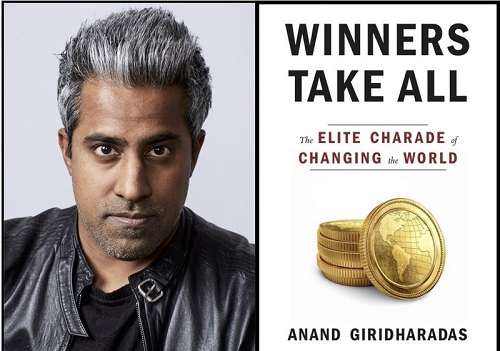
Anand Giridharadas presents a different picture of the Rich in Winners Take All. The Rich spend massive amounts of money trying to convince the world that they are benefactors of the Planet. Their charities project Hope, but many of them are just tax write-offs.
In reality, Anand Giridharadas shows how the Rich are moulding societies to their benefit. Politicians do their bidding in order to get million dollar campaign contributions. The Rich gave an expensive RV to a Supreme Court Justice. Did that affect future Supreme Court decisions?
Currently, Trump’s pal Larry Ellison, who purchased Paramount, now is going to buy Warner Brothers and get CNN in the deal. Will that affect broadcast journalism? Soon CNN will be a clone of FOX NEWS.
Billionaires rule but pretend Democracy still works. We all know it doesn’t. Money is the root of all Evil…and Evil is growing. Winners Take All is a disturbing book by providing examples of the rot creeping over our institutions and governments. GRADE: A
TABLE OF CONTENTS:
Prologue 3
Chapter 1 But How is the World Changed? 13
Chapter 2 Win-Win 35
Chapter 3 Rebel-Kings in Worrisome Berets 60
Chapter 4 The Critic and the Thought Leader 87
Chapter 5 Arsonists Make the Best Firefighters 129
Chapter 6 Generosity and Justice 154
Chapter 7 All That Works in the Modern World 201
Epilogue “Other People Are Not Your Children” 245
Acknowledgments 265
A Note On Sources 271
Index 277