WEDNESDAY’S SHORT STORIES #15: MY FAVORITE FANTASY STORY Edited by Martin H. Greenberg

Last Wednesday, I reviewed My Favorite Science Fiction Story (you can read the review here). Then, Todd Mason, learning of the existence of My Favorite Horror Story, reviewed it here. Now, I complete the trifecta with My Favorite Fantasy Story (2000). This is my favorite volume of the three because some of my favorite stories can be found in this volume. “That Hell-Bound Train” won Robert Block a Hugo Award. Jack Vance is celebrated by Robert Silverberg choosing “Mizirian the Magician” and George R. R. Martin choosing ” Liane the Wayfarer.”

Classics like L. Sprague de Camp’s “The Gnarly Man” and Charles Dickens’s “The Bagman’s Story” are represented. I enjoyed Debra Doyle and James D. Macdonald’s spy mashup, “Stealing God” where the Holy Grail makes an appearance. And Andre Norton pick’s one of my favorite Manly Wade Wellman stories, “The Spring.” All in all, an excellent anthology! GRADE: A

TABLE OF CONTENTS:

INTRODUCTION by Martin H. Greenberg — 1

David Byrne’s American Utopia [HBO]

If you’re a fan of the group Talking Heads, you’ll love David Byrne’s American Utopia. The performance is a mix of music and commentary led by David Byrne, the front man of the Talking Heads. This theatrical concert features a talented group of musicians who are constantly in motion. The action on the stage never stops.

David Byrne’s American Utopia is directed by Spike Lee who manages to keep the dancing and music under control during the performance before an enthusiastic audience. The film was shot in New York City in 2020 before the pandemic shut Broadway down.

If you’re in the mood for a high energy concert, this is the one to watch! Are you a Talking Heads fan? GRADE: A

SONG LIST:

A WEALTH OF PIGEONS: A CARTOON COLLECTION By Harry Bliss & Steve Martin

If you’re a fan of cartoons in The New Yorker you’ll enjoy Harry Bliss and Steve Martin’s A Wealth of Pigeons. Bliss is provides excellent cartoons and Martin provides the punchlines. Here’s a couple of examples:

About 130 cartoons fill this book. I found about a third of them funny, a third made me smile, and a third were clunkers. You have to find fun where you can get it these days. Do you enjoy cartoons? Steve Martin? Harry Bliss? GRADE: B

SUPER BOWL LV: Kansas City Chiefs vs. Tampa Bay Buccaneers

I didn’t think the NFL could pull off 256+ games during a pandemic. Yet, here we are at the ultimate game. Patrick Mahomes and the Kansas City Chiefs try to defend their Super Bowl Championship against the home-town Tampa Bay Buccaneers. The Chiefs are 3-point favorites. Tom Brady is trying to win the Super Bowl again. I’m rooting for the Chiefs. Who do you think will win today? What’s on your Super Bowl menu?

BOOMERS: THE MEN AND WOMEN WHO PROMISED FREEDOM AND DELIVERED DISASTER By Helen Andrews

Helen Andrews lays out her approach in Boomers in her Preface where she writes: “…I found I had no interest at all in writing about buffoons and psychopaths, however colorful some of them were. Instead, I was drawn to the boomers who had all the elements of greatness but whose effect on the world was tragically and often ironically contrary to their intentions.” Andrews quotes David Crosby’s assessment of his generation: “We were right about the war. We were right about the environment. We were right about civil rights and women’s issues. But we were wrong about drugs.” (p.195)

When Andrews tackles Steve Jobs, she goes for the jugular. Not only did Jobs unleash cell phones on an unsuspecting populace–she doesn’t go as far as blaming Jobs for Tinder and Tik Tok–but Andrews suggests Jobs may have sown the seeds to civilization’s impending collapse.

Andrew Sorkin gets blamed for fooling an entire generation about the way politics and Washington works with his fictitious TV show The West Wing. I was surprised that Andrews didn’t blame social media on Sorkin because he wrote the screenplay to The Social Network, a movie about the founding of Facebook.

Jeffrey Sachs gets nailed because his economics doesn’t work. Andrews thinks “the Indian Jones of economics” is goofy and wrong.

Camille Paglia, “the next Susan Sontag,” falls short with her career as an academic superstar. Andrews chronicles the years Paglia labored in obscurity, teaching workers at the Philadelphia College of Performing Arts Night School until she hit the Big Time with Sexual Personae in 1990. Suddenly, Paglia was a hot commodity on the media circuit. “Paglia was able to parlay this initial burst of celebrity in a more lasting fame as a public intellectual.” (p. 105) Andrews uses this case study as one of the reasons our vaulted colleges and universities allow dissertations on The Sopranos.

I did not know that Reverend Al Sharpton worked as James Brown’s tour manager. “Traveling on the road with Brown taught Sharpton as much about business as it did about showmanship.” (p. 128). Despite the debacle of the Tawana Brawley hoax of 1987–where Brawley falsely claimed she had been gang raped by law enforcement officials–Sharpton managed to escape most of the blow-back of that escapade. And Sharpton settled most of the income tax problems he generated with his many “charitable” projects. Basically, Andrews dismisses Sharpton as a phony.

I confess I did not know much about Sonya Sotomayor. Andrews lists many of Sotomayor’s faults which basically reveals her as a diva. According to Andrews, Chief Justice John Roberts has criticized Sotomayor for attacking the majority of the Justices in personal terms. Using her heritage as a lever of power, Sotomayor destabilizes the Supreme Court according to Andrews. Personally, I’m not seeing it.

Boomers shows as much about Helen Andrews’s thought process and beliefs as it does the people Andrews accuses of “delivering disaster.” One has to wonder why Trump isn’t on this list… GRADE: C

Table of Contents

Preface ix

1 The Boomers 1

2 Steve Jobs 19

3 Aaron Sorkin 43

4 Jeffrey Sachs 69

5 Camille Paglia 97

6 Al Sharpton 125

7 Sonia Sotomayor 165

8 The Millennials 191

Acknowledgments 199

Notes 201

Index 231

FRIDAY’S FORGOTTEN BOOKS #626: THE PALACE OF LOVE By Jack Vance

Jace Vance’s The Palace of Love (1967) is the third book in the Demon Princes series. Kirth Gersen, a survivor of a vicious attack on his home, Mount Pleasant, has vowed to punish the five master criminals who coordinated and participated in the massacre. So far, Gersen has eliminated Attel Malagate (you can read my review of Star King here) and  Kokor Hekkus (aka, The Killing Machine). The Killing Machine is my least favorite novel in the Demon Princes series, so I’ll spare you my review.

However, The Palace of Love presents Kirth Gersen with a challenge: finding The Palace of Love and finding its owner, Viole Falushe who searches for Love while practicing Hate. Gersen has to trace Viole Falushe’s development from a moody teenager into a criminal genius. The actual scenes of the confrontation in The Palace of Love are among the most compelling in Vance’s series. GRADE: A-

TAPESTRY REVISITED: A TRIBUTE TO CAROLE KING

I’m not a big fan of tribute albums (because most of them are mediocre) but Tapestry Revisited is an exception. I grew up listening to dozens of songs written by Carole King and Gerry Goffin during the Sixties. Then, King and Goffin divorced and Carole King released a solo album, Tapestry in 1971. Tapestry would go on to become a classic.

Tapestry Revisited came in 1995 and features a curious mix of performers who sing all the songs–with slightly different arrangements–included on the original Tapestry album.

Rod Stewart had a hit with “So Far Away.” Celine Dion performed “(You Make Me Feel Like) A Natural Woman” when Diane and I saw her in concert. Amy Grant performed “It’s Too Late” when we saw her in concert.

If you’re a Carole King fan, you will enjoy this CD. If you love Tapestry, you’ll find a lot to like on this tribute CD. Are you a Carole King fan? Did you buy a copy of Tapestry when it first came out? GRADE: B+

TRACK LIST:

1.I Feel the Earth Move Carole KingEternal4:59
2.So Far Away Carole KingRod Stewart4:25
3.It’s Too LateCarole King; Toni SternAmy Grant3:59
4.“Home Again” Carole KingCurtis Stigers3:41
5.Beautiful Carole KingRichard Marx3:46
6.“Way Over Yonder” Carole KingBlessid Union of Souls3:54
7.You’ve Got a Friend Carole KingBeBe & CeCe Winans featuring Aretha Franklin6:03
8.Where You LeadCarole King; Toni SternFaith Hill3:32
9.Will You Love Me TomorrowCarole King; Gerry GoffinBee Gees5:02
10.Smackwater JackCarole King; Gerry GoffinThe Manhattan Transfer4:37
11.“Tapestry” Carole KingAll-4-One3:12
12.(You Make Me Feel Like) A Natural WomanCarole King; Gerry Goffin; Jerry WexlerCeline Dion3:43

WEDNESDAY’S SHORT STORIES #14: MY FAVORITE SCIENCE FICTION STORY Edited by Martin H. Greenberg

Some of the MY FAVORITE SF STORIES anthologies feature stories that the writer choses from his or her oeuvre. But in Marty Greenberg’s My Favorite Science Fiction Story (1999), writers chose stories they love written by other writers.

Several of my favorite SF stories grace the Table of Contents. Love C. M. Kornbluth’s “The Little Black Bag.” What happens when a doctor’s kit from the Future shows up now? The results will surprise you.

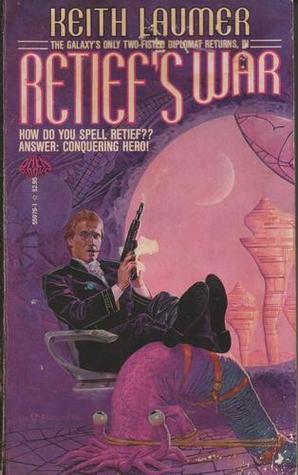
I’m also fond of Cordwainer Smith’s “The Ballad of Lost C’mell,” one of his most moving Instrumentality stories. And who can forget Keith Laumer’s classic “The Last Command”?

A couple of these stories were new to me (or I had completely forgotten I read them). “Black Charlie” by Gordon R. Dickson explores what Art really is. And Greenberg cleverly ends this wonderful anthology with one of C. M. Kornbluth’s darkest (yet insightful) stories about the price of ignoring the lessons of History. All in all, this is a great collection of stories. The short essays by the chosers also provide additional information about the writer and the story. Highly recommended! How many of these stories have you read? GRADE: A

TABLE OF CONTENTS:

Introduction — ix

The man who lost the sea / Theodore Sturgeon — Chosen by Arthur C. Clarke — 1

The last command / Keith Laumer — Chosen by Anne McCaffrey –13

Day million — Frederik Pohl — Chosen by Joe Haldeman — 32

The little black bag / C.M. Kornbluth — Chosen by Fredrick Pohl — 38

A galaxy called Rome / Barry N. Malzberg — Chosen by Mike Resnick — 67

Diabologic / Eric Frank Russell — Chosen by Andre Norton — 86

Untouched by human hands / Robert Sheckley — Chosen by Alan Dean Foster — 108

Black Charlie / Gordon R. Dickson — Chosen by Poul Anderson — 123

The ugly chickens / Howard Waldrop — Chosen by Harry Turtledove — 139

The mathenauts / Norman Kagan — Chosen by Greg Bear — 162

Lot / Ward Moore — Chosen by Connie Willis — 178

The ballad of lost C’mell / Cordwainer Smith — Chosen by Lois McMaster Bujold — 205

A Martian odyssey / Stanley G. Weinbaum — Chosen by L. Sprague de Camp — 226

Common time / James Blish — Chose by Robert Silverberg — 262

The engine at heartspring’s center / Roger Zelazny — Chosen by Greg Benford — 273

Nerves / Lester del Rey — Chosen by Mariam Zimmer Bradley — 282

The only thing we can learn / C.M. Kornbluth — Chosen by David Drake — 356

SOUL [Disney+]

SOUL, the new Pixar animated feature, features Joe Gardner (voiced by Jamie Foxx), a frustrated Middle School band teacher, who finally gets his Big Break to play with an established Jazz musician. But one mis-step sends Joe from New York City to the steps of the Great Beyond.

Joe is given a chance to alter his fate when a precocious soul named 22 (voiced by Tina Fey) is placed in his care. Joe needs to show 22 that Life is worth living, that Life on Earth is worth the risk, and that Human Experience is fulfilling.

SOUL is directed by Academy Award winner Pete Docter (“Inside Out,” “Up”), co-directed by Kemp Powers (“One Night in Miami”). Jon Batiste’s original jazz compositions power the music in this film while musicians Trent Reznor and Atticus Ross also composed the film’s score.

If you’re looking for some musical diversion, SOUL will take you there. Are you a fan of Jazz? GRADE: B

THE BRIGHT BOOK OF LIFE: NOVELS TO READ AND REREAD By Harold Bloom

The Bright Book of Life is basically Harold Bloom’s choices of the best novels ever written. When you boil all these books down, Bloom think’s Moby-Dick and In Search of Lost Time are the two greatest novels. But I have a few quibbles. I’ve read most of these novels. I have never heard of Book of Numbers by Joshua Cohen. I like Ursula K. Le Guin but I would not consider The Left Hand of Darkness or The Dispossessed among the greatest novels. And where is Gabriel García Márquez’s One Hundred Years of Solitude?

Some of Bloom’s choices are a little strange, too. The Ambassadors is a very good Henry James novel, but is it really better than Wings of the Dove? Does Joseph Conrad deserve three novel choices while George Orwell’s 1984 is ignored?

How many of these novels have you read? What are your favorites? GRADE: B+

Table of Contents:

Preface The Lost Traveller’s Dream xi

1 Don Quixote Miguel De Cervantes 3

2 Clarissa Samuel Richardson 22

3 Tom Jones Henry Fielding 33

4 Pride and Prejudice Jane Austen 39

5 Emma Jane Austen 46

6 Persuasion Jane Austen 52

7 I Promessi Sposi (The Betrothed) Alessandro Manzoni 61

8 The Red and the Black Stendhal 66

9 The Charterhouse of Parma Stendhal 71

10 The Vautrin Saga: Old Goriot, Lost Illusions, The Splendor and Misery of the Courtesans Honore De Balzac 76

11 The Captains Daughter Alexander Pushkin 82

12 Wuthering Heights Emily Bronte 93

13 Vanity Fair William Makepeace Thackeray 101

14 Moby-Dick Herman Melville 112

15 Bleak House Charles Dickens 152

16 Our Mutual Friend Charles Dickens 156

17 Madame Bovary Gustave Flaubert 161

18 Les Miserables Victor Hugo 166

19 A Sportsman’s Notebook Ivan Turgenev 172

20 First Love Ivan Turgenev 181

21 The Cossacks Leo Tolstoy 190

22 War and Peace Leo Tolstoy 197

23 Anna Karenina Leo Tolstoy 215

24 Hadji Murat Leo Tolstoy 229

25 The Return of the Native Thomas Hardy 238

26 The Brothers Karamazov Fyodor Dostoevsky 244

27 The Princess Casamassima Henry James 254

28 The Ambassadors Henry James 258

29 Nostromo Joseph Conrad 261

30 The Secret Agent Joseph Conrad 268

31 Under Western Eyes Joseph Conrad 273

32 The Reef Edith Wharton 277

33 The Rainbow D.H. Lawrence 286

34 Women in Love D.H. Lawrence 291

35 Ulysses James Joyce 300

36 The Magic Mountain Thomas Mann 354

37 To the Lighthouse Virginia Woolf 377

38 In Search of Lost Time Marcel Proust 387

39 The Master and Margarita Mikhail Bulgakov 391

40 Absalom, Absalom! William Faulkner 411

41 The Death of the Heart Elizabeth Bowen 427

42 Invisible Man Ralph Ellison 434

43 The Left Hand of Darkness Ursula K. Le Guin 447

44 The Dispossessed Ursula K. Le Guin 460

45 The Loser Thomas Bernhard 466

46 Blood Meridian Cormac McCarthy 472

47 The Rings of Saturn W. G. Sebald 485

48 Book of Numbers Joshua Cohen 504

Afterword The Changeling 511