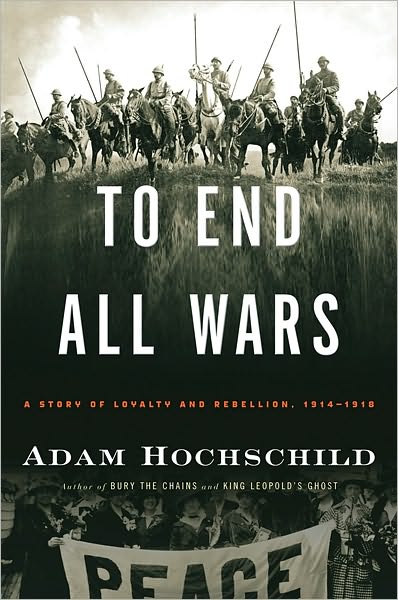
 Flame-throwers, poison gas, barbed wire, zeppelins, tanks, submarines, and most deadly of all, machine guns butchered over 10 million men in World War I and caused 20 million wounded. Science and technology turned war into slaughter. Adam Hochschild’s powerful story of people who saw the horror of this new war and tried to stop it becomes the best book I’ve ever read about “the War to end all Wars.” Hochschild’s research shows that over 5000 merchant ships were sunk by German U-Boats during the war, something I didn’t know. Groups of college students would march together into deadly machine-gun fire. The students had no conception of the ferocity of machine guns that could mow a 1000 men down in minutes. The complete waste of lives, the horrors of senseless fighting in the trenches, and the callousness of generals willing to sacrifice thousands of lives for a few feet of ground will disturb you. General Sherman said, “War is Hell” but World War I was way beyond that. GRADE: A
TO END ALL WARS: A STORY OF LOYALTY & REBELLION, 1914-1918 By Adam Hochschild
8 Replies
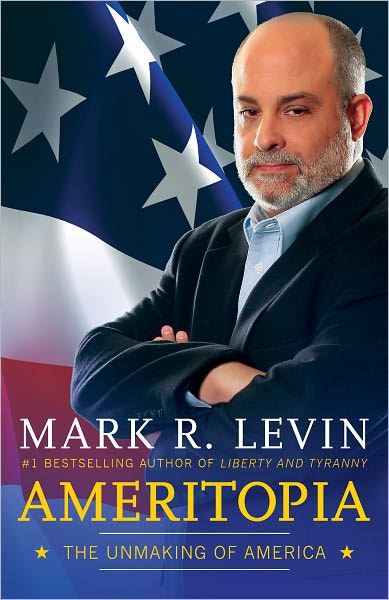 I’m conflicted about Mark Levin’s Ameritopia. It analyzes Plato’s The Republic, Thomas Moore’s Utopia, and Thomas Hobbes’ Leviathan with remarkable clarity. Levin thinks our 21st Century government is trying to turn the U.S. into a utopia. And Levin thinks that’s a Bad Idea. Individualism is always sacrificed by utopian movements, according to Levin. He uses the Soviet Union as an example. While I was enlightened by Levin’s writing on classics of political theory, I thought his paranoia of government power over the individual to be a bit overwrought. GRADE: B
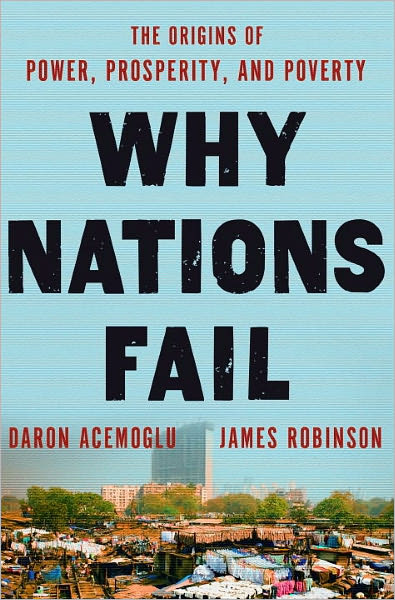 In Why Nations Fail Daron Acemoglu and James Robinson update Adam Smith’s classic The Wealth of Nations and David Landes brilliant The Wealth and Poverty of Nations. Where Jared Diamond saw nations failing because of Germs, Guns, and Steel, Acemoglu and Robinson’s research shows that institutions largely determine whether a state will prosper or fail. They give plenty of evidence that elites (yes, that pesky 1%) that are uncontrolled lead to rampant corruption and eventual societal failure. Acemoglu and Robinson persuaded me. If you’re going to only read one book of political analysis in 2012, make it Why Nations Fail. GRADE: A


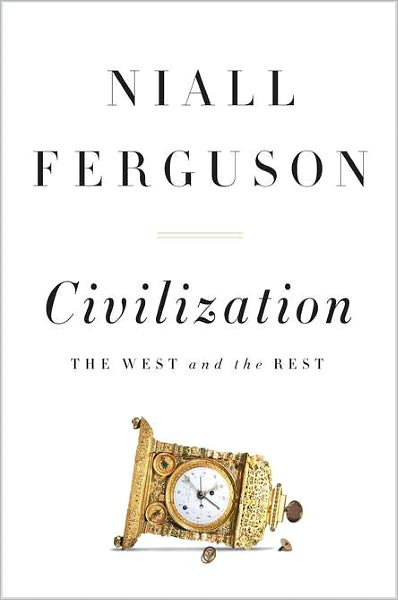 I enjoy controversial historian, Niall Ferguson. For one thing, he takes an economic and financial view of history which I find enlightening. In his latest book, Civilization: The West and the Rest, Ferguson asks why the West emerged as the leader in wealth and technology over the rest of the world. His answer is that the West developed “killer apps” that pushed them head-and-shoulders over the rest of the world. The “killer apps” are: competition, science, property rights, medicine, the consumer society, and work ethic. The West’s status is threatened, according to Ferguson, because the rest of the world is finally catching on and they’re working on implementing those killer apps for their countries. If you’re in the mood for a provocative read, Civilization will agitate you. GRADE: B+
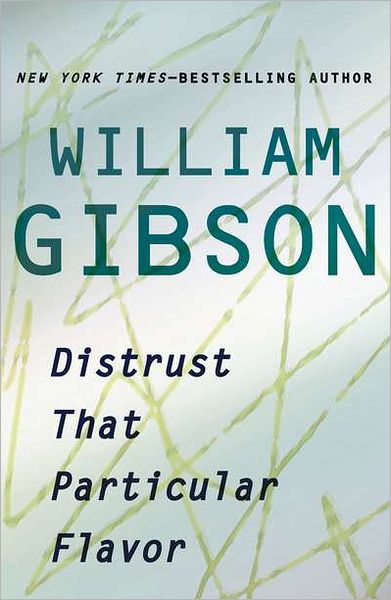 William Gibson is the author of Neuromancer, the science fiction novel that coined the word “cyberspace” back in the early 1980s. Later, a movie based on Neuromancer was made called Johnny Mnemonic starring Keanu Reeves. Gibson has written nine novels, but this is his first volume of essays. In his Introduction, Gibson admits he’s not an essayist or non-fiction writer. These collected pieces range in subject matter from essays on Tokyo to book introductions. The best essays reveal something about the reticent William Gibson. Gibson writes about the death of his parents and how he was alone at 18. In another essay, Gibson admits he was addicted to buying high-end wrist watches on eBay. If you’re a Gibson fan, you’ll enjoy Gibson’s patented takes on Reality. I, on the other hand, hope Gibson returns to what he really does well: write novels. GRADE: B-